Best Green Smoothie Recipes for Natural Energy and Better Digestion
Five green smoothies built for real breakfasts: enough fruit to taste good, leafy greens you will barely notice, and protein and fiber to make the glass last until lunch.
At a glance
- Treat a breakfast smoothie like a meal: include produce, protein, fiber and a little fat.
- Baby spinach disappears into fruit more easily than kale; if you use kale, strip out the tough stems first.
- Use whole fruit rather than juice so the fiber stays in the glass.
- If you are not used to much fiber, begin with fewer greens and seeds and build up slowly.
- A smoothie only counts as breakfast if it has enough substance to keep you going.
A green smoothie can be an excellent breakfast. It can also be a cold glass of blended fruit that leaves you rummaging for toast before the blender jug is dry. The color tells you very little. What matters is whether the glass contains the same basic pieces you would put on a breakfast plate: produce, a clear source of protein, a fiber-rich carbohydrate and some fat.
Think of the blender as a mixing bowl, not a shortcut: fruit and greens bring the produce, while yogurt, milk, oats and seeds turn it into a meal.
A simple formula for a smoothie that sticks with you
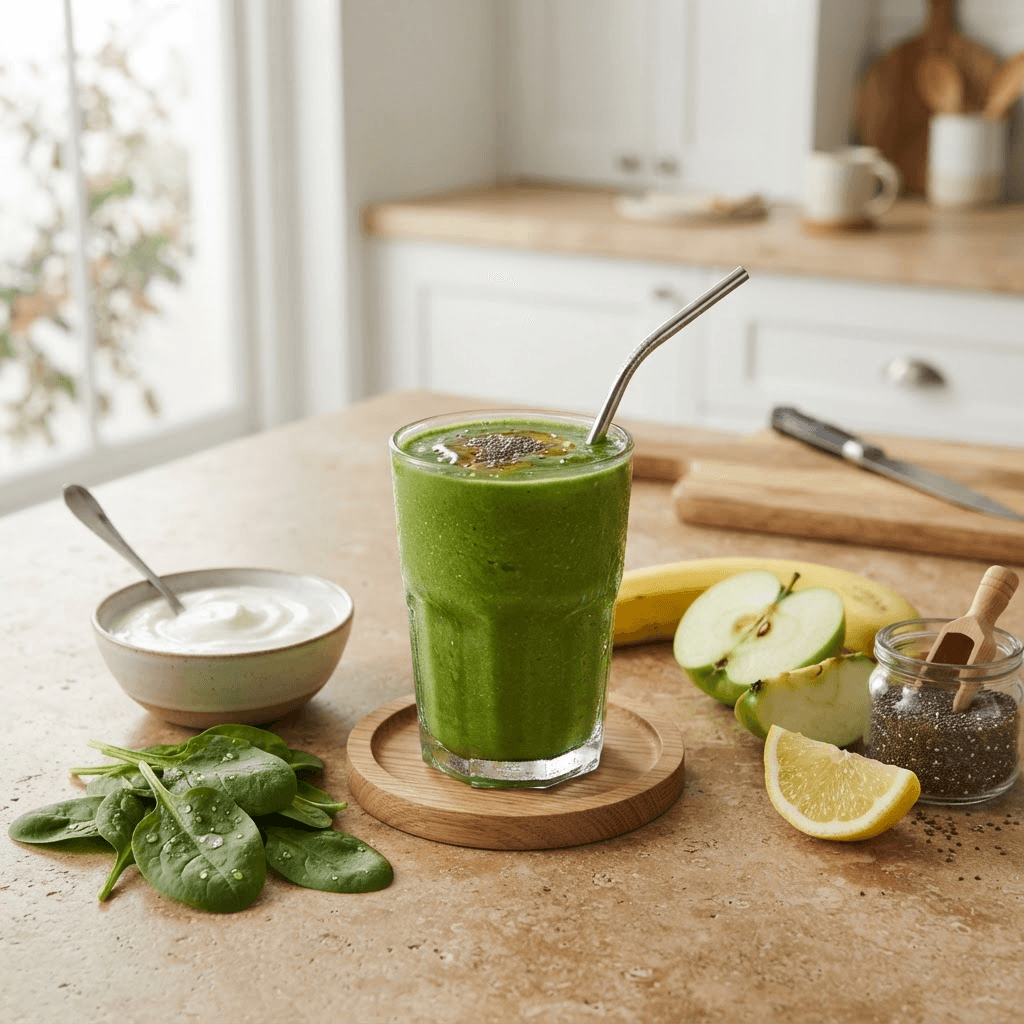
For one generous glass, start with a packed cup of leafy greens and about a cup of fruit. Add three-quarters to one cup of plain yogurt, kefir, dairy milk or unsweetened soy milk, then a tablespoon of chia, ground flax, oats or nut butter. Use water and ice to loosen the blend. The fruit is not something to fear; it simply should not have to carry breakfast by itself.
- Greens: baby spinach is soft and mild; kale tastes greener and needs its woody stems removed; romaine makes a crisp, lighter drink.
- Fruit: frozen banana and mango give body, while berries, kiwi and skin-on pear bring a sharper flavor and useful fiber.
- Protein: choose plain Greek yogurt, kefir, dairy milk or unsweetened soy milk. Many almond and oat drinks contain little protein, so check the carton.
- Fiber and fat: chia, ground flax, rolled oats, avocado and nut butter make the texture fuller and help the meal feel more substantial.
- Flavor: fresh ginger, cinnamon, mint, lime, lemon and unsweetened cocoa do more for a flat smoothie than another spoonful of sweetener.
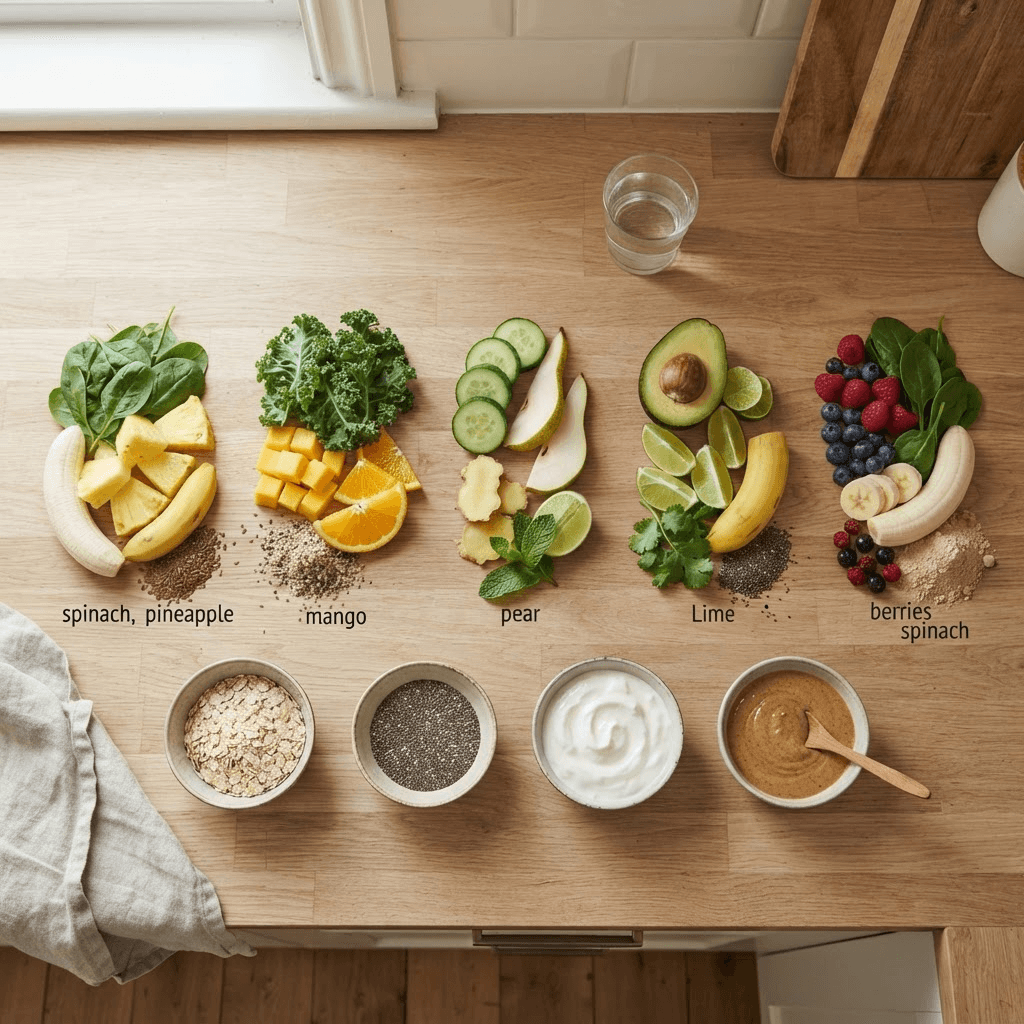
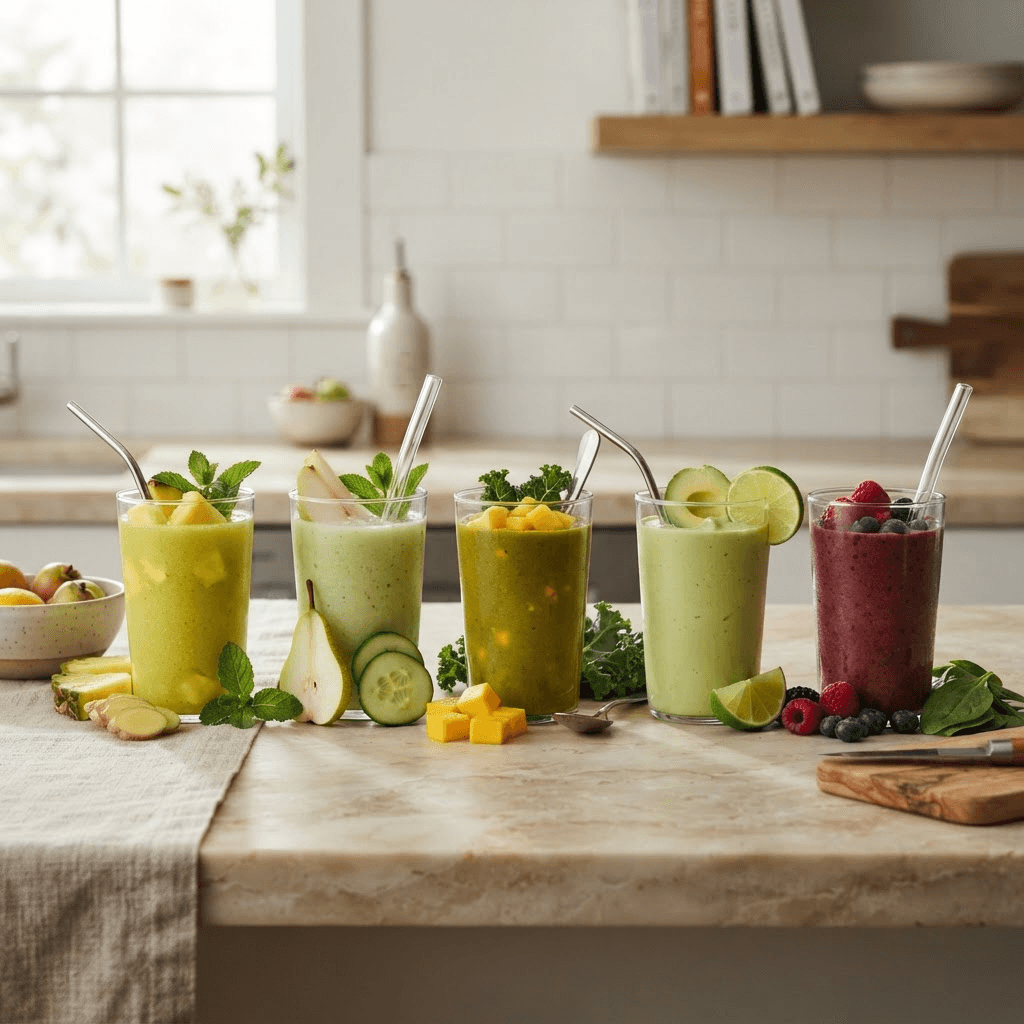
Five green smoothies that earn a repeat blend
1. Pineapple-ginger breakfast smoothie
Add 1 packed cup baby spinach, 1 cup frozen pineapple, ¾ cup plain Greek yogurt, ½ cup cold water, 1 tablespoon chia seeds and a peeled thumb-size piece of ginger. Blend until no spinach flecks remain. Pineapple and ginger cover the earthy edge of the greens, while the yogurt makes this thick enough to eat with a wide straw—or a spoon if you hold back a splash of water.
2. Pear, cucumber and mint smoothie
Blend 1 cup spinach, 1 ripe pear with its skin, ½ cucumber, ¾ cup unsweetened soy milk, 1 tablespoon ground flax and a small handful of mint. Keep the cucumber peel on unless it is thick or waxed. The result is fresh rather than creamy, with tiny pear-skin speckles. Pear can bother some sensitive stomachs; two peeled kiwis make a bright substitute.
3. Mango-kale energy smoothie
First blend 1 cup chopped, stemmed kale with 1 cup unsweetened soy milk for 20 seconds. Then add 1 cup frozen mango, 2 tablespoons rolled oats and a good squeeze of lime. That first noisy spin with only kale and liquid matters: it cuts down the stubborn leafy bits that otherwise collect around the straw. Add two or three ice cubes if the mango is soft rather than frozen.
4. Avocado-lime smoothie without banana
Blend 1 cup spinach, ½ small avocado, 1 kiwi, ¾ cup kefir, ¼ cup water, the juice of ½ lime and a handful of ice. Avocado gives the silky texture people often rely on banana for, but the drink stays tart and not especially sweet. Kefir contributes protein and live cultures; it is food, though, not a treatment for ongoing gut symptoms.
5. Berry-green steady-energy smoothie
Blend 1 cup spinach, 1 cup frozen mixed berries, 1 cup plain dairy or soy milk, 1 tablespoon peanut or almond butter and 1 tablespoon rolled oats. Scrape the nut butter onto the fruit rather than the bottom of the jug so it reaches the drink instead of coating the blades. Berries make this the least obviously green of the five and give it a pleasant, yogurt-shop tartness without sweetened yogurt.
| Smoothie | Protein | Fiber | Best fit |
|---|---|---|---|
| Pineapple-ginger | 18–22 g | 7–9 g | Substantial breakfast |
| Pear-cucumber | 9–12 g | 8–10 g | Light morning meal |
| Mango-kale | 10–13 g | 7–9 g | Pre-work or active day |
| Avocado-lime | 10–14 g | 7–9 g | Banana-free option |
| Berry-green | 12–16 g | 9–11 g | Less-sweet choice |
What “energy and digestion” really mean here
There is no special energy compound hiding in spinach. Your body gets usable energy from carbohydrate, fat and protein. A well-built smoothie is useful because of pace and balance: fruit and oats provide carbohydrate, while protein, fat and fiber generally help the meal satisfy for longer than juice alone. That may make morning hunger feel less abrupt, but it does not make a smoothie a cure for fatigue.
For digestion, fiber does the ordinary, important work. Whole fruit, greens, oats and seeds supply several kinds of fiber that support regular stools and feed gut microbes. Blending changes the texture; it does not strain away the fiber as juicing does. The liquid helps too. Increase the total gradually, because a sudden fiber pile-on can leave you more uncomfortable, not less.
How to get a smooth result from an ordinary blender
Pour in the liquid first so the blades have room to move. Add yogurt and other soft ingredients next, followed by greens, fresh fruit, frozen fruit and ice. Tuck oats, seeds and nut butter into the middle; left at the bottom, they can paste themselves beneath the blade, and left on top, they often decorate the lid. Start low, climb to high and let the blender run for 45 to 60 seconds.
If mature spinach or kale leaves confetti in the glass, blitz the greens with the liquid for 20 to 30 seconds before adding anything else. When the mixture forms a hollow cave above the blades and stops moving, it is too thick. Add water a tablespoon at a time. If you go too far, add two tablespoons of oats, a little avocado or a few frozen fruit pieces, then wait two minutes before deciding whether chia or oats have thickened it enough.
Make the portion fit the moment
Breakfast needs enough food to carry you to the next meal, so include an obvious protein source and do not make the entire glass from fruit and water. A snack can be smaller—half the fruit and yogurt may be plenty. Appetite, activity, body size and what else you are eating that day are more useful guides than a universal jar size.
- Before exercise: if you are eating within an hour, go easy on fat and fiber and use familiar fruit with milk or yogurt.
- After exercise: include both carbohydrate and a real protein source. The pineapple-ginger and berry-green versions do that without requiring a recovery powder.
- For breakfast: combine yogurt or soy milk with oats, chia or nut butter, then take a few minutes to drink it rather than treating it like water.
- Beside a meal: pour a smaller, produce-focused serving so it complements lunch instead of quietly becoming a second lunch.
A short shopping list for a week of smoothies
- Buy unsweetened frozen fruit. It is picked ripe, creates a colder drink and will not soften forgotten in the fruit bowl.
- Choose plain yogurt and unsweetened milk. If the milk is your main protein source, look for roughly 8 grams or more per serving on the label.
- Wash and freeze spinach in loose handfuls. It will wilt when thawed, which makes no difference once the blades start.
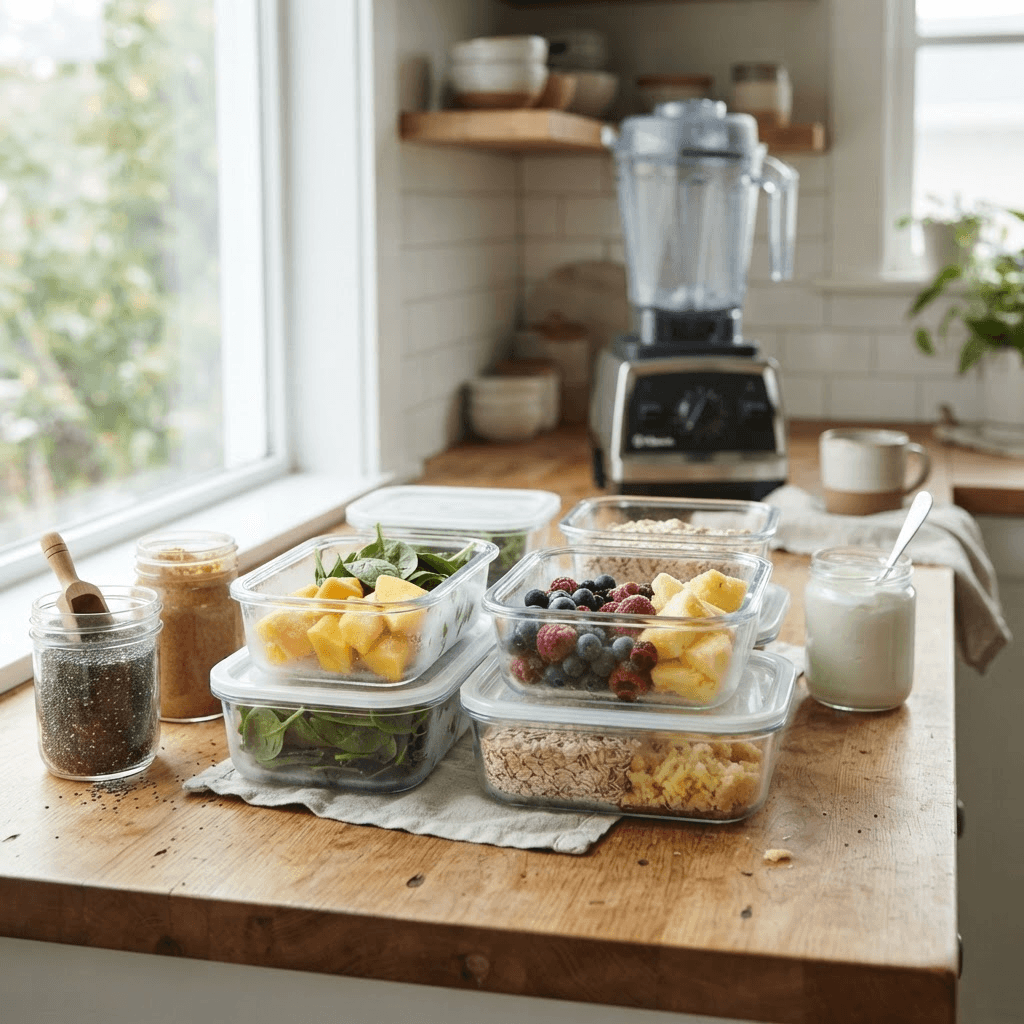
- Pack greens, fruit, oats and ginger together in freezer bags or containers. Add the liquid, yogurt, seeds and nut butter when you blend.
- Measure the dense extras at least the first few times. Seeds, avocado and nut butter are useful ingredients, but three casual scoops can change a light breakfast considerably.
Store it safely—and expect a little separation
The texture is best straight from the blender, but overnight storage is workable. Pour the smoothie into a clean, airtight container, fill it nearly to the top and refrigerate it promptly. If it contains dairy or a dairy alternative, use it within 24 hours. A watery layer and a darker green surface are normal; shake hard before drinking. Throw it away if it has sat at room temperature for more than two hours, smells fermented or has built pressure in the container.
For longer storage, freeze the finished drink in a freezer-safe container with space for expansion, then thaw it in the refrigerator overnight. It may need a quick reblend. Ingredient packs usually taste fresher: freeze washed greens, chopped fruit, oats and ginger flat, label them with the recipe and date, and use them within about three months for best quality.
Useful swaps, plus fixes for a disappointing glass
The formula is forgiving. Unsweetened soy yogurt can replace Greek yogurt and usually has more protein than coconut yogurt. Sunflower seed butter works when nuts do not. Use certified gluten-free oats when needed. For body without banana, try avocado, mango, ripe pear or soaked oats. If both dairy and soy are off the table, read alternative-milk labels and consider eating eggs, beans or another protein-rich food alongside the smoothie.
| Problem | Likely cause | Practical fix |
|---|---|---|
| Too bitter | Mature greens or kale stems | Use baby spinach; add lime, ripe pear or pineapple |
| Too sweet | Too much fruit or a sweetened base | Add cucumber, spinach, plain yogurt and lemon |
| Too thin | Excess liquid or thawed fruit | Add oats, avocado, chia or frozen fruit |
| Too thick | Frozen pieces cannot circulate | Add water or milk one tablespoon at a time |
| Too gritty | Fibrous greens or whole seeds | Blend greens with liquid first; use ground flax |
| Not filling | Not enough protein or substance | Add Greek yogurt, soy milk, oats or nut butter |
Three claims to leave on the blender box
Myth: a green smoothie detoxes your body
Your liver, kidneys, lungs and digestive tract already process waste. A smoothie can add fluid, fiber and micronutrients to the day, but it does not “flush toxins.” That phrase belongs to cleanse marketing, not a description of what the recipe does.
Myth: fruit sugar makes every smoothie unhealthy
Whole fruit comes with water, fiber and micronutrients. Ask what else is in the jug: mostly juice and sweetened yogurt, or fruit sharing space with greens, protein and seeds? The full recipe and the portion tell you more than the presence of a banana.
Myth: you need a powder to make it complete
Protein powder is convenient, not compulsory. Greek yogurt, kefir and soy milk provide protein, while oats, seeds and nut butter add body and nutrients. A scoop can suit some kitchens and budgets; it cannot rescue a recipe that is otherwise just sweet liquid.
Evidence behind the guidance
These public-health and clinical sources support the guidance on healthy eating, fiber and choosing whole fruit.
- Healthy diet fact sheetWorld Health Organization
- Dietary fiber: essential for a healthy dietMayo Clinic
- Whole fruits and fruit fiberUSDA MyPlate
Green smoothie questions, answered plainly
Is it healthy to drink a green smoothie every day?
It can be part of a varied diet. Change up the greens and fruit, include a protein source, and keep eating chewable whole foods at other meals. The smoothie should make breakfast easier, not become the only way vegetables appear in your day.
What is the easiest green to use in a first smoothie?
Baby spinach. It is mild, tender and disappears behind most fruit. Start with one packed cup. If you move on to kale, pull the leaves from the tough stems and pair them with mango, pineapple or citrus.
Does blending remove the fiber?
No meaningful amount is removed. The blades break the ingredients into smaller pieces, but the fiber remains in the jug. Juicing is different because it strains away much of the pulp.
Can a green smoothie help with constipation?
Whole fruit, greens, chia or flax and enough fluid may support regularity, particularly if your usual diet is low in fiber. Add fiber slowly. Constipation that persists, or comes with pain, bleeding or an unexplained change in bowel habits, needs medical assessment.
How do I make a green smoothie taste less bitter?
Use baby spinach, strip the stems from kale and add ripe fruit plus lemon or lime. Ginger or cinnamon can round out the flavor without making the drink sweeter. A tiny pinch of salt can also sharpen a dull fruit flavor.
Is a smoothie better than eating whole fruit?
Not automatically. Whole fruit takes longer to eat and may feel more satisfying. A smoothie is handy when mornings are rushed or appetite is low. Keep the whole fruit in the blender and use milk, yogurt or water rather than juice as the base.
Can I make a green smoothie the night before?
Yes. Refrigerate it promptly in a clean, tightly closed container and drink it within 24 hours. Separation and some darkening are normal, so give it a firm shake. For the best texture, assemble a freezer pack at night and blend it in the morning.
What can I use instead of banana?
Avocado makes a creamy, less-sweet drink. Mango, ripe pear, soaked oats and plain yogurt also add body. Begin with a small amount and pour in extra liquid gradually; each thickens the blend differently.
Why does a green smoothie make me feel bloated?
A quick jump in fiber, a very large serving, fast drinking or an ingredient you do not tolerate well can all play a part. Try baby spinach, reduce seeds from a tablespoon to a teaspoon and build up slowly. Discuss severe or persistent bloating or pain with a clinician.
Vitalis Nutrition Desk
The Vitalis Nutrition Desk turns established nutrition science into useful, food-first guidance for everyday kitchens.
Medical disclaimer: This article provides general food and nutrition education, not personalised medical nutrition therapy. Speak with a qualified clinician or registered dietitian if you have a medical condition, food allergy, take medication affected by diet, or need an individual eating plan.