Cottage Cheese Ice Cream: The High-Protein Recipe That Actually Scoops (No Ice, No Grit)
The viral high-protein dessert fails for one boring reason: texture. Here is the fix-it version — a diagnostic for icy, grainy or chalky batches, one blender ratio that scoops like gelato, and roughly 20g of protein per bowl.
Find your batch below
It only fails three ways — and each one has a fix
Why
Too little fat/sugar or a slow, deep freeze
Full-fat cheese, keep the sweetener, shallow pan
Why
Under-blended or a weak blender
A full 2 minutes in a high-speed blender
Why
Low-fat cheese plus protein powder
Skip the powder — the cheese is the protein
The whole timeline
Four steps, one afternoon
- Blend2 minHigh speed until glass-smooth
- Freeze3–4 hrShallow, pre-chilled metal pan
- Temper10 minRest on the counter to soften
- Scoop30 secWarm scoop, gliding not dragging
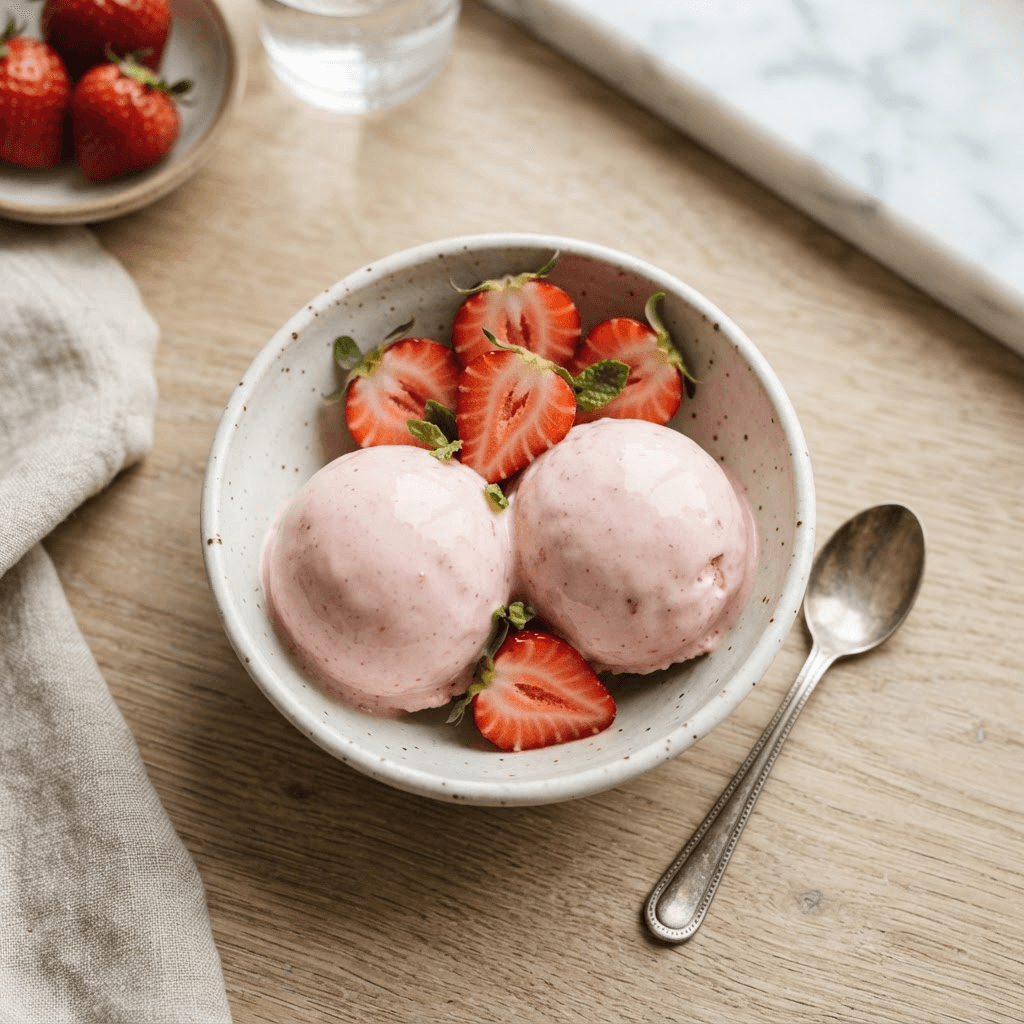
Nine out of ten disappointing cottage cheese ice creams fail for the same reason, and it is never the flavor. It is the texture. You blend a tub of cottage cheese with some honey, freeze it overnight, and the next day you are chipping at an icy, grainy puck with a bent spoon wondering why the internet lied to you. The good news: every one of those failures is fixable, and once you know which mistake you made, you never make it again.
So this is not a "dump and freeze" recipe. It is a diagnostic. We will name the three ways this dessert goes wrong, tell you exactly what caused each one, and give you a base ratio that scoops like real gelato — with about 20 grams of protein in a generous bowl and no protein powder in sight.
First, diagnose your last batch
If you have already tried this once and it flopped, start here. Match what went wrong to the cause, and the rest of this guide fixes it. If this is your first attempt, read it anyway — it tells you what to watch for before you commit a whole tub.
| What went wrong | The real cause | The fix |
|---|---|---|
| Icy and hard, chips instead of scoops | Too little fat and sugar, or a deep container that froze slowly | Use full-fat cottage cheese, keep the sweetener, freeze in a shallow pan |
| Grainy or gritty, you can feel the curds | Under-blended, or a weak blender that never broke the curds down | Blend a full 2 minutes in a high-speed blender until completely smooth |
| Chalky or "protein-y" aftertaste | Low-fat cottage cheese plus added protein powder | Skip the powder — the cottage cheese is already the protein |
Why each ingredient earns its place
There are only five things in the base, and each one is doing a specific job. Cut the wrong one and you land straight back in the failure table above.
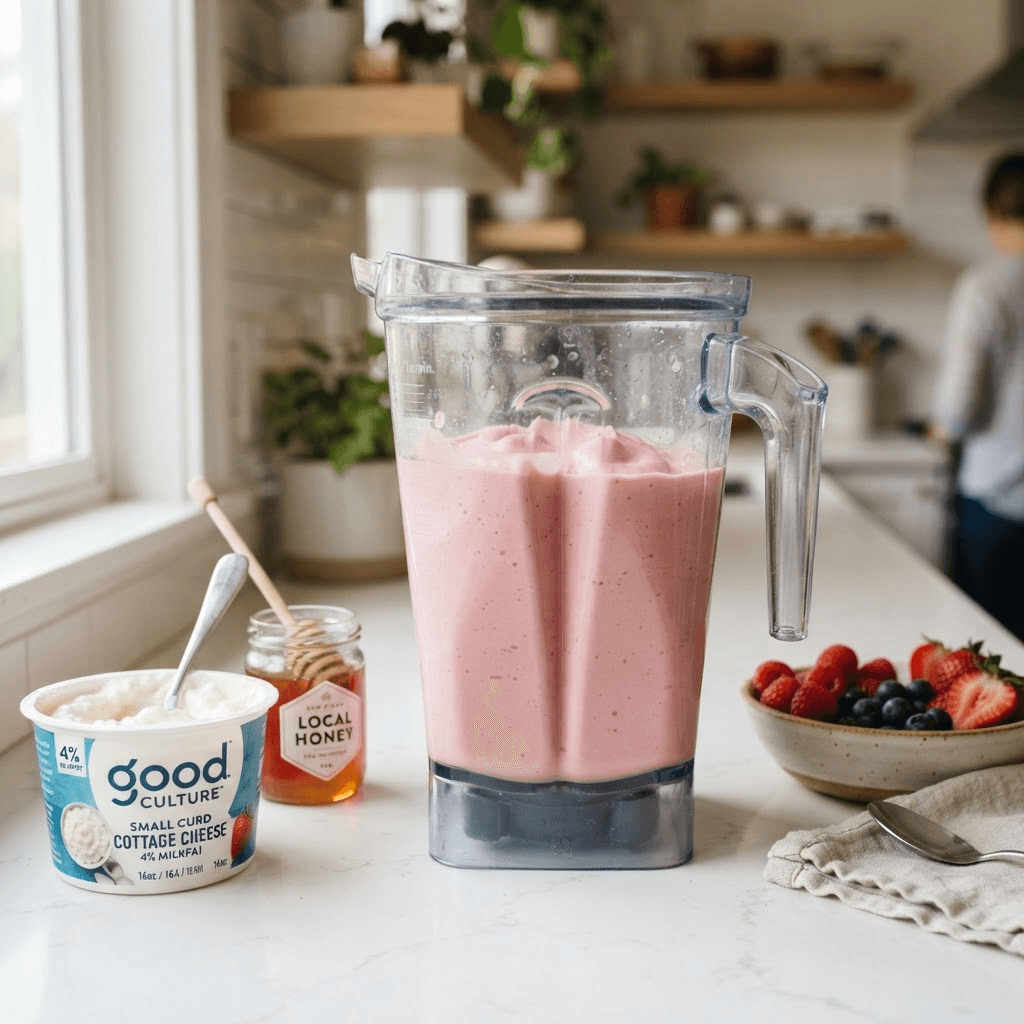
- Full-fat cottage cheese (2 cups) — the whole point, and the protein. The fat is not optional: it coats ice crystals and keeps the texture creamy instead of icy. A 4% tub beats a fat-free one every single time here.
- Honey or maple syrup (3 tbsp) — sweetness, yes, but sugar also lowers the freezing point, which is the difference between "scoopable" and "concrete". Do not slash it to zero.
- A splash of milk (1 tbsp) — just enough to loosen the blend so the machine can catch and whip it smooth.
- A pinch of salt — it sharpens sweetness and mutes any lingering tang from the cheese.
- Your flavor layer — cocoa, freeze-dried fruit, vanilla, coffee or nut butter. This is where it stops tasting like a health experiment and starts tasting like dessert.
The method, in the order that matters
The sequence is the recipe. Most people get the ingredients right and still fail because they under-blend or over-freeze. Follow the order and the timing.
- Add cottage cheese, sweetener, milk and salt to a high-speed blender or food processor.
- Blend on high for a full two minutes, stopping once to scrape down the sides. Do not trust "looks smooth" at 30 seconds — keep going.
- Add your flavor and pulse to combine. For berries, blend them in; for chocolate chips or crushed nuts, stir them in by hand so they stay whole.
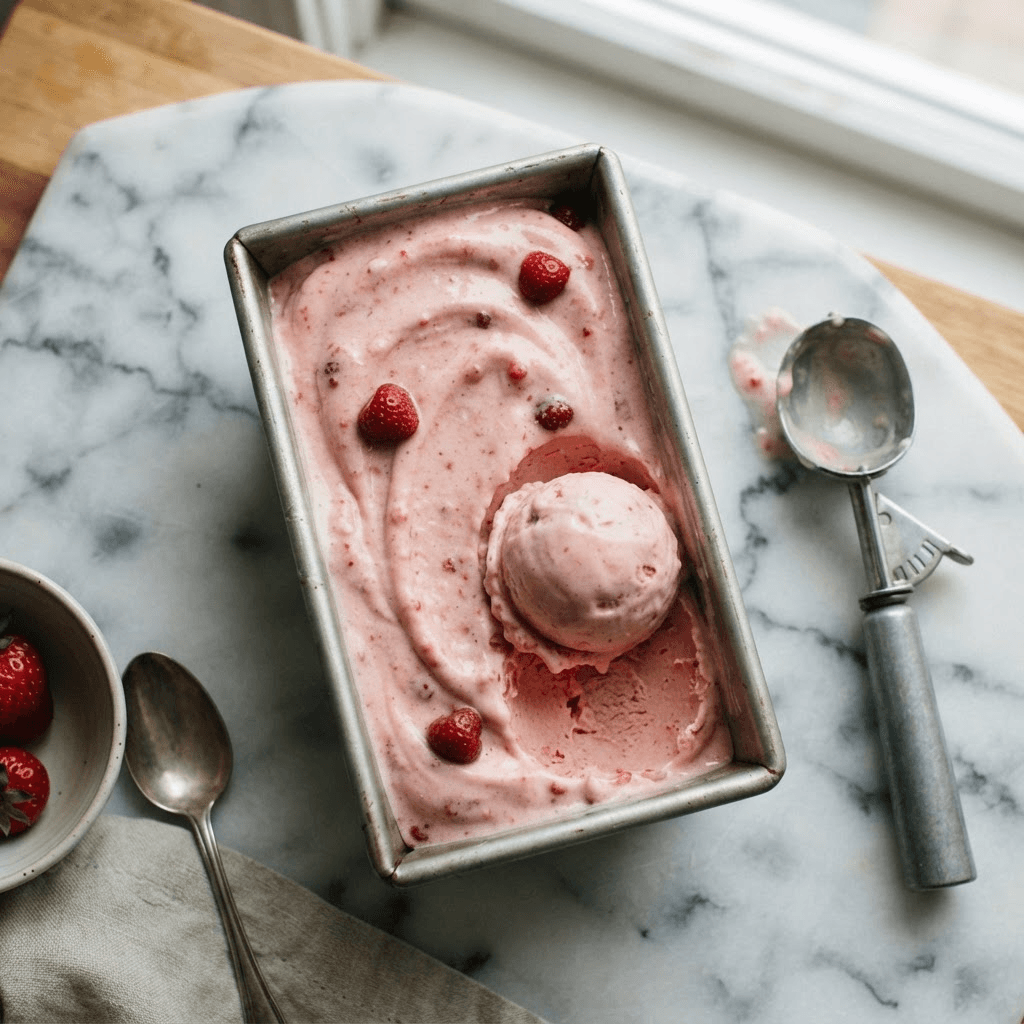
- Pour into a shallow metal loaf pan you have chilled in the freezer for 10 minutes. Smooth the top.
- Freeze 3 to 4 hours for soft-serve, or up to overnight for a firmer scoop.
- Before serving, rest the pan on the counter 5 to 10 minutes, then scoop.
The two-minute blend is not a suggestion. It is the entire difference between gelato and grit. Set a timer and walk away from the "that looks fine" instinct.
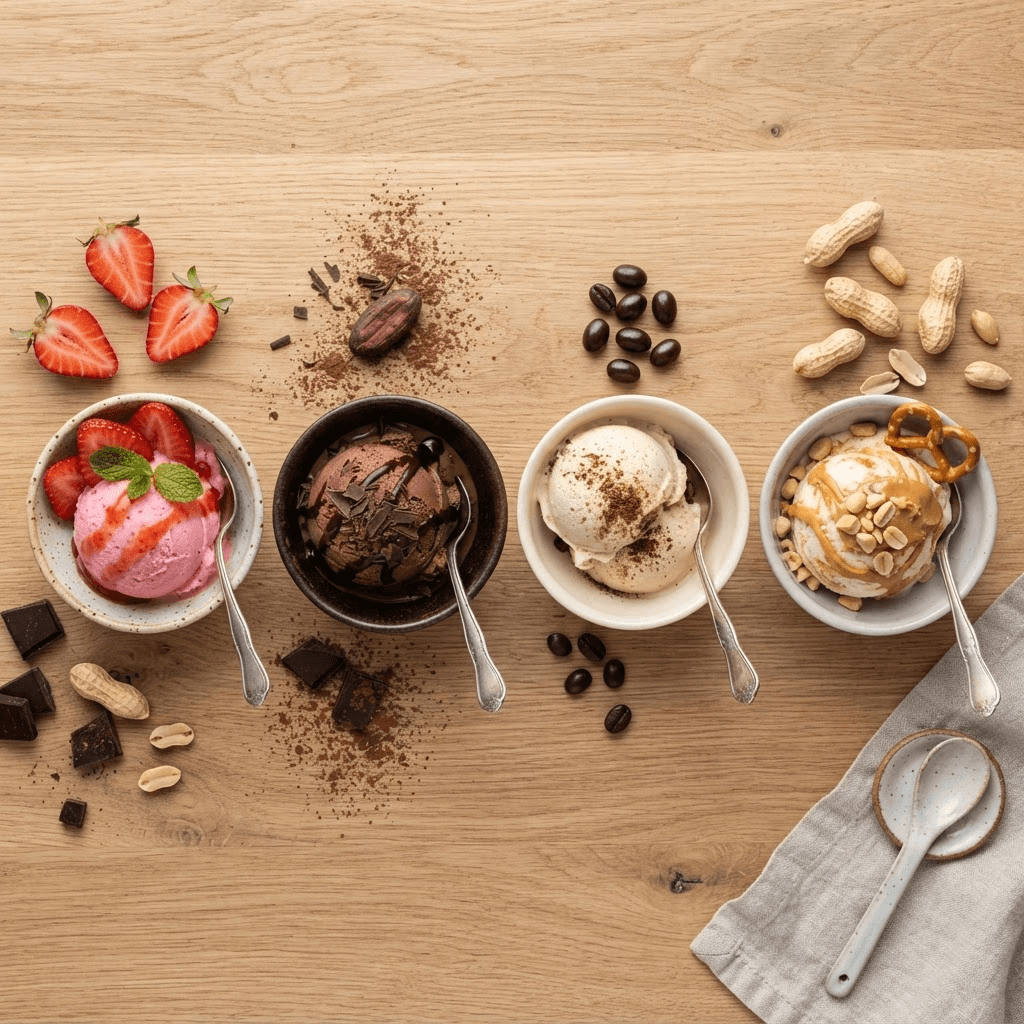
Four flavors that hide the cottage cheese entirely
Add these to the smooth base after blending. Amounts are per full batch (2 cups of cottage cheese), and each one leans on a strong flavor that overwrites the dairy tang completely.
| Flavor | Add to the base | How to add it |
|---|---|---|
| Strawberry | 1 cup freeze-dried or 1.5 cups fresh strawberries | Blend in — freeze-dried gives the most intense color and flavor |
| Chocolate | 3 tbsp cocoa powder + 1 extra tbsp sweetener | Blend in; cocoa is bitter, so the extra sweetener matters |
| Coffee | 1 tbsp instant espresso + 1 tsp vanilla | Blend in; dissolve the espresso in the milk first |
| Peanut butter | 3 tbsp natural peanut butter | Blend in for swirl-free, or ripple by hand for pockets |
The scooping problem nobody warns you about
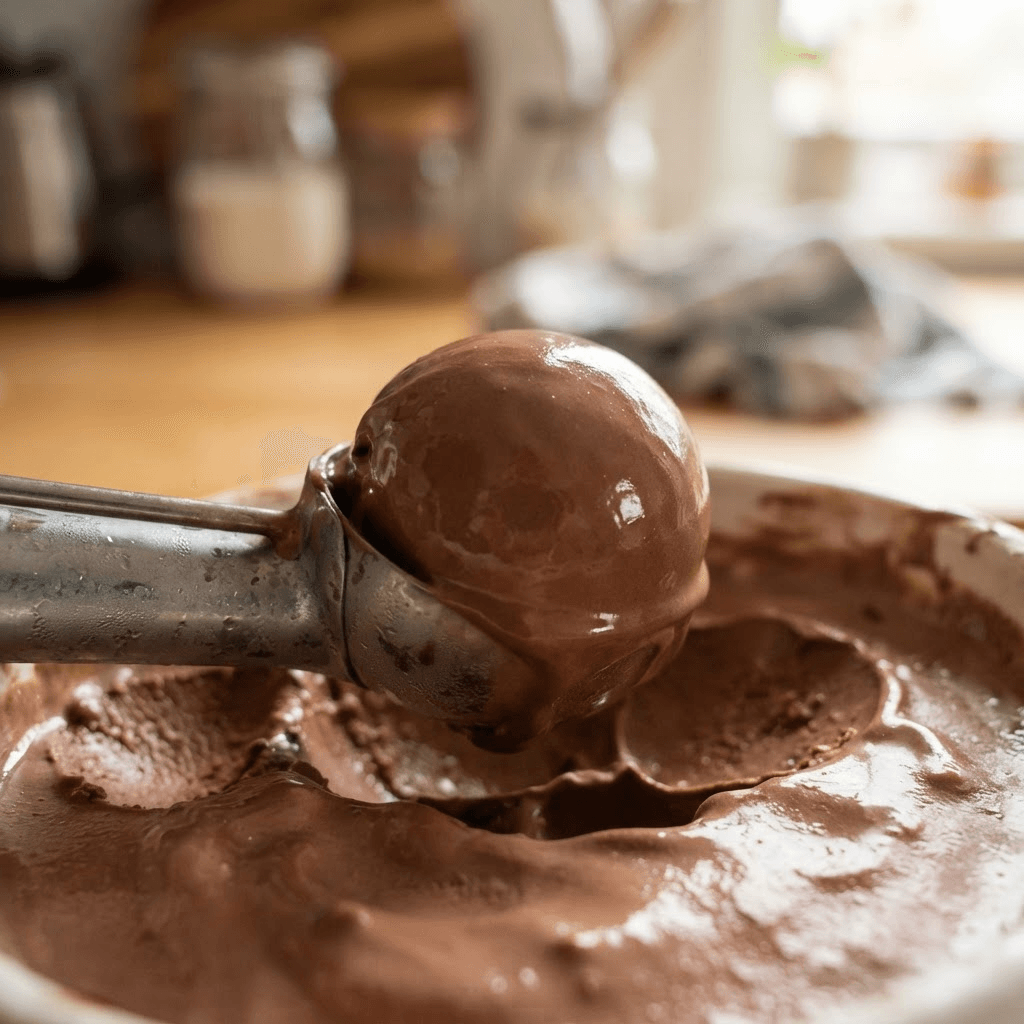
Even a perfect batch will feel like a brick straight from the freezer, because homemade ice cream has none of the emulsifiers that keep store-bought pints soft at freezer temperature. This is not a mistake in your recipe — it is physics, and the fix takes ten minutes and zero effort.
- Move the pan from freezer to counter 5 to 10 minutes before you want to eat. It softens to scoop-perfect on its own.
- Warm your scoop by dipping it in hot water and shaking off the drops. A warm scoop glides; a cold one drags.
- For the softest result, eat it after 3 to 4 hours (soft-serve stage) rather than the next day.
- If it did fully freeze solid, a 15-second stint in the microwave at low power brings the surface back without melting it.
Is it actually healthy, or just internet-healthy?
Honestly, it holds up. Cottage cheese is one of the highest-protein dairy foods you can buy, and it brings casein, a slow-digesting protein that keeps you full — which is part of why a bowl of this satisfies in a way a scoop of regular ice cream does not. A generous serving lands somewhere around 15 to 20 grams of protein depending on your brand and portion, without any powder.
It is still a dessert, not a health food, and that is fine. There is real sugar in it because sugar is doing a texture job, and full-fat cottage cheese brings saturated fat. The honest framing: this is a genuinely better-for-you swap for a nightly pint, not a food to eat by the tub. If you are building protein into the rest of your day, it pairs naturally with our high-protein snack ideas and the batch-cooking approach in our high-protein meal-prep system.
Sources for the nutrition and food-safety context
These public sources support the guidance on dairy protein, added sugars and safe handling of dairy-based frozen desserts.
- Dairy, protein and the role of casein in the dietHarvard T.H. Chan School of Public Health
- Added sugars and daily limitsAmerican Heart Association
- Refrigerator and freezer storage of dairy foodsFoodSafety.gov
Tape this to the freezer
The pre-blend checklist
- Icy, grainy or chalky are three different problems with three different fixes — diagnose before you re-blend.
- A high-speed blender and a full two minutes of blending is what turns curds into gelato-smooth base.
- Fat and sugar are not the enemy here — they are the two ingredients that stop it freezing rock hard.
- Freeze in a shallow, pre-chilled metal pan, not a deep tub, so it sets fast and evenly.
- Let it sit out 5 to 10 minutes before scooping; straight from the freezer it will feel like a brick.
After the first batch
The questions people ask after their first batch
Why is my cottage cheese ice cream icy?
Almost always one of two things: you used low-fat or fat-free cottage cheese, or you froze it in a deep container so it set slowly. Fat and sugar both interfere with ice-crystal formation, so full-fat cottage cheese and the full amount of sweetener are what keep it creamy. Freezing in a shallow metal pan speeds up the set and gives a smoother result.
Do I need a high-speed blender or ice cream maker?
You need something that can fully break down the curds — a high-speed blender or a food processor both work. An ice cream maker is not required. A weak personal blender is the usual reason people get a grainy texture, because it cannot whip the cottage cheese completely smooth in the two minutes the recipe needs.
Can I make it without any sweetener to cut sugar?
You can, but expect a harder, icier result, because sugar lowers the freezing point and keeps it scoopable. If you want less sugar, reduce it rather than removing it, or use a small amount of a sugar alcohol like allulose, which mimics sugar’s anti-freezing effect better than most substitutes.
How long does it keep in the freezer?
It is best within the first day or two, when the texture is closest to soft-serve. It stays safe to eat for a couple of weeks stored airtight, but the longer it sits the firmer and more ice-prone it gets, so plan to eat homemade batches sooner rather than treating it like a store-bought pint.
Can I taste the cottage cheese?
If it is fully blended and you use a strong flavor, no. Under-blending leaves a savory tang, and so does a weak flavor addition. Cocoa, freeze-dried fruit, coffee and peanut butter all overwrite the dairy taste completely; plain vanilla is the one version where a faint tang can still come through.
Is this good for weight loss?
It can fit a weight-loss diet as a high-protein swap for regular ice cream, since the protein keeps you fuller for fewer calories than an equivalent scoop of standard ice cream. It is still an energy-containing dessert, though, so portion still matters. Treat it as a smarter version of a treat you already eat, not a free food.