Dense Bean Salad: The Viral High-Protein, High-Fiber Formula You Can Build 100 Ways
Active
15 minutes
Protein
about 15 g per serving
Fibre
about 12 g per serving
Per serving
roughly $1.40 per serving
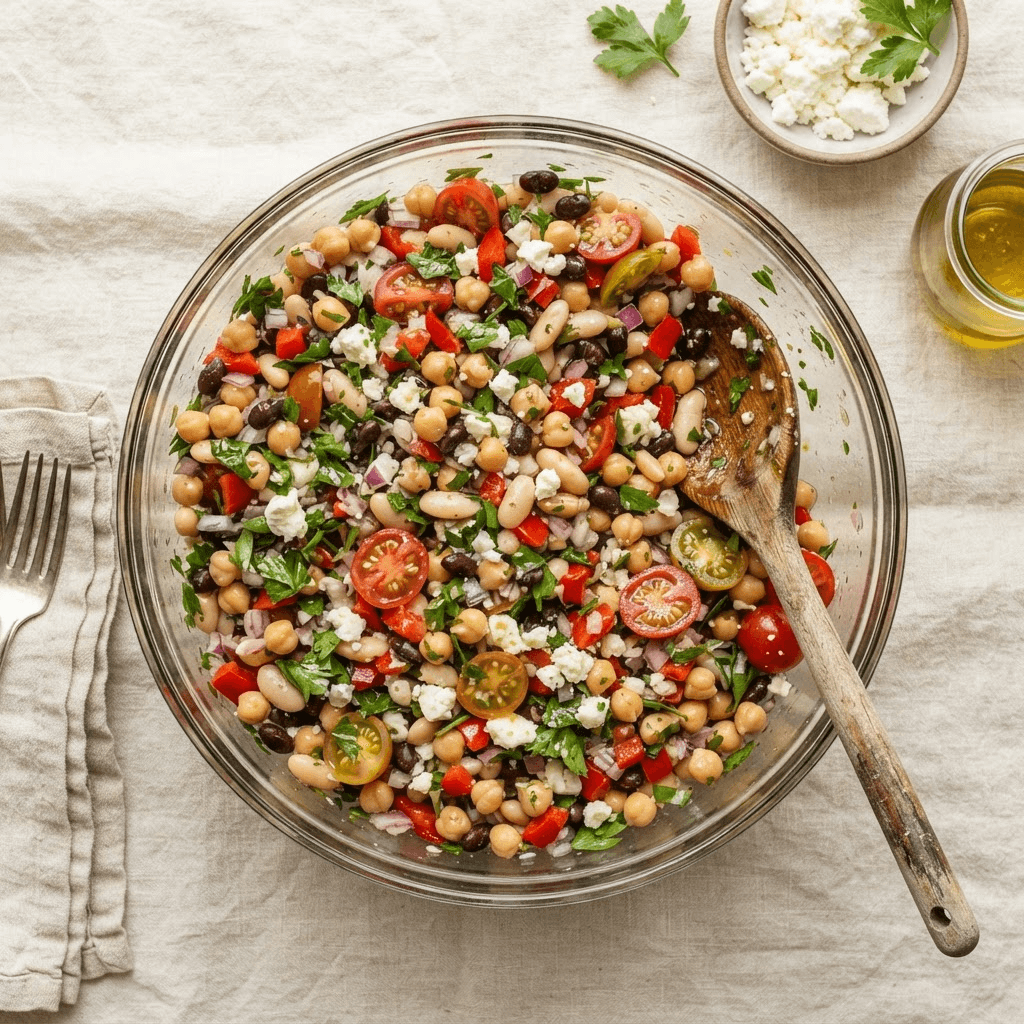
Somewhere between the sad desk lunch and the $14 grain bowl, the internet rediscovered a can of beans. The "dense bean salad" — DBS, if you spend time on the food side of TikTok — is the rare viral recipe that deserves the attention, because it is not really a recipe at all. It is a formula you can rebuild a hundred ways from whatever is in the fridge, and it happens to be cheap, plant-forward and packed with protein and fibre.
This guide treats it that way. Instead of one rigid ingredient list, you get the six-part method underneath every version, a swap matrix for building your own bowl, five ready-made flavour routes and — the part most write-ups skip — an honest timeline of how the salad changes as it sits. If you already keep a two-hour Sunday meal-prep system going, this slots in as the no-cook lunch that never needs reheating.
The formula behind every dense bean salad
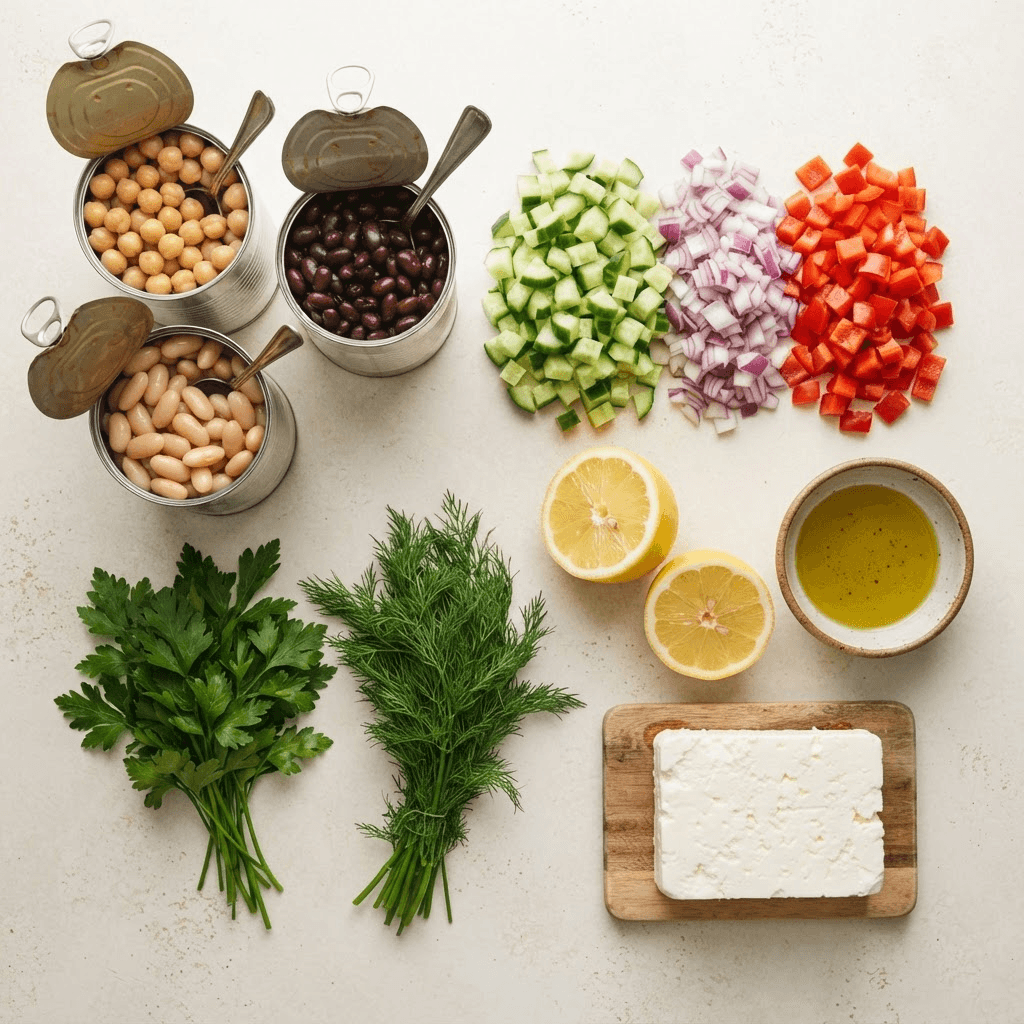
Learn this once and you never need another bean salad recipe. Every good version is the same six roles filled with different ingredients. Get the roles right and the specifics barely matter — the salad works whether you reach for chickpeas or black beans, dill or cilantro, lemon or lime.
The dense bean salad formula
- 1
The beans
3 cans (about 4½ cups)
The bulk, the protein and the fibre. Mix at least two kinds so every forkful has variety in size and bite.
ChickpeasBlack beansCannellini / white beansKidney beansButter beansEdamame - 2
The crunch
2 cups, finely diced
Small, even dice keeps the salad scoopable and stops any single vegetable from taking over. Cut everything roughly bean-sized.
CucumberRed bell pepperCeleryCarrotRadishFennel - 3
The bite
½ cup, minced fine
A sharp allium wakes the whole bowl up. Soak raw onion in cold water for 10 minutes if you want it milder.
Red onionShallotGreen onionChivesQuick-pickled onion - 4
The herbs
1 packed cup, chopped
Herbs are the difference between "beans in a bowl" and something you crave. Be generous — this is not a garnish.
Flat-leaf parsleyDillCilantroMintBasil - 5
The acid + fat
3 tbsp acid, 4 tbsp oil
This is the dressing, and it does the marinating. Acid brightens; oil carries flavour into the beans as they sit.
Lemon juice + olive oilRed wine vinegar + olive oilLime + avocado oilSherry vinegar + olive oil - 6
The extra
to taste
One optional layer that decides the personality: salty, creamy or spicy. Pick one, not all three.
Crumbled fetaDiced avocado (add at serving)Sun-dried tomatoesOlivesA pinch of chilli flakes
How to build it, step by step
There is no cooking here, so the whole method is really about texture and seasoning. Five moves take it from a bowl of separate ingredients to something cohesive enough to eat straight from the container for four days.
Five moves, no stove
- 1
Rinse the beans hard
Drain all three cans and rinse under cold water until the foam and cloudy liquid are completely gone. This removes the tinny canned taste and a good deal of the sodium. Shake the colander dry — wet beans dilute the dressing.
- 2
Dice everything small and even
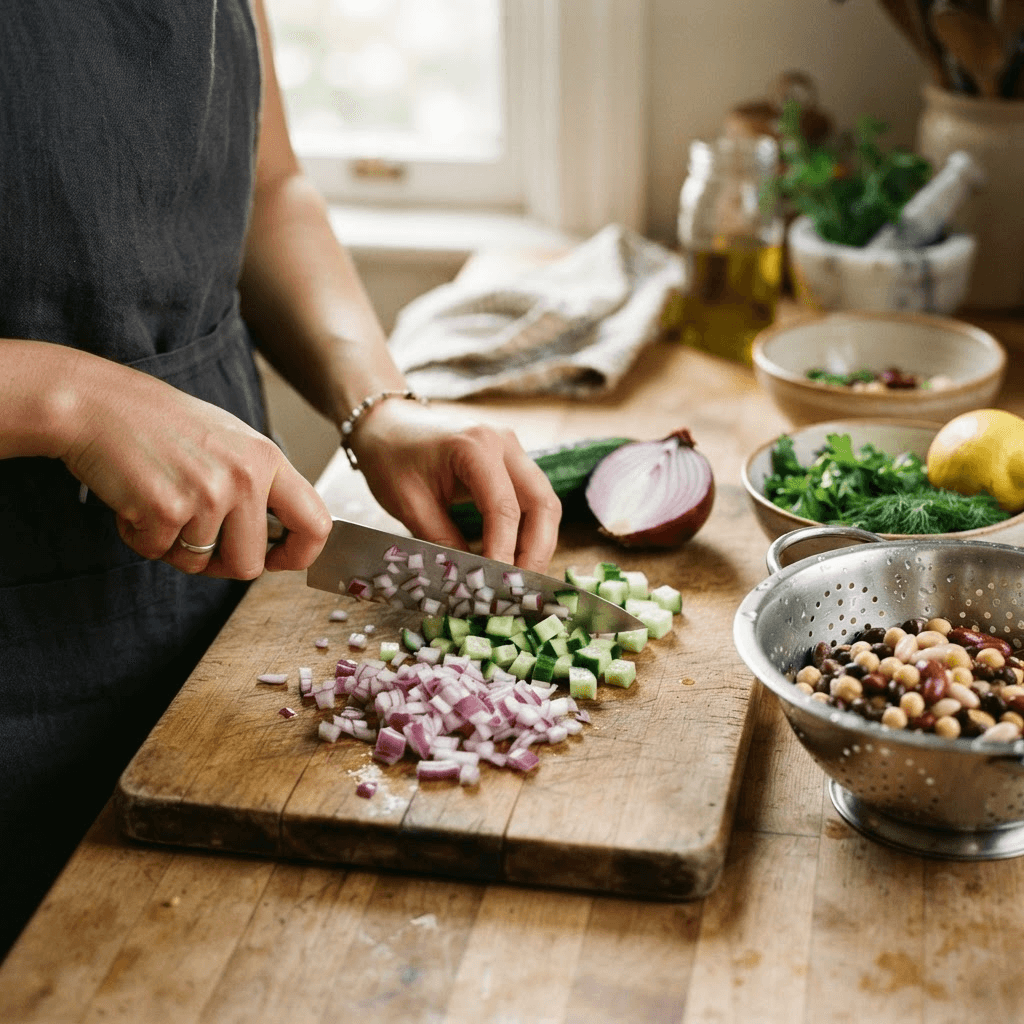
Cut the crunchy vegetables and the onion to roughly the size of a chickpea. Even dice is the whole texture secret: it makes the salad scoopable and stops one vegetable from dominating a bite.
- 3
Whisk the dressing separately
In a small jar or bowl, combine your acid, oil, salt, pepper and any dried spices. Whisk or shake until it looks cloudy and emulsified. Taste it — it should be a touch too tangy on its own, because the beans will mellow it.
- 4
Combine and season boldly
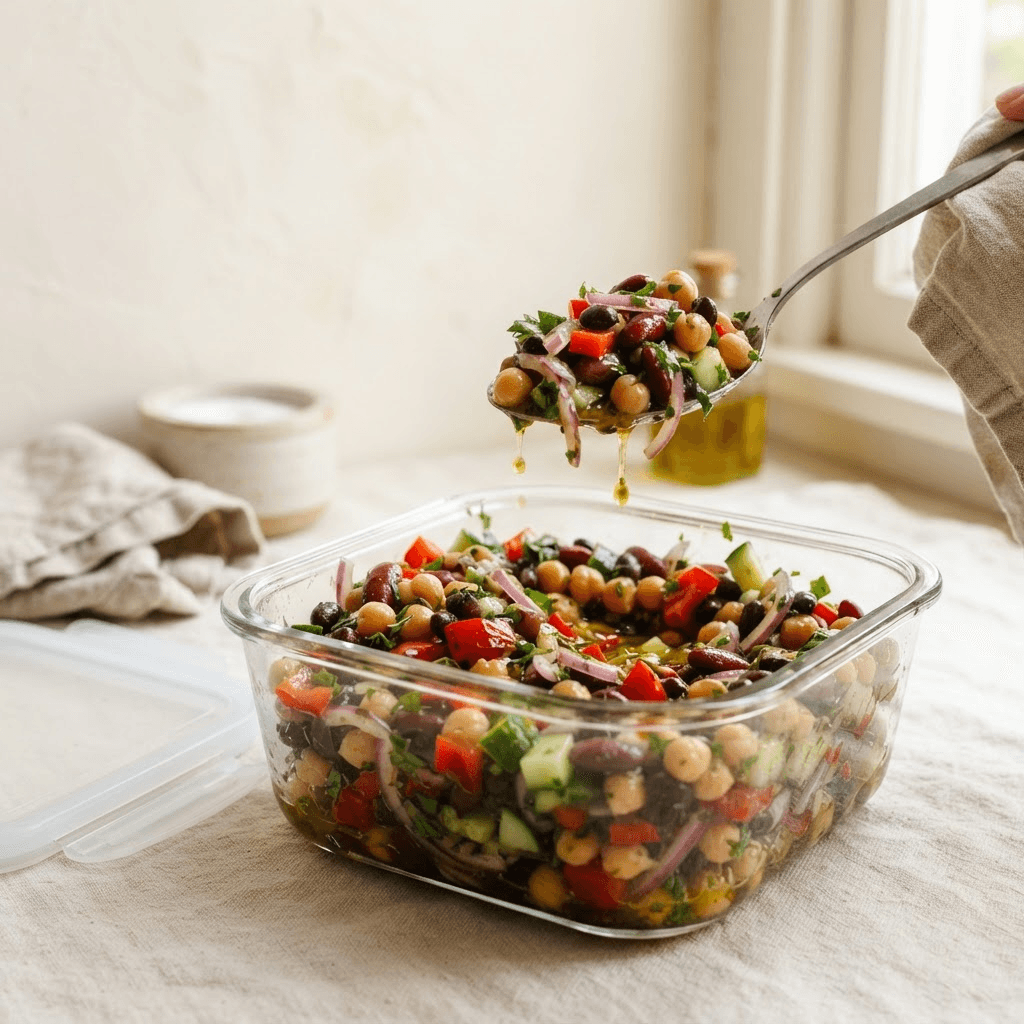
Add beans, vegetables, onion and herbs to a large bowl, pour over the dressing and fold gently. Beans need more salt than you expect. Add a good pinch, taste, and add more until it stops tasting flat.
- 5
Rest before you serve
Cover and refrigerate for at least 30 minutes, ideally overnight. Add anything soft — avocado, extra fresh herbs — only just before eating so it stays vivid.
Five flavor routes, one method
Mediterranean
Bright, herby, feta-forward
- Build with
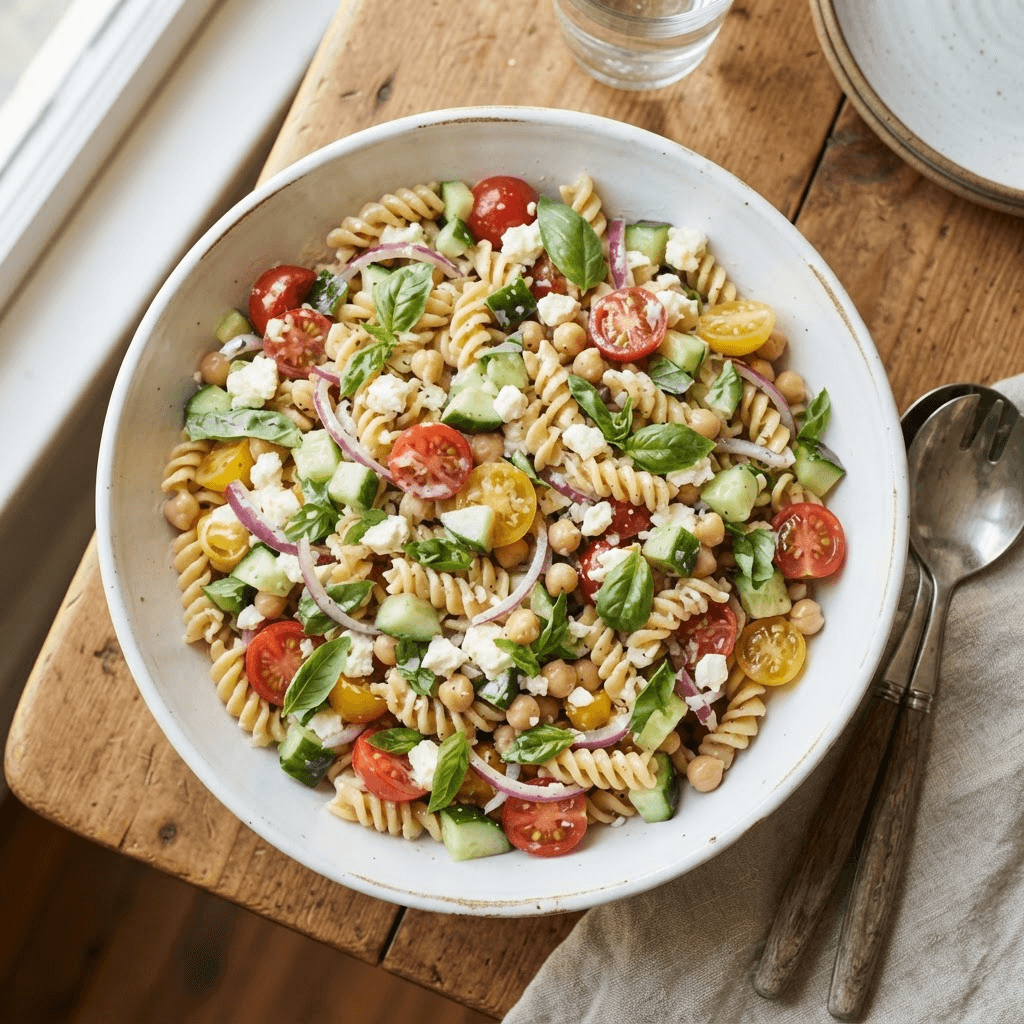
- Chickpeas + white beans, cucumber, cherry tomato, red onion, parsley, feta, olives
- Dressing
- Lemon juice, olive oil, dried oregano, garlic
Southwest
Smoky and a little spicy
- Build with
- Black beans + kidney beans, red pepper, corn, red onion, cilantro, avocado
- Dressing
- Lime juice, olive oil, cumin, smoked paprika
Tuscan
Mellow and savoury
- Build with
- Cannellini + butter beans, celery, sun-dried tomato, basil, shaved parmesan
- Dressing
- Red wine vinegar, olive oil, Dijon, cracked pepper
Crunchy Asian
Fresh, nutty, punchy
- Build with
- Edamame + chickpeas, carrot, cucumber, green onion, cilantro, sesame seeds
- Dressing
- Rice vinegar, sesame oil, soy sauce, grated ginger
Greek-diner
Cool and creamy
- Build with
- Chickpeas + white beans, cucumber, tomato, red onion, dill, feta
- Dressing
- Lemon, olive oil, a spoon of Greek yogurt, garlic
If a blank formula feels like too much freedom, start here. Each route keeps the same build steps and only swaps the fillings and the dressing. Mediterranean is the classic entry point; the Southwest and Crunchy Asian versions are the ones that convert people who think they dislike bean salad.
Why it tastes better on day two
This is the trait that makes dense bean salad genuinely great meal prep, and it is worth understanding rather than just trusting. Beans are starchy and porous, so they behave like little sponges. Mix them with an acidic, oily dressing and they slowly draw it inward — the raw bite of the onion softens, the flavours merge, and a bowl that was merely fine at the start becomes properly delicious a day later.
How it changes in the fridge
- 1
Minute 0
Just mixed
Fresh and a little separate — the beans still taste like beans and the dressing sits on top. Edible, but not yet the point.
- 2
30 minutes
First rest
The onion softens, the acid starts sinking in and the flavours begin to introduce themselves. This is the minimum wait.
- 3
Day 1
Hitting its stride
The beans have drunk the dressing, the raw edge is gone and everything tastes like one dish instead of many. This is the sweet spot.
- 4
Days 2–4
Deep and mellow
Rich, savoury and cohesive. Fresh herbs fade, so stir in a fresh handful and a squeeze of lemon before serving to bring back the brightness.
| If you want to… | Do this | What changes |
|---|---|---|
| No fresh herbs on hand | Use 2 tsp dried oregano or Italian herbs | Less bright, still good; add a little extra lemon to compensate |
| Want it higher in protein | Add edamame, a can of tuna, or diced grilled chicken | Pushes each serving toward 25–30 g protein |
| Making it for a crowd / potluck | Double everything and skip the feta and avocado in the base | Stays safe unrefrigerated longer and pleases more diets |
| Low-sodium diet | Use no-salt-added beans and rinse well; season with lemon and herbs | Big flavour with a fraction of the sodium |
| Cheaper still | Cook a bag of dried beans instead of buying cans | Roughly a third of the cost per serving with better texture |
Make it yours: the swap matrix
The formula bends easily to what you have and what you need. Below are the swaps readers ask about most — for higher protein, lower sodium, a tighter budget or a potluck crowd. None of them change the method; they just change the fillings.
Estimated per meal-size serving of the Mediterranean route with feta, from typical label values. Figures vary by brand, route and portion size.
What makes it so filling
The staying power is not a coincidence. A meal-size serving pairs roughly 15 grams of plant protein with about 12 grams of fibre, and that combination is what slows digestion and keeps you full for hours instead of ninety minutes. The figures below are a calculation from typical label values for the Mediterranean route with feta, not a lab result — brands of beans, oil and cheese shift them, so read your own labels if you track closely.
The fibre is the headline. One bowl delivers close to half of many adults’ daily target, which is why beans and legumes sit near the top of almost every evidence-based eating pattern. For more on hitting that target without gut discomfort, our high-fibre foods guide has a gradual plan, and the wider Healthy Recipes collection has more prep-ahead ideas to rotate through the week.
Storage, safety and the four-day rule
Sealed airtight, a dense bean salad keeps for up to four days in the refrigerator — one of the few salads that actively rewards being made ahead. FoodSafety.gov advises holding the fridge at 40°F (4°C) or below and not leaving prepared food at room temperature for more than two hours, so a packed lunch wants an insulated bag with an ice pack on a long commute.
Freezing is the one thing to skip: the vegetables turn watery and limp on thawing, and you lose the crunch that makes the dish. If a batch tastes flat by day three, it usually just needs a lift — a pinch of salt, a squeeze of lemon and a fresh scatter of herbs bring it right back.
Nutrition and food-safety references
Sources used for nutrition and storage context
These references support the general nutrition and food-safety context. They do not certify the exact nutrition of a home-prepared batch.
- FoodData Central nutrient database (beans and legumes)U.S. Department of Agriculture
- Cold food storage chartFoodSafety.gov
- Fibre, legumes and health in the dietHarvard T.H. Chan School of Public Health — The Nutrition Source
Why did dense bean salad go viral?
Most viral recipes burn bright and vanish. Dense bean salad stuck because it solved several problems at once and photographed beautifully doing it. It is cheap in a year when groceries are not, it is genuinely filling without meat, and it lands squarely inside the high-protein, gut-health and budget-cooking conversations all happening on the same feeds. A jewel-toned bowl of beans, herbs and diced vegetables is also unusually camera-friendly, so every remix looked good enough to try.
The bigger reason it kept spreading is that it is remixable by design. There is no single "correct" version to get wrong, so creators could each claim their own — a Southwest one, a Greek one, a spicy one — while still pointing at the same core idea. That turned a recipe into a format, and formats travel much further than any one bowl ever could.
Is dense bean salad healthy?
For most people, yes — and it holds up better than a lot of viral food does. Beans and legumes sit near the top of nearly every evidence-based eating pattern, from the Mediterranean diet to standard dietary guidelines, because they pair plant protein with fibre, slow-digesting carbohydrate and a range of micronutrients. One meal-size bowl delivers roughly 15 g of protein and 12 g of fibre, which is the combination that keeps you full for hours rather than reaching for a mid-afternoon snack.
The caveats are small and manageable. Canned beans can be high in sodium, so rinse them hard or buy no-salt-added; the dressing is where most of the calories and fat live, so pour rather than drown; and if you rarely eat legumes, a sudden large serving can cause bloating — scale up gradually and drink water. None of this is a reason to skip it, just a reason to build it thoughtfully.
The best beans for a high-protein dense bean salad
The single best move for both texture and protein is to mix at least two or three kinds of bean rather than relying on one. Different beans bring different sizes, colours and bite, so every forkful stays interesting, and layering varieties nudges the protein and fibre up without any meat. Canned is completely fine — just rinse well — but dried beans, cooked yourself, give the firmest texture and the lowest cost.
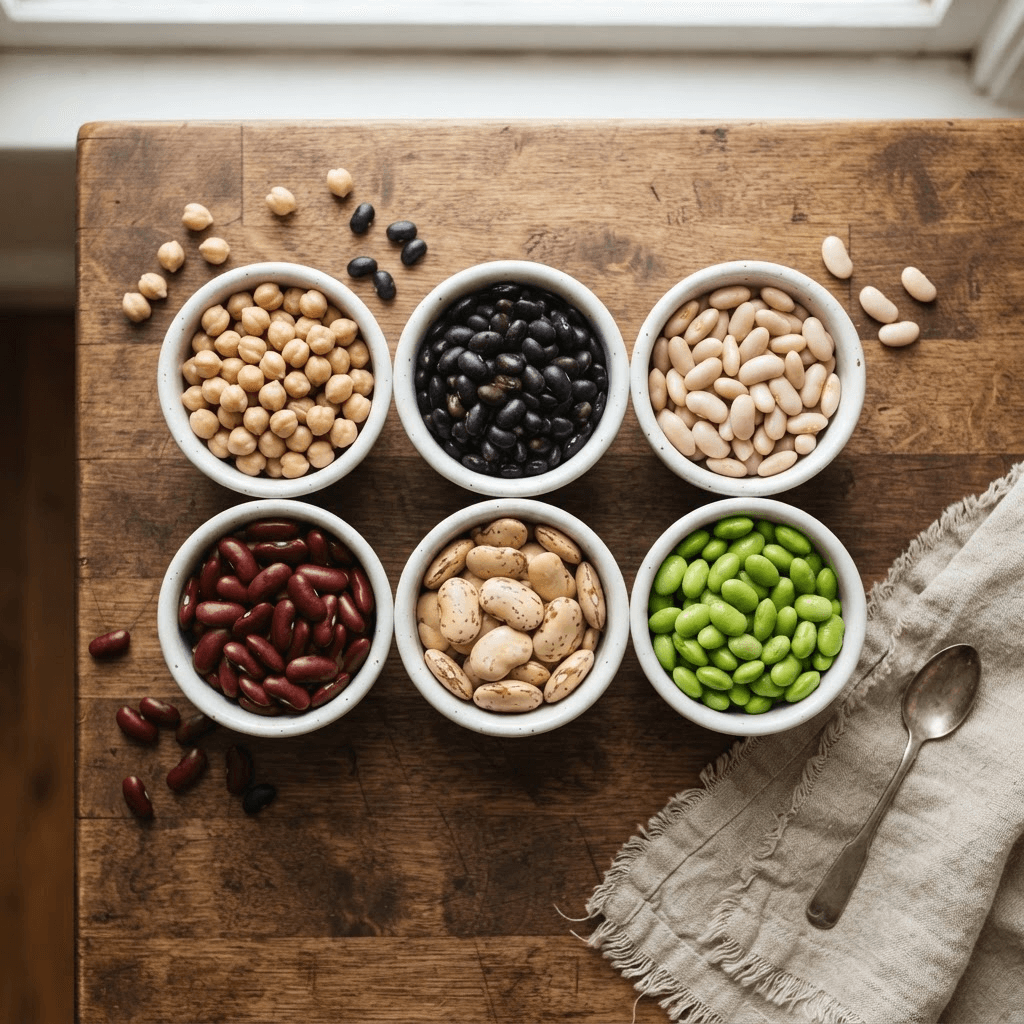
- Chickpeas — the most popular base: firm, nutty and hold their shape for days. About 15 g protein per cup.
- Cannellini / white beans — creamy and mild, they soak up dressing beautifully and balance firmer beans.
- Black beans — colour, a soft-but-intact bite and a slightly earthy flavour; a Southwest staple.
- Kidney beans — large, meaty and deep red, they add heft and visual contrast to the bowl.
- Edamame — the protein booster: bright green, snappy and around 18 g protein per cup.
- Butter beans — big, buttery and plush, best as an accent rather than the whole base.
A reliable formula is two shape-holding beans (say chickpeas and kidney beans) plus one creamy bean (cannellini) for contrast — then a scoop of edamame whenever you want to push a serving toward 20 g of protein or more.
Reader questions
Dense bean salad questions, sorted before you open a can
What exactly is a dense bean salad?
It is a no-cook salad built mostly from beans rather than leafy greens, mixed with finely diced vegetables, herbs and a bright dressing. "Dense" refers to how substantial and nutrient-packed it is — a scoopable, protein- and fibre-rich salad that holds up for days instead of wilting. It went viral as a cheap, adaptable meal-prep lunch.
What are the best beans to use?
Use at least two kinds for variety in size and texture. Chickpeas and cannellini (white) beans hold their shape well and are the most popular base; black beans and kidney beans add colour and a firmer bite; edamame or butter beans work too. Canned is perfectly good — just rinse them hard to remove the tinny liquid and excess sodium.
How long does dense bean salad last in the fridge?
Kept airtight at 40°F (4°C) or below, it stays good for up to four days, and it usually tastes best on day one or two once the beans have absorbed the dressing. Add soft ingredients like avocado and delicate herbs only at serving. Do not freeze it — the vegetables turn watery and lose their crunch.
Is dense bean salad actually high in protein?
Yes, for a plant-based dish. Three cans of mixed beans give roughly 15 grams of protein per meal-size serving before any add-ins. To push it toward 25–30 grams, fold in edamame, a can of tuna, or diced grilled chicken. The fibre content — around 12 grams — is what makes it unusually filling.
Why does my bean salad taste bland?
Almost always under-seasoning. Beans are starchy and need more salt and acid than most vegetables, so a batch that tastes flat usually just needs a good pinch of salt, an extra squeeze of lemon or vinegar, and a fresh handful of herbs. Letting it rest for at least 30 minutes before serving also lets the flavours come together.
Can I make it ahead for the week?
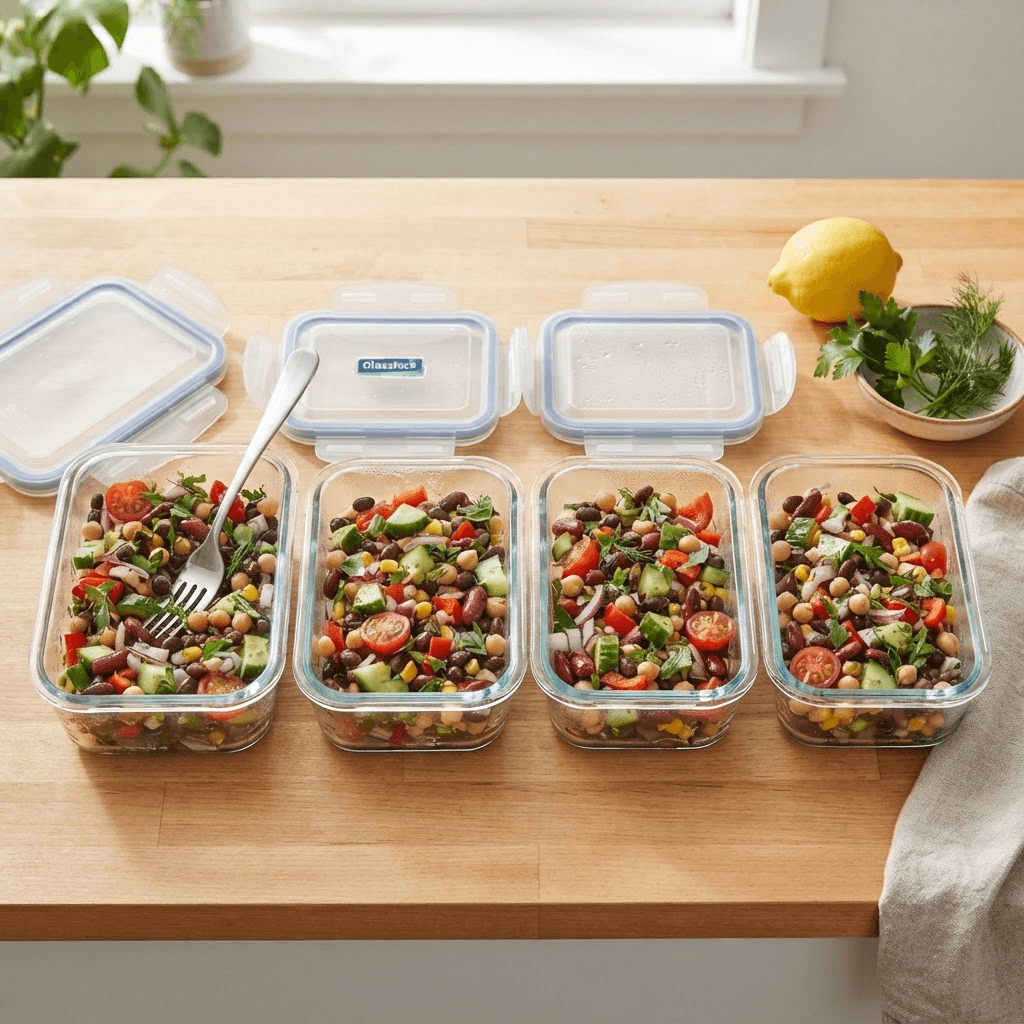
It is one of the best salads for exactly that. Build the base without avocado or delicate herbs, portion it into airtight containers, and it will hold for four days and improve for the first two. Refresh each serving with a little lemon and fresh herbs as you eat it.