High-Protein Pasta Salad: A 30-Minute Meal-Prep Lunch (32g Protein)
A cold, creamy pasta salad that hits about 32 grams of protein per serving using chickpea pasta, chicken and a blended cottage cheese dressing—no mayo, no protein powder, and it holds up for four days of lunches.
Jump to recipe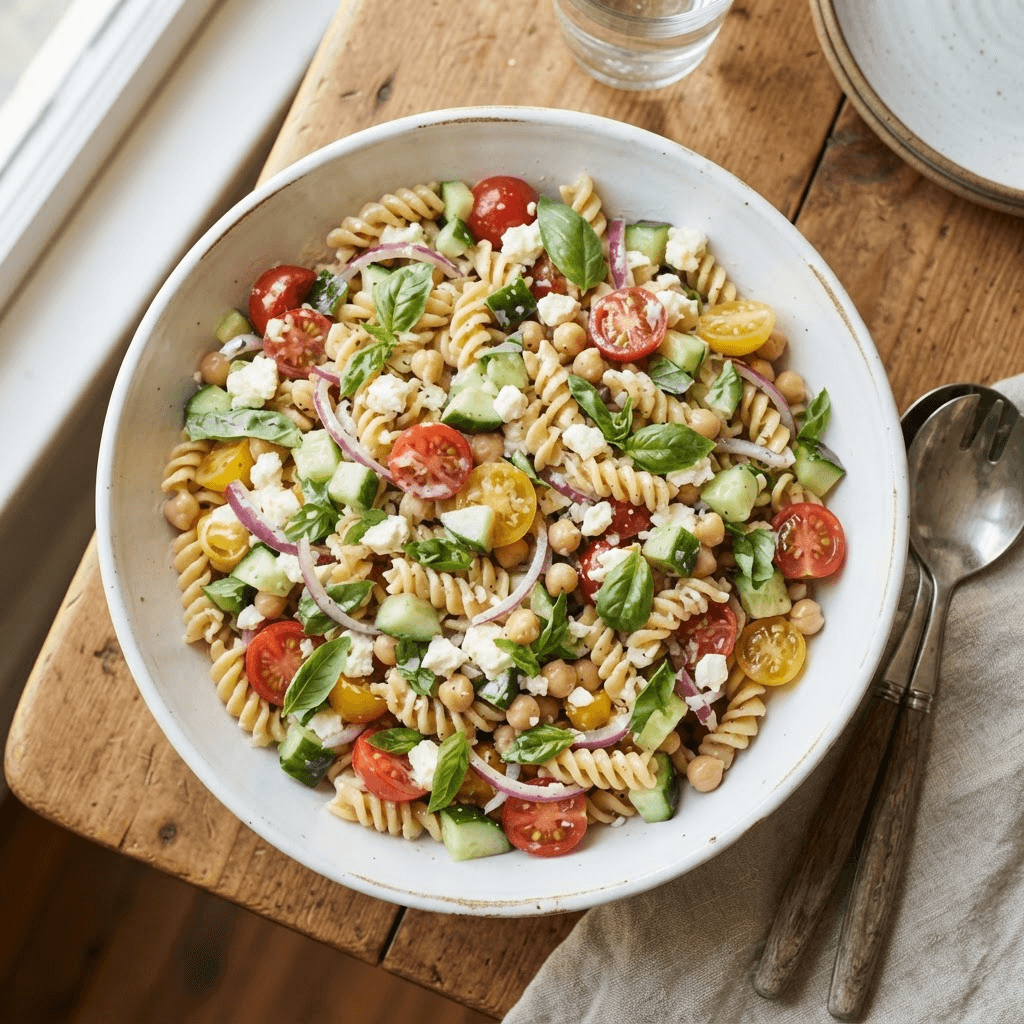
Prep
20 minutes
Cook
10 minutes
Makes
5 servings
Protein
about 32 g per serving
Most pasta salads are a delivery system for mayonnaise. They taste fine at the barbecue and leave you hungry ninety minutes later. This one flips the ratio: the pasta and dressing are built around protein first, so a single bowl behaves like an actual lunch instead of a carb-heavy side dish. Make it once on Sunday and you have solved four weekday lunches in thirty minutes of hands-on work.
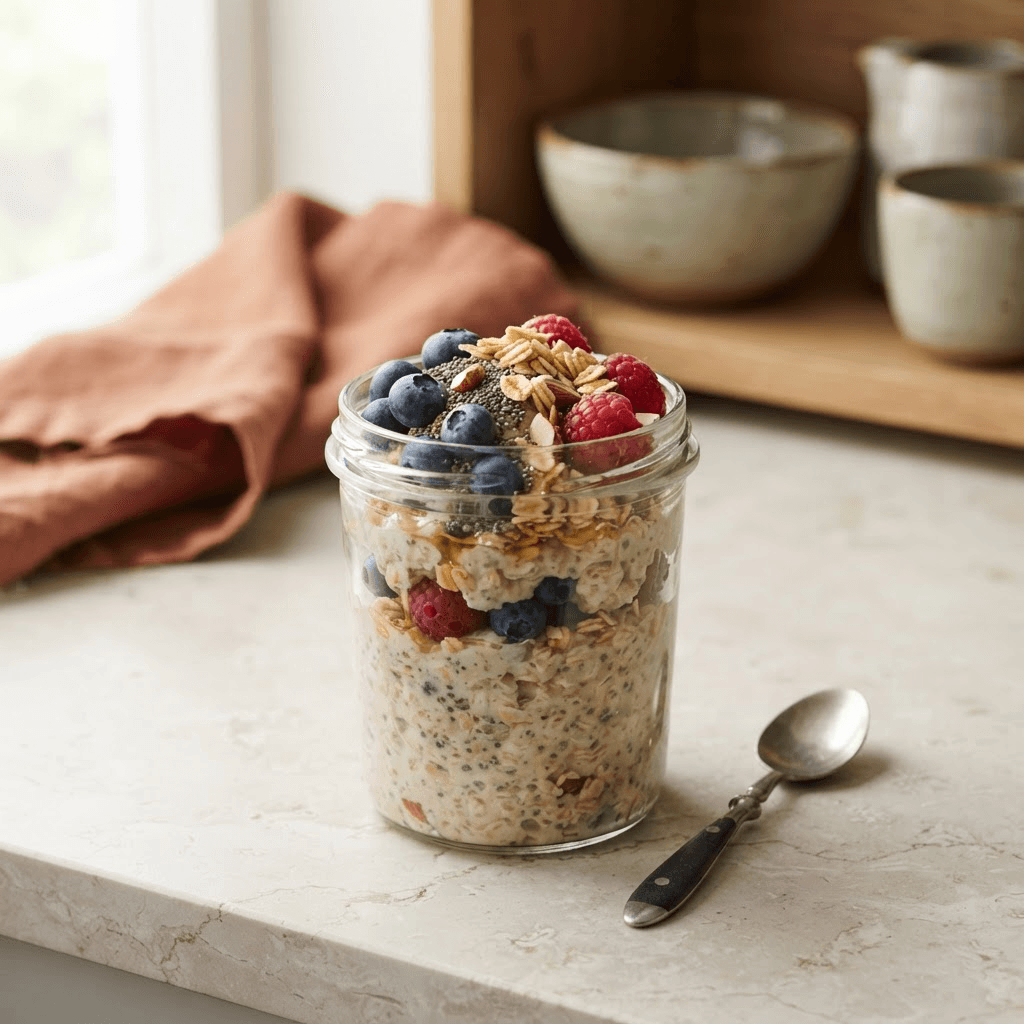
Two swaps do the heavy lifting. Chickpea or lentil pasta roughly doubles the protein and fibre of regular pasta, and the creamy dressing comes from blended cottage cheese rather than mayo. Add chicken and a can of chickpeas and each serving lands near 32 grams of protein. It is the same food-first logic behind our high-protein overnight oats—use ingredients that already carry protein instead of reaching for a powder.
Why this recipe works
A good cold pasta salad is really an engineering problem: how do you keep it creamy, seasoned and firm three days after you made it? Four decisions solve it.
- Legume pasta carries its own protein and fibre, so the dish is filling without piling on extra meat or cheese.
- Blended cottage cheese makes a thick, tangy dressing with a fraction of the fat of mayo and several times the protein.
- Cooking the pasta firm and rinsing it cold locks in a texture that survives days in dressing instead of collapsing into paste.
- Dressing in stages, plus a little held back, means you can revive leftovers that always drink up some sauce overnight.
Cottage cheese is the quiet star. Blended, it loses every trace of curd and turns into something between ranch and a light Caesar. The U.S. Department of Agriculture lists cottage cheese among the most protein-dense dairy foods per calorie, which is exactly why it out-performs mayo here on both nutrition and staying power.
Equipment you will need
Kitchen checklist
Large pot
Boils the pasta with room to move so the pieces cook evenly and do not clump.
Colander
Drains and, crucially, lets you rinse the pasta cold so it stops cooking.
Blender or food processor
Turns cottage cheese into a smooth, pourable dressing with no visible curds.
Large mixing bowl
Gives you space to toss everything without pasta flying over the rim.
Sharp chef’s knife
Clean cuts on cucumber, tomato and onion mean the salad holds up for days.
5 airtight containers
Portioning straight away is what turns one bowl into a week of lunches.
Nothing specialist, but two tools matter more than the rest: a blender to get the dressing genuinely smooth, and enough airtight containers to portion the batch the moment it is mixed. Portioning is what converts a bowl of salad into a week of lunches you do not have to think about.
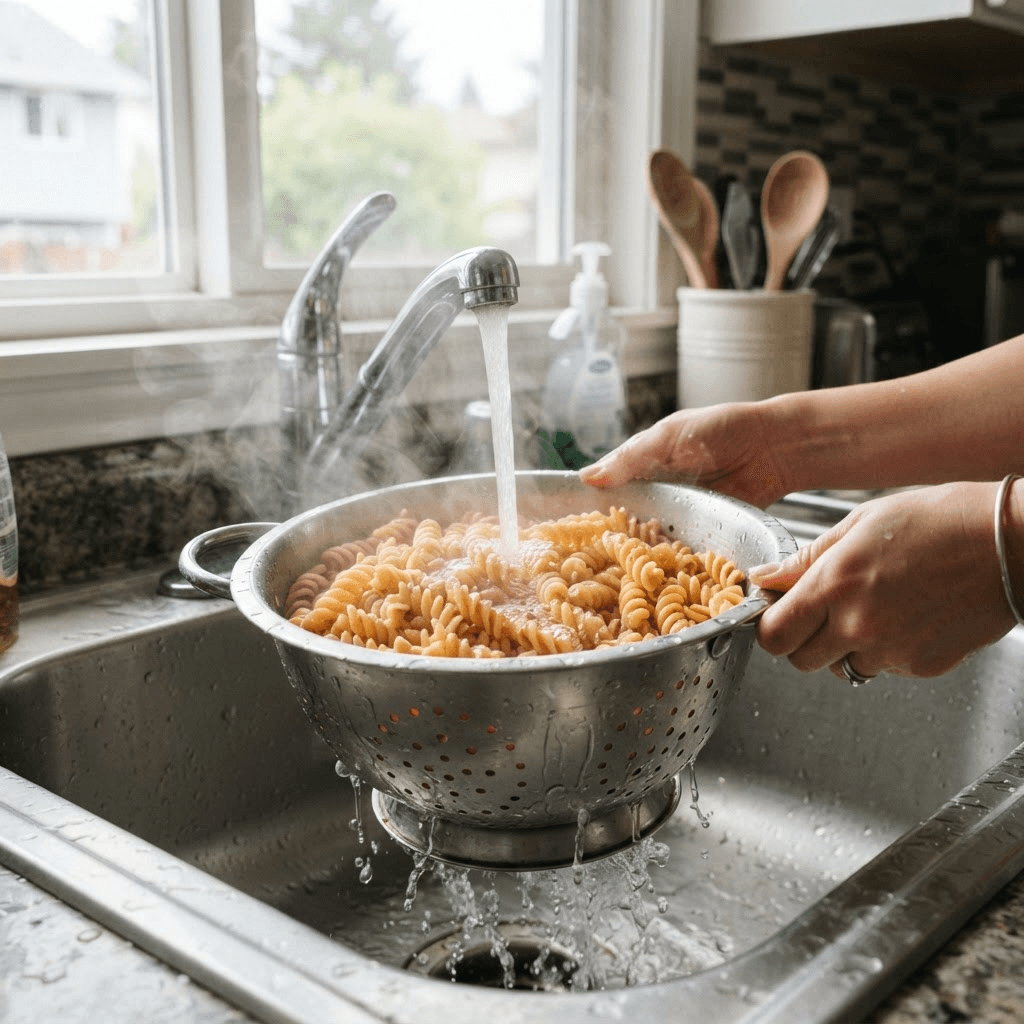
Five prep tips before you start cooking
Salt the pasta water like the sea
This is the only chance to season the pasta itself. Use about one tablespoon of salt per four litres of water. Under-salted pasta tastes flat no matter how good the dressing is.
Cook to firm, not soft
Pull the pasta a minute before the box says. It keeps cooking from residual heat, and firm pasta survives three days in dressing without going mushy.
Rinse cold and toss with oil
For a cold salad, rinsing washes off surface starch and instantly stops the cooking. A teaspoon of oil afterwards keeps pieces separate while you prep the rest.
Dry your vegetables
Pat cucumber and tomato with a towel. Excess water is the number one reason a creamy pasta salad turns watery by day two.
Blend the dressing first
Have the dressing waiting before the pasta is drained. Warm-ish pasta drinks in a little dressing and carries flavour deeper than cold pasta does.
High-protein pasta salad
Ingredients
The base
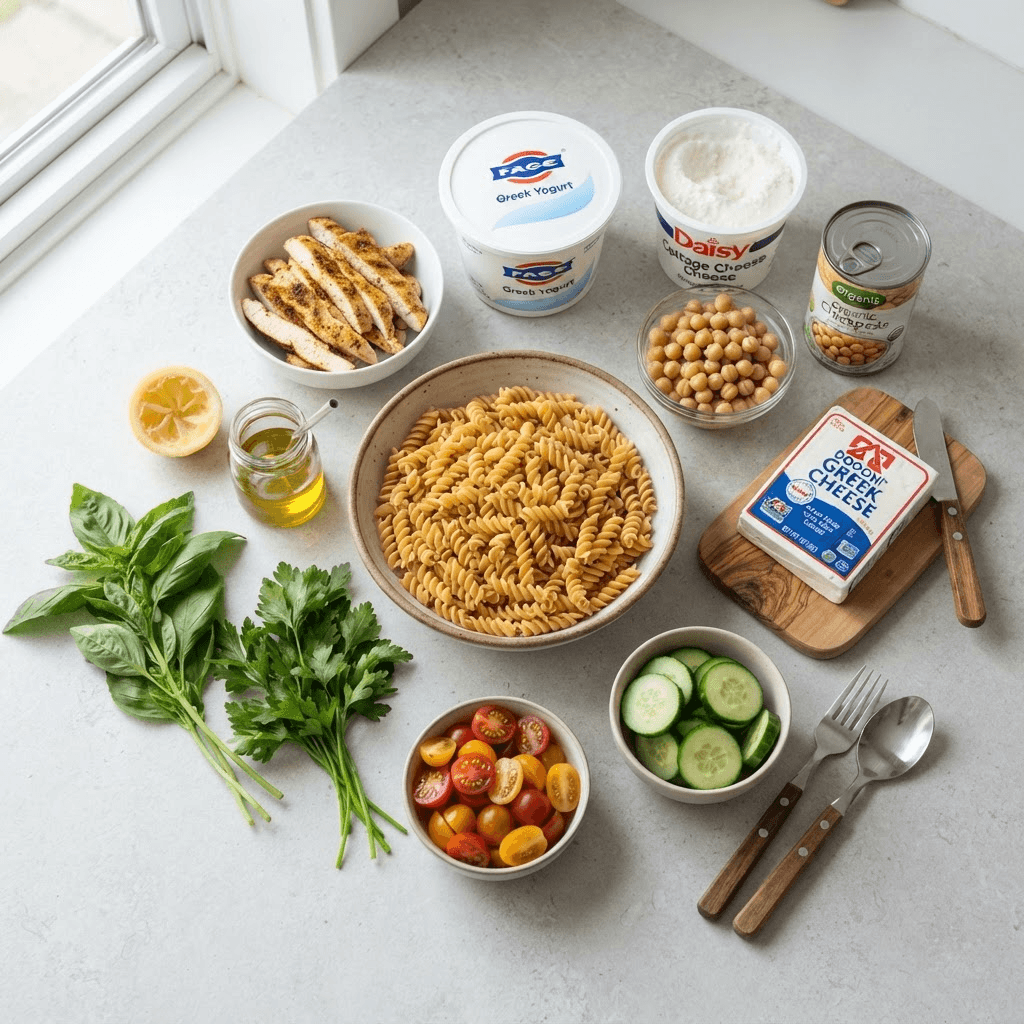
- 10 oz (280 g) chickpea or lentil rotini pasta
- 1 can (15 oz / 425 g) chickpeas, drained and rinsed
- 2 cups cooked chicken breast, diced (about 2 small breasts)
- 1 1/2 cups cherry tomatoes, halved
- 1 large cucumber, seeded and diced
- 1/3 cup finely diced red onion
- 1/2 cup crumbled feta
- 1/2 cup chopped fresh basil and parsley
Creamy cottage cheese dressing
- 1 cup (225 g) 2% cottage cheese
- 1/3 cup (80 g) plain Greek yogurt
- 2 tablespoons olive oil
- 2 tablespoons lemon juice
- 1 small garlic clove
- 1 teaspoon Dijon mustard
- 1/2 teaspoon dried oregano
- 1/4 teaspoon black pepper, plus salt to taste
Method
- 1
Boil and shock the pasta
Cook the pasta in well-salted water to one minute under al dente. Drain, rinse under cold running water until fully cool, then toss with a teaspoon of oil.
Look for: A piece should bend but still snap back with a little chew, never fall apart.
- 2
Blend the dressing
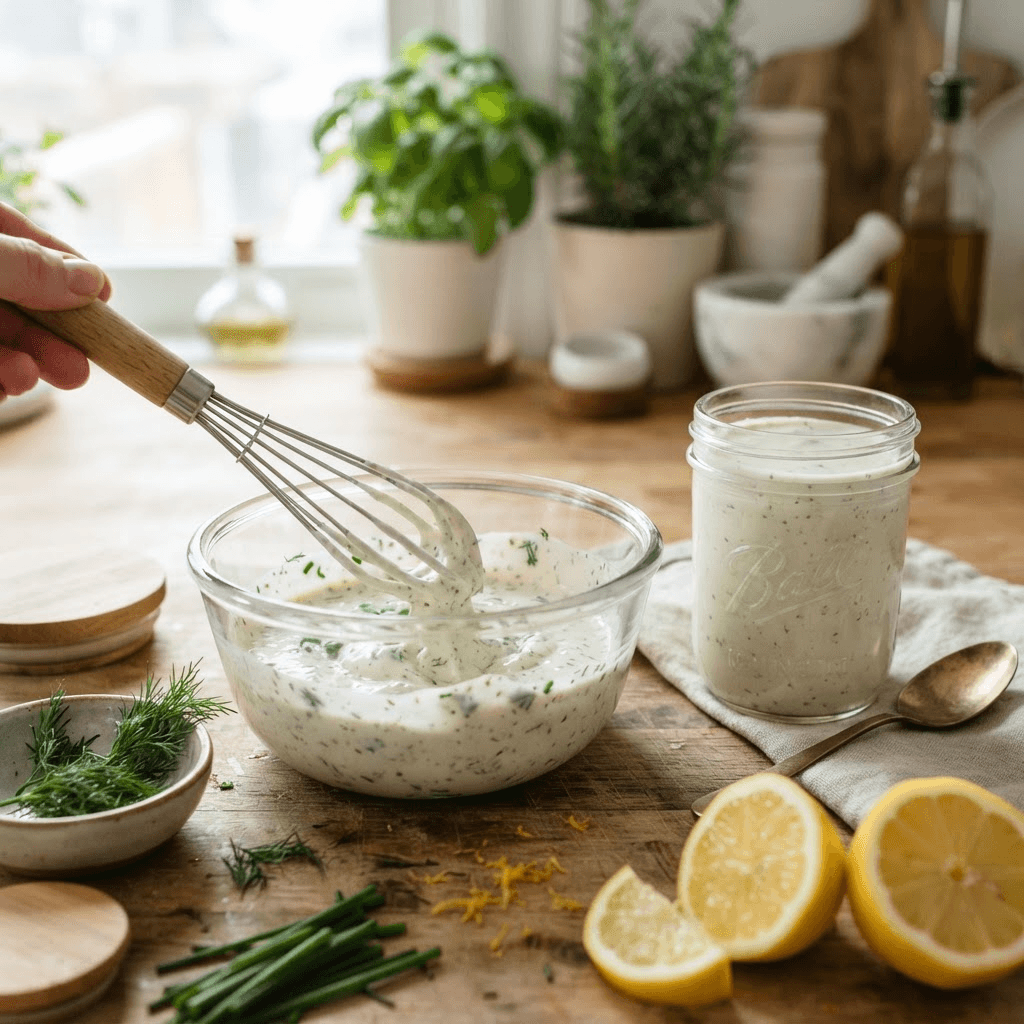
Blend the cottage cheese, Greek yogurt, olive oil, lemon, garlic, Dijon, oregano and pepper for 30 to 45 seconds until completely smooth. Taste and add salt.
Look for: It should coat the back of a spoon and pour slowly, like a thick ranch.
- 3
Prep and dry the add-ins
Halve the tomatoes, dice the seeded cucumber and onion, and pat the wet vegetables dry. Dice the cooked chicken and drain the chickpeas well.
Look for: The cutting board should look barely damp before anything goes in the bowl.
- 4
Toss in stages
Combine pasta, chickpeas, chicken and vegetables. Add two-thirds of the dressing and fold gently, then add more until every piece is lightly coated.
Look for: Glossy, not swimming. Reserve a little dressing to refresh leftovers later.
- 5
Rest, then finish
Fold in the feta and herbs. Chill for at least 30 minutes so the flavours settle, then taste again and adjust salt, lemon or pepper before serving.
Look for: Cold dulls seasoning, so it should taste slightly bolder than you expect warm.
calories
approximately 430 kcal
protein
approximately 32 g
carbohydrates
approximately 44 g
fiber
approximately 11 g
fat
approximately 14 g
Estimated per serving; values vary by brand, substitution and portion size.
This recipe is forgiving, but these habits are the difference between a salad that is great on day one and one that is still great on day four. Read them once before you turn on the stove.
How long it keeps, and how to revive it
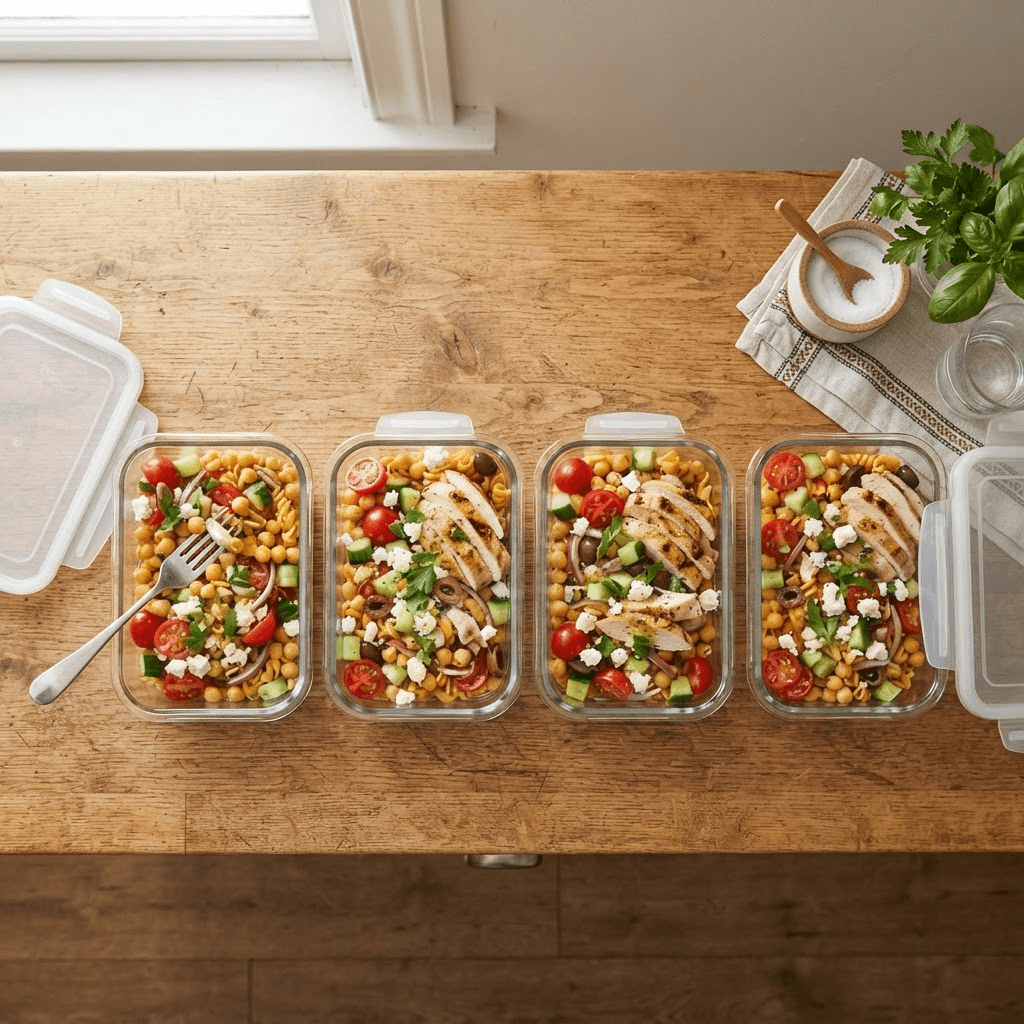
Stored airtight, this salad holds well for up to four days in the refrigerator. FoodSafety.gov advises keeping the fridge at 40°F (4°C) or below and not leaving prepared food at room temperature for more than two hours, which for a packed lunch means an insulated bag and an ice pack. The pasta and chickpeas absorb dressing as they sit, so leftovers can look a little dry.
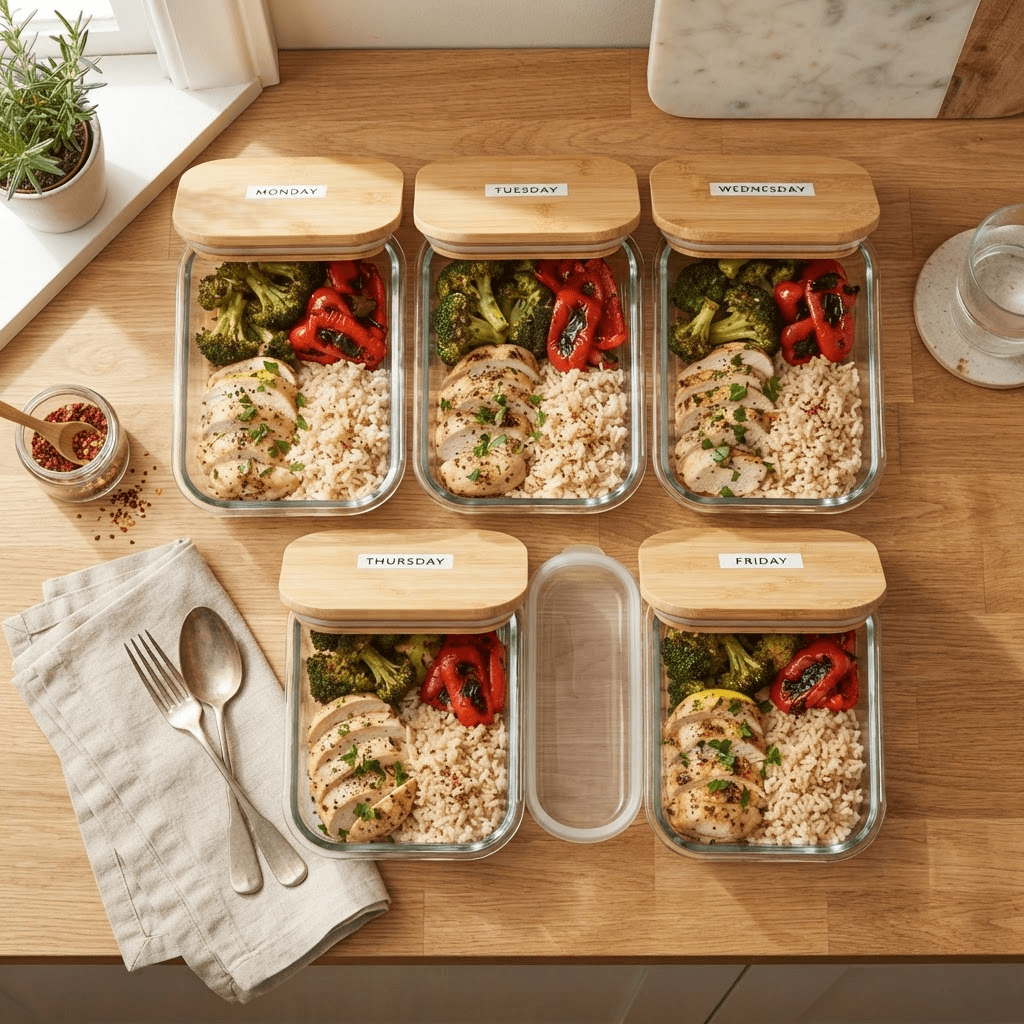
That is what the reserved dressing is for. Stir a spoonful through the portion you are eating, or loosen it with a squeeze of lemon and a small drizzle of olive oil. Add fresh herbs at serving if you want the day-one brightness back. If you are batch-cooking this alongside hot dinners, our two-hour Sunday meal-prep system shows how to slot it into the same session.
Five ways to change it up
| Variation | How to make it | Protein |
|---|---|---|
| Mediterranean | Add kalamata olives, roasted red pepper and swap basil for extra oregano and mint. | ~30 g |
| Caprese tuna | Replace chicken with two drained cans of tuna and add mini mozzarella pearls. | ~34 g |
| Buffalo ranch | Whisk 2 tablespoons hot sauce into the dressing; top with extra chicken and celery. | ~33 g |
| Vegetarian power | Drop the chicken, double the chickpeas and add a handful of toasted edamame. | ~24 g |
| Pesto green | Stir 2 tablespoons pesto into the dressing; add peas, spinach and pine nuts. | ~29 g |
The base is deliberately plain so it can go in any direction. Keep the pasta and dressing method the same and change the mix-ins. If you are cooking for a crowd with different tastes, the vegetarian version and the tuna version can share the same batch of dressing.
What “about 32 grams of protein” actually means
The estimate—roughly 430 calories, 32 grams of protein, 44 grams of carbohydrate, 11 grams of fibre and 14 grams of fat per serving—assumes the listed quantities split into five portions. It is a calculation from typical label values, not a lab result. Brands of legume pasta, cottage cheese and feta vary enough to move these numbers meaningfully, so read your own labels if you are tracking closely.
The fibre is worth noticing. Between the legume pasta and the chickpeas, one serving delivers close to a third of many adults’ daily fibre target—useful context alongside our high-fibre foods guide. Pair the salad with fruit for a complete lunch, and browse the rest of the Healthy Recipes collection for more protein-first ideas. Anyone managing diabetes, kidney disease or a food allergy should follow individual guidance from a clinician or registered dietitian rather than a general recipe.
Nutrition and food-safety references
Sources used for nutrition and storage context
These references support the general nutrition and food-safety context. They do not certify the exact nutrition of a home-prepared batch.
- FoodData Central nutrient database (cottage cheese, legume pasta)U.S. Department of Agriculture
- Cold food storage chartFoodSafety.gov
- Fiber and legumes in the dietHarvard T.H. Chan School of Public Health — The Nutrition Source
Reader questions
Quick answers before your next batch
Can pasta salad really be high in protein without mayo?
Yes. Swapping regular pasta for chickpea or lentil pasta, adding chicken and chickpeas, and using a blended cottage cheese dressing instead of mayo brings each serving to about 32 grams of protein. The exact figure depends on the brands you choose.
Does the cottage cheese dressing taste like cottage cheese?
Not once it is blended. It becomes smooth and tangy, closer to a light ranch. Lemon, Dijon, garlic and oregano round it out so the cottage cheese flavour disappears into the background.
How long does high-protein pasta salad last in the fridge?
Kept airtight at 40°F (4°C) or below, it stays good for up to four days. The pasta absorbs dressing over time, so stir through a little reserved dressing or a squeeze of lemon before eating leftovers.
Can I make it ahead and freeze it?
Freezing is not recommended. The vegetables release water and the creamy dressing separates when thawed. This salad is designed for fresh refrigerated batches of up to four days instead.
What is the best pasta shape for pasta salad?
Short, ridged shapes like rotini, fusilli or penne hold dressing best and are easy to eat cold. Whatever shape you pick, cook it a minute under al dente so it stays firm after days in the dressing.
How do I keep pasta salad from getting dry or watery?
Two habits fix both problems: pat your vegetables dry so they do not leak water, and reserve some dressing to refresh the salad after it sits. Dressing in stages rather than drowning it all at once also helps.