Gochujang Salmon Rice Bowls: A Build-Your-Own Weeknight Dinner in 20 Minutes
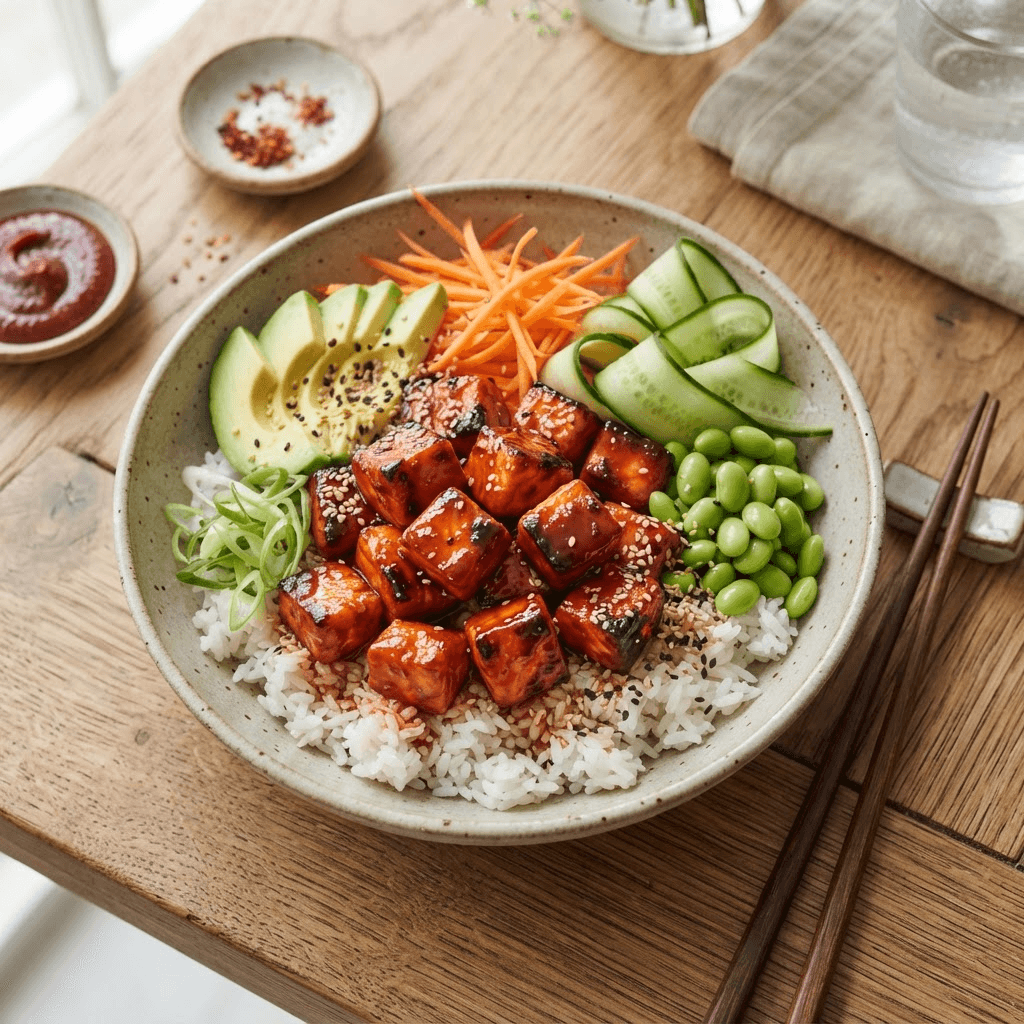
Sticky, spicy-sweet salmon over rice with whatever crunchy, fresh things you have on hand. Instead of one rigid recipe, this is a five-layer bowl you assemble your way — with a glaze you can dial from mild to fiery and a version that survives four days of lunches.
- Total
- 20 min
- Serves
- 2–3
- Heat
- You choose
- Layers
- 5
Learn this, improvise forever
Every rice bowl is these five layers
- BaseRice, quinoa, soba or greens
- ProteinGochujang-glazed salmon cubes
- SauceThe four-spoon glaze, plus extra to drizzle
- CrunchCarrot, cucumber, sesame, peanuts
- FreshAvocado, spring onion, lime, herbs
One pan, every spice level
The heat lives in one ingredient, so the same pan feeds everyone.
It is 6:40 on a Tuesday, you are hungry, and the only real food in the fridge is a fillet of salmon and half a cucumber. This is exactly the situation this bowl was built for. Twenty minutes from now you can be eating something that tastes like a restaurant order — sticky, spicy, a little sweet, with cool crunch cutting through the rich fish — and you will not have used a single pan you dread washing.
The trick is to stop thinking about it as a recipe you have to follow and start thinking about it as a bowl you assemble. A rigid recipe fails the moment you are out of one ingredient. A framework bends. So instead of a fixed ingredient list, this guide hands you five layers and a single glaze, and lets you swap almost everything inside them based on what is actually in your kitchen tonight.
The bowl, built in five layers
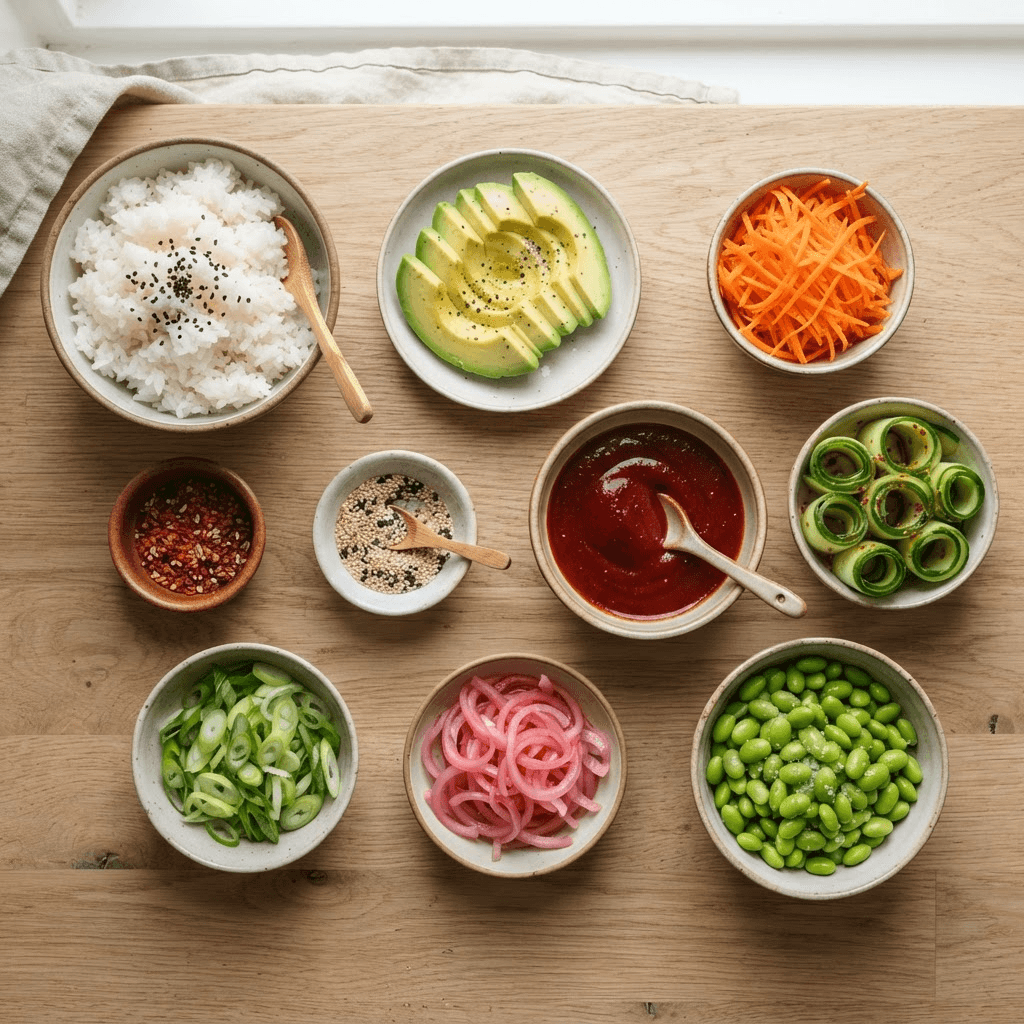
Every great rice bowl is the same five-part idea wearing different clothes. Get these five jobs covered and the bowl works; the specific ingredient in each slot is negotiable. Read this once and you will be improvising bowls for the rest of your life.
- Base — the thing that soaks up sauce. Steamed white or brown rice is classic, but quinoa, soba noodles or even a bed of greens all do the job.
- Protein — tonight it is gochujang salmon, glossy and caramelized. This is the layer that makes it dinner rather than a side.
- Sauce — the four-spoon gochujang glaze that ties every other layer together. Always make extra to drizzle at the end.
- Crunch — the texture contrast that stops a bowl feeling like baby food: shredded carrot, cucumber, toasted sesame, crushed peanuts, crispy shallots.
- Fresh — the cool, bright layer that balances the heat: avocado, spring onion, quick-pickled onion, a wedge of lime, a handful of herbs.
The glaze: four spoons and two aromatics
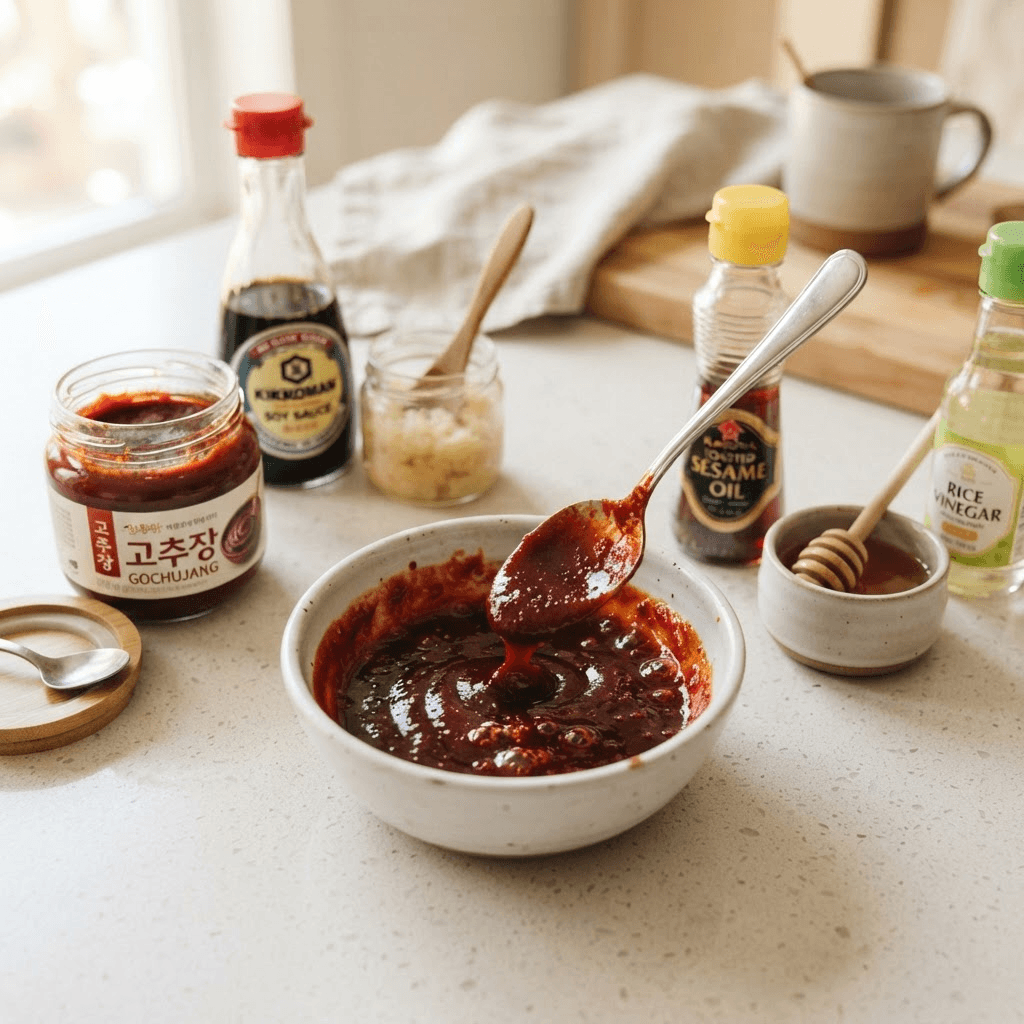
This is the only part worth memorizing, because it is the flavor engine of the entire bowl. Gochujang is a Korean fermented chili paste — deeply savory, gently sweet and slow-burning rather than sharp — and it is the single ingredient doing most of the work. Everything else just balances it.
- 2 tbsp gochujang — the savory, fermented, spicy backbone.
- 1 tbsp honey or maple syrup — the sweetness that helps it caramelize and cling.
- 1 tbsp soy sauce or tamari — salt and umami depth.
- 1 tbsp rice vinegar — the acidity that keeps it from tasting flat and heavy.
- 1 grated garlic clove + 1 tsp toasted sesame oil — the aromatics that make it smell like takeout.
Whisk it all in a small bowl until smooth and pourable. If it seizes up too thick to coat, loosen it with a teaspoon of water at a time. Reserve about a third of it before it ever touches raw fish — that clean portion is your finishing drizzle, so you never spoon anything that touched raw salmon back onto the cooked bowl.
Cook the salmon: three routes, same result
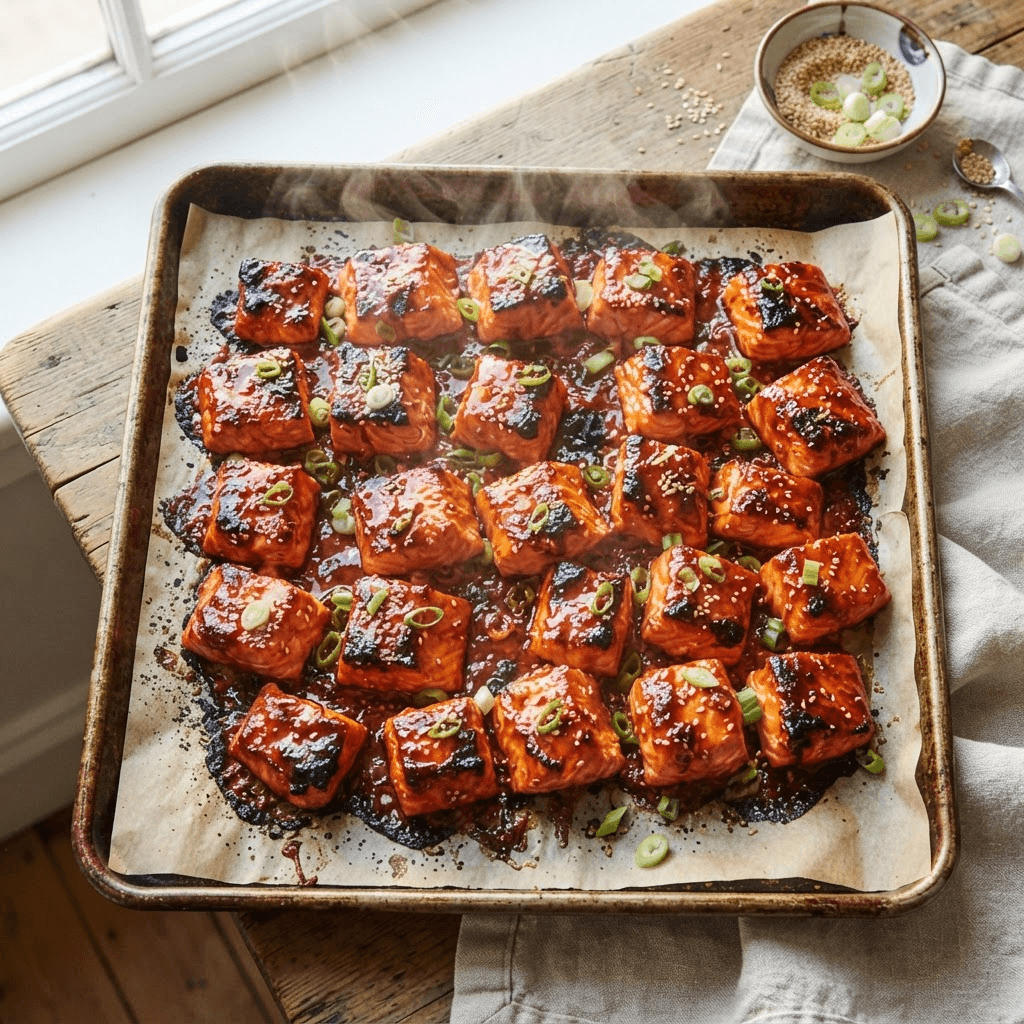
Here is the one technique choice that actually matters: cube the salmon into roughly 1-inch pieces before you glaze it. Whole fillets look elegant, but cubes give you far more surface area, which means more of that lacquered, caramelized glaze on every bite and faster, more even cooking. Pat the salmon dry, toss it in two-thirds of the glaze, then pick your heat source.
| Method | Time & temp | Best for |
|---|---|---|
| Oven | 9–10 min at 425°F (220°C) | Hands-off cooking while you prep the other layers |
| Air fryer | 7–8 min at 400°F (200°C) | The stickiest, most caramelized edges, fastest of all |
| Skillet | 5–6 min over medium-high, turning | No oven access; watch closely as honey glaze can scorch |
Salmon is done when it flakes easily with a fork and looks just opaque in the center — the USDA safe internal temperature is 145°F (63°C). Because the glaze contains sugar, it darkens fast, so check a minute or two early rather than late. A little charring at the edges is flavor; a uniformly blackened cube means the honey caught. If in doubt, pull it: carryover heat finishes it on the plate.
Dial the heat to whoever is at the table
The quiet genius of this bowl is that almost all the heat lives in one ingredient. That means you can feed a spice-averse kid and a chili obsessive from the same pan without making two dinners. Adjust the gochujang up or down, and lean on the sweet and fresh layers to tame or sharpen the burn.
| Heat level | What to change | Balance it with |
|---|---|---|
| Mild | Halve the gochujang, add an extra teaspoon of honey | Extra avocado and rice to mellow it further |
| Medium | The recipe as written | A squeeze of lime to keep it bright |
| Hot | Add 1 tsp gochugaru or a spoon of chili crisp | Cold cucumber and a dollop of plain yogurt |
Cook the salmon medium, then let people build their own bowls. The person who wants it fiery adds chili crisp at the table; the person who does not, simply does not.
Assembly: the ninety-second finish
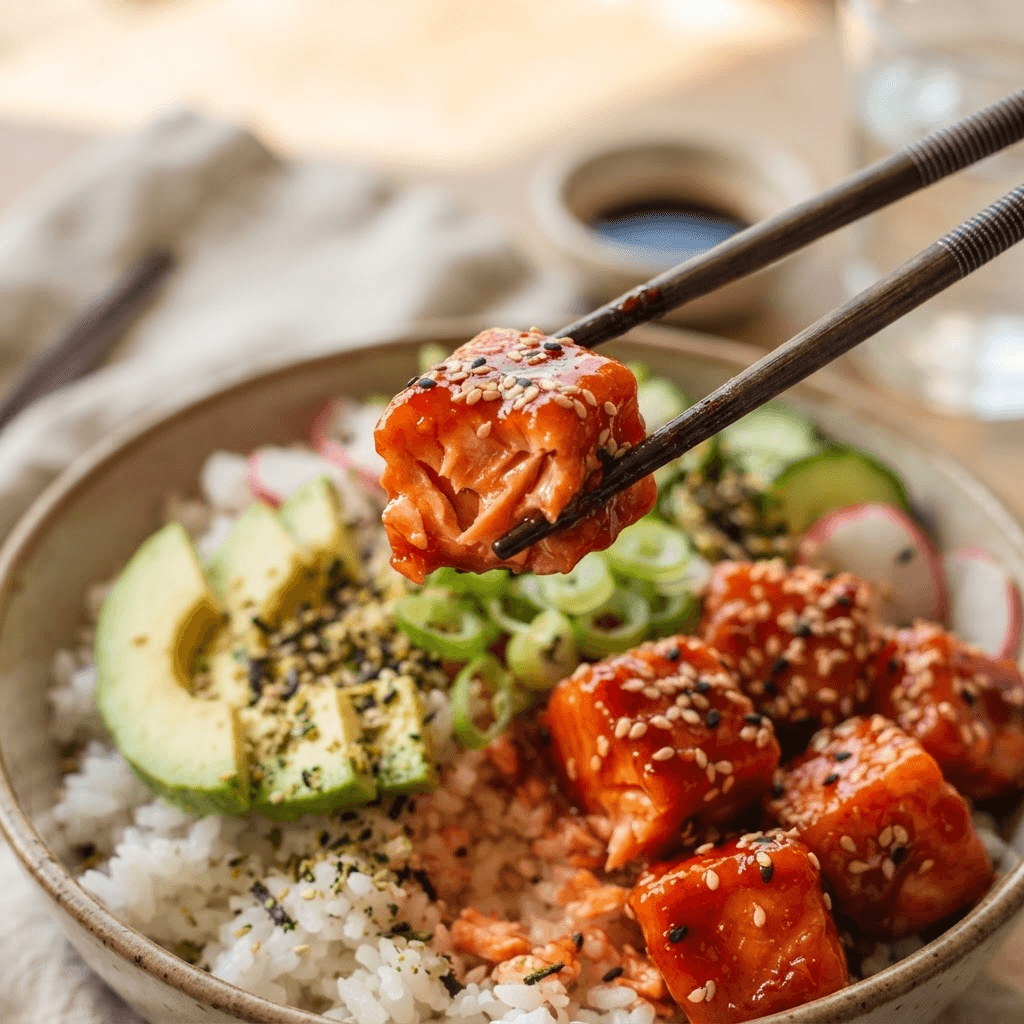
This is the fun part, and it should feel loose. Spoon warm rice into a wide, shallow bowl — shallow matters, because it gives you more surface to arrange things and every bite gets a bit of everything. Pile the glazed salmon on one side. Around it, group your crunch and fresh layers in little sections rather than tossing everything together; it looks better and lets everyone steer their own forkful.
- Rice first, in a shallow bowl, fluffed so it is not a dense puck.
- Salmon next, grouped on one side while it is still glossy and warm.
- Crunch and fresh layers arranged in sections around the salmon.
- Drizzle over the reserved clean glaze — be generous, this is the money moment.
- Finish with toasted sesame, sliced spring onion and a wedge of lime.
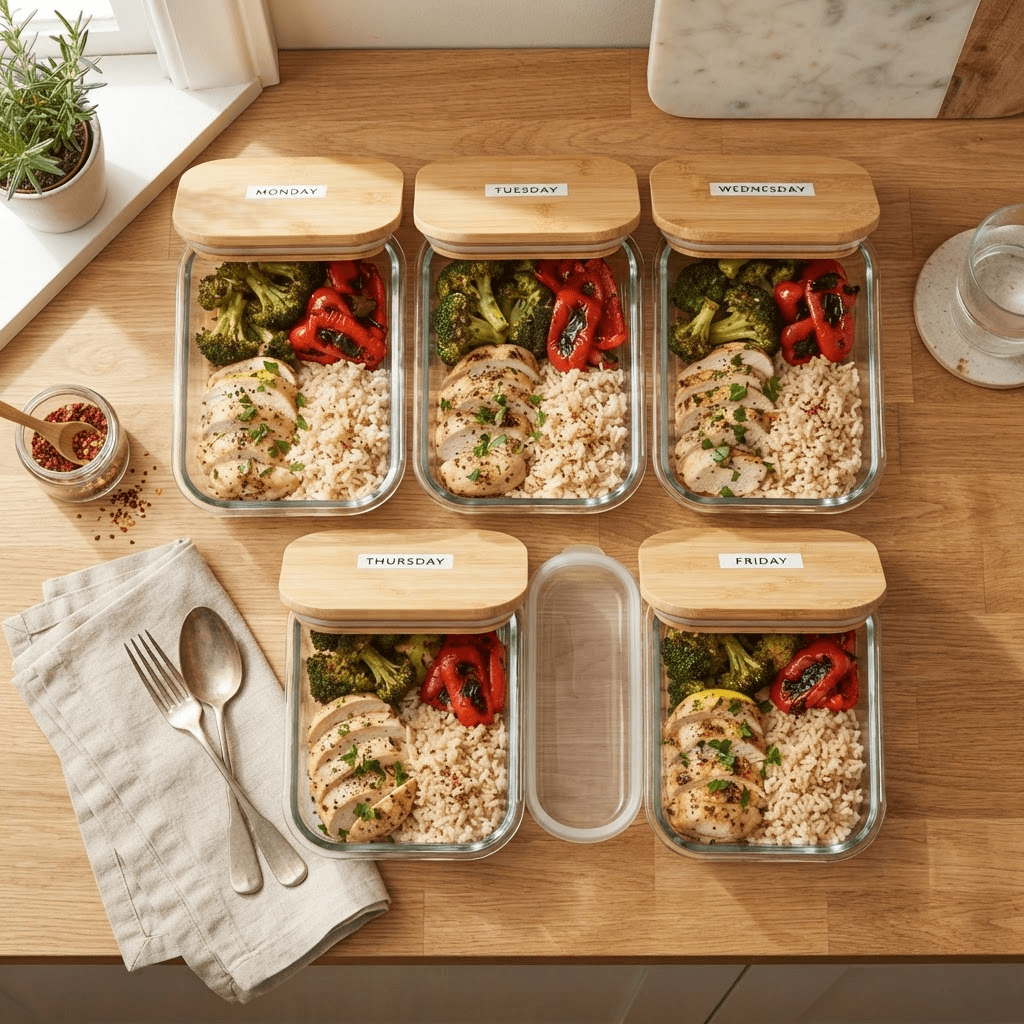
Make it four lunches (the honest version)
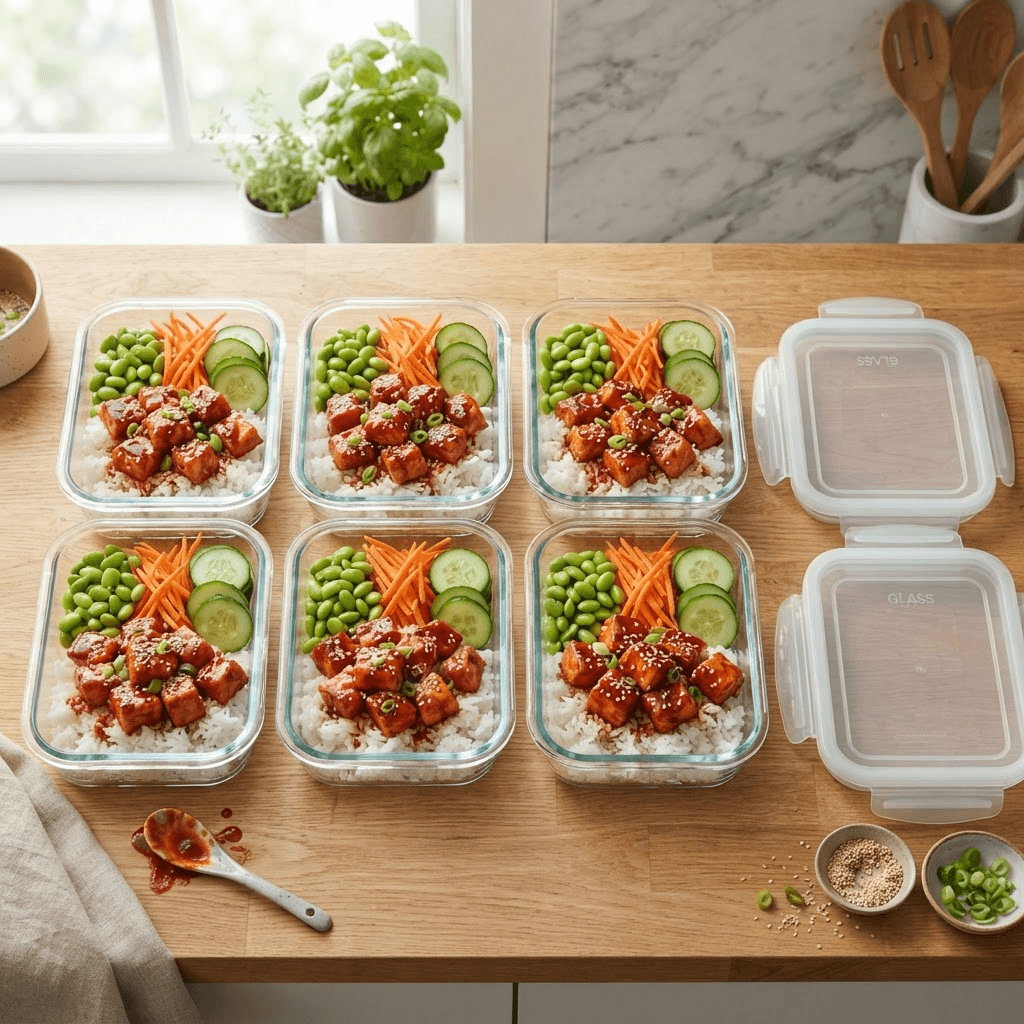
Unlike a delicate salad, most of this bowl preps beautifully — with one rule. Cook the rice and salmon in a double batch and portion them into containers, but keep the fresh crunch layer out until the morning you eat. Avocado browns, cucumber weeps, and both turn a crisp bowl sad by day two. Store them separately and the whole thing holds up for genuinely good lunches.
| Component | Keeps | Notes |
|---|---|---|
| Cooked salmon + rice | Up to 3–4 days | Store cold within 2 hours; reheat gently so the fish stays moist |
| Extra glaze | Up to 1 week | Keeps in a jar; a fresh drizzle revives a reheated bowl |
| Fresh + crunch layer | Add the day of | Avocado, cucumber and herbs go in the morning you eat, not before |
Swaps for whatever is actually in your fridge
This is where the layer framework earns its keep. Missing the salmon? The glaze is just as good on other proteins. Watching the budget? Canned and frozen options work harder than people admit. Nothing here is precious.
- No fresh salmon — cubed chicken thigh (cook longer, to 165°F), firm tofu, or even the same glaze tossed through canned salmon or a tin of chickpeas.
- No rice — soba noodles, quinoa, or a bed of shredded cabbage for a lower-carb bowl.
- On a budget — frozen salmon portions thaw fast under cold water; frozen edamame and bagged shredded carrot cut both cost and prep.
- No air fryer or oven — the skillet route works fine; just keep the heat at medium so the honey does not scorch.
- Want more vegetables — roast broccoli or green beans on the same tray as the salmon for the last few minutes.
Is it actually healthy? A straight answer
Genuinely, yes — and it does not have to try hard to get there. Salmon is one of the best everyday sources of omega-3 fats and delivers a serious dose of protein per portion, which is what makes a single bowl this filling. The American Heart Association suggests eating fish, and especially oily fish like salmon, a couple of times a week for heart health, and a bowl like this is an easy way to hit that without thinking about it.
The two numbers worth a glance are sodium and added sugar, since soy sauce brings the salt and honey brings the sweetness. Neither is a problem in normal amounts — use low-sodium soy if you watch your salt, and remember you control exactly how much glaze goes on. Load the bowl with vegetables and it lines up neatly with the everyday approach in our high-fiber foods guide, while the protein makes it a natural fit alongside our high-protein meal-prep system.
Sources for the nutrition and food-safety context
These public-health sources support the guidance on salmon, omega-3s, safe cooking temperature and storage.
- Fish and omega-3 fatty acids for heart healthAmerican Heart Association
- Safe minimum internal cooking temperatures (fish 145°F)FoodSafety.gov
- Cold food storage and leftoversFoodSafety.gov
Stick this on the fridge
The bowl, in five lines
- Think in layers, not a recipe: base, protein, sauce, crunch, fresh. Once you own the framework you never need the exact card again.
- The glaze is four spoons — gochujang, honey, soy and rice vinegar — plus garlic and sesame. That is the whole flavor engine.
- Cube the salmon before glazing so every side caramelizes; whole fillets look prettier but stay saucier and slower.
- The heat lives entirely in one ingredient, so you can serve the same pan mild for a child and fiery for yourself.
- Cook salmon and rice for prep, but keep the fresh crunch layer separate and add it the morning you eat.
Kitchen questions
Before you fire up the oven: quick answers
Do I need to marinate the salmon first?
No — that is the point of this bowl. Because you cube the salmon and cook it hot and fast, the glaze caramelizes onto the surface in minutes with no marinating time. If you want a slightly deeper flavor, you can toss the cubes in the glaze while the oven preheats, but it is genuinely optional.
Can I use frozen salmon?
Yes. Thaw it quickly by sealing the portions in a bag and submerging in cold water for 20–30 minutes, then pat very dry before glazing. Excess water is the enemy of caramelization, so drying the fish thoroughly is the one step not to skip with frozen salmon.
What does gochujang taste like, and how spicy is it?
Gochujang is a fermented Korean chili paste that is savory and slightly sweet with a slow, rounded heat rather than a sharp burn. On its own it is moderately spicy, but balanced with honey and served over rice and avocado it lands as pleasantly warm. You control the level entirely by how much you use.
Is this recipe gluten-free?
It can be. Use tamari or coconut aminos in place of soy sauce, and check your gochujang label, as some brands contain wheat while others are certified gluten-free. Served over plain rice with fresh vegetables, everything else in the bowl is naturally gluten-free.
How do I stop the glaze from burning?
Sugar in the honey darkens fast under high heat, so check the salmon a minute or two before you think it is done and pull it as soon as the edges caramelize. In a skillet, keep the heat at medium rather than high. A little char is flavor; uniformly black means it overcooked.
What can I serve instead of rice to make it lower carb?
Swap the rice for a bed of shredded cabbage or mixed greens, cauliflower rice, or a small portion of quinoa. The glazed salmon and the fresh-and-crunch layers carry the bowl, so the base is the most flexible part of the whole framework.
How long does gochujang salmon last in the fridge?
Cooked salmon and rice keep for about three to four days if refrigerated within two hours of cooking. Store the fresh toppings separately and add them the day you eat. Reheat the salmon gently so it stays moist, and finish with a fresh drizzle of the reserved glaze.