High Fiber Foods List for Digestion, Cholesterol and Steady Energy
A practical high-fiber foods list with realistic portions, label-reading tips and a gradual plan for supporting digestion, cholesterol and steadier energy.
At a glance
- Most adults should work toward about 25 to 38 grams of fiber daily, depending on age and sex—not jump there overnight.
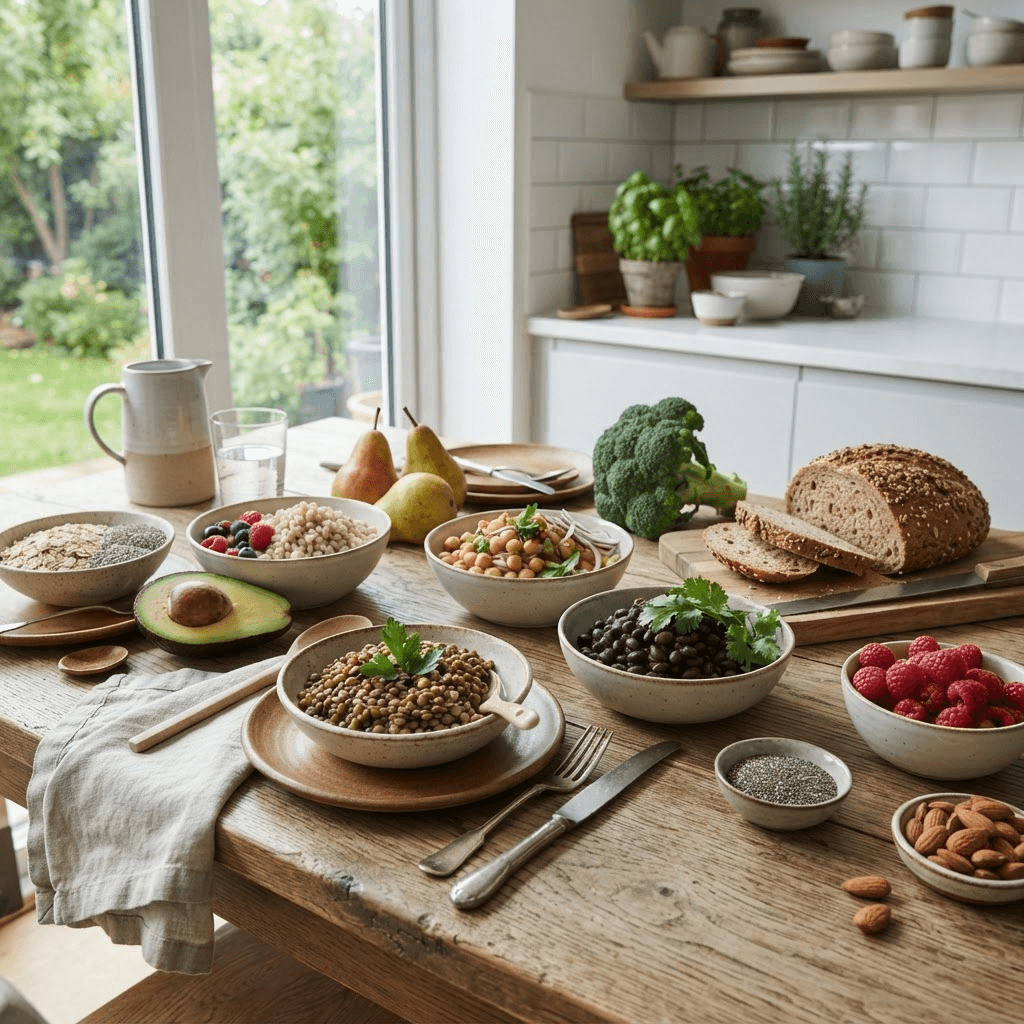
- Beans, lentils, oats, barley, berries, pears, avocado, chia and nuts deliver meaningful fiber in ordinary portions.
- Soluble fiber can support healthy LDL cholesterol, while insoluble fiber helps stool move through the digestive tract.
- Increase fiber gradually and drink enough fluid to reduce the chance of gas, cramping or constipation.
- A mix of plant foods is more useful than chasing one “superfood” or relying on a fiber supplement alone.
Fiber is often reduced to a number on a cereal box, but it is really a diverse group of carbohydrates that the small intestine does not fully digest. That is useful: fiber can soften and bulk stool, feed microbes in the colon, slow the absorption of a meal and help carry cholesterol-rich bile acids out of the body.
The best approach is not to eat a heroic bowl of bran once a week. It is to build modest amounts into breakfast, lunch, dinner and snacks. This guide ranks useful foods by realistic serving—not by an unrealistic 100-gram comparison—and shows how to increase them without making your stomach miserable.
How much fiber do you actually need?
The National Academies set an adequate intake at 14 grams per 1,000 calories. That works out to about 25 grams daily for many adult women and 38 grams for many adult men through age 50, with somewhat lower targets after 50 as energy needs decline. Your personal needs may differ, but these figures are useful direction—not a pass-or-fail test.
The high-fiber foods list: 20 useful choices
| Food | Serving | Approx. fiber | Easy use |
|---|---|---|---|
| Split peas, cooked | 1 cup | 16 g | Soup or dhal |
| Lentils, cooked | 1 cup | 15 g | Bowls, curry or pasta sauce |
| Black beans, cooked | 1 cup | 15 g | Tacos, chili or salads |
| Chickpeas, cooked | 1 cup | 12 g | Hummus, curry or roasting |
| Chia seeds | 2 tbsp | 10 g | Oats, yogurt or pudding |
| Raspberries | 1 cup | 8 g | Breakfast or snack |
| Pear with skin | 1 medium | 6 g | Snack with nuts |
| Whole-wheat pasta | 1 cup cooked | 6 g | Pasta bowls |
| Barley, pearled | 1 cup cooked | 6 g | Soup or grain bowl |
| Avocado | ½ medium | 5 g | Toast, tacos or salads |
| Brussels sprouts | 1 cup cooked | 6 g | Roasted side |
| Broccoli | 1 cup cooked | 5 g | Stir-fry or side |
| Apple with skin | 1 medium | 4–5 g | Snack or oatmeal |
| Oats | ½ cup dry | 4 g | Porridge or overnight oats |
| Sweet potato with skin | 1 medium | 4 g | Baked or in bowls |
| Almonds | 1 oz / 23 nuts | 3.5 g | Snack or topping |
| Ground flaxseed | 2 tbsp | 4 g | Oats or smoothies |
| Air-popped popcorn | 3 cups | 3.5 g | Whole-grain snack |
| Whole-grain bread | 2 slices | 4–6 g | Toast or sandwiches |
| Green peas | ½ cup cooked | 4 g | Pasta, rice or side |
Beans and lentils give the biggest return
Pulses combine soluble and insoluble fiber with plant protein, iron, potassium and slowly digested carbohydrate. If a full cup feels like too much, begin with ¼ cup of rinsed canned beans in a familiar meal. Increase to ½ cup as tolerated. Canned beans are nutritionally useful; rinsing lowers some of the sodium and removes some gas-producing carbohydrates from the canning liquid.
Whole grains are an everyday foundation
Oats and barley are notable for beta-glucan, a soluble fiber associated with lower LDL cholesterol when eaten regularly in an overall heart-healthy diet. Brown rice, bulgur, quinoa, whole-wheat pasta and whole-grain bread add variety. “Multigrain” only means that several grains are present; look for a whole grain near the top of the ingredients and compare fiber per serving.
Fruit and vegetables count—even when they are not trendy
Raspberries are unusually fiber-rich, but apples, oranges, pears, carrots, broccoli, peas and potatoes with skin all contribute. Fresh, frozen and no-added-sugar canned produce can work. Juice removes most fiber, so whole fruit is the better default for fullness and steadier absorption.
Seeds and nuts make small additions meaningful
Chia, ground flax, almonds, pistachios and peanuts add fiber alongside unsaturated fats. Chia absorbs many times its weight in liquid, so use it in moist foods and drink adequately. Flax is easier to access nutritionally when ground. Two tablespoons are useful; a giant scoop is not necessary.

How fiber supports digestion
Insoluble fiber adds bulk and helps material move through the gut. Soluble fiber dissolves or swells in water, creating a gel that can soften stool. Fermentable fibers are used by colon bacteria, which produce short-chain fatty acids that help support the cells lining the colon. Most whole foods contain a mixture, so there is little need to classify every bite.
For constipation, fiber works best alongside fluid, movement and a consistent bathroom routine. Kiwi, prunes, pears, oats, ground flax and legumes are practical options. However, severe pain, vomiting, blood in stool, unexplained weight loss or a sudden lasting bowel change requires medical care. Adding more fiber is not the answer to a possible obstruction.
The right fiber target is one you can reach consistently and comfortably—not the highest number you can force into a single day.
The fiber–cholesterol connection
Viscous soluble fibers can trap bile acids in the digestive tract. The liver then uses circulating cholesterol to make more bile, which can help lower LDL cholesterol. Oats, barley, beans, lentils, apples, citrus and psyllium are useful sources. The effect is meaningful but modest: fiber complements prescribed treatment, physical activity and an eating pattern lower in saturated fat; it does not replace them.
For oats, regular intake matters more than an occasional bowl. Choose plain oats and add fruit, nuts or seeds. If you use a packaged cereal, compare serving sizes and added sugar as well as fiber. Products fortified with isolated fiber can increase the number on the label but may not provide the same range of nutrients as intact plant foods.
Build steadier energy, not a “no-carb” meal
Fiber slows how quickly a meal leaves the stomach and how rapidly carbohydrate reaches the bloodstream. Pairing a fiber-rich carbohydrate with protein and unsaturated fat can make a meal more satisfying: oats with yogurt and walnuts, whole-grain toast with eggs and avocado, or lentils with vegetables and olive oil.
Fiber does not make every food blood-sugar neutral, and responses vary. People using insulin or glucose-lowering medication may need personalized guidance when changing carbohydrate and fiber intake. For everyone else, the useful principle is simple: favor intact or minimally processed plant foods and combine rather than eliminate food groups.
Six smart swaps that add fiber without changing everything
A higher-fiber pattern does not require a separate menu or specialty products. The easiest changes preserve the meals you already enjoy while replacing one lower-fiber ingredient or adding one plant food. Make one swap at a time so you can notice how your appetite and digestion respond.
- Use seeded whole-grain bread instead of white bread for sandwiches or toast.
- Replace half the meat in chili, tacos or pasta sauce with lentils or beans.
- Choose a whole pear, orange or berries more often than fruit juice.
- Mix barley, bulgur or brown rice into your usual white rice rather than changing it all at once.
- Top yogurt or oats with one tablespoon of chia or ground flax instead of relying on a sugary granola.
- Choose roasted chickpeas, nuts or plain popcorn when you want a crunchy snack.

A realistic 30-gram day
- Breakfast: ½ cup dry oats, ½ cup raspberries and 1 tablespoon chia seeds—about 10 grams.
- Lunch: whole-grain sandwich with hummus and vegetables, plus a pear—about 10 grams.
- Snack: 1 ounce of almonds—about 3.5 grams.
- Dinner: ½ cup lentils with roasted vegetables and brown rice—about 10 grams.
That total slightly exceeds 30 grams, and exact numbers will vary. If you currently eat closer to 10 or 15 grams, do not adopt the full menu tomorrow. Add the breakfast change first, then the lunch or beans several days later. Our daily hydration guide can help you pair the increase with enough fluid. If cultured foods also suit you, see the probiotic foods guide.
How to increase fiber with less gas and bloating
Some gas is normal when gut microbes receive more fermentable carbohydrate, but discomfort is a signal to adjust the pace. Keep portions moderate, chew well and spread fiber across the day. Drinking regularly matters because many fibers hold water; adding a large amount of dry bran or seeds without fluid can make stools harder rather than easier to pass.
- Establish your baseline. Note your usual meals for two or three days before changing them.
- Add one serving, such as fruit at breakfast or ¼ cup of beans at lunch, and keep it steady for several days.
- If symptoms remain mild, add a second source. If discomfort rises, reduce the portion rather than abandoning fiber completely.
- Try preparation changes: rinse canned beans, cook vegetables until tender and choose oats or ground flax when raw bran feels harsh.
- Check the whole picture. Carbonated drinks, sugar alcohols, very large meals and eating quickly can also contribute to bloating.

Three label checks that prevent fiber confusion
- Compare the stated serving size. Six grams per cup and six grams per two tablespoons are very different foods and portions.
- Read the ingredients. For bread and cereal, look for “whole” grain early in the list; color and words like “wheat” or “multigrain” are not proof.
- Notice added sugar and sodium too. A product does not become an everyday choice solely because it contains fiber.
Do you need a fiber supplement?
Food offers vitamins, minerals and plant compounds alongside fiber, so it is the best foundation. A supplement can be useful when food alone is not enough or when a clinician recommends a specific type. Psyllium has evidence for constipation and LDL cholesterol. Start with a low dose, take it with the directed amount of water and separate it from medicines when a pharmacist advises, because fiber can alter absorption.
Evidence behind this guide
These public-health and clinical sources support the intake targets and practical guidance in this article.
- Dietary Reference Intakes for energy, carbohydrate, fiber, fat and proteinNational Academies Press
- High-fiber foodsMayo Clinic
- Soluble fiber and heart healthNational Lipid Association
- Dietary fiber: essential for a healthy dietMayo Clinic
Common questions about eating more fiber
What food is highest in fiber?
Cooked split peas, lentils and beans are among the most useful high-fiber foods in realistic portions. Chia seeds are concentrated, while raspberries are a fiber-rich fruit. Variety is more helpful than relying on one food.
How can I get 30 grams of fiber a day?
Include a fiber source at each meal: oats and berries at breakfast, whole grains and fruit at lunch, beans or lentils at dinner, and nuts or seeds as a snack. Increase gradually rather than changing every meal at once.
Which fiber is best for lowering cholesterol?
Viscous soluble fiber is especially useful. Sources include oats, barley, beans, lentils, apples, citrus and psyllium. Eat them regularly as part of an overall heart-healthy pattern.
Why am I bloated after eating more fiber?
Gut bacteria ferment some fibers and produce gas. A sudden increase, large portions or inadequate fluid can worsen symptoms. Reduce the amount, increase more slowly and introduce one new food at a time.
Is fruit fiber as good as vegetable fiber?
Both are valuable and provide different mixtures of fiber and nutrients. Beans, whole grains, nuts and seeds add still more variety. Aim for a broad mix rather than ranking one plant group as best.
Can too much fiber cause constipation?
Yes. A rapid increase—especially without enough fluid—can worsen constipation or discomfort. Increase gradually. Seek care for severe pain, vomiting, blood in stool or a sudden persistent change in bowel habits.
Vitalis Nutrition Desk
The Vitalis Nutrition Desk turns established nutrition science into useful, food-first guidance for everyday kitchens.
Medical disclaimer: This article provides general food and nutrition education, not personalised medical nutrition therapy. Speak with a qualified clinician or registered dietitian if you have a medical condition, food allergy, take medication affected by diet, or need an individual eating plan.