How Much Water Should You Drink a Day? Hydration Facts vs Common Myths
A flexible, food-first way to judge your daily fluid needs—without forcing eight glasses, buying electrolyte powders or carrying a gallon jug everywhere.
At a glance
- There is no single glass count that fits every body, climate, menu and activity level.
- The widely cited intake figures include water from food as well as every beverage—not just plain water.
- Thirst, urine color, weather, activity and health context are more useful together than a gallon-jug target.
- Most ordinary days do not require an electrolyte product; meals already provide sodium and other minerals.
- Very high fluid intake can be dangerous, especially when consumed quickly or during prolonged exercise without enough sodium.
The honest answer is less tidy than “eight glasses.” Your water needs change when the pavement is radiating heat, when lunch is soup and watermelon, when you spend an hour gardening, or when you sit in an air-conditioned office. A useful target therefore behaves more like a range than a prescription. Start with normal thirst and regular drinks, then adjust for the day in front of you.
Your lunch counts, too
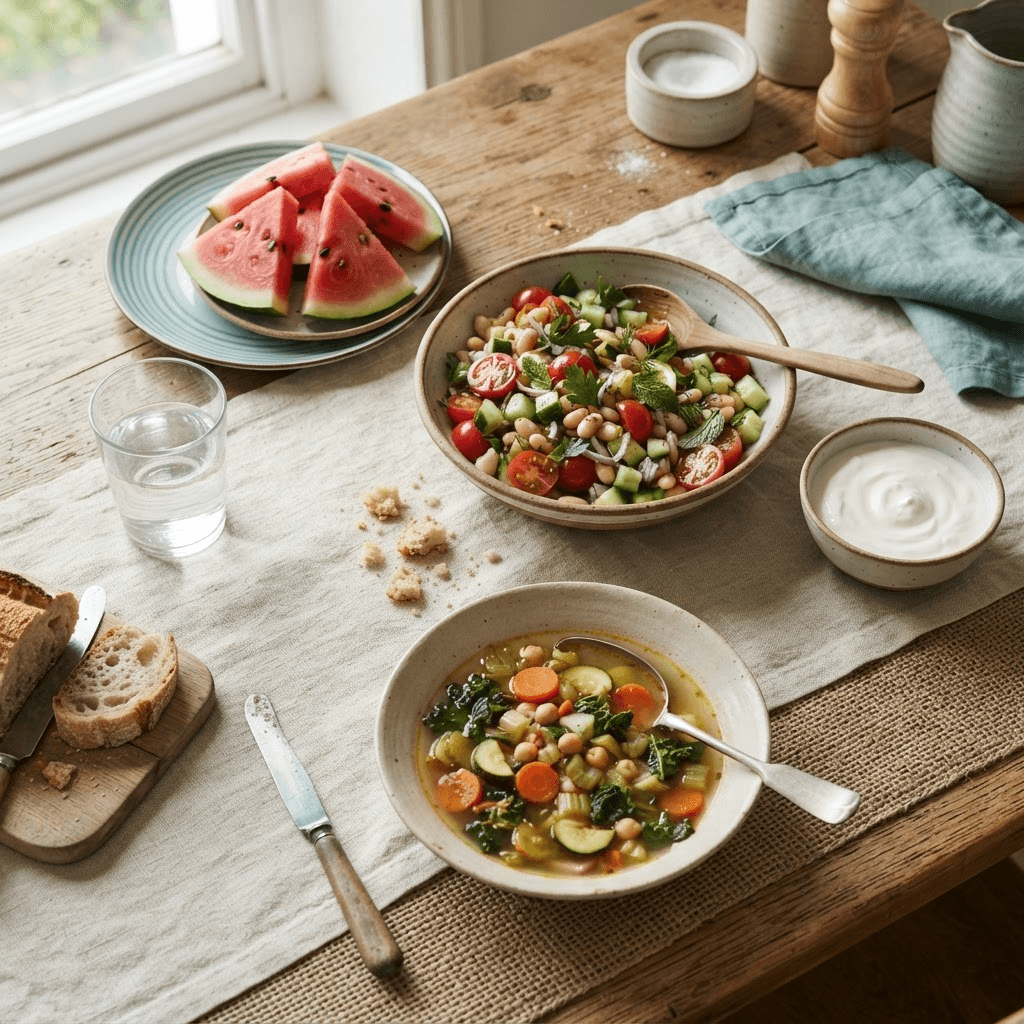
“Total water” is the detail that disappears from social-media graphics. A bowl of lentil soup, a peach dripping over the sink and yogurt spooned over breakfast all contribute water. So do milk, sparkling water, tea and coffee. The National Academies estimated that food supplies roughly one-fifth of total water for many people, although a produce-heavy menu can contribute more and a dry, salty menu less.
| Food or drink | What it contributes | Kitchen note |
|---|---|---|
| Plain water | Fluid without calories or added sugar | Keep a glass where you eat or work rather than relying on memory. |
| Milk or fortified soy milk | Fluid plus protein and minerals | Useful with breakfast; choose unsweetened soy if avoiding dairy. |
| Coffee or tea | Fluid and caffeine | They still count. Watch late-day caffeine if it disturbs sleep. |
| Soup or stew | Fluid, food and usually sodium | Taste before salting; canned versions can vary widely. |
| Watermelon, oranges and berries | Water, carbohydrate, fiber and micronutrients | Pack whole fruit rather than treating juice as the default. |
| Tomatoes, cucumber and leafy salads | Water and fiber with very little energy | Dress them well enough that you actually want to eat them. |
Food is not a reason to avoid drinking; it is a reason not to count hydration as if only plain water exists. A person eating oatmeal with milk, vegetable soup and several pieces of fruit starts from a different place than someone eating crackers, a deli sandwich and chips.
Build a hydration map instead of chasing a number
If tracking ounces makes you anxious or sends you to the bathroom every half hour, tie drinks to parts of the day you already repeat. Have something with breakfast, lunch and dinner; keep water nearby between meals; take extra fluid before and after sweaty activity. This is deliberately ordinary. A habit that survives a busy Tuesday is more useful than a perfect target you abandon by Thursday.
- On waking: drink if you are thirsty. There is no need to force a liter before coffee.
- At breakfast: pair the meal with water, milk, tea or coffee. A bowl of fruit and yogurt contributes too.
- Through the workday: use a refillable glass or bottle you enjoy drinking from. Refill when empty rather than racing a clock.
- With meals: drink to comfort. Water does not “dilute digestion” in a harmful way for healthy people.
- Around exercise or heat: begin hydrated, drink during longer or sweatier sessions, and replace what you lost afterward.
- In the evening: ease back if large drinks repeatedly wake you to urinate.
Use clues, not one clue
Thirst is a useful signal for most healthy adults, but it may become less noticeable with age and can lag behind losses during hard exercise or heat. Pale straw-colored urine often suggests adequate hydration, while darker yellow urine can prompt a drink. Still, urine color also changes with supplements, medicines and foods. Look at the pattern: thirst, a dry mouth, headache, less frequent urination, unusual fatigue and the conditions around you.
The days that change the equation
Hot weather and altitude
Sweat can disappear quickly on a dry day, so do not wait for a soaked shirt to acknowledge fluid loss. Bring water on long walks, drink with meals and include familiar salty foods when sweating heavily. At altitude, faster breathing and drier air can also increase losses. Increase gradually rather than gulping a huge volume at once.
Exercise
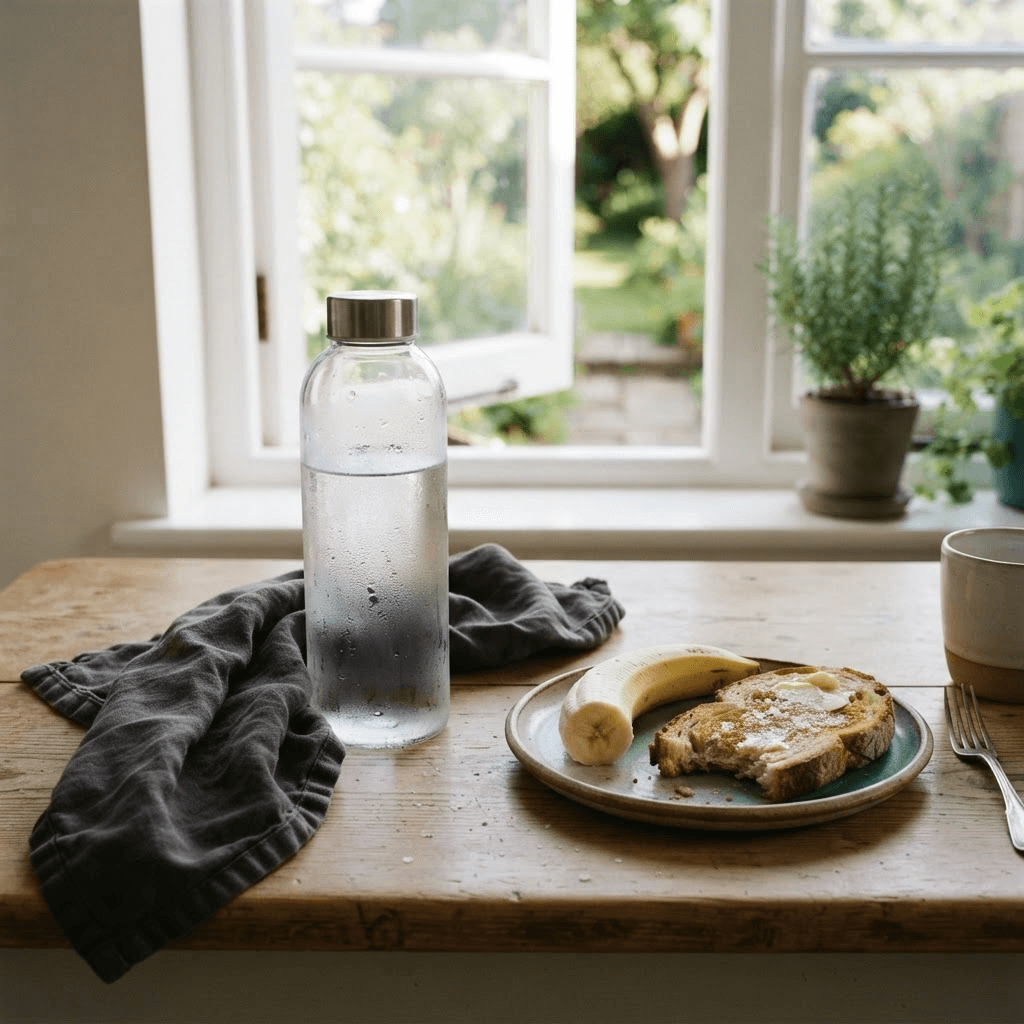
A relaxed half-hour walk generally does not demand a sports drink. Longer, harder sessions—especially in heat—are different because sweat removes both water and sodium. Body-size changes before and after training can help athletes estimate personal sweat loss: one kilogram lost is roughly one liter of fluid, although drinking and bathroom breaks during the session affect the calculation. Avoid finishing heavier than you started; that can be a sign of overdrinking.
Pregnancy, breastfeeding and illness
Pregnancy and milk production increase water needs, while fever, vomiting and diarrhea can rapidly raise losses. Small, frequent sips may sit better during nausea. An oral rehydration solution has a specific balance of glucose and salts and is more appropriate than plain water for significant diarrhea or vomiting; follow clinical or package guidance, especially for children.
Medical conditions and medicines
Kidney, heart and liver conditions can change how the body handles fluid, and some medicines affect thirst or urine output. If a clinician has given you a fluid limit or a specific target, that individualized plan takes priority over general hydration advice—including this article.
Do you need electrolytes, or just lunch?
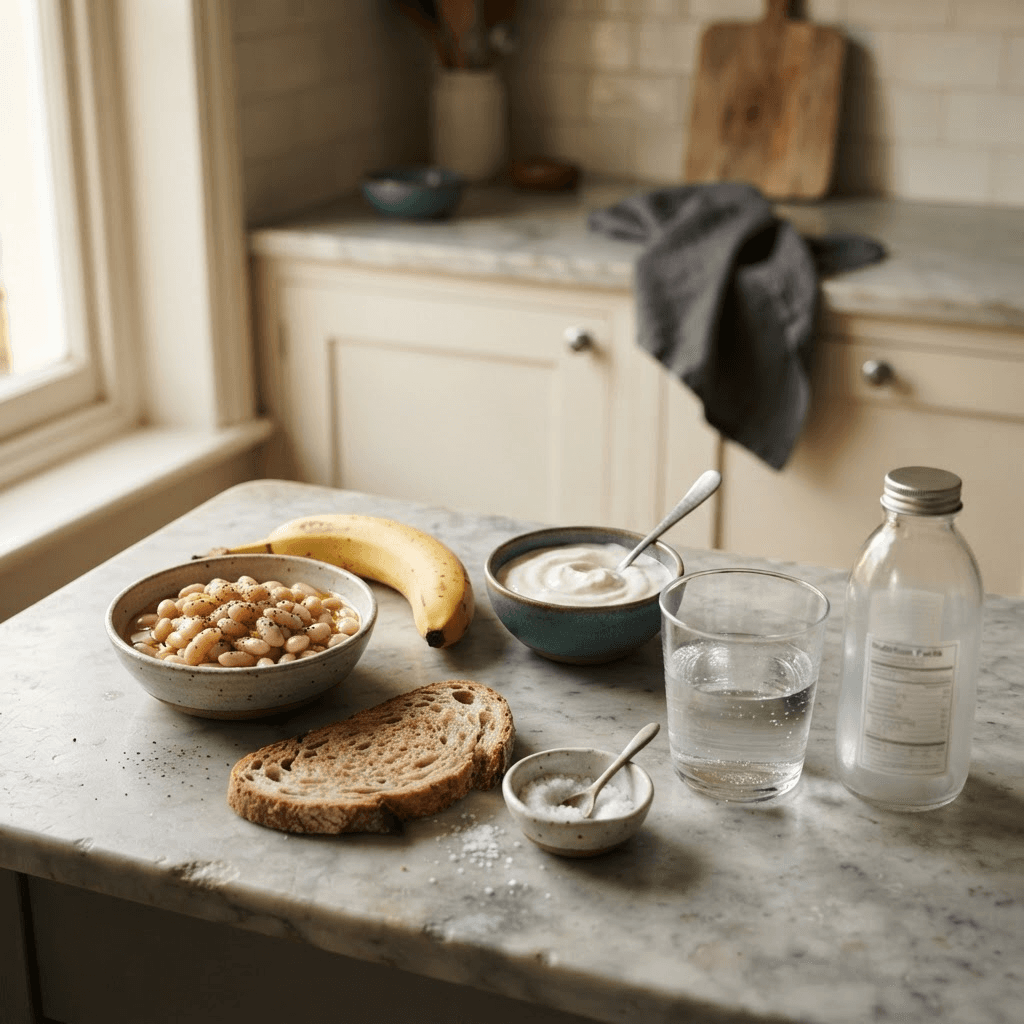
Electrolytes are minerals with an electrical charge, including sodium and potassium. They help regulate fluid balance, nerves and muscles. They are essential; that does not make a flavored powder essential. On a normal day, meals usually replace them without any special planning: bread, cheese, beans, vegetables, dairy, soups and salted cooking all contribute.
- Plain water is usually enough for short, easy activity and routine desk days.
- A regular meal plus water can cover recovery after many moderate workouts.
- A sports drink may be practical during prolonged, vigorous or very sweaty exercise, especially in heat.
- An oral rehydration solution is a medical-style formulation for substantial gastrointestinal losses; it is not the same as wellness water.
Read the front label last
Turn the bottle around. Check the serving size, added sugar and sodium per serving, then multiply if the package contains more than one. “Electrolyte” on the front may describe a meaningful sodium dose, a token sprinkle of minerals or mostly a sweet drink. Pick the product for the job: during a long hot run, carbohydrate and sodium may be useful; at your desk, water and a normal lunch usually make more sense.
Five hydration myths worth retiring
Myth 1: Everyone needs eight glasses
Eight glasses is memorable, not universal. Glasses differ in size, and needs differ by body size, climate, diet, activity, pregnancy and health. It can be a convenient personal routine, but it is not a physiological law.
Myth 2: Coffee dehydrates you
Caffeine can modestly increase urine production, particularly in people unaccustomed to it, but the water in ordinary coffee and tea still contributes to hydration. That is not permission to use six coffees as a water plan; caffeine can cause jitters and interfere with sleep. It simply means your morning mug does not cancel itself out.
Myth 3: Clear urine means perfect hydration
Completely clear urine all day may mean you are drinking beyond thirst. Aim for context, not a colorless contest. Pale yellow is a practical general sign, while persistent changes or urinary symptoms deserve proper medical attention rather than internet diagnosis.
Myth 4: More water detoxes the body
Your kidneys and liver manage waste continuously. Adequate fluid supports normal kidney function, but extra liters do not scrub away a weekend meal or compensate for a restrictive cleanse. Regular meals, enough fiber and normal hydration are less glamorous and far more sensible.
Myth 5: You cannot drink too much
Drinking water much faster than the kidneys can remove it can dilute blood sodium, a dangerous condition called hyponatremia. Risk rises during endurance events when people drink excessively, but extreme challenges can cause it too. Drink steadily and responsively; do not force fluids through nausea, bloating or a sloshing stomach.
If plain water is hard to remember—or hard to like
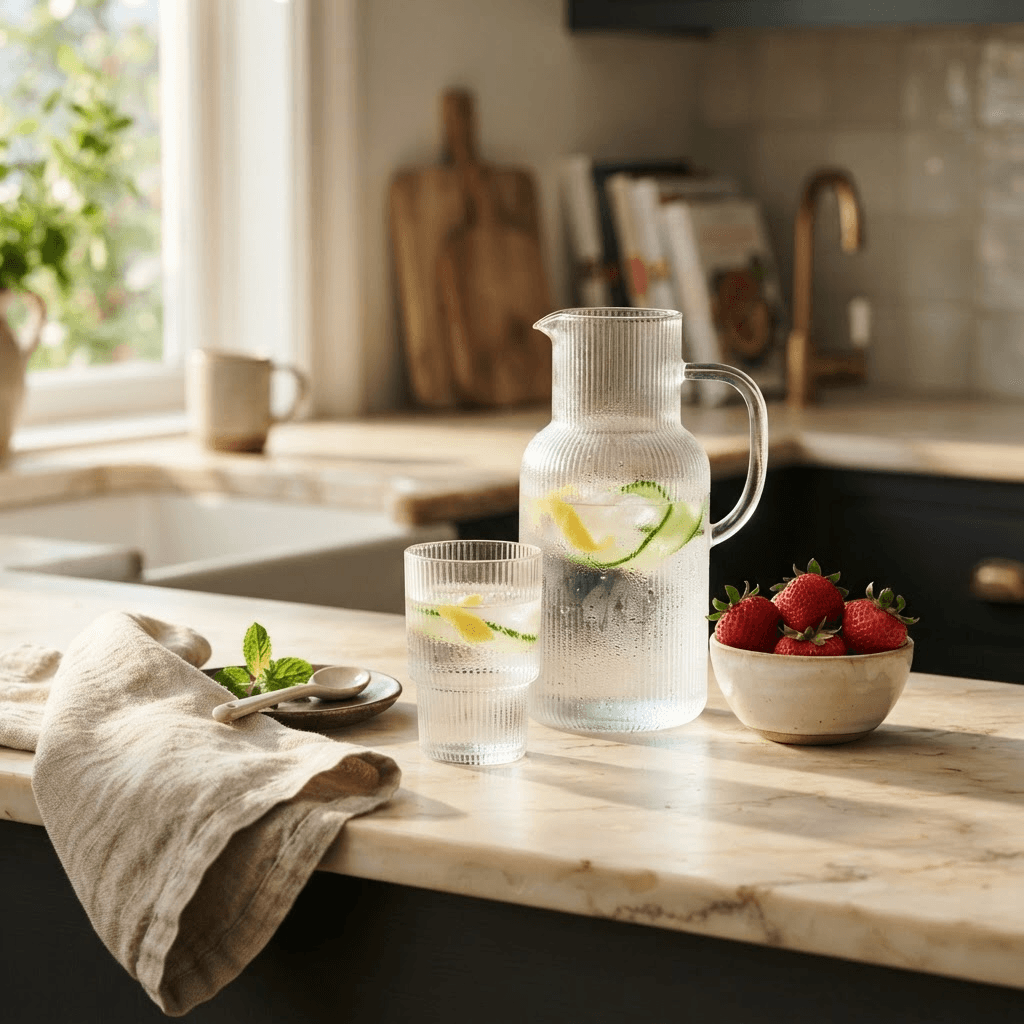
Put cold water where the decision happens: a carafe on the lunch table, a bottle beside your keys, a glass next to the kettle. Flavor it with bruised mint, citrus peel, frozen berries or cucumber if that helps. Sparkling water counts. So does unsweetened iced tea. If your bottle develops an old-dishwasher smell, the solution may be a bottle brush and a fresh lid gasket, not more motivation.
- Choose a bottle that fits your bag and is easy to clean; giant containers are inconvenient when full.
- Serve water with meals before reaching for a sweet drink by default.
- Keep chilled water ready if you prefer it cold, or use a mug if room-temperature water feels better.
- Add water-rich sides: sliced tomatoes, a piece of fruit, broth-based soup or yogurt.
- For a substantial blended breakfast, use the balance notes in our green smoothie guide rather than relying on juice alone.
Good hydration should fit quietly into the day. If the plan requires constant arithmetic, bathroom mapping and a suitcase-sized bottle, it is probably too rigid.
Sources and further reading
These public-health and clinical sources support the intake figures, practical hydration guidance and safety notes used above.
- Dietary Reference Intakes for Water, Potassium, Sodium, Chloride, and SulfateNational Academies Press
- About Water and Healthier DrinksCenters for Disease Control and Prevention
- Water: How much should you drink every day?Mayo Clinic
Hydration questions without the hype
Does sparkling water hydrate as well as still water?
Yes. Plain sparkling water contributes fluid just like still water. Carbonation can cause fullness or bloating for some people, and flavored varieties may contain sugar, sweeteners or sodium, so check the label if those matter to you.
Do coffee and tea count toward daily water intake?
Yes. The fluid in coffee and tea counts. Caffeine may modestly increase urine output, particularly if you rarely consume it, but ordinary servings do not erase the water they contain. Keep caffeine within a level that does not cause jitters or disturb sleep.
How can I tell if I am drinking enough?
Use several clues together: normal thirst, regular urination, generally pale-yellow urine and how you feel in the context of heat, exercise or illness. Dark urine, dry mouth, headache and less frequent urination can suggest you need more fluid, but persistent or severe symptoms deserve medical attention.
Should I drink water even when I am not thirsty?
Most healthy adults can use thirst as a central guide on ordinary days. Drink more deliberately during prolonged exercise, hot weather, illness, pregnancy or breastfeeding, and remember that thirst may be less reliable in older adults. Do not force large volumes without a reason.
When is an electrolyte drink useful?
It can be useful during prolonged, vigorous or very sweaty activity, particularly in heat, when both fluid and sodium are being lost. For short easy exercise and routine days, water plus normal meals is usually enough. Significant vomiting or diarrhea may call for a properly formulated oral rehydration solution rather than a sports drink.
Can drinking too much water be dangerous?
Yes. Very high intake, especially consumed quickly or during endurance exercise, can dilute blood sodium and cause hyponatremia. Headache, nausea, confusion and swelling during or after excessive drinking require urgent assessment. Avoid drinking beyond comfort simply to meet an arbitrary target.
Vitalis Nutrition Desk
The Vitalis Nutrition Desk turns established nutrition science into useful, food-first guidance for everyday kitchens.
Medical disclaimer: This article provides general food and nutrition education, not personalised medical nutrition therapy. Speak with a qualified clinician or registered dietitian if you have a medical condition, food allergy, take medication affected by diet, or need an individual eating plan.