Cottage Cheese Flatbread: The 2-Ingredient High-Protein Bread That Actually Works
Two ingredients, one blender, about 25 grams of protein. Cottage cheese flatbread is the viral bread swap that goes wrong in five predictable ways — so this is a fix-it guide, not just a recipe. Diagnose the soggy, rubbery and stuck-to-the-tray disasters before they happen.
 2 ingredients
Total time
45 minutes
Protein
about 25 g per flatbread
Calories
about 260 kcal per flatbread
Per flatbread
roughly $1.10 per flatbread
Your first cottage cheese flatbread will probably be soggy in the middle. Or rubbery. Or welded to the parchment so hard you eat it with a fork off the tray. This is not because the recipe is hard — it has two ingredients — but because every viral clip shows the 15-second success and none of the failures. So we are going to do this differently: fix the failures first, then bake.
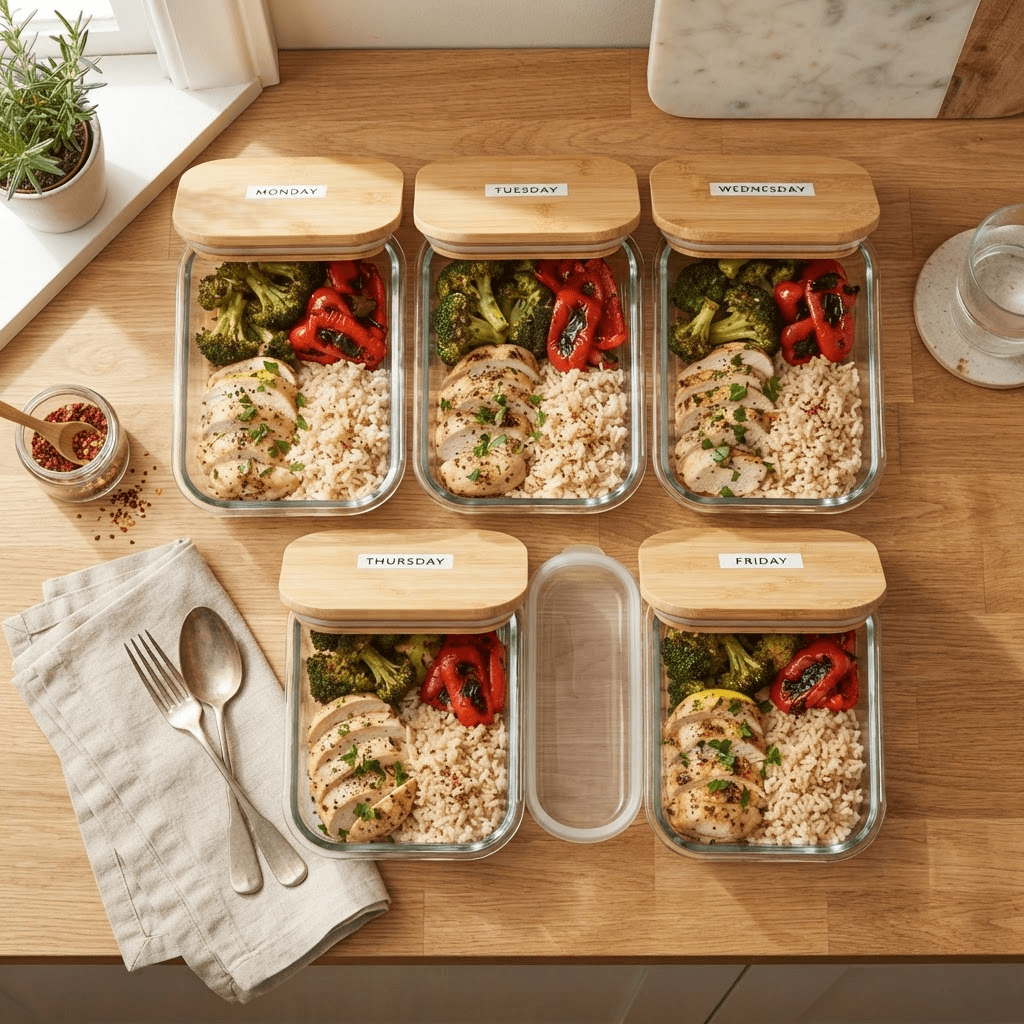
The appeal is real and worth the trouble. One tray gives you a bread-like base carrying around 25 grams of protein for the carbs of half a slice of sandwich bread. It is naturally gluten-free, it costs about a dollar, and it bends into a wrap, a pizza crust or toast. If you are already running a two-hour Sunday meal-prep system, this is the bread component that finally fits the macros.
The two ingredients (and the ratio that matters)
There is exactly one number to remember: one cup of cottage cheese to two eggs. That ratio is the whole recipe. The cottage cheese brings the protein and the soft, bready body; the eggs are the binder that holds it together as it bakes. Everything past that — seasoning, parmesan, herbs — is personality, not structure.
People overcomplicate it by adding a third egg for "more protein" or skipping the blend to save a dish. Both backfire. More eggs push it toward a baked omelette; skipping the blend leaves curds that turn rubbery. Respect the ratio and the method, and the flatbread is close to foolproof.
The whole shopping list
Cottage cheese
1 cup (about 225 g)
Full-fat or 2% blends smoothest. Low-fat works but bakes a touch drier.
Eggs
2 large
The binder. No eggs, no structure — this is not a swap you can skip.
Seasoning
1–2 tsp
Everything-bagel, garlic powder, Italian herbs or a pinch of salt. Your call.
Optional: grated parmesan
2 tbsp
Adds savour and helps the surface crisp and brown.

The method, with the cue for each step
Four steps, and each one has a specific thing to look for rather than a clock to trust. Ovens lie; your eyes do not. Watch for the cue and the flatbread comes out right whether your oven runs hot or cold.
Blend until completely smooth
Add cottage cheese and eggs to a blender or a tall cup for an immersion blender. Run it for a full 30–45 seconds — longer than feels necessary.
Watch forLook for a pourable, pancake-like batter with no visible curds. Curds you can still see will show up as rubbery lumps later.
Spread thin and even
Pour onto a parchment-lined tray and spread into a rectangle roughly the thickness of two stacked coins. Even edges bake evenly; thick puddles stay wet in the middle.
Watch forYou should almost see the parchment through the thinnest spots. Sprinkle seasoning on now.
Bake hot and long enough
Bake at 350°F (175°C) for 35–40 minutes. Resist opening the door early — the surface needs to fully dry before it will lift cleanly.
Watch forIt is done when the top looks matte and dry, the edges are deep golden, and it feels firm and set when you press the centre.
Cool before you peel
Slide the parchment onto a rack and let it cool for at least 10 minutes. Peeling a hot flatbread is the fastest way to tear it in half.
Watch forWhen cool, it should release from the parchment with almost no resistance. If it sticks, it needed a few more minutes in the oven.

The fix-it bench: every way it goes wrong
This is the part other recipes skip and the reason most people give up after one soggy attempt. Nearly every bad batch traces back to the same short list of causes. Find your symptom, read the cause, apply the fix — and your second flatbread will be your last bad one.
The fix-it bench
Soggy or wet in the middle
- Why it happens
- Spread too thick, or pulled from the oven too early.
- The fix
- Spread thinner next time and bake the full 40 minutes. A wet centre almost always means underbaked, not a bad ratio.
Rubbery, eggy texture
- Why it happens
- Batter was not blended smooth, or too many eggs.
- The fix
- Blend a full 45 seconds until no curds remain, and keep it to 2 eggs per cup of cottage cheese.
Sticks and tears on the parchment
- Why it happens
- Peeled while hot, or undercooked underside.
- The fix
- Cool 10 minutes before peeling. Use parchment, never wax paper or a bare tray.
Tastes bland
- Why it happens
- Cottage cheese is mild; no seasoning was added.
- The fix
- Season the batter and the surface. Salt, garlic powder and parmesan do the heavy lifting.
Too floppy to hold a filling
- Why it happens
- Made too thick and soft, or not baked long enough to firm up.
- The fix
- For a sturdy wrap, spread thin and bake until the edges are properly golden and crisp.
Watery batter that will not spread
- Why it happens
- Very wet, low-fat cottage cheese with excess liquid.
- The fix
- Drain the cottage cheese in a sieve for a few minutes first, or stir in 1 tbsp of grated parmesan to firm it up.
The texture dial: crispy, foldable or soft
Here is what the viral clips never mention: cottage cheese flatbread is not one texture. How thin you spread it and how long you bake it moves it along a dial from shatteringly crisp to soft and sliceable. Decide what you are making it for first, then set the dial.
Set the dial before you spread
Thin & crispy
- Spread
- Very thin — near cracker thickness
- Bake
- 40 min at 350°F, until edges are deep gold
- Best for
- Wraps, quesadillas, dipping and pizza bases
Medium & foldable
- Spread
- Two-coin thickness, even rectangle
- Bake
- 35–38 min at 350°F
- Best for
- Sandwich bread, breakfast wraps, everyday use
Thick & soft
- Spread
- Poured into a small tray or loaf pan
- Bake
- 38–42 min, cover loosely if browning fast
- Best for
- A soft, bread-like slab to slice and toast
Four ways to actually eat it
A plain flatbread is a means, not an end. The reason it earns a permanent spot in the fridge is how many jobs it quietly does across a week.
The high-protein wrap
Roll it around grilled chicken, greens and hummus. Warm it 20 seconds first so it folds without cracking.
A personal pizza base
Top the baked flatbread with sauce, cheese and vegetables, then grill 5 minutes until bubbling.
Toast that keeps you full
Slice the thick version, toast it, and load it like sourdough — smashed avocado, egg, chilli.
Dippers and crackers
Cut the crispy version into strips for hummus, tzatziki or soup instead of bread.


Why the macros made it go viral
Strip away the trend and the numbers explain everything. A whole flatbread lands near 25 grams of protein with only about 7 grams of carbohydrate — bread-shaped food with the macro profile of a protein snack. That is a genuinely useful trade for anyone counting protein or cutting refined carbs, which is most of the internet right now.
Estimated per whole flatbread made with 2% cottage cheese and two eggs, from typical label values. Figures vary by brand, cottage cheese fat level and toppings.
The one honest caveat: on its own it has essentially no fibre. Treat the flatbread as the protein and the vehicle, and let the filling do the fibre — vegetables, beans, greens. If fibre is a focus for you, our high-fibre foods guide pairs naturally with it, and the wider Healthy Recipes collection has more high-protein builds to rotate through the week.
Storing, reheating and making it ahead
Cool it completely, then wrap and refrigerate for up to four days. FoodSafety.gov advises keeping the fridge at 40°F (4°C) or below and not leaving egg-based food at room temperature for more than two hours, so a packed lunch wants an insulated bag. Reheat in a dry pan or toaster rather than a microwave, which turns the surface soft and steamy.
It freezes better than most egg dishes. Layer cooled flatbreads between parchment, freeze flat, and reheat straight from frozen in a hot pan. Making a double batch on the weekend is the move — two trays back to back is barely more work than one.
Nutrition and food-safety references
Sources used for nutrition and storage context
These references support the general nutrition and food-safety context. They do not certify the exact nutrition of a home-baked flatbread.
- FoodData Central nutrient database (cottage cheese and eggs)U.S. Department of Agriculture
- Cold food storage chartFoodSafety.gov
- Protein and health in the dietHarvard T.H. Chan School of Public Health — The Nutrition Source
Reader questions
Cottage cheese flatbread: the questions that come up mid-bake
Why is my cottage cheese flatbread soggy in the middle?
Almost always because it was spread too thick or taken out of the oven too early. The centre needs the full 35–40 minutes to dry out and set. Spread the batter thinner and even, and wait until the whole surface looks matte and dry — not shiny — before removing it. A soggy centre is an underbaking problem far more often than a ratio problem.
What is the correct cottage cheese to egg ratio?
One cup of cottage cheese (about 225 g) to two large eggs makes one large flatbread. That ratio is the backbone of the recipe. Adding a third egg makes it taste like a baked omelette; using only one makes it fragile and hard to lift. Scale it up in the same proportion for bigger batches.
Why did mine come out rubbery and eggy?
Two usual causes: the batter was not blended completely smooth, so visible curds turned rubbery, or too many eggs were used. Blend for a full 45 seconds until it is a smooth, pourable batter with no lumps, and stick to two eggs per cup of cottage cheese. Both fixes are quick and reliable.
Can I make it dairy-free or lower in fat?
Low-fat and 2% cottage cheese both work, though very low-fat versions bake a little drier — draining off excess liquid first helps. Truly dairy-free swaps are harder because the cottage cheese provides the body and protein; a blended silken tofu base is the closest experiment, but it behaves differently and is not a like-for-like substitute.
Is cottage cheese flatbread actually healthy?
For most people, yes, as part of a varied diet. It is high in protein, low in carbohydrate and made from two whole ingredients with no additives. Its main gap is fibre, which it has almost none of on its own, so pair it with vegetables, beans or greens. It is also naturally gluten-free, which makes it useful for people avoiding wheat.
Can I use it as a pizza crust or wrap?
Yes, and it is one of the best uses. For a wrap, spread the batter thin and bake until foldable, then warm it briefly so it does not crack. For pizza, bake it fully crisp, add your toppings, and grill for about five minutes. Because it firms up properly, it holds a slice better than most vegetable-based crusts.
How long does it keep, and can I freeze it?
Cooled and wrapped, it keeps in the fridge for up to four days at 40°F (4°C) or below. It also freezes well: layer cooled flatbreads between parchment, freeze flat, and reheat from frozen in a hot dry pan. Avoid the microwave for reheating, as it makes the surface soft and steamy rather than crisp.