High-Protein Chia Pudding: The Foolproof Ratio (and How to Fix a Runny One)
- The ratio
- 3 tbsp chia : 1 cup liquid
- Protein
- 25–40 g per jar
- Chill
- 4 hours (or overnight)
- Per jar
- roughly $1.10 per jar
You did everything the recipe said. You stirred the seeds into the milk, screwed the lid on, slid the jar to the back of the fridge, and went to bed picturing a thick, spoonable breakfast. In the morning you opened it to find soup — thin, seedy, sad soup, with a dry clump stuck to the bottom. If that is why you are here, good news: chia pudding almost never fails because of a bad recipe. It fails because of a bad ratio and a lazy stir.
So this guide is built backwards from the usual recipe. We start with the one number that decides everything, then the two-minute method that prevents lumps, then how to load a single jar with 25 to 40 grams of protein. At the end is a troubleshooting table you can come back to whenever a batch misbehaves. If you like breakfasts you assemble once and eat all week, it sits right alongside our high-protein overnight oats.
The one ratio that decides everything
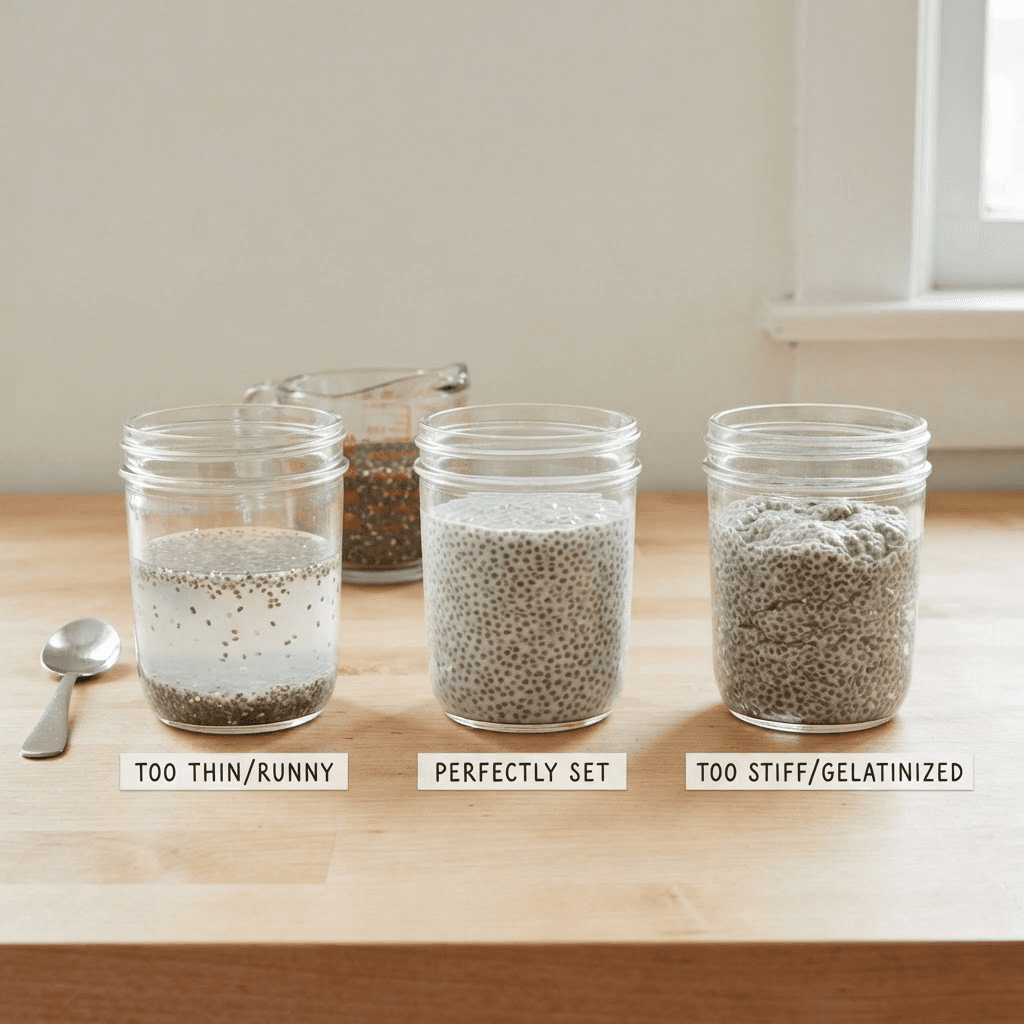
Chia seeds can hold roughly ten times their weight in liquid, which is exactly why they work — and exactly why they punish guesswork. Too little chia and you get a drink; too much and you get a rubbery brick. The whole texture of the finished pudding lives in this single dial, so it is worth seeing all the way across before you commit to a number.
The texture dial
- 1 : 82 tbsp per cupToo thin
Loose and drinkable, closer to a seeded smoothie than a pudding. Fine over granola, disappointing on its own.
- 1 : 62.5 tbsp per cupToo thin
Soft-set, just holds a spoon. Good if you like it silky, but it will loosen again by day three.
- 1 : 53 tbsp per cupThe sweet spot
The sweet spot. Thick, scoopable, holds its shape and stays that way all week. This is the ratio to memorize.
- 1 : 44 tbsp per cupToo thick
Dense and sliceable, almost gel-cake firm. Deliberate for parfait layers, too stiff for everyday eating.
- 1 : 35 tbsp per cupToo thick
A solid block. Useful only if you are folding in extra liquid later, otherwise a waste of chia.
The base recipe (memorize this, not the flavors)
Here is the entire foundation. Four ingredients, one bowl, no heat. Every flavor later in this guide is just this base with something stirred in or spooned on top, so if you learn these amounts once you never need another chia pudding recipe again.
The four-part base
Makes 2 jars (about 1 generous serving each)- 6 tbsp
Chia seeds
The whole structure. They swell to about ten times their size and lock the liquid into a soft gel.
- 2 cups
Milk of choice
The body. Dairy, soy and pea milk set firmest; light coconut and almond milk set softer.
- 1–2 tbsp
Sweetener
Maple syrup, honey or a mashed date. Add before chilling so it distributes evenly.
- 1 tsp + a pinch
Vanilla + pinch of salt
The quiet upgrade. Salt is what makes people say it does not taste "healthy".
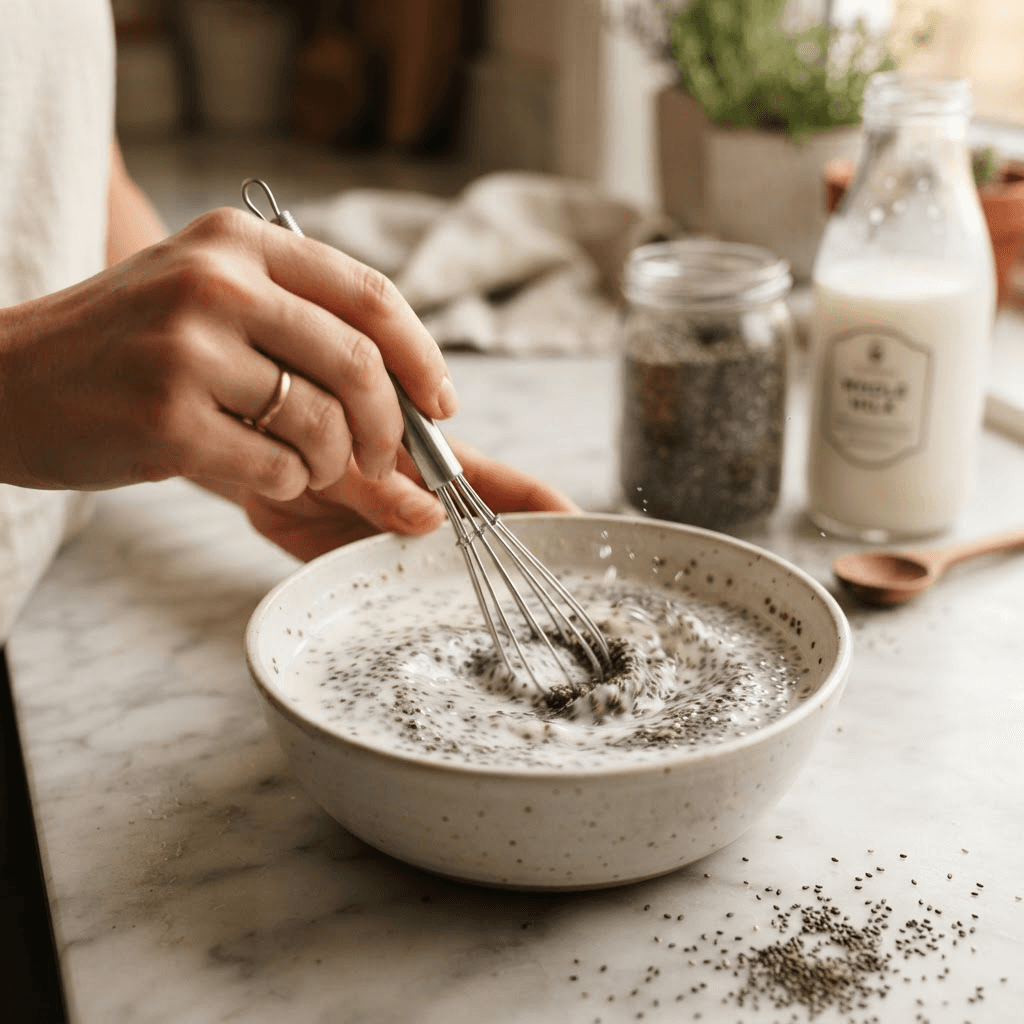
The method matters more than the ingredient list, and it is where nearly every runny, lumpy jar goes wrong. Chia does not dissolve; it disperses and then swells. If the seeds are allowed to settle before they gel, they clump on the bottom while the top stays liquid. Two short whisks, a few minutes apart, is the fix.
Minute 0
Whisk, do not just stir
Combine chia, milk, sweetener, vanilla and salt in a bowl or jar and whisk hard for 20–30 seconds. Stirring leaves the seeds to sink and clump; whisking suspends them so they gel evenly.
Minute 5
Rest, then whisk again
Let it sit five minutes on the counter, then whisk a second time. This second pass breaks up the little seed rafts that always form and is the single biggest fix for lumpy pudding.
4 hours+
Cover and refrigerate
Cover and chill at least four hours, ideally overnight. Give it one more stir before the fridge if you can. It sets fully by hour four and holds for five days.
When ready
Loosen and top
If it firmed up more than you like, stir in a splash of milk to loosen. Add fruit, nut butter or crunch just before eating so toppings stay bright.
How to get 25 to 40 grams of protein in one jar
Plain chia pudding is a fibre and omega-3 story, not a protein one — two tablespoons of seeds bring only about 4 grams. That is fine as a snack, but it will not carry a breakfast. The good news is that chia pudding is unusually easy to fortify because the base is just seeds and liquid, so you have room to add protein without wrecking the texture.
Five ways to load the jar
- +20–25 g
Scoop of protein powder
Whisk into the milk first. Add 2–3 tbsp extra liquid, since powder thickens the mix too.
- +10 g
Greek yogurt (½ cup)
Fold in after the first set for a thicker, tangier, mousse-like texture.
- +12 g
Cottage cheese, blended (½ cup)
Blend smooth with the milk. Adds body and protein with almost no flavor of its own.
- +6–8 g
Soy or pea milk instead of almond
The easiest upgrade: swap the base milk and do nothing else.
- +4 g
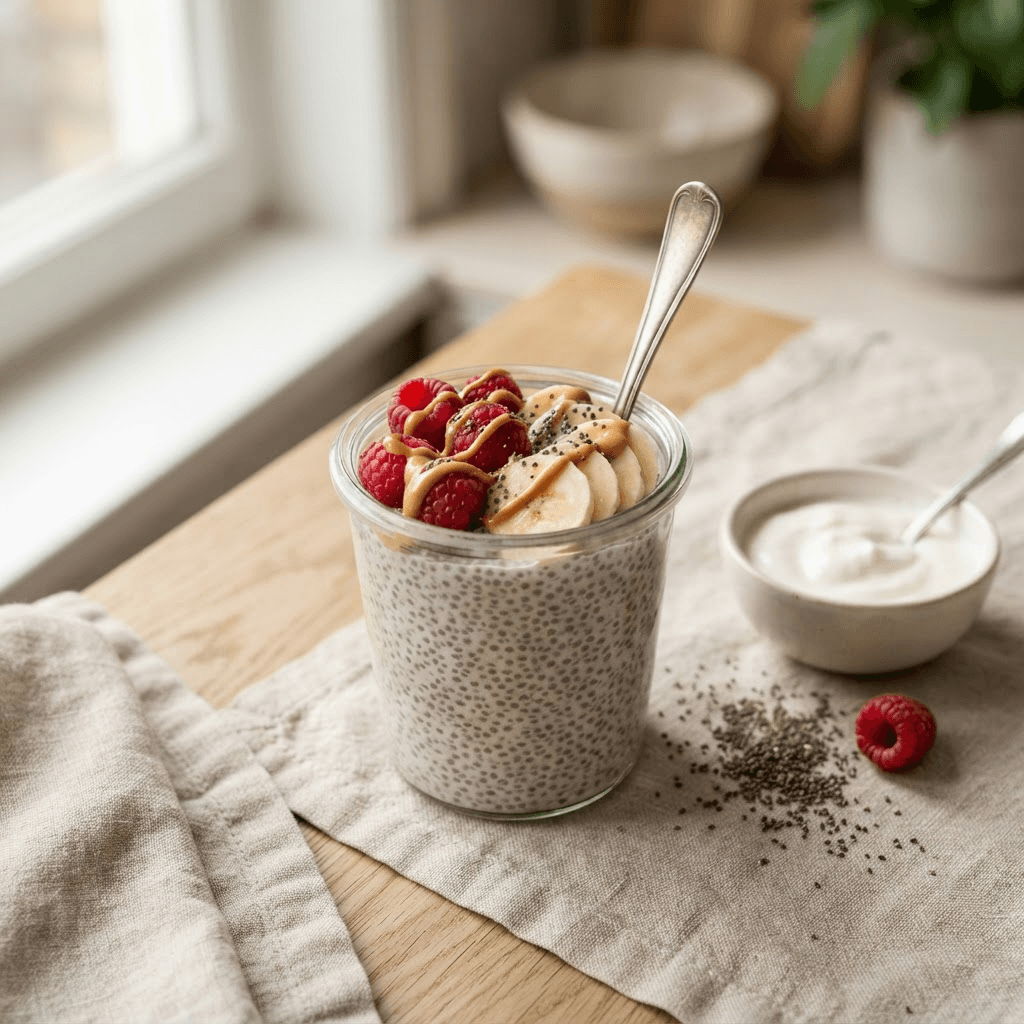
Peanut butter (1 tbsp)
Swirl in for flavor and a little extra protein and healthy fat.
Five flavors on the same base
Once the base and the ratio are second nature, flavor is the fun part and the reason a prep-ahead jar never gets boring. Each of these keeps the 3-tablespoons-per-cup ratio; only the stir-ins and toppings change. Build the base to set, and add anything fresh or crunchy at serving.
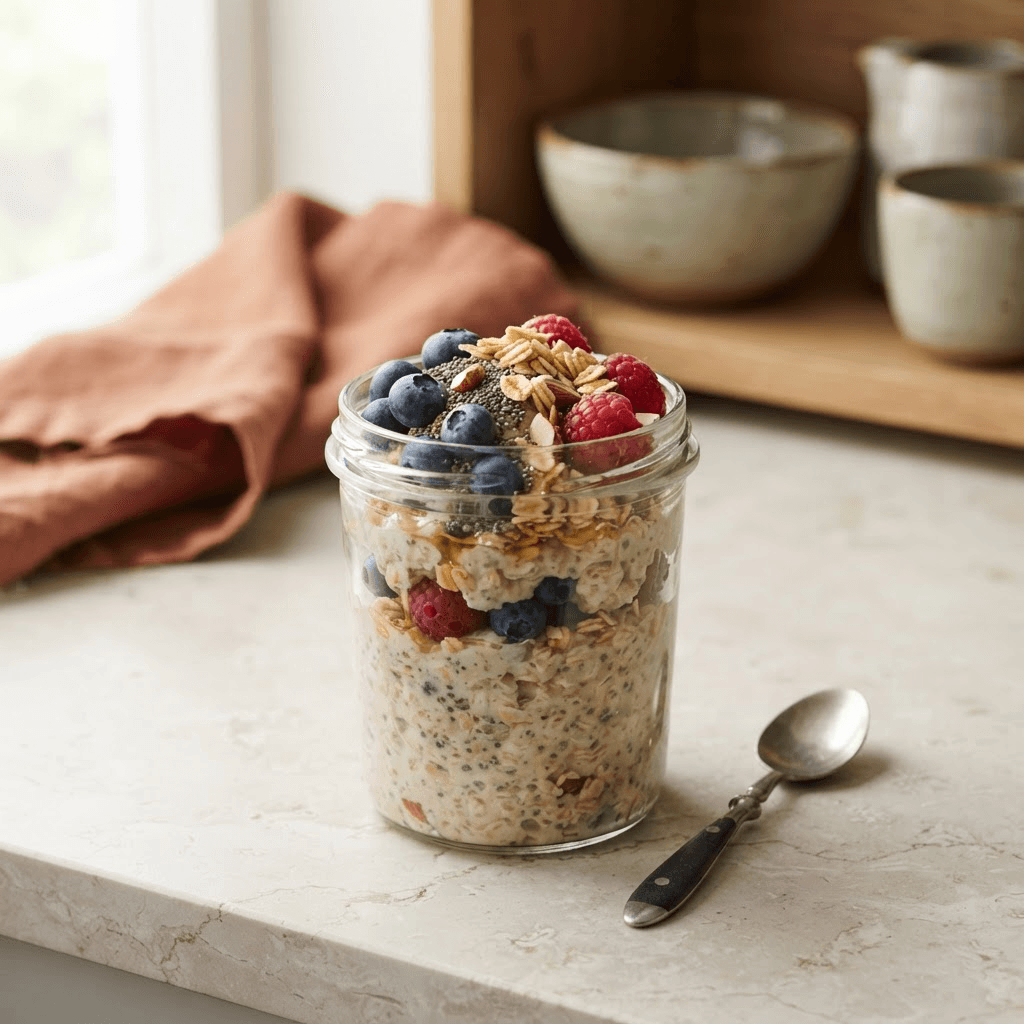
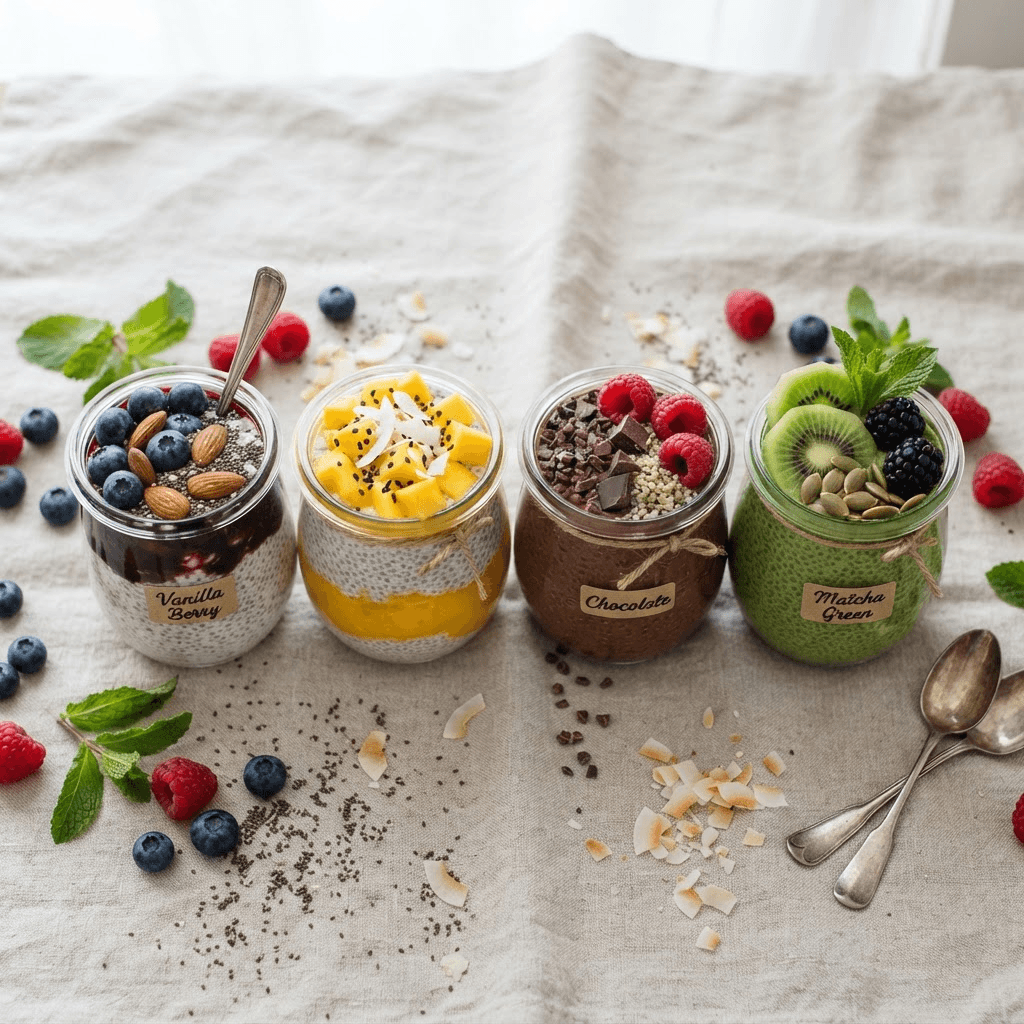
Vanilla berry
- Base
- Dairy or soy milk + vanilla
- Stir in
- Nothing extra
- Top
- Fresh raspberries, blueberries, a few toasted oats
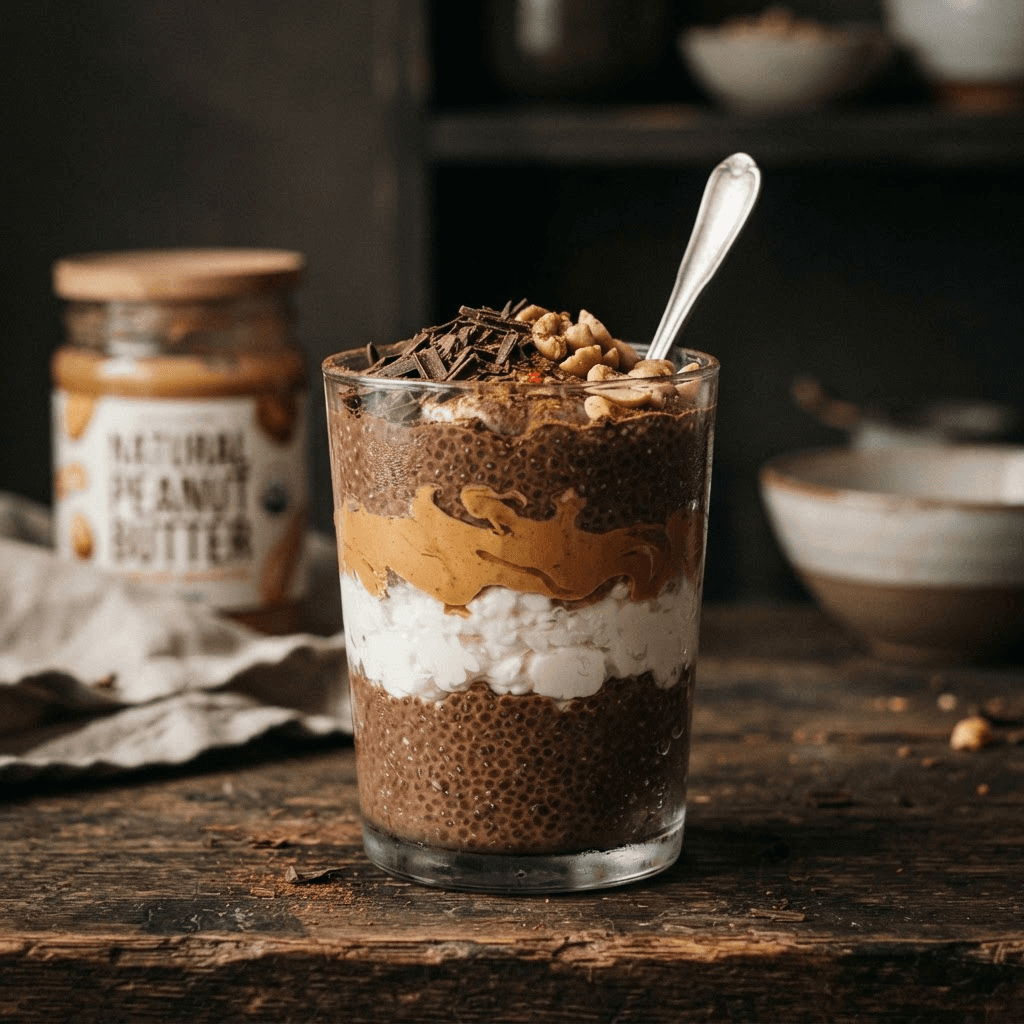
Chocolate peanut butter
- Base
- Milk + 1 tbsp cocoa + chocolate protein
- Stir in
- 1 tbsp peanut butter
- Top
- Chopped peanuts, dark chocolate shavings
Mango coconut
- Base
- Half coconut milk, half regular
- Stir in
- Diced mango
- Top
- Toasted coconut flakes, lime zest
Matcha vanilla
- Base
- Soy milk + 1 tsp matcha
- Stir in
- Extra 1 tsp maple
- Top
- Sliced kiwi, pumpkin seeds
Apple pie
- Base
- Milk + cinnamon + nutmeg
- Stir in
- Grated apple
- Top
- Chopped walnuts, a drizzle of maple
Troubleshooting: why your chia pudding failed
This is the table to bookmark. Whatever went wrong, the cause is almost always one of five things, and each has a quick rescue for the batch in front of you plus a tweak to stop it happening again. You rarely have to throw a jar away.
The fix-it board
It stayed runny / never set
Why it happens
Too much liquid for the seeds, or the seeds sank and clumped instead of dispersing.
The fix
Whisk in another 1 tbsp chia per cup, wait 10 minutes, whisk again and chill. Next time use the 3-tbsp-per-cup ratio and do the two-whisk method.
It set into a solid, rubbery block
Why it happens
Too much chia, or acidic add-ins (lots of citrus) firmed it further overnight.
The fix
Stir in a splash of milk to loosen it back to a spoonable pudding. Dial the ratio down to 2.5 tbsp per cup next time.
Lumpy clumps of dry seeds inside
Why it happens
You stirred once and walked away, so pockets of seeds gelled together before dispersing.
The fix
For this batch, break the clumps with a fork or blend for a few seconds. Always whisk, rest five minutes, then whisk again.
It tastes bland or "healthy"
Why it happens
No salt, not enough sweetener, or under-flavored milk like plain almond.
The fix
Add a real pinch of salt, a little more maple or a mashed date, and lean on vanilla, cocoa or cinnamon. Salt is the missing ingredient nine times out of ten.
It got watery again after a couple of days
Why it happens
A softer ratio, or a thin milk that keeps releasing liquid as it sits.
The fix
Pour off the top liquid and stir, or start at 3 tbsp per cup with a firmer-setting milk like soy, dairy or pea.
Meal prep, storage and the 5-day rule
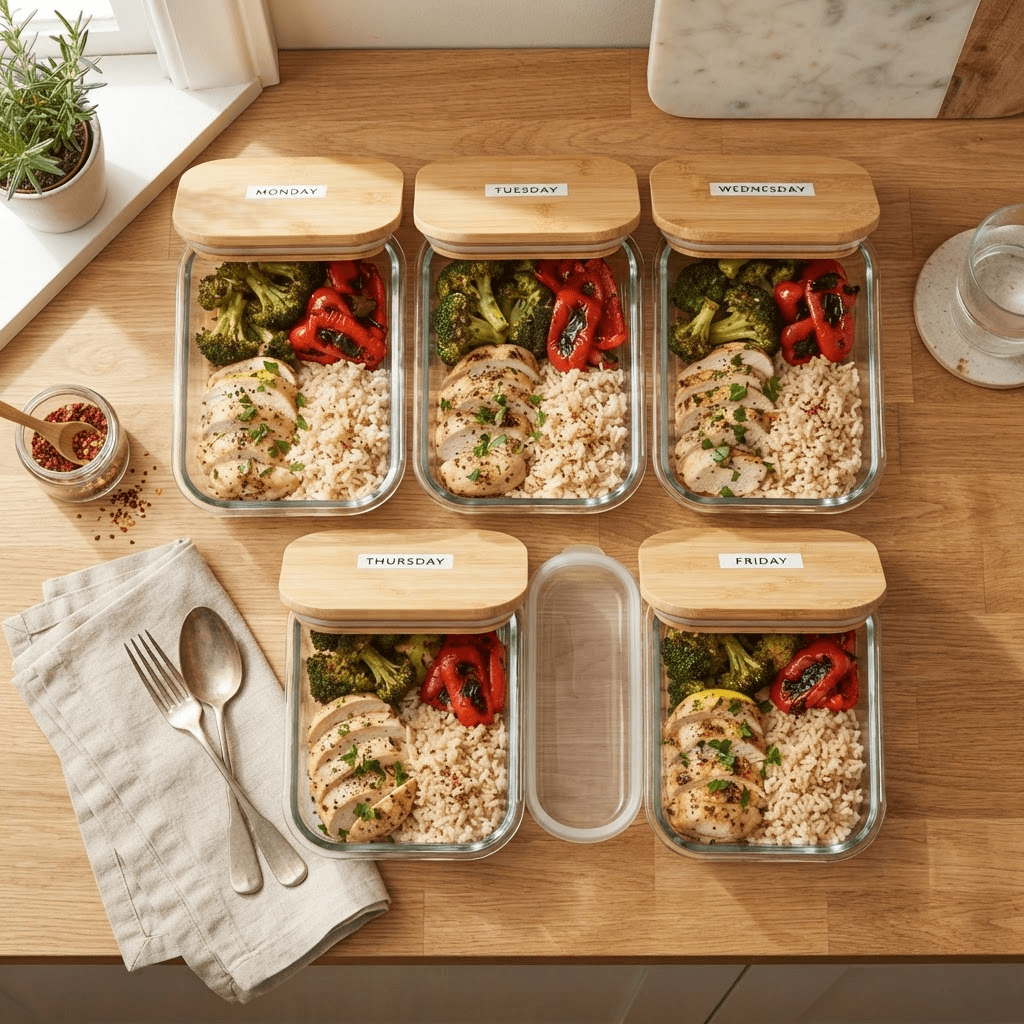
Chia pudding is close to the perfect meal-prep breakfast because it wants to be made ahead — it needs those hours in the fridge to set anyway. A double batch of the base splits neatly into jars on Sunday and holds for up to five days when kept cold. Portion the base plain, then flavor and top each jar the morning you eat it so nothing turns soggy.
Keep the fridge at 40°F (4°C) or below, and if you are carrying a jar to work, treat it like any dairy-based food: an insulated bag with an ice pack for anything longer than a short commute. You can freeze the plain base for up to a month, though the texture loosens slightly on thawing, so a quick whisk brings it back.
The nutrition, honestly
The figures below are calculated from typical label values for one jar made with dairy milk, a tablespoon of maple syrup and a single scoop of protein powder — not a lab measurement. Your brand of milk, powder and sweetener will shift them, so read your own labels if you track closely. What does not change is the shape of it: high in fibre and omega-3s, genuinely high in protein once fortified, and low in added sugar if you keep the sweetener light.
Estimated per jar with dairy milk, 1 tbsp maple syrup and a single scoop of protein powder, from typical label values. Figures vary by brand, add-ins and portion size.
Nutrition and food-safety references
Sources used for nutrition and storage context
These references support the general nutrition and food-safety context. They do not certify the exact nutrition of a home-prepared jar.
- FoodData Central nutrient database (chia seeds)U.S. Department of Agriculture
- Cold food storage chartFoodSafety.gov
- Omega-3 fatty acids — health professional fact sheetNIH Office of Dietary Supplements
Reader questions
Quick answers before you soak a single seed
What is the best chia seed to liquid ratio?
Three tablespoons of chia seeds to one cup of liquid (a 1:5 ratio by volume) is the reliable sweet spot. It sets thick and spoonable within about four hours and holds that texture for days. Use 2.5 tablespoons per cup if you prefer a softer, silkier pudding, or 4 tablespoons per cup for firm, sliceable parfait layers.
Why is my chia pudding runny and not thickening?
Almost always too much liquid for the seeds, or the seeds clumped and sank instead of dispersing. Whisk in an extra tablespoon of chia per cup, wait ten minutes, whisk again and return it to the fridge. Next time use the 3-tablespoons-per-cup ratio and whisk twice — once at the start and once after a five-minute rest.
How do I make chia pudding high in protein?
Whisk a scoop of protein powder into the milk (add a little extra liquid to compensate), or fold in half a cup of Greek yogurt or blended cottage cheese after the first set. Switching from almond milk to soy or pea milk adds several grams for free. Any of these can take one jar from about 4 grams of protein to 25–40 grams.
How long does chia pudding last in the fridge?
Up to five days in a sealed container kept at 40°F (4°C) or below, which is what makes it such good meal prep. Store the base plain and add fresh fruit and crunchy toppings the morning you eat each jar so nothing turns watery or soggy.
What is the best milk for chia pudding?
For the firmest, creamiest set, use dairy, soy or pea milk — they also add protein. Almond and light coconut milk work but set softer and can loosen after a couple of days. Full-fat coconut milk makes an especially rich pudding but is higher in calories.
Can I eat chia pudding every day?
For most people, yes. Chia is a whole food rich in fibre and omega-3s, and a jar a day fits comfortably into a balanced diet. Because it is high in fibre, increase your intake gradually and drink enough water to avoid bloating. If you have a digestive condition or swallowing difficulty, check with your clinician first.