Hiking for Mental Health: Nature Therapy That Lowers Cortisol
Use the trail to create room, not another target. This guide turns the evidence into a safe, repeatable walk for the day you actually have.
The goal is not to escape farther. It is to return with more room.
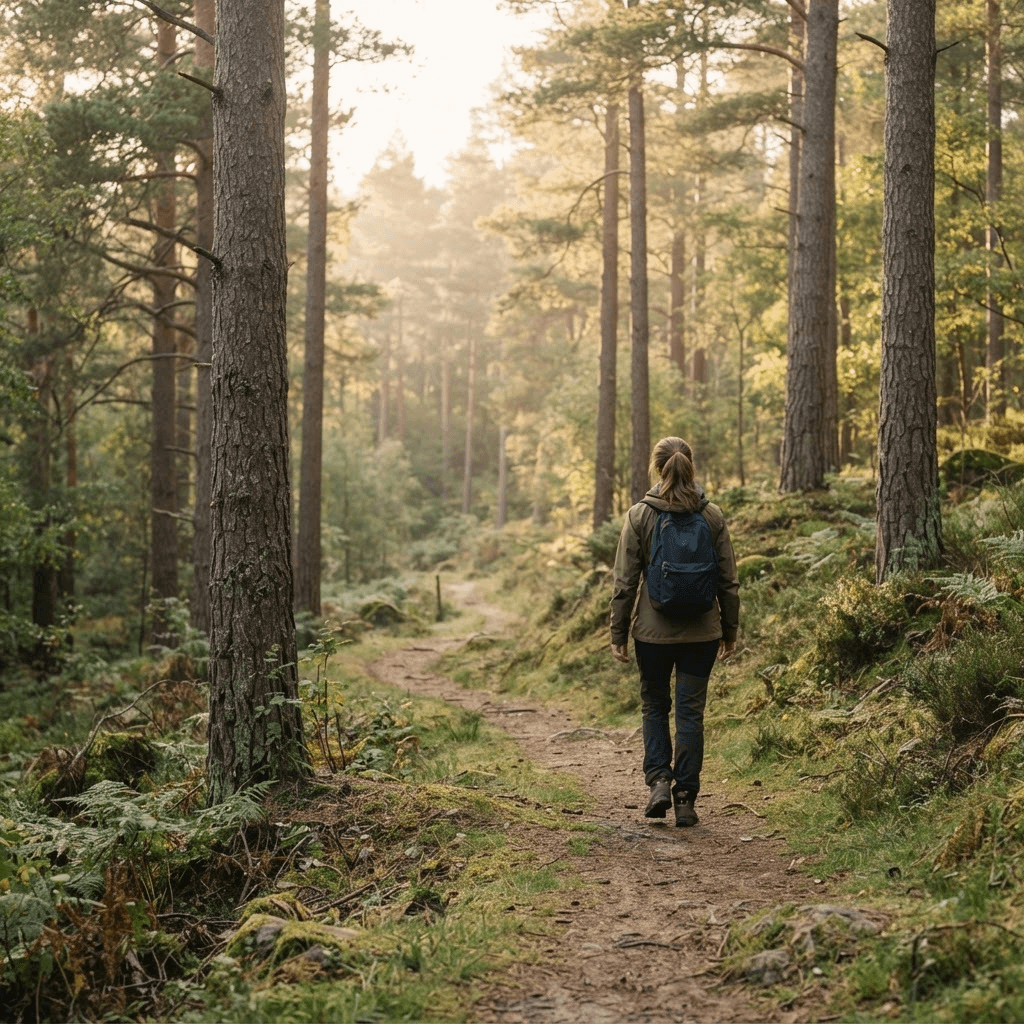
The useful dose
Start with twenty minutes. Leave the summit for another day.
Familiar route. Conversational pace. One sensory anchor. No performance score required.
At the trailhead, your phone still shows twelve unread messages. Ten minutes later, the signal drops. Nothing in your life has been solved, yet the mind has fewer objects to hold: gravel underfoot, a bend in the path, wind moving through leaves. That change in attentional load is one reason hiking can feel different from walking on a treadmill—even when your heart rate is nearly identical.
This is not an argument that nature cures anxiety or that a difficult mood can be walked away. It is a field guide for using outdoor movement as supportive care. You will learn what the cortisol research can and cannot prove, how to choose a route when stressed, and how to build a hike that leaves you steadier instead of depleted.
What changes when the walk moves outdoors
A hike combines several ingredients that mental-health studies often examine separately: physical activity, daylight, distance from routine stressors, lower exposure to notifications, sensory variety and sometimes social connection. That combination makes hiking promising, but it also makes the exact active ingredient difficult to isolate. The benefit may come from the trees, the movement, the break in rumination—or the way those pieces reinforce one another.
Reviews of green exercise and nature exposure generally find small-to-moderate improvements in mood, stress and wellbeing. Some studies report reductions in salivary cortisol after time in forests or green spaces. Cortisol is a normal hormone that helps regulate energy and alertness; it is not a toxin to “flush.” Levels naturally change by time of day, sleep, food, exercise and testing method, so a single reading cannot tell you whether your nervous system is healthy.
| Your starting state | Choose | Avoid today |
|---|---|---|
| Wired and restless | A familiar 30–45 minute loop at a steady conversational pace | Intervals, steep climbs and constant pace checking |
| Mentally exhausted | A flat 20-minute route with one clear turnaround point | Navigation-heavy trails and too many decisions |
| Low and withdrawn | A daylight walk with a trusted person and an easy exit | An isolated route that makes cancelling feel safer |
| Physically depleted | A bench, garden or five-minute green-space stroll | Treating exhaustion as a discipline problem |
Choose the route before motivation enters the conversation
Stress reduces working memory. A route with unclear parking, multiple junctions and uncertain distance can turn restorative time into another logistics problem. Build a small route menu when you feel reasonably well: one 20-minute local option, one 45-minute trail and one longer weekend route. Save the map offline and note where you can turn back.
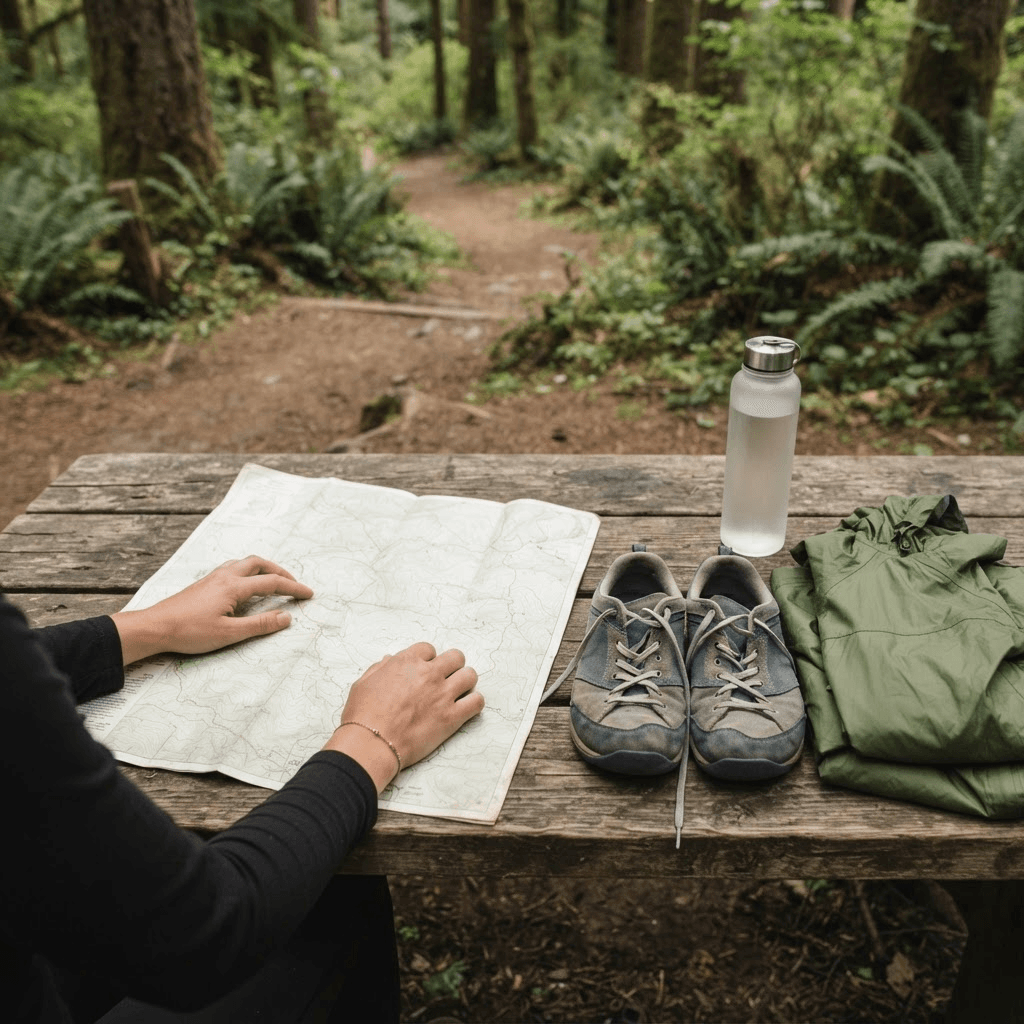
The low-friction route test
- Travel time is short enough that getting there does not become the hardest part.
- The trail is within your current mobility and fitness capacity—not your past best.
- You know the distance, surface, elevation, daylight window and likely weather.
- There is an easy way to shorten the route without feeling that the outing failed.
- Someone knows where you are when the route is remote or reception is unreliable.
- Water, layers, medication and accessibility needs are handled before you leave.
If you are new to hiking, start where other people are present and signs are clear. “Nature” does not need to mean wilderness. A riverside path, urban woodland, botanical garden or tree-lined park can offer many of the same sensory and attentional changes with less risk and planning.
Run the hike in three parts: arrive, widen, return
Do not demand calm at minute one. The first part of a walk often carries the speed of the day into the landscape. Instead of judging whether nature therapy is “working,” use a simple sequence that gives attention time to settle.
Part 1 — Arrive for the first ten minutes
Walk at a pace that lets you speak a full sentence. Keep your phone available for safety but silence nonessential alerts. Notice practical facts first: the trail surface, temperature and how your shoes feel. External facts are often easier anchors than asking a busy mind to become quiet.
Part 2 — Widen attention in the middle
Pick one sense at a time for roughly a minute. Listen for the farthest sound, then the nearest. Find three shades of green or three different textures. Notice air across the face and the rhythm of your steps. This resembles grounding, but it should feel curious rather than rigid. If counting creates pressure, drop the exercise and simply keep walking.
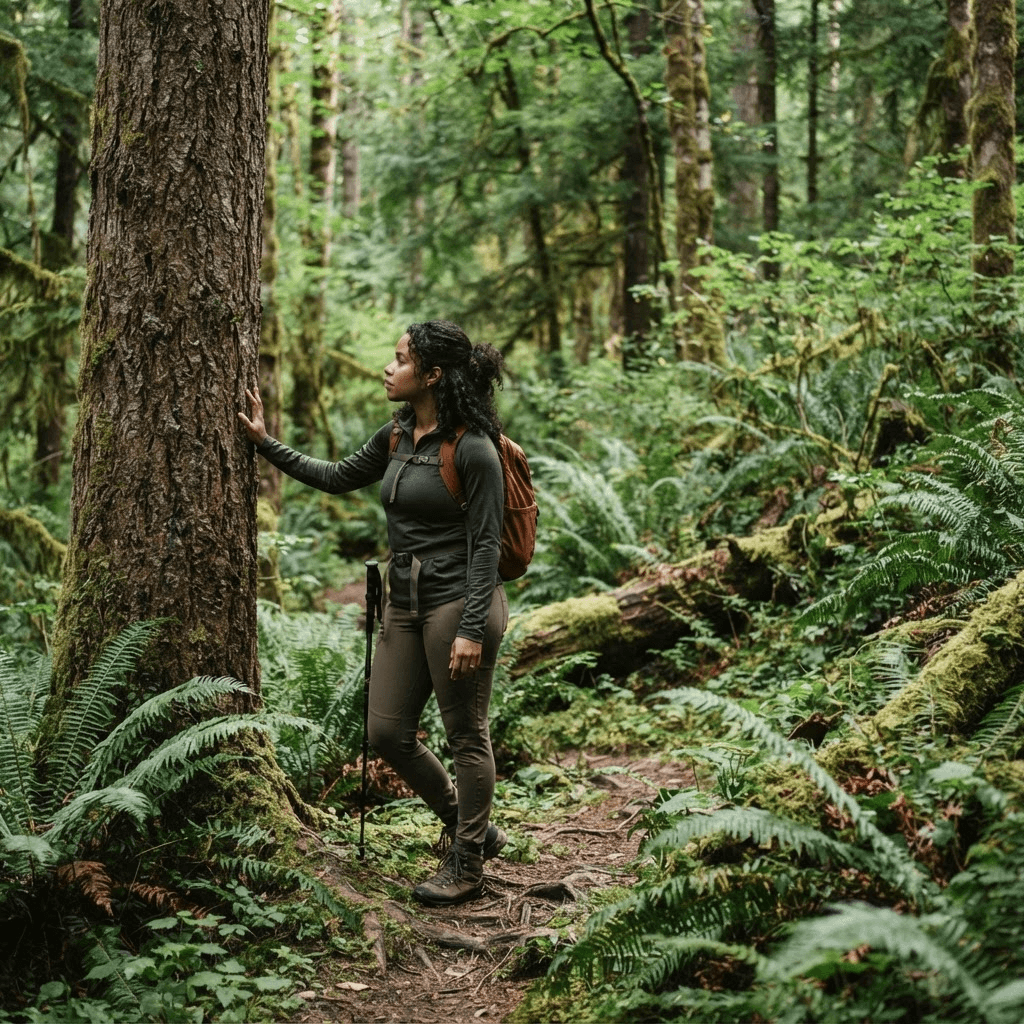
Part 3 — Return before the tank is empty
Turn back with enough energy for the final quarter of the route, the journey home and your next basic need. A hike that ends in hunger, pain or a frantic drive can erase much of the immediate benefit. On the return, decide only one thing: what is the next kind action after the walk—food, water, a shower, ten quiet minutes or a message to someone safe?
A restorative hike is not measured by how far you escaped. It is measured by the state you bring back.
Solo or social: choose by the problem you are carrying
Walking alone reduces conversation and can create useful mental room. It can also leave rumination uninterrupted or feel unsafe. Walking with someone adds connection and accountability, but a fast companion or emotionally demanding conversation can increase strain. Neither format is automatically better.
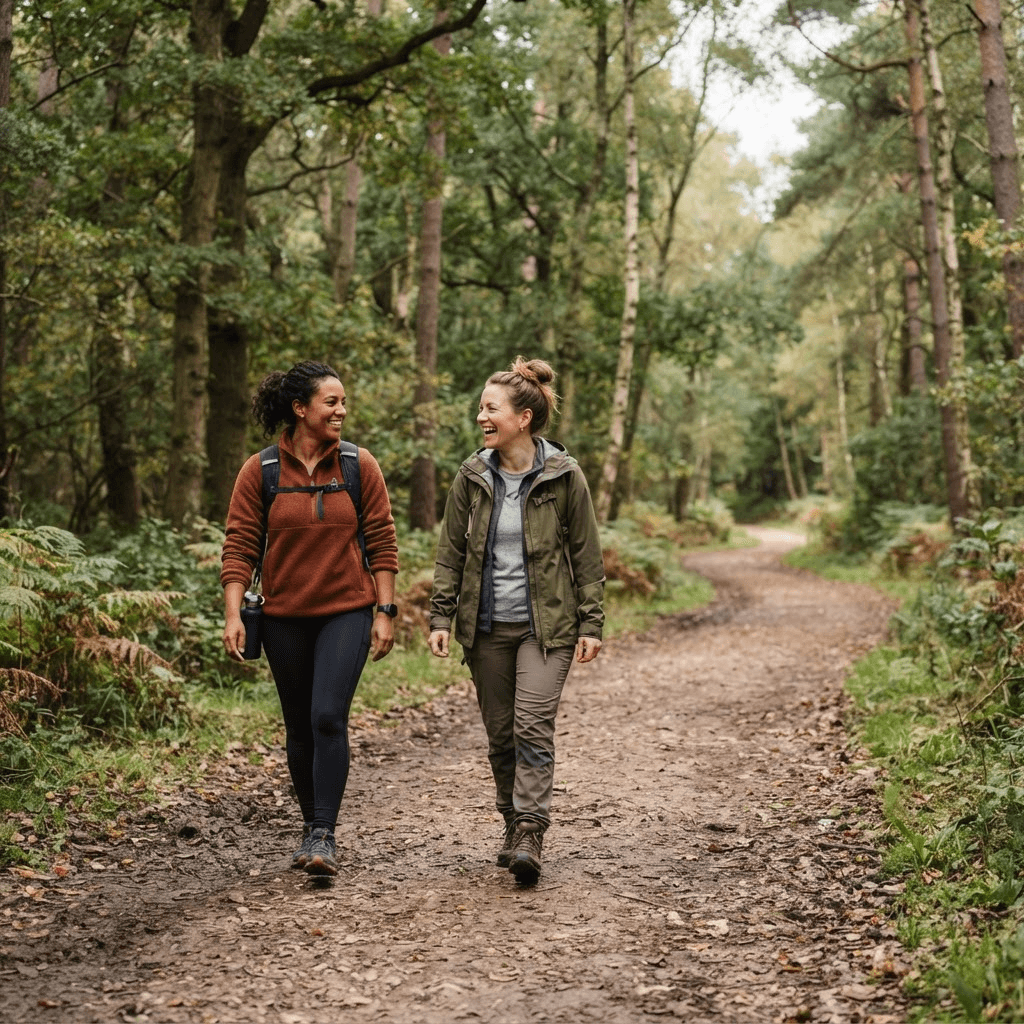
- Choose solo when you need fewer inputs, know the route and feel safe being alone.
- Choose company when isolation is deepening low mood, motivation is fragile or the route is unfamiliar.
- Try a quiet first ten minutes together if both people arrive overstimulated.
- Say what you need: “I would like company, but I do not need advice today.”
- Use a walking group when regularity matters more than intimate conversation.
If mornings are when stress feels loudest, pair a short green-space walk with the light and planning steps in our morning anxiety field guide. If exhaustion is the main problem, check the burnout recovery guide before adding another commitment to the week.
A two-week nature-therapy experiment
Treat this as an experiment, not a transformation. Choose a route and repeat it three times a week for two weeks. Familiarity removes navigation decisions and makes it easier to notice whether the outing changes your state. Keep at least two walks short enough to fit an ordinary weekday.
- Before leaving, rate tension, mental noise and energy from 0 to 10.
- Walk for 20 to 45 minutes at a conversational pace without a distance target.
- Use one external anchor—sound, color, texture or the feeling of footfall.
- Twenty minutes after returning, rate the same three measures again.
- At the end of two weeks, keep the route, timing or company that produced the most reliable small shift.
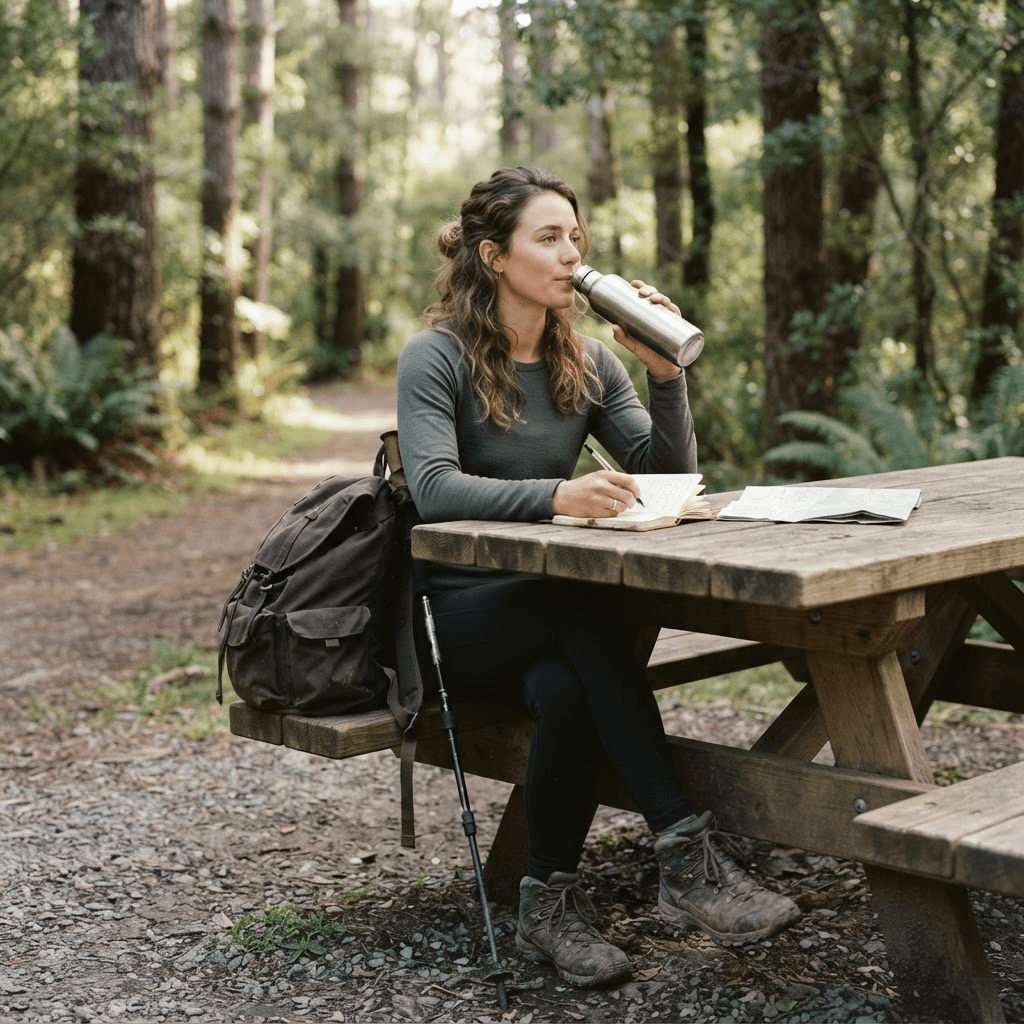
Success may be smaller than feeling happy
A useful walk may not create joy. It may lower tension by two points, interrupt one hour of rumination, make lunch easier to prepare or help you answer a message you were avoiding. Those functional changes count. Mental-health habits become sustainable when they are judged by whether they widen your options, not whether they force a particular emotion.
Keep hiking if it reliably gives you a little more room. Change the route, duration or company if it becomes another metric to optimize. And if distress remains persistent or daily life keeps shrinking, bring that pattern to a clinician. The trail can be part of a care plan; it should never carry the whole plan alone.
Research behind the trail plan
Nature and exercise research is promising but varied. These sources support the cautious claims in this guide rather than a guarantee that hiking will lower cortisol for every person.
- Mental health benefits of interactions with nature in children and teenagers: a systematic reviewJournal of Epidemiology and Community Health
- Associations between green/blue spaces and mental health across 18 countriesScientific Reports
- Urban nature experiences reduce stress in the context of daily lifeFrontiers in Psychology
- Physical Activity Is Good for the Mind and the BodyUS Centers for Disease Control and Prevention
- Caring for Your Mental HealthNational Institute of Mental Health
Four trail questions, answered plainly
How long should a nature walk be for mental health?
Twenty minutes is a practical starting point. Research uses many different durations, and there is no universal minimum that guarantees a result. Choose a length you can repeat without creating fatigue, pain or scheduling stress.
Does hiking lower cortisol?
Some studies find lower salivary cortisol after nature exposure, but results vary and cortisol naturally changes with time of day, sleep, food and exercise intensity. Hiking may support stress regulation; it should not be marketed as a guaranteed hormone treatment.
Is hiking alone good for anxiety?
It can reduce input and provide mental room when the route is familiar and you feel safe. If being alone increases rumination, fear or avoidance, walk with a trusted person or choose a populated park route instead.
Can hiking replace therapy or medication?
No. Hiking can be a supportive habit alongside professional care, but it does not replace assessment, therapy or prescribed medication for a mental-health condition.