Revenge Bedtime Procrastination: Why You Stay Up Late When You Are Exhausted (and How to Stop)
You were shattered by 10pm. It is now 1am and you are still awake, scrolling, not even enjoying it. That is not laziness or bad discipline — it has a name, a cause, and a fix. Here is why you keep stealing hours from your own sleep, and how to take the evening back.
What last night actually cost
Every stolen hour feels free at midnight because the charge does not land until morning. Here it is, added up.
Revenge Bedtime Co.
One (1) exhausted customer
- Intended lights-out10:30 pm
- "One more" episode+52 min
- Bed scroll ("me time")+38 min
- Actual lights-out1:00 am
- Enjoyment of said hoursLow
*Paid in full by tomorrow's mood. Non-refundable.
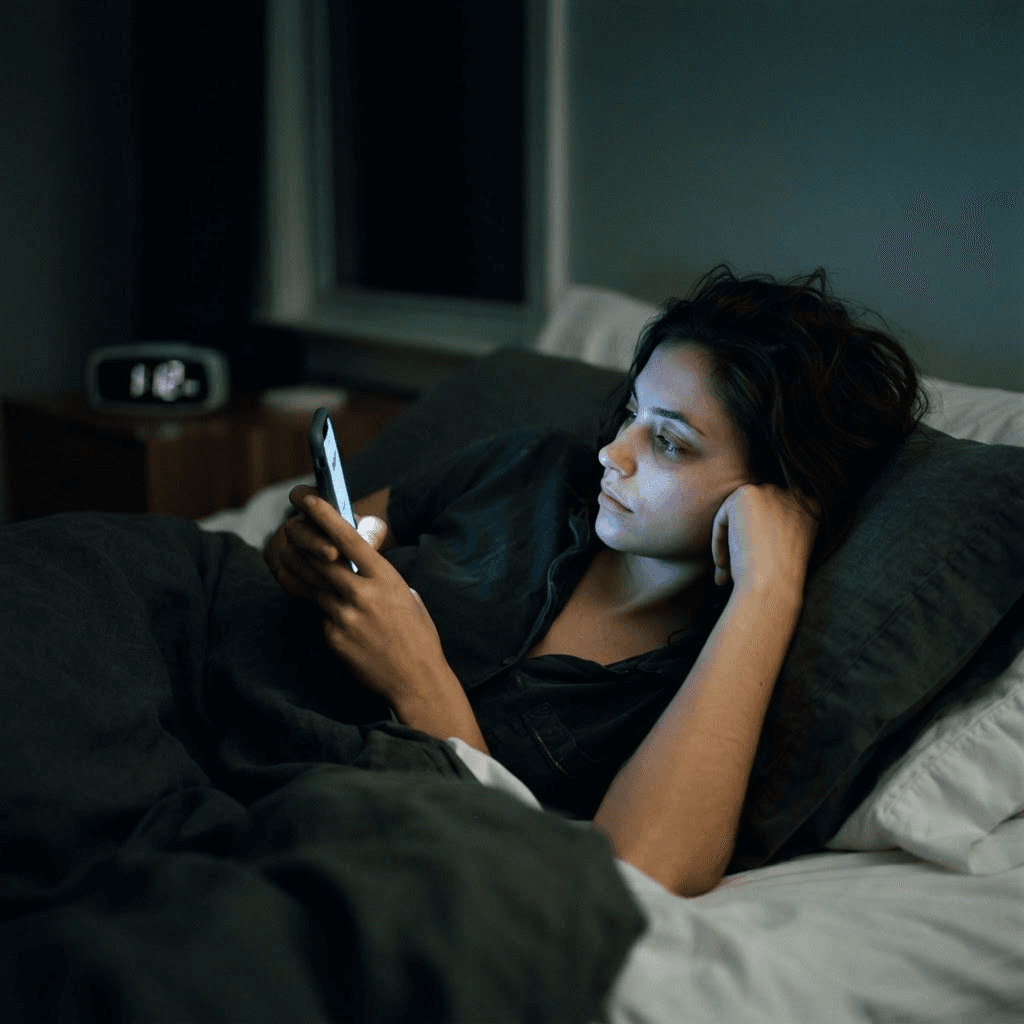
Here is the part nobody warns you about: you can be so tired your eyes sting, know exactly how brutal tomorrow will feel, want to sleep with your whole body — and still choose to stay awake. Not for anything. You are not finishing a project or talking to a friend. You are lying in the dark refreshing the same three apps, watching an episode you will not remember, telling yourself "one more" the way a gambler does. Some quiet, stubborn part of you has decided that the day is not allowed to end yet.
That behaviour has a name. Researchers call it bedtime procrastination, and the internet gave it a blunter, truer one: revenge bedtime procrastination — staying up late as a small act of revenge against a day that gave you no time to yourself. If you have ever felt personally attacked by your own 1am reflection, this guide is for you. We are going to look at why it happens, why willpower keeps losing, and exactly what to change so your evenings stop disappearing.
What revenge bedtime procrastination actually is
Strip away the meme and there is a real, studied pattern underneath. Bedtime procrastination is defined as failing to go to bed at your intended time without any external reason stopping you. No newborn, no night shift, no emergency — just you, awake, by default. The "revenge" part is the motive people report when you ask them why: the day belonged to everyone else, so the night is the only slice they can claim back.
It shows up most in people whose days are the fullest — parents, carers, shift workers, anyone in back-to-back meetings, anyone whose job bleeds past its finish time. The cruel logic goes like this: if every waking hour has already been spoken for, the only unclaimed territory left is the hours you are supposed to be asleep. So you annex them. It feels like freedom. It is really a loan against tomorrow at a punishing interest rate.
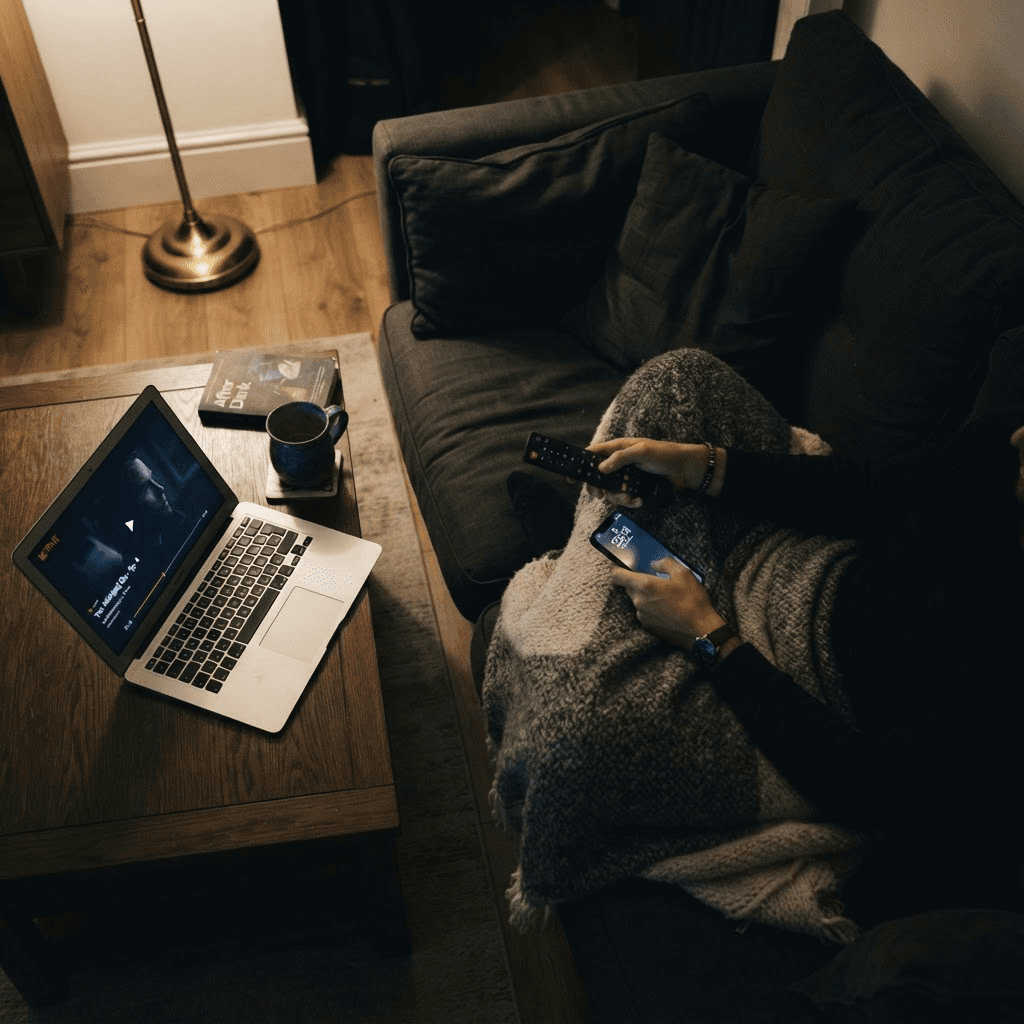
The giveaway that this is procrastination rather than a genuinely good night is how little you actually enjoy it. Real leisure leaves you fuller. Revenge scrolling leaves you emptier — you are not savouring anything, you are stalling. You know this in the moment, which is why it comes with a faint, nagging guilt even as you tap "next episode".
Why "just go to bed earlier" never works
Every article that tells you to have more discipline at bedtime has misunderstood the problem. By 11pm, your capacity to make hard choices is running on fumes. Psychologists talk about self-regulation as a resource that depletes across the day; you spend it holding your temper in traffic, biting your tongue in meetings, resisting the biscuit tin at 3pm. By late evening the tank is close to empty — which is precisely when you ask it to do the unglamorous job of putting the phone down. You are demanding the most self-control at the exact moment you have the least.
There is a second reason, and it matters more. Staying up is not really about being tired or not tired. It is about autonomy. When a whole day has been dictated by other people's needs, going to bed on time can feel like surrendering the last decision you get to make. The late night is a protest vote. That is why fixing this is not a matter of trying harder — you cannot willpower your way out of a need for control. You have to give that need somewhere legitimate to go, earlier in the day, before it comes collecting at midnight.
You are not staying up because you lack discipline. You are staying up because it is the only part of the day that still feels like yours.
If your days feel this scraped-out most of the time, the exhaustion may be bigger than one bad habit. It is worth reading the warning signs in our guide to recovering from burnout and what real rest looks like, because chronic revenge bedtime procrastination is often burnout wearing a Netflix login.
The bill you are quietly running up
It is easy to treat a stolen hour as free, because the charge does not land until morning. But sleep is not optional maintenance; it is when your brain files memories, clears metabolic waste, and resets the emotional thermostat that decides how you will handle tomorrow. Skim an hour off the top and you do not just feel groggy — you make yourself more reactive, more anxious and more likely to reach for the same coping loop tomorrow night. The receipt below is the honest itemisation of a single "harmless" late night. The signature strip at the top of this page shows it laid out; here is what each line really means.
- The lost hours are not paid back the next night. Sleep debt accumulates faster than you can repay it on a weekend lie-in.
- Next-day mood takes the biggest hit. A short night lowers your tolerance for ordinary friction, so tomorrow feels harder than it is — which makes you want to reclaim the evening all over again.
- The scrolling itself keeps you wired. Bright screens and the steady drip of notifications hold your nervous system in a mild state of alert, so even when you do put the phone down, sleep does not come cleanly.
- It compounds. One night is recoverable. A habit of nights rewires your expectations, so bedtime starts to feel like a punishment you delay by reflex rather than a rest you look forward to.
The fix: give the evening a real beginning
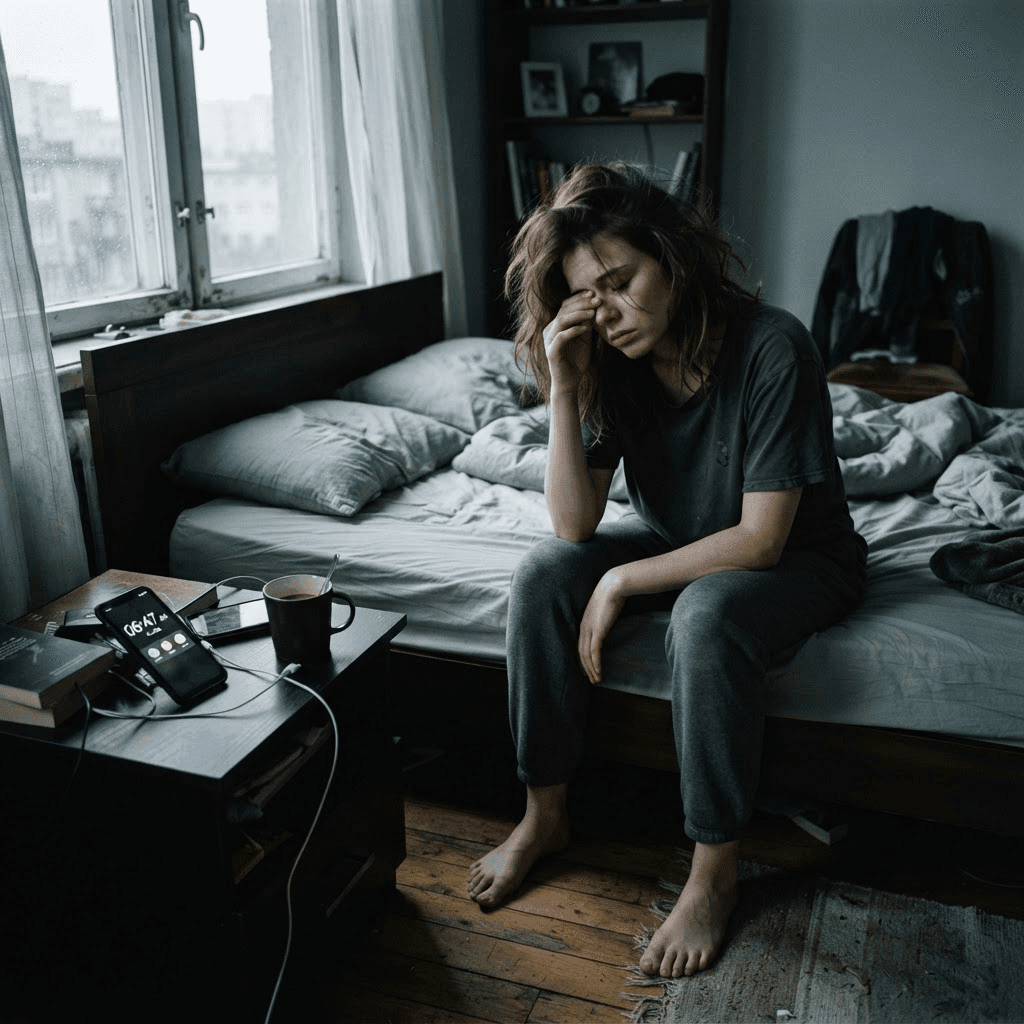
Here is the reframe the whole solution turns on. You are not trying to make yourself go to bed. You are trying to make yourself feel like you already had an evening — so that by bedtime there is nothing left to reclaim. Revenge bedtime procrastination is a hunger for unstructured, unclaimed time. Feed that hunger deliberately and early, and the midnight raid loses its point.
Practically, that means carving out a genuine, protected pocket of leisure before you are exhausted — a real gap, not the dregs of the day. Twenty to forty minutes of something that is actually yours, done while you still have the energy to enjoy it, does more for this problem than any bedtime rule. When the day contains a real intermission, the night stops having to be one.
Swap the losing move for the winning one
You do not need to overhaul your life. You need to trade a handful of specific late-night moves for earlier, better-timed ones. Read the left column as the thing you do now; the right as the small swap that removes its reason to exist.
| The 1am move | The swap | Why it works |
|---|---|---|
| Scrolling in bed for "me time" | A protected 30-minute leisure block right after dinner | Meets the need for unclaimed time while you can still enjoy it |
| "Just one more episode" | Decide the stop point before you press play | Removes the in-the-moment decision your tired brain will lose |
| Phone charging on the pillow | Charge it across the room, on an old-fashioned alarm clock | Adds friction; you cannot tap what you have to stand up to reach |
| A blurry, undefined evening | One small thing you look forward to, planned in advance | Gives the day an ending you chose, not one you resent |
| Staying up to feel in control | Make one real decision earlier — what to cook, what to skip | Spends the autonomy need in daylight so it stops billing you at night |
A three-window wind-down that respects a real life
Forget the ten-step bedtime rituals designed for people with no responsibilities. This is built for a normal, tiring day, and it splits the evening into three windows so you always know which one you are in. If a night falls apart, you only have to rescue the window you are in, not the whole plan.
- The claim window (right after dinner): take your protected 20–40 minutes of genuine leisure now, while you have energy for it. Read, play, potter, message a friend, do the hobby you keep postponing. This is the intermission that pays off the whole day. Protect it like an appointment.
- The dim window (about an hour before bed): drop the lights, close the laptop, and move the phone to its across-the-room charging spot. You are signalling to your nervous system that the day is genuinely ending. If your mind is still racing here, a short reset like the one in our guide to regulating your nervous system settles the body faster than lying still and hoping.
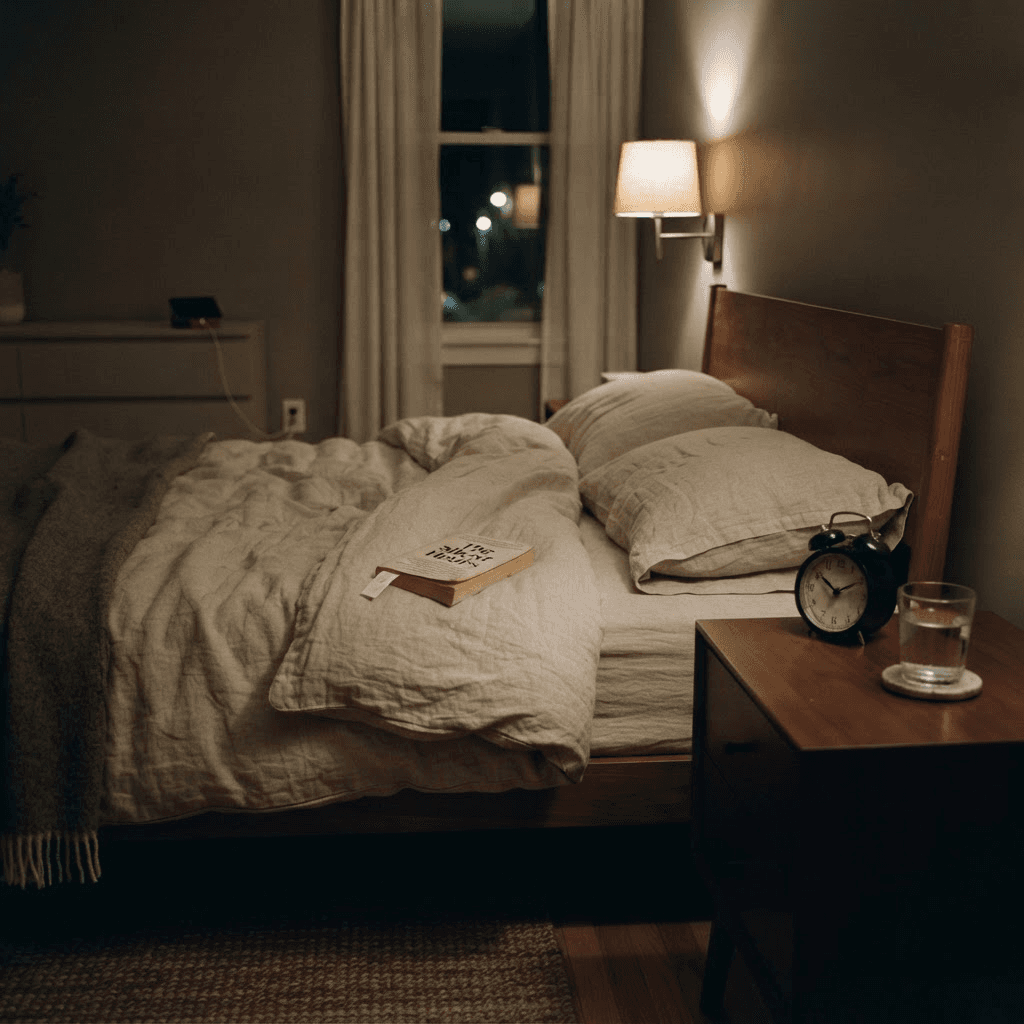
- The landing window (in bed): keep it boring on purpose. A paperback, a dull podcast, slow breathing — anything that does not reward you for staying awake. The goal is a soft, unremarkable slide into sleep, not a finale.

One more thing about the phone, because it is usually the ringleader. The scroll is not a neutral pastime you happen to do at night; it is engineered to be hard to leave, and at night your defences are lowest. If the phone is the specific habit you cannot break, the structured plan in our seven-day phone reset for doomscrolling gives you the scaffolding to loosen its grip without going cold turkey.
When it is more than a habit
Most revenge bedtime procrastination responds well to a real evening and a bit of friction between you and your phone. But not all of it. A few patterns are worth taking more seriously, because they point to something the swaps alone will not fix.
- You get into bed on time and genuinely cannot fall asleep — the staying up is not a choice. That is insomnia territory and deserves its own approach.
- The late nights come with a low, flat mood, loss of interest, or a sense that mornings are unbearable. Persistent sleep changes alongside low mood are worth raising with a doctor.
- You have always found it near-impossible to switch tasks or wind down, and structure of any kind is a lifelong struggle — bedtime procrastination is notably common in people with ADHD, and naming that can change what actually helps.
- The exhaustion is bone-deep and constant, not just end-of-day tired. Read the burnout warning signs and take them seriously.
None of these mean you have done anything wrong. They mean the tool needs to match the problem. Sleep that is repeatedly disrupted — whether you are choosing it or not — is worth a conversation with a professional, not a private battle you keep losing at 1am.
Where this guidance comes from
The mechanisms described here — bedtime procrastination as a self-regulation problem, and the effects of short sleep on mood and health — are drawn from peer-reviewed research and established public-health sources.
- Bedtime procrastination: introducing a new area of procrastination researchFrontiers in Psychology
- Going to bed at a fixed time and the self-regulation of sleepNational Library of Medicine (PMC)
- Sleep and health: why adults need 7 or more hoursUS Centers for Disease Control and Prevention
- How sleep affects your mental healthNational Institutes of Health — News in Health
Revenge bedtime procrastination: the questions people whisper at 1am
- Is revenge bedtime procrastination a real condition?
- It is not a formal diagnosis, but the behaviour underneath it — bedtime procrastination — is genuinely studied by sleep researchers, who define it as delaying sleep with no external reason forcing you to. "Revenge" is simply the popular name for the most common motive people report: reclaiming personal time a demanding day took away.
- Why do I stay up late even when I am completely exhausted?
- Because the issue is usually control, not tiredness. If your whole day was dictated by other people, staying up can feel like the only decision left that is truly yours. On top of that, your self-control is at its lowest by late evening, so the exact moment you need discipline to put the phone down is the moment you have the least of it.
- How is this different from insomnia?
- Revenge bedtime procrastination is a choice — you could sleep but decide to stay up. Insomnia is the inability to fall or stay asleep even when you want to and try to. Many people experience both on different nights. If you routinely lie in bed unable to switch off, treat it as insomnia and address the racing mind rather than the choice to stay awake.
- What is the single most effective thing I can do tonight?
- Give yourself a real, protected pocket of leisure straight after dinner — 20 to 40 minutes of something you actually enjoy, while you still have energy for it. When the day contains a genuine intermission, the midnight version loses its purpose. Pair it with charging your phone across the room so the late scroll needs effort to reach.
- Is revenge bedtime procrastination linked to ADHD?
- It can be. Difficulty switching off a stimulating task, a weaker internal sense of time, and trouble with transitions all make bedtime procrastination more likely, and all are common features of ADHD. If winding down and switching tasks has been a lifelong struggle for you, it is worth discussing with a professional, because the strategies that help may differ.
- Will catching up on sleep at the weekend fix it?
- Not really. A weekend lie-in can take the edge off acute tiredness, but it does not fully repay accumulated sleep debt, and it can push your body clock later, making the next work-week bedtime even harder. Consistent nights beat dramatic catch-ups. The aim is fewer stolen hours, not better repayment plans.
You were never trying to steal sleep. You were trying to find a part of the day that belonged to you.
So stop fighting yourself at midnight — you will lose, because that fight was rigged from the start. Give the evening a real beginning instead. Take your thirty minutes early, while you can still enjoy them, and let bedtime become the thing it was always meant to be: not a surrender, just a rest you actually chose.
Vitality Editorial Team
Vitality publishes practical mental-health guidance based on cited sources and established clinical recommendations.
Medical disclaimer: This article is general mental-health education and is not a diagnosis, a treatment plan or a substitute for care from a qualified professional. If you regularly cannot sleep, feel persistently low, or your tiredness is affecting your safety at work or on the road, please speak with a doctor or a mental-health professional.