How to Meditate for Beginners: 10 Minutes, Start to Finish
You do not need a blank mind. You need one place to return when attention leaves—and permission to begin again.
One chair. One timer. No special equipment.
Notice. Name it lightly. Return.
If you repeat that cycle once, you meditated. If you repeat it fifty times, you practised fifty returns.
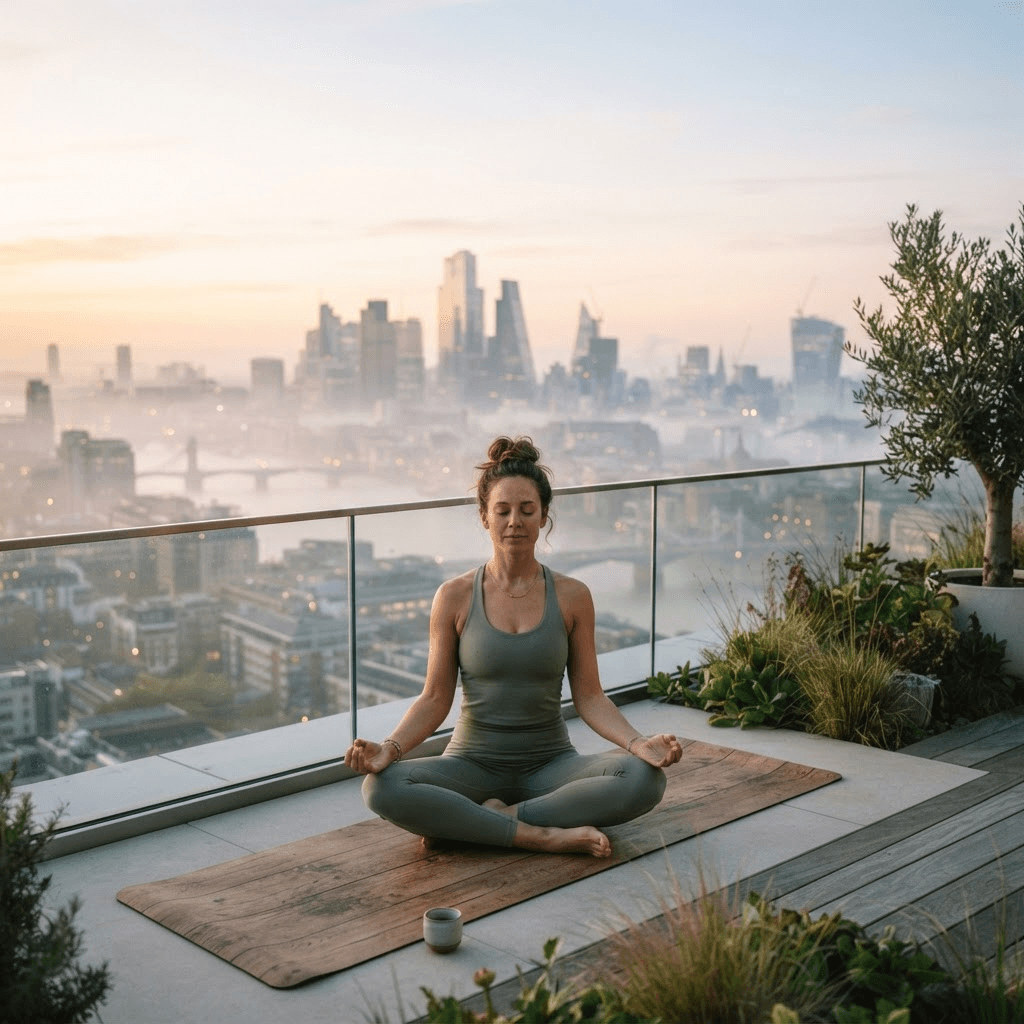
The ten-minute route
Wandering is expected at every stage.
- 0–1 minArrive
- 1–3 minFeel breath
- 3–6 minReturn
- 6–8 minWhole body
- 8–9 minHear
- 9–10 minRe-enter
At minute two, you remember an unpaid bill. At minute four, your left ankle becomes the most interesting object in the universe. By minute six, you are planning dinner and wondering whether thinking about dinner means you are bad at meditation. It does not. That moment—the one where you notice you have drifted—is the actual repetition you came to practise.
There are two very different versions of beginner meditation. In the advertised version, the mind becomes quiet and stays there. In the useful version, you choose an anchor, lose it, notice, and return without putting yourself on trial. A spacious session can feel pleasant; a restless session may contain more repetitions of the actual skill. Both count.
Set up the practice in under a minute
Choose a place where you are unlikely to be interrupted, not a place with no sound. A bedroom chair before the household wakes, a parked car before work or the end of the sofa after lunch can all work. Silence is not required. The skill is learning to include ordinary sounds without following each one into a story.
Pick a position you can forget about
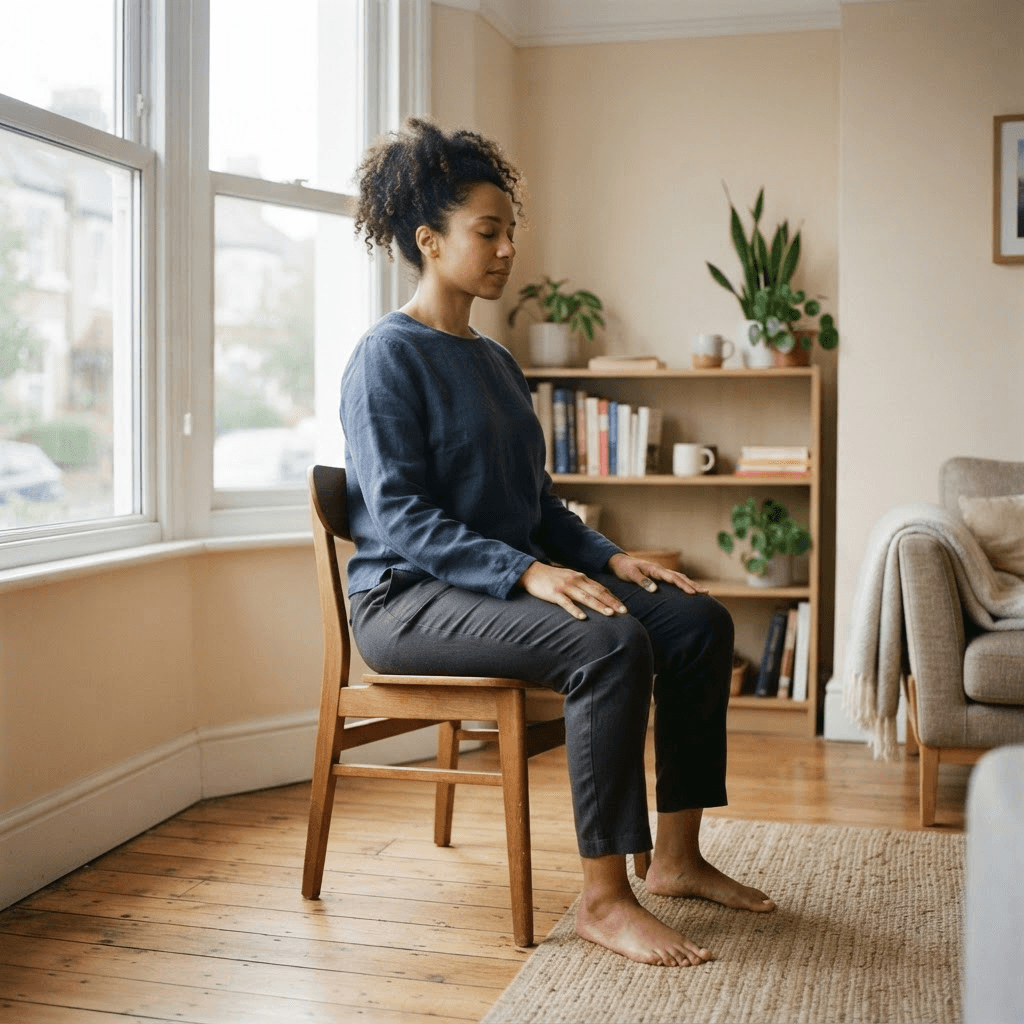
- On a chair: place both feet on the floor, let the hands rest on the thighs and sit away from the backrest if that is comfortable.
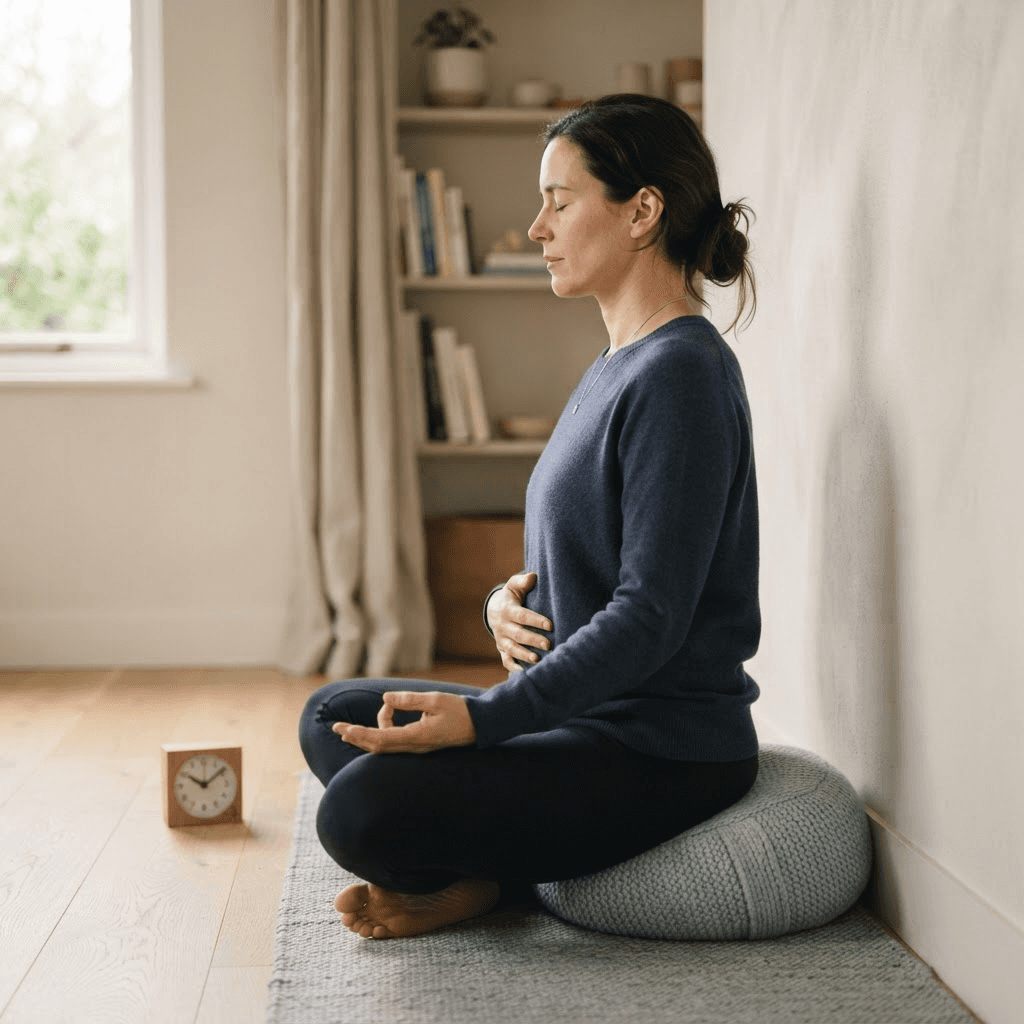
- On a cushion: raise the hips enough that the knees can settle below or level with them. Cross-legged is optional, not superior.
- Lying down: keep the arms relaxed and bend the knees if the lower back feels strained. This is useful for pain or limited mobility, though sleepiness is more likely.
- Eyes: close them, lower the gaze or look softly at one neutral spot. Keep them open if closing them feels unsafe or disorienting.
Aim for upright rather than rigid. Imagine the crown of the head rising while the jaw and shoulders stop helping. Pain is not evidence of discipline. Shift position slowly, support the body or choose a chair. If discomfort is persistent or medically significant, use appropriate clinical guidance rather than forcing a meditation posture.
If a tense morning makes sitting difficult, begin with the daylight or movement suggestions in our guide to reducing morning anxiety naturally, then return for a shorter seated practice.
| If you notice | Try this anchor | What to pay attention to |
|---|---|---|
| Racing thoughts | Feet or hands | Pressure, warmth and contact with the chair or floor |
| Breath anxiety | Sounds | Near and far sounds without naming their source for long |
| Sleepiness | Open eyes | Color, light and the shape of one neutral object |
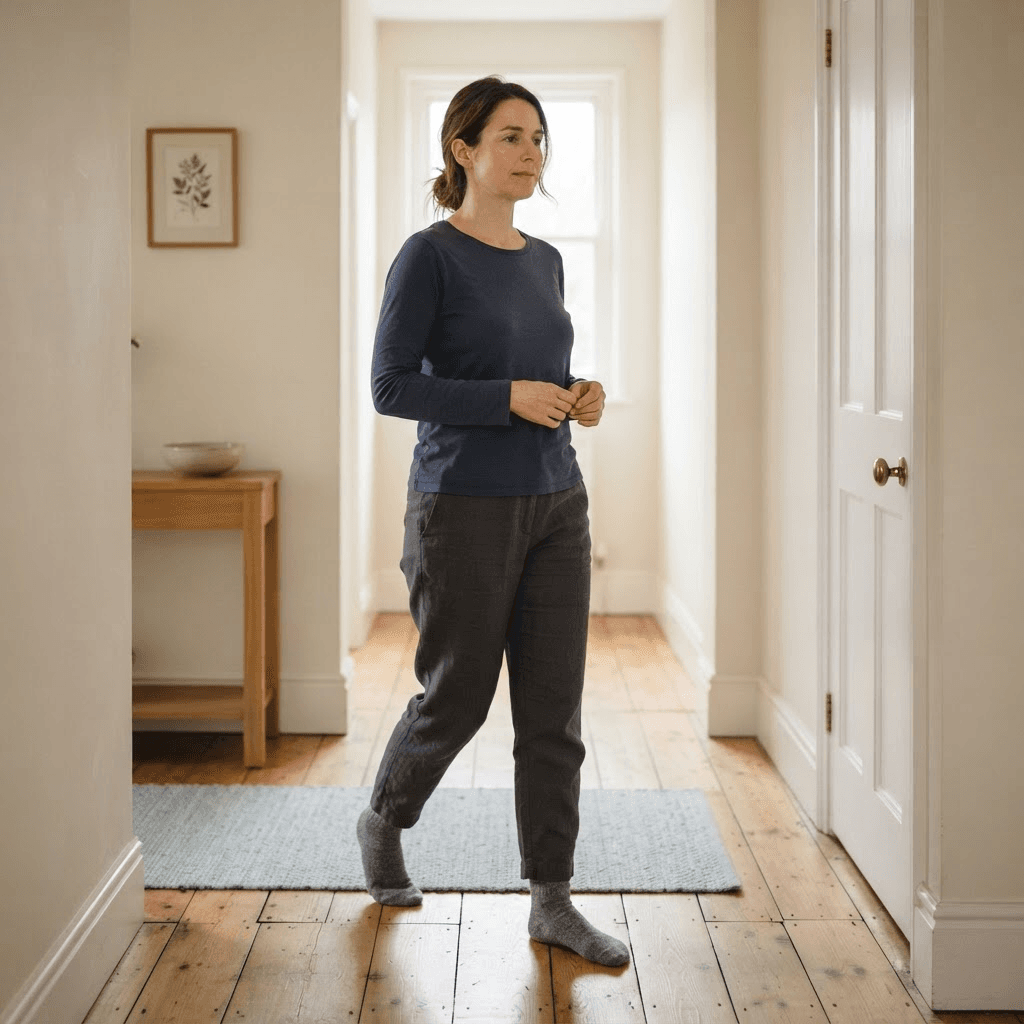
| Restlessness | Walking | Heel, sole and toes contacting the ground |
Press start: your 10-minute mindfulness practice
Before you press start, make three decisions only: where the body will rest, which sensation will be the anchor and how the timer will end. Put the phone face down with notifications off. Then stop adjusting the setup. Use the sequence once as written and treat whatever happens as the first piece of information—not a verdict on whether you can meditate.
Minute 0–1: arrive before you improve anything
Notice the room, then the body inside it. Feel the support beneath you. Let the hands land. Ask one practical question: “Can I be here for the next ten minutes?” You do not need to feel enthusiastic. You only need to stop solving the rest of the day for this one minute.
Minute 1–3: find one breath-sized place
Let breathing happen by itself. Locate the clearest sensation: air at the nostrils, movement in the chest or expansion in the abdomen. Follow one inhale from beginning to end, then one exhale. Do not deepen or slow the breath unless that occurs naturally. Your job is to feel breathing, not manage it.
Minute 3–6: practise the return
Soon you will notice a thought, image, memory, sound or itch has taken center stage. Name the category lightly—“planning,” “hearing,” “remembering”—then return to the next physical breath. The label should take less than a second. It is a signpost, not an invitation to analyse why you are planning.
A wandering mind is not the interruption to meditation. Noticing the wandering is the moment of meditation.
Minute 6–8: include the whole body
Widen attention beyond the breath. Notice the face, shoulders, hands, abdomen and feet together. Where is effort unnecessary? Let one area soften by five percent. If an uncomfortable sensation is mild, observe whether it pulses, shifts or has edges. If it is sharp, escalating or concerning, change position. Mindfulness does not require ignoring useful body signals.
Minute 8–9: let sounds come to you
Listen without searching. A car passes, plumbing clicks, someone speaks in another room. Notice the beginning and end of each sound. If the mind produces a complaint—“this would be easier if they were quiet”—include that as another thought and return to hearing.
Minute 9–10: choose the next action
Return to the contact beneath your feet or body. Take in the room with open eyes. Before reaching for the phone, name the next physical action: stand up, wash the cup, open the document, put on shoes. Endings matter. This final choice carries a small amount of deliberate attention into the next part of the day.
When meditation does not look peaceful
“I cannot stop thinking”
Do not make thought-stopping the task. Try counting each exhale from one to five, then begin again. If you reach twelve, you were lost in thought; simply return to one. During a busy workday, you may restart fifty times. That is fifty moments of recognizing where attention went.
“Focusing on breathing makes me more anxious”
Move attention outside the body. Keep the eyes open and listen for the most distant sound, then the nearest. You can also feel both feet or hold a cool mug. Breath awareness is common, but it is not mandatory. People with panic symptoms, trauma histories or some respiratory concerns may find an external anchor steadier.
“I get sleepy”
Sit rather than lie down, open the eyes and practise earlier in the day. Sleepiness can also be information: perhaps you are under-rested. Meditation is not a substitute for sleep. If the same period is your only opportunity, try five minutes of slow walking meditation instead of fighting to stay awake.
If your body needs a little more movement first, use this gentle morning stretch routine for stiff joints before trying the seated practice again.
“I feel restless or bored”
Make restlessness the object for three breaths. Where is it—legs, chest, hands? Does it feel like pressure, heat or an urge to move? Then decide deliberately whether to stay or shift. Boredom often means attention is waiting for stronger stimulation. Look more closely at one inhale; the temperature and texture are not exactly the same from start to finish.
“Ten minutes feels impossible”
Use three minutes for seven days: one minute to arrive, one to follow breathing or sounds, one to notice the whole body. Add a minute only when starting feels ordinary. A daily three-minute mindfulness practice is more useful than a heroic half hour performed twice.
Make it daily without building a new personality
Attach meditation to a stable event rather than a perfect clock time. Sit after the kettle clicks, after parking at work or before opening your laptop. Keep the location and cue consistent for two weeks. On disrupted days, use the three-minute version. The habit is “take the seat,” not “achieve calm.”
- Days 1–3: practise for three minutes and learn the return.
- Days 4–7: extend to five minutes; keep the same position and anchor.
- Days 8–10: use seven minutes and add whole-body awareness near the end.
- Days 11–14: complete the full ten-minute meditation, then decide which length is realistic for the next month.
Track only whether you practised and for how long. Rating every session as good or bad encourages performance monitoring. If you want a useful weekly review, ask: Did I notice distraction sooner? Was I less automatic in one difficult moment? Did the practice make daily life more workable? These are subtler outcomes than “I felt relaxed,” and often more meaningful.
What meditation may help—and what it cannot promise
Research on mindfulness meditation suggests small to moderate benefits for some measures of anxiety, stress, depression, pain and sleep. Results vary, study quality is uneven and a ten-minute individual practice is not identical to a structured eight-week mindfulness program. “Lowers stress hormones” or “rewires your brain in ten minutes” makes a stronger promise than the evidence supports.
Meditation is also not universally soothing. Some people report increased anxiety, low mood, distressing memories or a sense of disconnection. Stop if the practice feels destabilizing. Shorten it, keep the eyes open, use movement or seek guidance from a trauma-informed licensed professional. If you are experiencing severe depression, mania, psychosis, suicidal thoughts or significant trauma symptoms, meditation should not delay appropriate care.
Evidence behind the practice
These sources explain the evidence, limitations and safety considerations used in this beginner meditation guide.
- Meditation and Mindfulness: Effectiveness and SafetyNational Center for Complementary and Integrative Health
- MindfulnessNational Health Service
- Meditation Programs for Psychological Stress and Well-being: A Systematic Review and Meta-analysisJAMA Internal Medicine
- Prevalence of meditation-related adverse effects in a population-based sample in the United StatesPsychotherapy Research
Questions that usually appear after the first session
01How long should a beginner meditate?
Start with three to ten minutes. Choose a length you can repeat most days without turning it into a test. After one or two weeks, add time only if the practice feels sustainable; longer is not automatically better.
02What should I think about while meditating?
You do not need to think about a specific subject or empty the mind. Place attention on one anchor, such as breathing, sounds or your feet. When thoughts take over, notice that happened and gently return to the anchor.
03Can I meditate lying down?
Yes. Lying down can be appropriate for pain, fatigue or limited mobility. If you repeatedly fall asleep and want an alert practice, sit in a chair, keep your eyes open or try slow walking meditation instead.
04Is it better to meditate in the morning or at night?
The best time is the one attached to a routine you can keep. Morning practice can happen before the day becomes busy; evening practice may help create a transition out of work. If meditation makes you sleepy, evening may suit you. If it makes you alert, practise earlier.
05Does meditation work if my mind keeps wandering?
Yes. Minds wander. The training moment is recognizing distraction and returning attention. A session with many returns is not wasted, although meditation should be adjusted or stopped if it repeatedly causes significant distress.