Walking for Weight Loss — the plan, the pace, the numbers
Walking is the most underrated fat-loss tool there is — free, joint-friendly and something you can start in the next ten minutes. This is the coach-led version: a four-week step ladder to follow, the pace that separates a stroll from a fat-loss walk, and honest numbers on how far walking really gets you.
- 01Week 1+1,500on your average10 min briskBuild the habit — same time, same route.
- 02Week 26–7ksteps / day15 min briskAdd a second short walk after a meal.
- 03Week 37.5–8.5ksteps / day20–25 min briskIntroduce pace in the middle of each walk.
- 04Week 48.5–10ksteps / day30 min briskLock it in and add one hill or incline.

It is 8:40 on a Tuesday, you have twelve minutes before your first meeting, and the most useful thing you could do for your weight this week is put your shoes on and walk to the end of the road and back. Not run. Not book a gym class you will cancel. Walk. It sounds too ordinary to matter, which is exactly why most people skip it — and exactly why it works so well for the ones who do not.
This guide is built to be used, not just read. Below you will find a four-week plan you can start today, the one variable that decides whether a walk burns fat or just passes time, and a set of honest numbers so you know what walking can and cannot do. If you only take one thing away: consistency beats intensity here, and walking is the rare kind of exercise you can actually be consistent with.
Why walking beats harder workouts for most people
Fat loss comes down to holding a calorie deficit for long enough that it adds up — the arithmetic our calorie deficit guide covers in full. The problem with intense exercise is not that it fails to burn calories; it is that it is hard to repeat and it tends to make you hungrier and more tired, so you eat more and move less for the rest of the day. Walking sidesteps all of that.
- It barely dents your appetite. A brisk walk rarely triggers the ravenous "post-workout" hunger that a hard run or spin class can, so the calories you burn are less likely to be eaten straight back.
- It is gentle on your joints, which means you can do it almost every day — and frequency, not occasional heroics, is what quietly builds the deficit.
- It doubles as your daily movement (NEAT), the largest and most ignored part of your metabolism, explained in our guide to speeding up your metabolism.
- It costs nothing, needs no equipment, and starts the moment you stand up. No barrier is the best feature an exercise can have.
Your 4-week walking plan
Forget "just walk more" — that advice is why most walking habits fizzle by week two. You need a target that climbs. This plan works whether you are starting from a mostly-seated 3,000 steps or already loosely active. Find your starting week by your current daily average (check your phone’s health app for last week’s number), then climb one rung at a time. If a week feels hard, repeat it before moving up. There are no prizes for skipping ahead.
The plan has two dials, not one: total steps (how much you move) and brisk minutes (how hard some of that movement is). Both climb together. The brisk minutes are the part that does the heavy lifting for fat loss, which is why they get their own column.
| Week | Daily step target | Brisk minutes/day | Focus |
|---|---|---|---|
| Week 1 | +1,500 on your current average | 10 min | Build the habit. Same time, same route, every day. |
| Week 2 | 6,000–7,000 | 15 min | Add a second short walk — after lunch or dinner. |
| Week 3 | 7,500–8,500 | 20–25 min | Introduce pace: pick up the speed for the middle of each walk. |
| Week 4 | 8,500–10,000 | 30 min | Lock it in. Add one hill or incline walk this week. |
Notice the goal is never a punishing 15,000 steps you manage once. It is a floor you can defend on a bad day. By the end of week four you will have a repeatable daily habit sitting somewhere around 8,500 steps with half an hour of brisk work inside it — which is squarely in the range research links to real weight and body-composition change.
How many steps a day do you actually need?
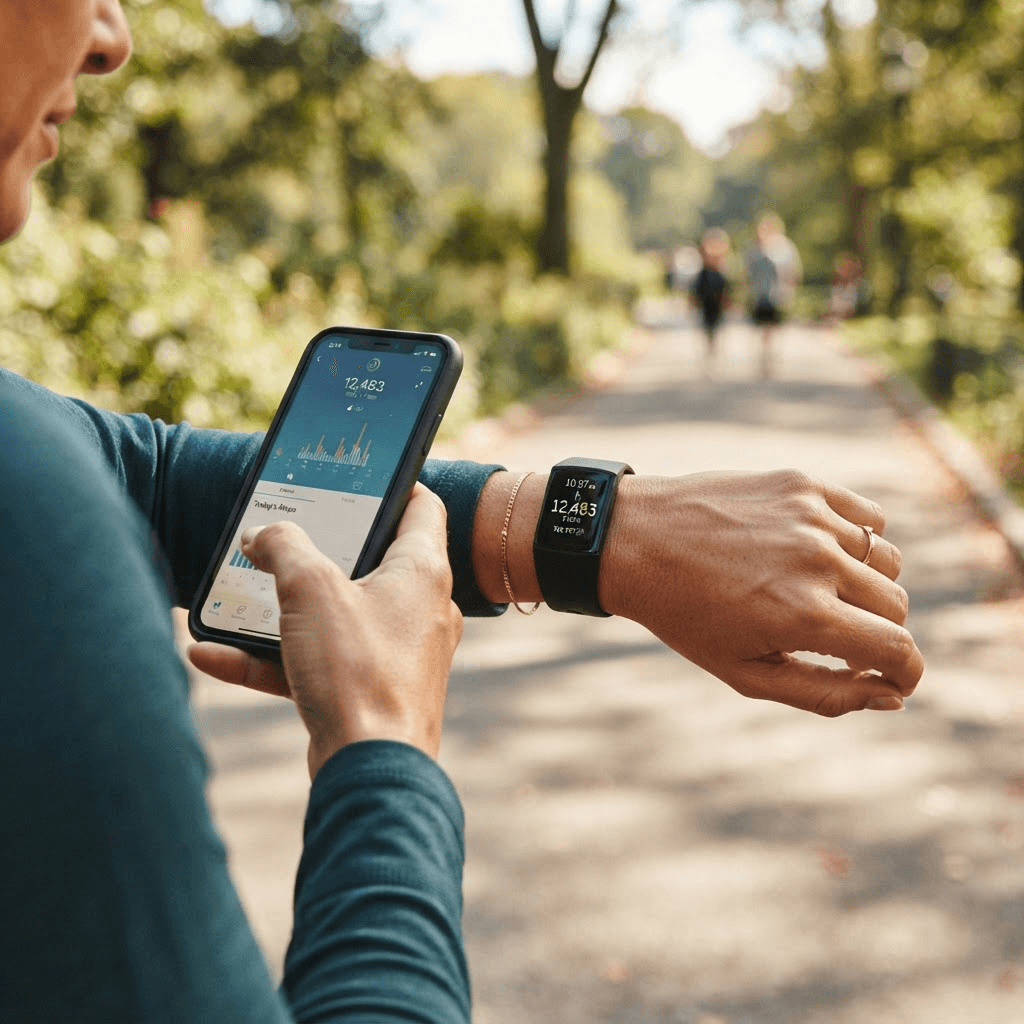
The famous 10,000-step target was not born in a lab — it came from a 1960s Japanese pedometer marketing campaign. That does not make it wrong, but it does mean it is not a magic threshold. The research that has accumulated since points somewhere lower and more forgiving.
- Health starts improving early. Reductions in mortality risk begin around 7,000–7,500 steps a day, with benefits continuing to climb from there.
- For weight loss and better body composition, roughly 8,000–10,000 steps a day is a strong, well-supported range.
- For keeping weight off once you have lost it, around 8,500 steps a day is a commonly cited maintenance figure.
So do not agonise over hitting exactly ten thousand. If you currently sit at 4,000, getting reliably to 7,500 will do more for you than any perfect-day 12,000 that you never repeat. The best step count is the highest one you can hit on an ordinary, unremarkable, slightly-too-busy day.
Pace: the difference between a stroll and a fat-loss walk
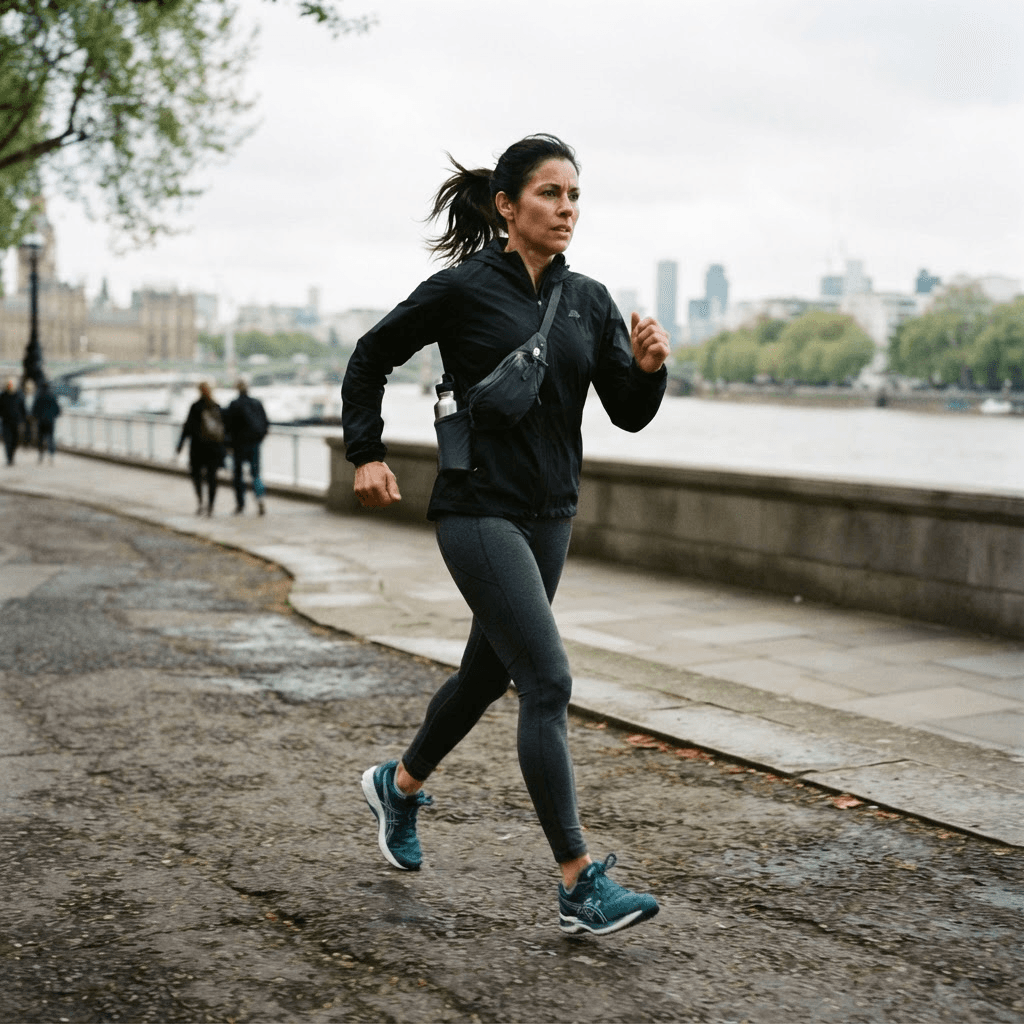
Here is the lever most people never touch. Two people can walk the same distance and burn very different amounts of energy, because intensity — not just steps — drives the number. A gentle amble and a purposeful, arms-pumping walk are almost different exercises. You do not need to power-walk the whole time; you need a chunk of each walk to be genuinely brisk.
| Gear | What it feels like | The talk test | Best for |
|---|---|---|---|
| Stroll | Relaxed, easy, window-shopping pace | You could sing | Recovery, digestion, headspace |
| Brisk | Purposeful, slightly breathless, arms swinging | You can talk but not sing | Fat loss — this is the target zone |
| Power / incline | Hard, focused, you would rather not chat | Short sentences only | Extra burn, breaking a plateau |
The practical version: walk out at whatever pace feels natural, then for the middle third of your walk, imagine you are slightly late for something and move like it. Let your arms bend and swing. Lengthen your stride a little. Then ease back for the last stretch. That single change turns an ordinary walk into a fat-loss walk without adding a minute to your day.
Does walking burn belly fat?
Yes and no — and the distinction matters. You cannot aim fat loss at your stomach; no exercise spot-reduces a body part, and anyone selling "walks to burn belly fat" is overselling. What walking does is support the overall calorie deficit that causes fat loss everywhere, and when your body loses fat, the deep visceral fat around your organs — the kind linked to health risk — is often among the first to go.
So the honest framing is this: walking does not target belly fat, but consistent brisk walking is one of the most sustainable ways to create the conditions in which belly fat shrinks. Pair it with enough protein and a modest deficit and the midsection follows. For the wider picture on this specific worry, our guide on how to lose belly fat goes deeper.
You cannot choose where the fat comes off. You can only choose to keep showing up until it does — and walking is the easiest promise to keep.
Why your walking has stopped working (and how to fix it)
Walking is forgiving, but it is not immune to plateaus. If the scale has stalled after a good run, it is almost never that "walking stopped working" — it is that one of these crept in. Run through them in order.
Your body got efficient and you never made it harder
The same 8,000-step walk that challenged you in month one is easier by month three — your body adapts and burns fewer calories doing it. This is normal and fixable. Add a variable: more brisk minutes, a hill, a heavier pace, or a loaded backpack (rucking). The walk has to keep asking a little more of you. Our full guide to breaking a weight-loss plateau covers this beyond walking.
The walk is real but the food quietly caught up
A 30-minute brisk walk burns something in the region of 150–200 calories for many adults — genuinely useful, and easily cancelled by an extra flapjack "because I walked". Movement and food are two separate accounts. Keep walking, but if progress stalls, the answer is usually to tighten the eating, not to walk yourself into the ground.
You are only counting the formal walk
The tracked 20-minute walk is the tip of it. The stairs, the pacing on phone calls, the extra loop to the far shop — that incidental movement is where a lot of the daily burn actually lives. Do not let a good scheduled walk become permission to sit perfectly still the rest of the day.
How to make the habit actually stick
A plan only works if you keep it, and walking habits die from friction, not from lack of motivation. These are the small hinges that swing the big door.
- Anchor the walk to something you already do. A loop straight after breakfast, a lap at lunch, a walk the moment you shut the laptop. Attaching it to an existing habit beats relying on willpower.
- Walk after meals when you can. A 10–15 minute walk after eating blunts the post-meal blood-sugar spike and is a painless way to bank steps twice or three times a day.
- Make bad-weather days automatic. Have a backup: an indoor mall loop, marching on the spot through a show, or treadmill incline. A plan with no rain contingency quits in November.
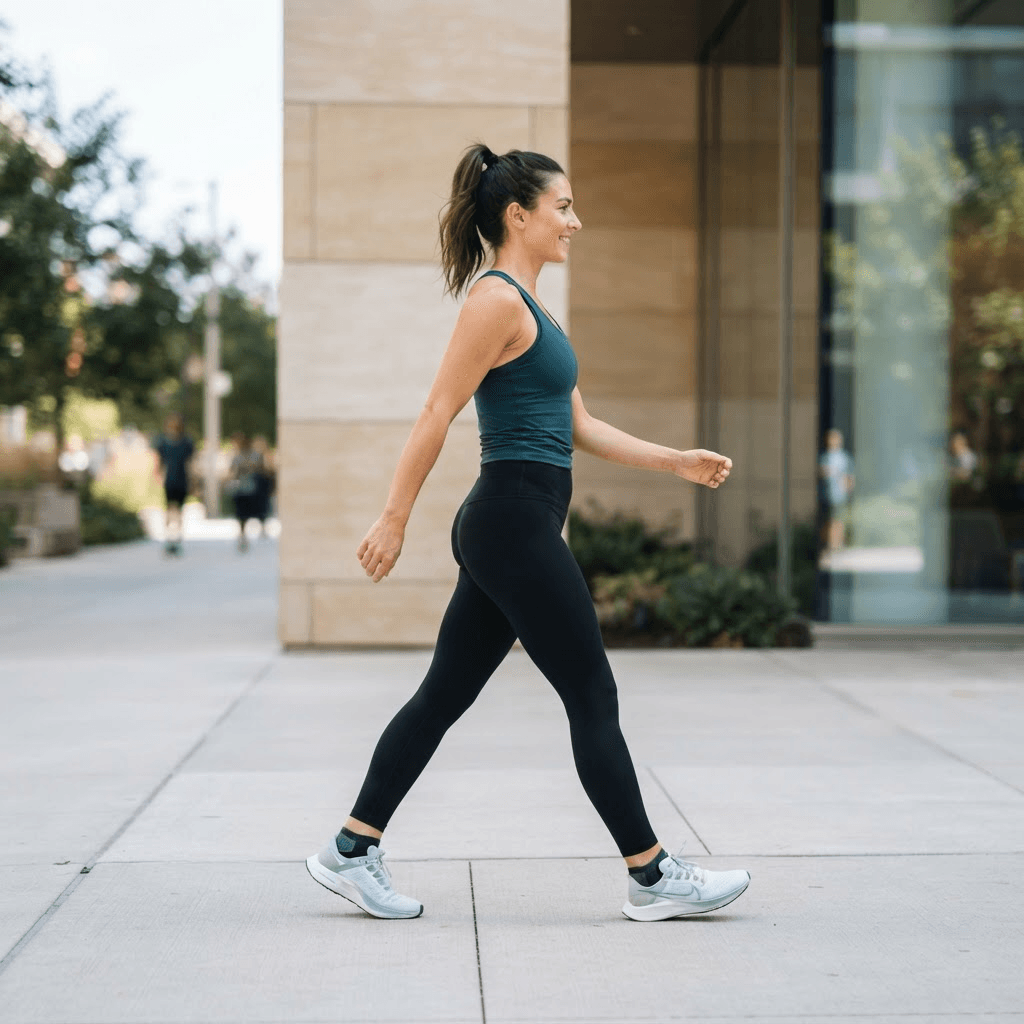
- Watch your form so you can keep going. Stand tall, relax your shoulders, let your arms bend and swing, and land heel-to-toe. Good posture lets you walk further without aches.
- Track the floor, not perfection. Log the days you hit your minimum. A visible streak of "good enough" days is more motivating than chasing an unrepeatable best.
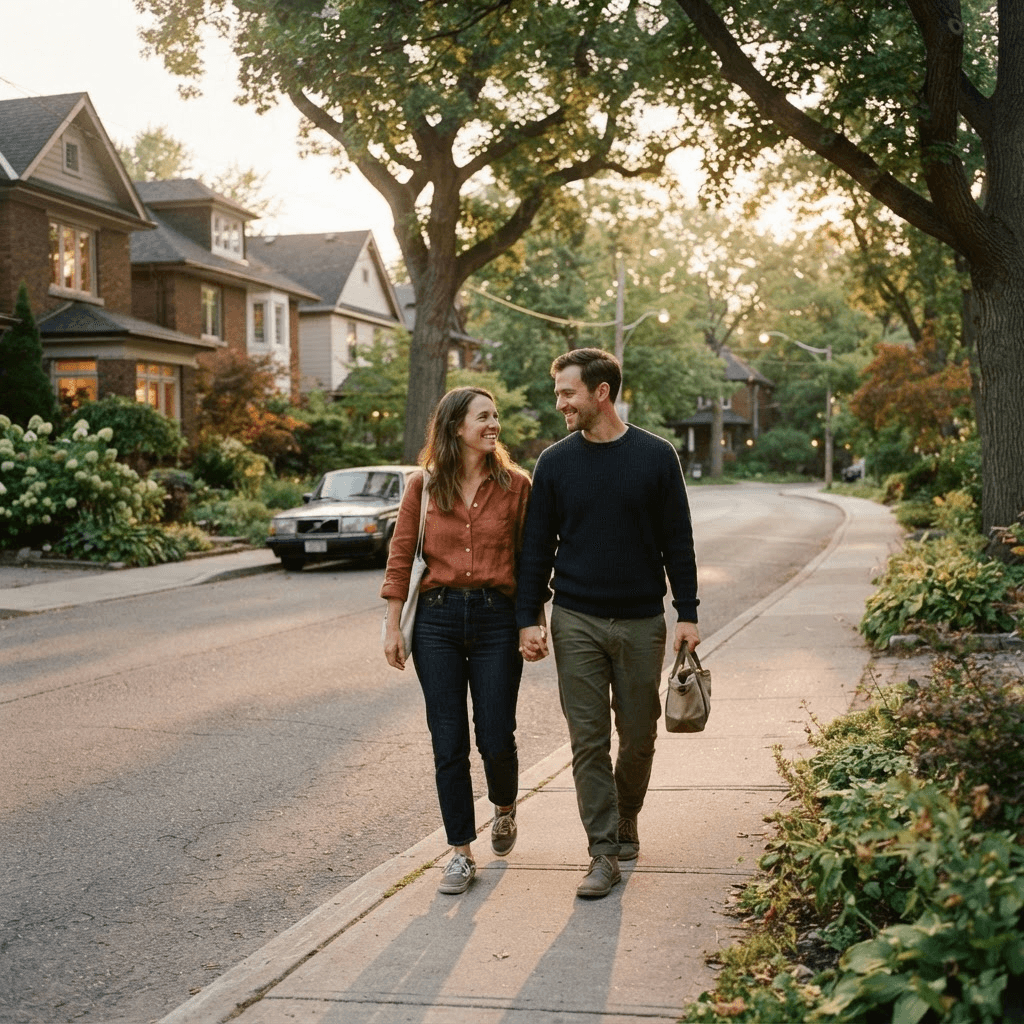
One more on form, because it decides how far you can comfortably go: keep your gaze up and forward rather than down at your feet, and let your posture stay tall. Small fixes here are what let a 20-minute walk grow into a 45-minute one without your hips and lower back complaining.
Walking vs running: which should you choose?
Running burns more calories per minute — no argument there. But the best exercise for weight loss is the one you will still be doing in six months, and for a lot of people that is walking. Running carries a higher injury rate and a bigger appetite kick, which is why plenty of people who "start running to lose weight" stop within weeks. Walking has almost no dropout cost.
You do not have to pick a side. A sensible path is to master the four-week walking habit first, then, if you enjoy it, let some of those brisk minutes turn into light jogging intervals. The walking builds the base that makes running sustainable rather than a two-week experiment.
Sources and further reading
The step targets and health figures in this guide come from peer-reviewed research and established public-health bodies. Follow the links to read the original findings.
- Daily steps and all-cause mortality: a meta-analysis of 15 international cohortsPaluch et al., The Lancet Public Health (2022)
- Association of step volume and intensity with all-cause mortality in older womenLee et al., JAMA Internal Medicine (2019)
- Physical activity guidelines for adults aged 19 to 64UK National Health Service (NHS)
- Walking and its role in weight management and cardiometabolic healthCenters for Disease Control and Prevention (CDC)
- The truth about the 10,000-steps target and how many you really needHarvard Health Publishing
Three walking gears, one talk test
Distance is easy to fake; intensity is not. Spend your brisk minutes in the middle gear — the one where you can talk but would rather not sing.
Five things to lace up and remember
- Walking works for fat loss because it burns real calories without wrecking your appetite or your joints — so you can do it almost every day for years.
- Aim for a step floor you never drop below rather than a hero number you hit twice: 7,000–8,500 steps a day is the sweet spot most research points to.
- Pace matters more than distance for fat loss — a brisk walk where talking is possible but singing is not roughly doubles the calorie burn of a stroll.
- Walking cannot spot-reduce belly fat, but a consistent deficit that walking supports is one of the most reliable ways to lose visceral fat over time.
- A walk only stays effective while it stays challenging — add minutes, pace, hills or a loaded backpack before you decide it has stopped working.
FAQ
Walking-for-weight-loss questions, answered straight
Is walking really enough to lose weight on its own?
For many people, yes — provided it is paired with a modest calorie deficit. Walking creates a repeatable daily burn and, crucially, does not spike your appetite the way harder exercise can. It rarely produces fast loss, but it produces steady, sustainable loss, which is the kind that lasts. If your eating stays roughly the same and you add consistent brisk walking, most people will lose weight.
How many steps a day should I walk to lose weight?
Roughly 8,000–10,000 steps a day is the range most research links to weight loss and improved body composition, while health benefits begin around 7,000. More important than the exact number is consistency — a step floor you hit every day beats an occasional big total. Build up gradually rather than jumping straight to 10,000.
How long does it take to see results from walking?
Expect fitness and energy changes within one to two weeks and visible weight change over roughly four to eight weeks of consistent brisk walking combined with a calorie deficit. The scale can lag behind because of water shifts, so also judge by how your clothes fit and how the walks feel. Patience is part of the method here.
Is it better to walk faster or walk for longer?
Both help, but for a busy schedule, pace gives you more return per minute. A brisk walk where talking is possible but singing is not can burn roughly double the calories of a gentle stroll over the same distance. Ideally you build both — longer walks over time, with a brisk chunk in the middle of each one.
What is the best time of day to walk for weight loss?
The best time is whenever you will actually do it consistently — that matters far more than any specific window. That said, a short walk after meals is especially useful because it helps steady post-meal blood sugar and stacks extra steps onto your day. Morning walkers often find it easier to protect the habit before the day gets busy.
Why am I walking every day but not losing weight?
Usually one of three things: your body has adapted and the walk is no longer challenging (add pace, hills or a loaded backpack), your food intake has quietly crept up to match the extra movement, or you are only counting the formal walk and sitting still the rest of the day. Walking rarely "stops working" — one of these variables has usually shifted.
Keep reading