Calorie Deficit for Weight Loss: How to Set One You Can Actually Keep
A calorie deficit is the one thing every diet has in common — and the reason most of them fail is that the deficit is too aggressive to live with. Here is how to size yours to your real life, protect your muscle and energy, and keep losing fat after the first month.
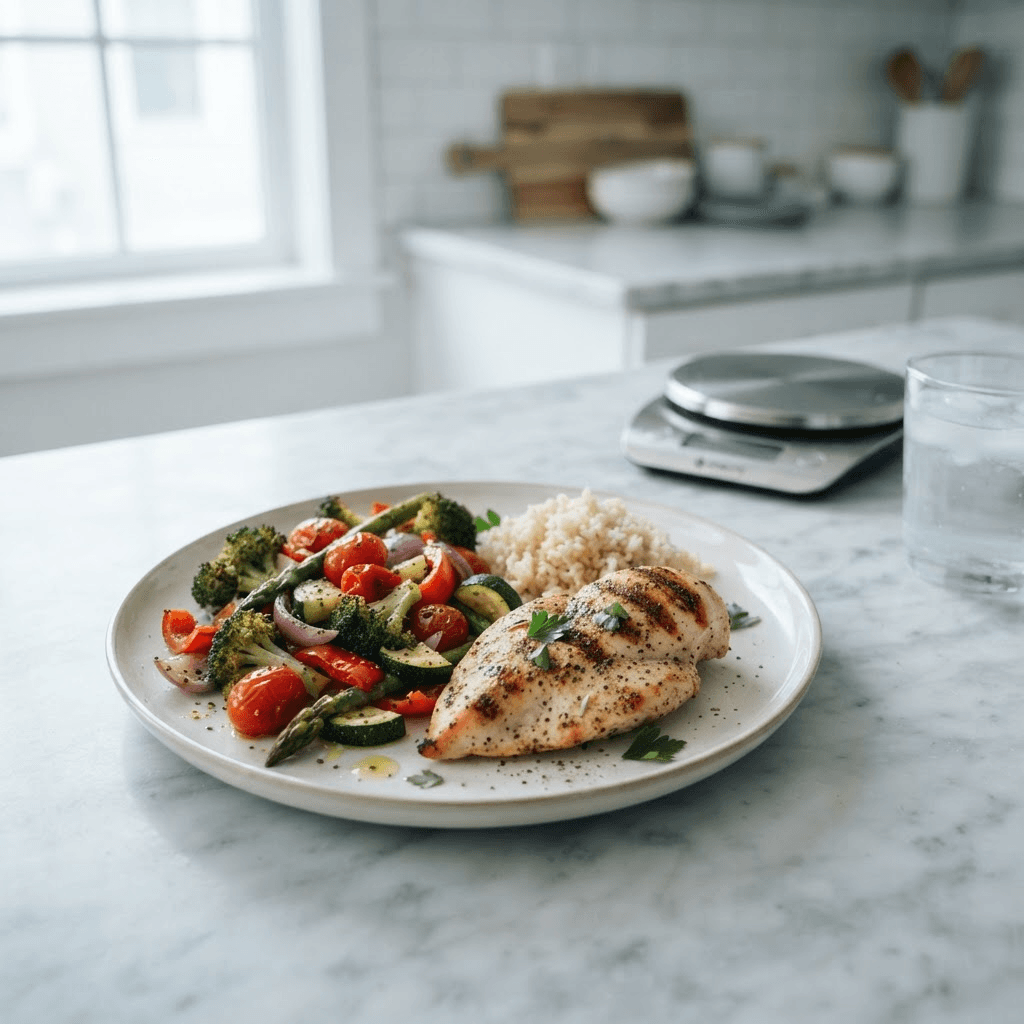
A worked example
The whole method is one subtraction
Find your maintenance calories, subtract a moderate deficit, and eat the result. Everything else in this guide is about making that target easy to hit day after day.
A client came to me last spring having lost the same 12 pounds four separate times. Her pattern never changed: a hard reset every January on about 1,200 calories, three brilliant weeks, then a birthday, a work trip or a bad night's sleep, and the whole thing collapsed by February. She did not have a discipline problem. She had a maths problem. The deficit she kept choosing was so steep that staying in it required perfect conditions, and nobody's life is perfect for more than a fortnight. We rebuilt it at roughly half the size, added protein and a daily walk, and she lost those 12 pounds one more time — except this time they stayed gone, because the plan survived contact with a normal week.
That is the whole game. A calorie deficit is not a diet you buy or a food you cut; it is simply the state of eating slightly less energy than your body spends, so it makes up the difference from stored fat. Every approach that has ever worked — keto, fasting, Mediterranean, calorie counting, "clean eating" — works only to the degree that it quietly produces this one condition. Understand how to size it to your life and you will never need another diet name again.
The only rule that actually matters
Your body burns energy in four ways: keeping you alive at rest (your basal metabolic rate, the biggest chunk), digesting food, deliberate exercise, and all the fidgeting, walking and standing you do without thinking about it. Add those up and you get your total daily energy expenditure — your maintenance calories. Eat below that number consistently and your body draws on fat stores to cover the shortfall. Eat above it and it stores the surplus. This is not a theory or a fad; it is the first law of thermodynamics applied to a human being, and it has held up in every carefully controlled feeding study ever run.
What genuinely varies between people is not whether the deficit works but how easy it is to create and hold. Hormones, sleep, stress, medications, menstrual cycle, food environment and how much muscle you carry all change your appetite and your maintenance number. That is why two people eating the same "sensible" diet can get different results — not because calories stopped counting, but because one of them is far hungrier, more tired or moving less than the other. Almost everything smart you can do for fat loss is really about making a deficit feel smaller than it is.
How to find your starting calorie target
You have two honest options. The first is to estimate: a rough, reliable starting point for most adults is your goal body weight in pounds multiplied by 12 to 14 for daily calories, using the lower end if you are largely sedentary. The second, and better, is to simply track everything you currently eat for a week without changing a thing. Whatever weight you held steady on is your real maintenance — far more accurate than any calculator, because it already accounts for your specific metabolism and activity.
Once you know maintenance, the deficit is a subtraction, not a leap. The table below shows what different deficit sizes actually buy you. Notice that bigger is not better: the aggressive column loses weight fastest on paper and fails fastest in practice, because it is where hunger, fatigue, muscle loss and social impossibility all spike at once.
| Daily deficit | Weekly loss | Feels like | Best for |
|---|---|---|---|
| Gentle (200–300 kcal) | ~0.3–0.5 lb | Barely noticeable, easy to hold | The last 5–10 lb, busy or high-stress periods |
| Moderate (300–500 kcal) | ~0.5–1 lb | Slightly hungry before meals, manageable | Most people, most of the time |
| Aggressive (500–750 kcal) | ~1–1.5 lb | Constant hunger, lower energy and mood | Short focused pushes with more to lose |
| Crash (750+ kcal) | 2+ lb | Unsustainable; muscle and water loss | Almost no one, and not without supervision |
A sensible target for almost everyone is losing 0.5 to 1 percent of your body weight per week. For a 180-pound person that is roughly 0.9 to 1.8 pounds — meaningful, but slow enough that most of what you lose is fat rather than the muscle and water that vanish first on a crash diet. If you have a great deal to lose you can sit at the higher end early on; as you get leaner, the smart move is to shrink the deficit, not grow it.
Here is that maths made concrete. Say tracking shows your maintenance is 2,200 calories. Subtract a moderate 400-calorie deficit and you eat 1,800 a day. That is not a punishment number — it is three satisfying meals and a snack if you spend it on protein and vegetables instead of liquid calories. The person eating 1,800 calories of real food will out-last the person white-knuckling 1,200 every single time.
The plate method: a deficit without a spreadsheet
Counting calories is a powerful skill, but plenty of people never do it and still lose fat for good. If tracking triggers obsessive tendencies or you simply know you will not keep it up, the plate method builds a deficit into the way you serve food, so portion control happens before the food ever reaches you.
- Fill half your plate with non-starchy vegetables — salad, broccoli, peppers, courgette, greens. They add volume, water and fiber for very few calories.
- Fill one quarter with a protein you enjoy — chicken, fish, eggs, tofu, Greek yoghurt, beans.
- Fill the last quarter with a starch or whole grain — rice, potatoes, pasta, bread — enjoyed, not feared.
- Add a thumb of fat: a little oil, cheese, nuts or avocado for flavour and satiety.
- Drink water or a zero-calorie drink rather than juice, sweet coffee or alcohol, which are where hidden calories quietly rebuild your maintenance number.
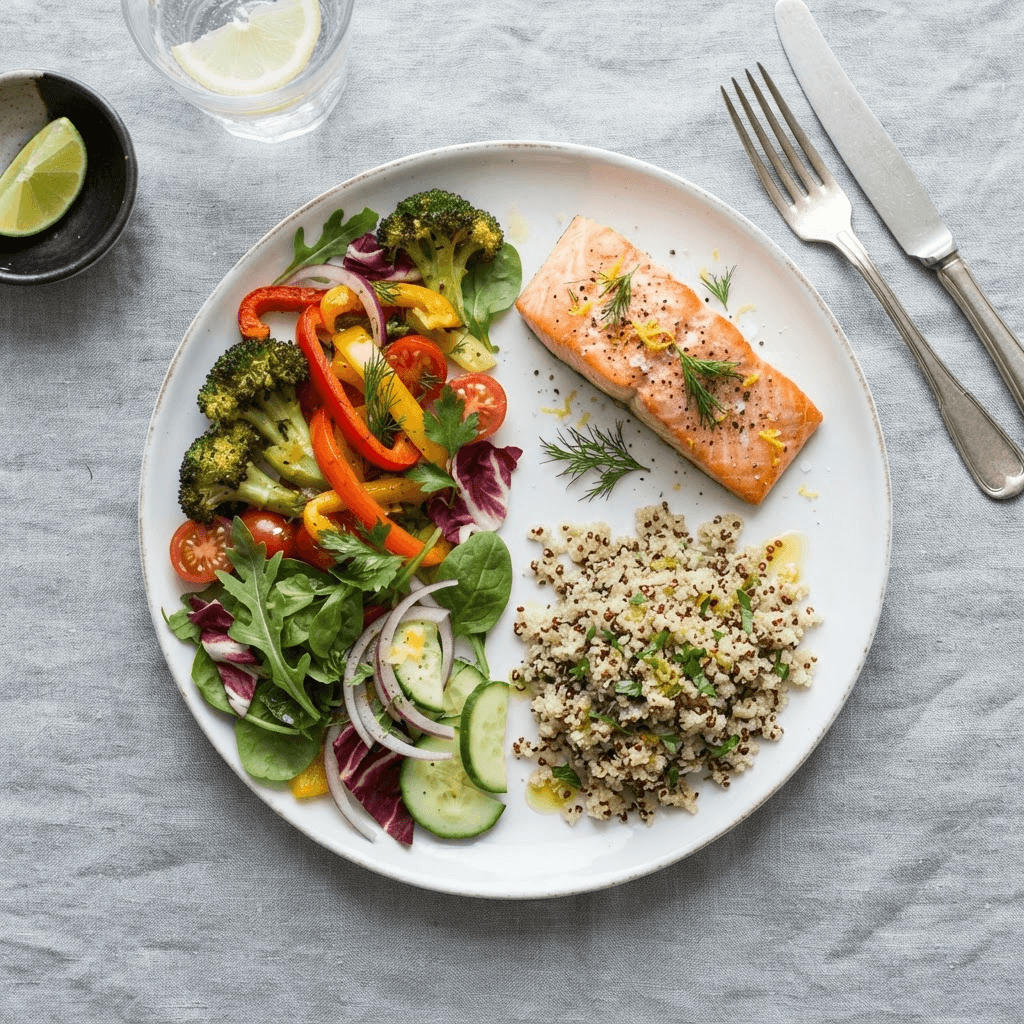
The other quiet win is swapping high-calorie foods for lower-calorie versions of the same thing rather than banning them. You keep the meal, keep the habit, and lose the calories you never noticed.
| Instead of | Try | Roughly saves |
|---|---|---|
| A large latte with syrup | A flat white or Americano | 150–250 kcal |
| Two glasses of wine nightly | One glass, or a spritzer | 150–200 kcal |
| Cooking oil poured by eye | One measured tablespoon | 100–200 kcal |
| Crisps with lunch | Air-popped popcorn or fruit | 100–150 kcal |
| Full-fat creamy dressing | Yoghurt or vinaigrette, lightly | 100+ kcal |

Protein and fiber: the two levers that make it bearable
If you change only one thing about how you eat in a deficit, make it protein. It is the most filling of the three macronutrients, it costs your body more energy to digest, and — crucially — it is the signal that tells your body to hold onto muscle while you lose fat. Skimp on it and a chunk of your weight loss comes from the very tissue that keeps you strong and keeps your metabolism up. Aim for roughly 1.6 to 2.2 grams of protein per kilogram of your goal body weight, spread across the day. Our guide to high-protein foods and how much you actually need turns that number into meals.
Fiber is the second lever. It slows digestion, blunts the blood-sugar swings that drive afternoon snacking, and adds bulk that fills you up on almost no calories. Most people eating in a deficit under-shoot it badly. Leaning on the foods in our high-fiber foods list — beans, oats, berries, vegetables — is one of the simplest ways to feel full on less. Combine the two levers and a deficit stops feeling like restriction and starts feeling like a slightly smaller version of how you already eat.
Move more without calling it exercise
You cannot reliably out-train a big appetite — exercise burns fewer calories than most people hope, and it tends to make you hungrier. But movement still matters enormously, for two reasons that have nothing to do with "burning it off". The first is that everyday, non-exercise movement — walking, standing, taking the stairs, carrying things — is the single most variable part of your daily burn, and it quietly shrinks when you diet unless you protect it. The second is that resistance training tells your body to keep muscle, which is what turns weight loss into fat loss.

The practical prescription is unglamorous and it works: get a daily step target you can actually hit, and lift something heavy two or three times a week. If you are starting from the couch, our guide to walking for weight loss and how many steps you really need is the gentler on-ramp, while strength training for beginners protects your muscle as the fat comes off. Prefer wheels to weights? Cycling with heart-rate zones is a joint-friendly way to add movement without wrecking your appetite.
Your realistic first four weeks
Do not overhaul everything on day one. A deficit you bolt onto your existing life in stages is one you keep. Here is the order I take clients through.
- Week 1 — measure, don't restrict. Track what you normally eat and note your average daily steps. Change nothing else. You are gathering your real maintenance number and current activity, not dieting yet.
- Week 2 — set the deficit and the protein floor. Drop to your target calories (a moderate 300–500 below maintenance) and hit your protein target every day. Leave everything else alone.
- Week 3 — add the movement. Lock in a daily step goal and add two short strength sessions. Keep calories and protein steady so you can see what movement alone changes.
- Week 4 — review and adjust. Look at four weeks of data, not four days. If the trend is down, keep going unchanged. If it is flat, tighten portions slightly or add steps — do not slash calories in a panic.
Underneath the phases, a handful of daily non-negotiables carry most of the result. Tape this somewhere you will see it.
- Hit your protein target — this is the one that protects muscle.
- Get most of your calories from foods with one ingredient.
- Fill half of every plate with vegetables or salad.
- Move: reach your step goal and lift on lifting days.
- Sleep seven-plus hours — short sleep spikes hunger hormones and sabotages the whole plan.
- Drink water first when you feel snacky; thirst masquerades as hunger constantly.
Why the scale lies for the first three weeks
Body weight is a noisy signal. It swings two to four pounds within a single day based on water, sodium, carbohydrate stores, hormones and what is simply still in your digestive tract. This is why weighing daily and reacting to each number is a fast route to giving up: you will hit mornings where you did everything right and the scale went up, and it means nothing. Fat loss is real but slow; daily fluctuation is large and fast. The trick is to stop reading the noise as the message.
Instead, judge progress the way a coach does — over weeks, using several signals at once. Weigh most mornings under the same conditions and watch the weekly average, not the daily figure. Then pay at least as much attention to the things the scale cannot see.
- A tape measure at your waist, taken monthly, often moves when the scale sulks.
- How your clothes fit, especially a specific pair of trousers.
- Progress photos in the same light every two to four weeks.
- Strength in the gym — holding or gaining strength in a deficit means you are keeping muscle.
- Energy, sleep and mood, which tell you whether the deficit is sized right or too steep.

The best deficit is not the fastest one. It is the one that is still running in six months, because that is the only timescale on which fat loss becomes permanent.
When the deficit stops working
Sooner or later the scale flattens for two or three weeks despite your effort. Before you assume your metabolism is "broken" — it almost never is — work through the likely causes in order. Nine times out of ten it is one of the first two.
- Calories crept up. Portions drift larger, "just a taste" adds up, and weekend eating erases the weekday deficit. Track honestly for a few days and the leak usually reveals itself.
- Your maintenance dropped. You are lighter now, so you burn less, and you may be moving less without noticing. A smaller body needs a smaller intake — re-estimate your maintenance and re-set the gap.
- Water is masking fat loss. Stress, poor sleep, more sodium or a new training block can hold water for weeks, hiding real fat loss that shows up all at once later.
- The deficit was never real. If progress never started, the intake estimate is off. Tighten the measurement, not your willpower.
The fix is rarely to eat dramatically less — that just makes the plan harder while your body defends itself with more hunger and less spontaneous movement. Often the smartest move at a genuine plateau is a planned week or two at maintenance calories: a "diet break" that restores hormones, sanity and adherence, after which a modest deficit works again. Slow, patient and repeatable beats fast, brutal and abandoned, every time.
References and further reading
The recommendations above are drawn from clinical guidance and peer-reviewed research on energy balance, protein and sustainable weight management. These are the primary sources.
- Hall KD, Guo J. Obesity energetics: body weight regulation and the effects of diet compositionGastroenterology (PubMed)
- Aim for a Healthy Weight — calories, energy balance and safe rates of weight lossU.S. National Heart, Lung, and Blood Institute
- Leidy HJ et al. The role of protein in weight loss and maintenanceAmerican Journal of Clinical Nutrition (PubMed)
- Helms ER et al. Evidence-based recommendations for natural bodybuilding contest preparation: nutrition and supplementation (protein and deficit size)Journal of the International Society of Sports Nutrition (PMC)
- Physical Activity Guidelines for Americans, 2nd edition — activity and weight managementU.S. Department of Health and Human Services
- Managing overweight and obesity in adults — behavioural weight-management guidanceNHS (United Kingdom)
Avoid these
The four mistakes that sink most deficits
A 1,000-calorie crash loses muscle and water, spikes hunger and rarely survives a fortnight. Smaller wins the year.
Skimp on protein and much of your loss is the muscle that keeps you strong and your metabolism up.
Juice, sweet coffee and alcohol quietly rebuild your maintenance number without ever filling you up.
Weight swings pounds a day on water alone. Chasing the noise is the fastest route to quitting.
Measure this, not just the scale
Track a dashboard
- Weekly weight average, not the daily number
- Waist tape, measured monthly
- How a specific pair of trousers fits
- Steady energy, sleep and gym strength
The whole guide in six lines
Coach's summary
- Fat loss requires a calorie deficit — no food, macro split or eating window changes that underlying arithmetic.
- Aim to lose roughly 0.5 to 1 percent of your body weight per week; faster usually means muscle, water and willpower, not just fat.
- A deficit of about 300 to 500 calories a day suits most people and is small enough to survive a bad week.
- Protein and fiber are the two levers that keep hunger and muscle loss in check while you eat less.
- You can run a workable deficit with the plate method and daily movement without weighing a single gram.
- Weight is noisy for the first few weeks; judge progress over a month using several signals, not one morning number.
Straight answers
Calorie deficit questions people ask their coach
- How do I calculate my calorie deficit?
- First find your maintenance calories, either by tracking what you currently eat while your weight stays stable, or by estimating your goal weight in pounds times 12 to 14. Then subtract 300 to 500 calories from that maintenance number. Eating at the lower figure is your deficit. Tracking your real intake for a week is more accurate than any online calculator because it reflects your actual metabolism and activity.
- How big should a calorie deficit be to lose weight safely?
- For most people a moderate deficit of about 300 to 500 calories a day is ideal, producing roughly half a pound to a pound of loss per week. Aiming to lose 0.5 to 1 percent of your body weight weekly keeps most of the loss as fat rather than muscle. Larger deficits work faster on paper but bring hunger, fatigue and muscle loss, and are much harder to sustain.
- Can I lose weight in a calorie deficit without counting calories?
- Yes. The plate method — half vegetables, a quarter protein, a quarter carbs, plus a little fat and mostly water to drink — builds a deficit into your portions without tracking. Swapping high-calorie items for lower-calorie versions and prioritising protein and fiber achieves the same effect. Counting is a useful skill but not a requirement.
- Why am I in a calorie deficit but not losing weight?
- The most common reasons are that calories have quietly crept up (larger portions, weekend eating, drinks), that your maintenance has dropped because you are now lighter or moving less, or that water retention from stress, sleep or sodium is masking real fat loss. Track honestly for a few days, judge progress over weeks rather than days, and adjust portions or steps slightly rather than slashing calories.
- How much protein should I eat in a calorie deficit?
- Aim for roughly 1.6 to 2.2 grams of protein per kilogram of your goal body weight per day, spread across your meals. Protein is the most filling macronutrient and is what signals your body to preserve muscle while you lose fat, so it is the single most important dietary change to make when cutting calories.
- Is it better to lose weight slowly?
- Almost always, yes. Slower loss from a moderate deficit preserves more muscle, is easier to sustain, and is far less likely to trigger the rebound that follows crash diets. A realistic target is 0.5 to 1 percent of your body weight per week. The best deficit is the one you can still be running in six months.
What makes a deficit stick
 NutritionHigh-Protein Foods: 30 Best Options, Portions and Easy Meal Ideas
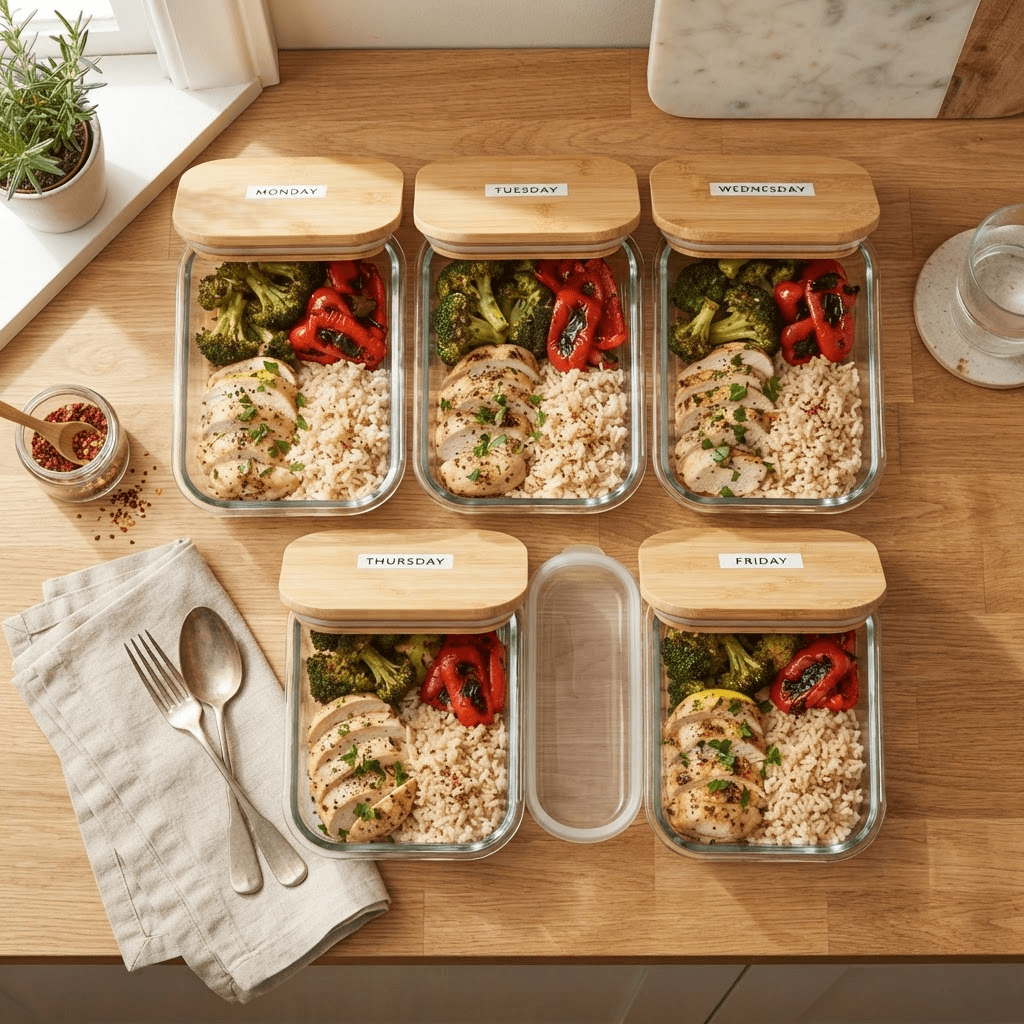 Healthy RecipesHigh-Protein Meal Prep for Busy Weeknights: The 2-Hour Sunday System
 FitnessStrength Training for Beginners: A 12-Week Full Body Workout Plan to Build Muscle
 Weight LossWalking for Weight Loss: The 4-Week Step Plan, Pace and Numbers That Actually Work