Strength Training for Beginners: A 12-Week Full Body Workout Plan to Build Muscle
A progressive full body workout plan for beginners who want to build lean muscle at home or in the gym, with correct form cues, progressive overload targets and realistic rest days you can keep up with for life.
Key takeaways
- Two or three full body sessions a week is enough to build real muscle in your first year.
- Five compound movements — squat, hinge, push, pull and carry — cover almost every muscle you have.
- Progressive overload matters more than exercise variety, fancy equipment or the perfect split.
- Leave one or two reps in reserve on most sets so you can train again in 48 hours.
- Expect strength changes in three weeks and visible changes in ten to twelve.
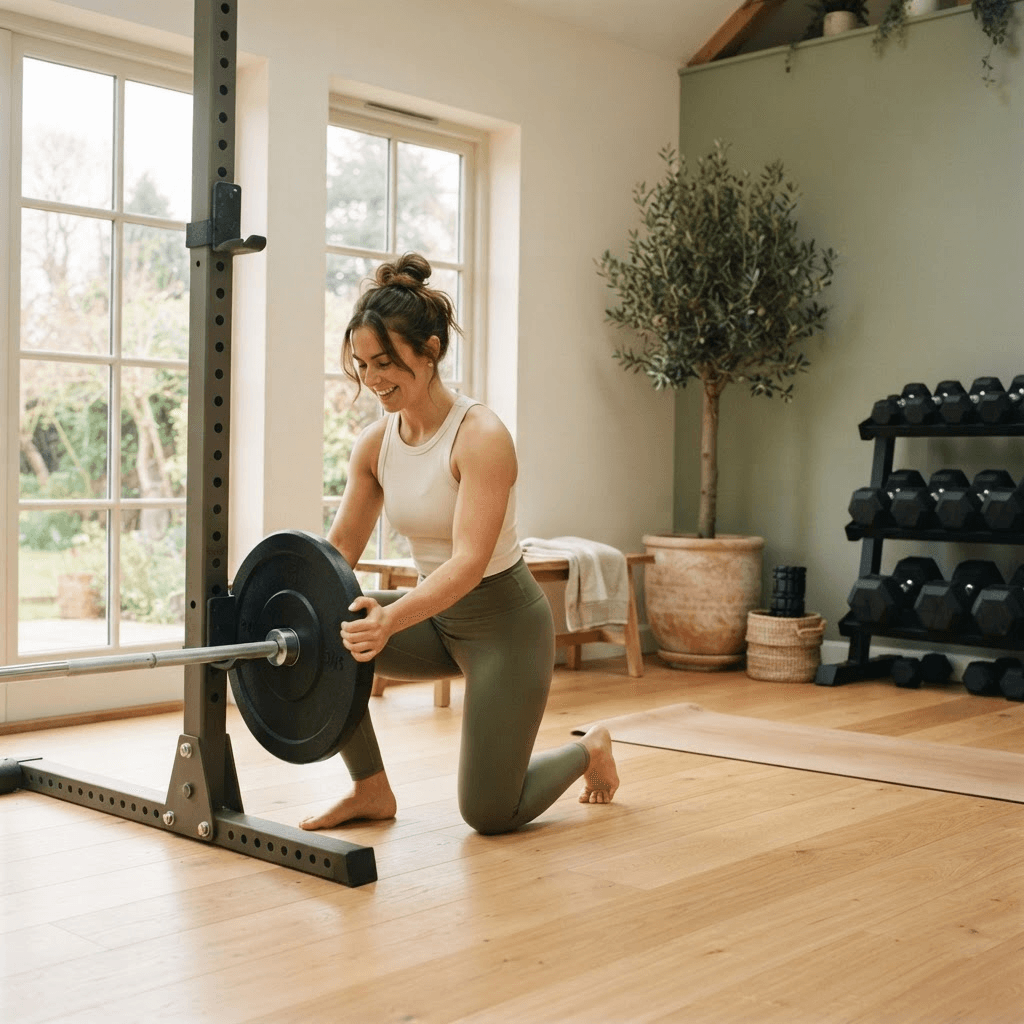
This guide gives you a complete 12-week full body workout plan, the form cues I repeat most often on the gym floor, and a clear way to decide how much weight to lift on any given day. You can run it at home with a pair of adjustable dumbbells or in a commercial gym with a barbell. Both work. What decides your results is not the equipment — it is whether you keep showing up and slowly asking your body to do slightly more than it did last week.
What strength training actually does to your body
When you lift something heavy enough to be challenging, you create small amounts of mechanical tension in the muscle fibres involved. Your body responds over the following two or three days by repairing those fibres slightly stronger and slightly denser than they were before. Repeat that cycle for months and the adaptation compounds. This is why rest days are not time off from training; they are the part of training where the change actually happens.
The visible outcome — firmer arms, a stronger back, better shape through the legs and shoulders — is honestly the least interesting benefit. Resistance training also raises bone mineral density, which becomes enormously valuable in your fifties and beyond. It improves how efficiently your muscles pull glucose out of your bloodstream, which supports steadier energy across the day. It reinforces tendons and connective tissue, which is why lifters tend to tolerate hiking, cycling and chasing children around far better than people who only do cardio.
None of this replaces cardiovascular work, and I would not want it to. Strength and endurance train different systems, and the ideal week contains both. If you already ride, our guide to cycling for weight loss and heart rate zones explains how to slot lifting around your riding without either one sabotaging the other.
The five movements that cover your entire body
Walk into any gym and you will see roughly two hundred pieces of equipment. You need five patterns. Every well-built beginner programme is a rearrangement of the same five human movements, and if you train all of them each week you will not have a weak link anywhere.
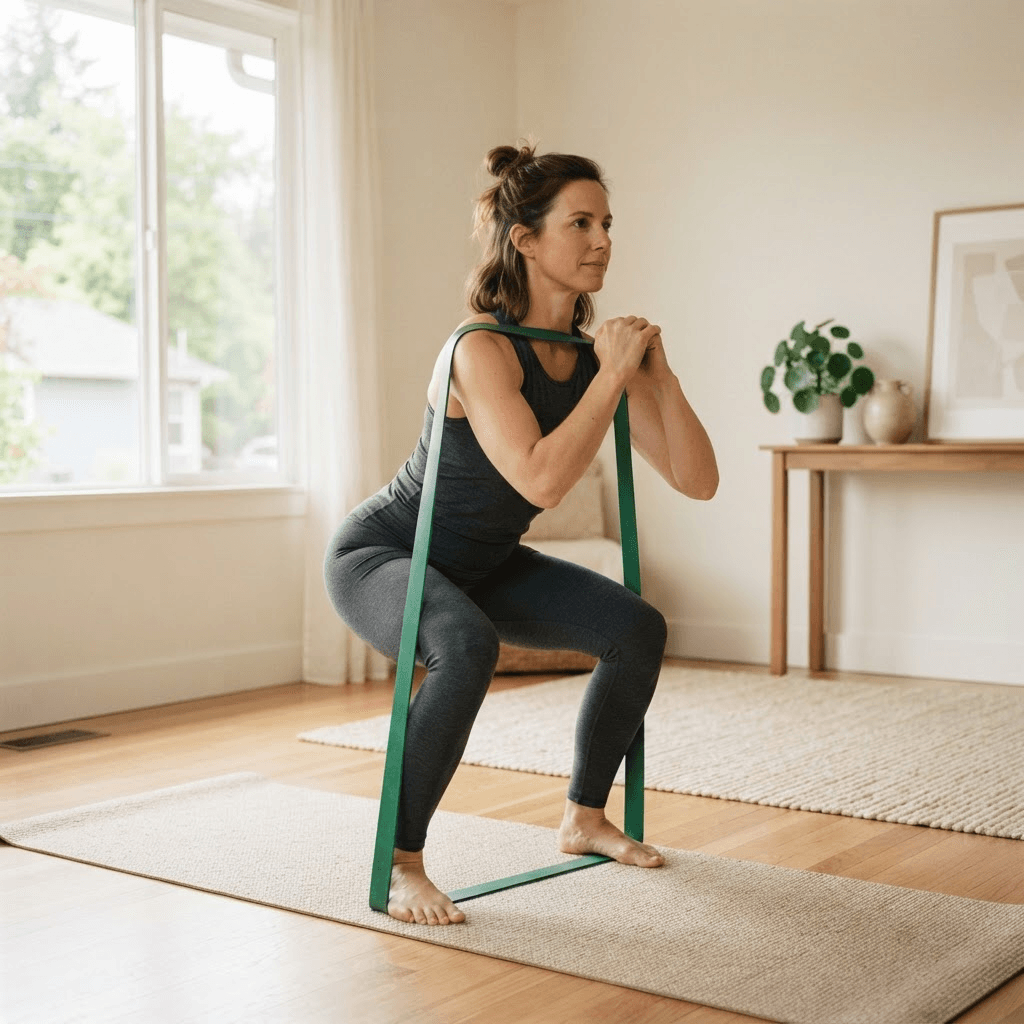
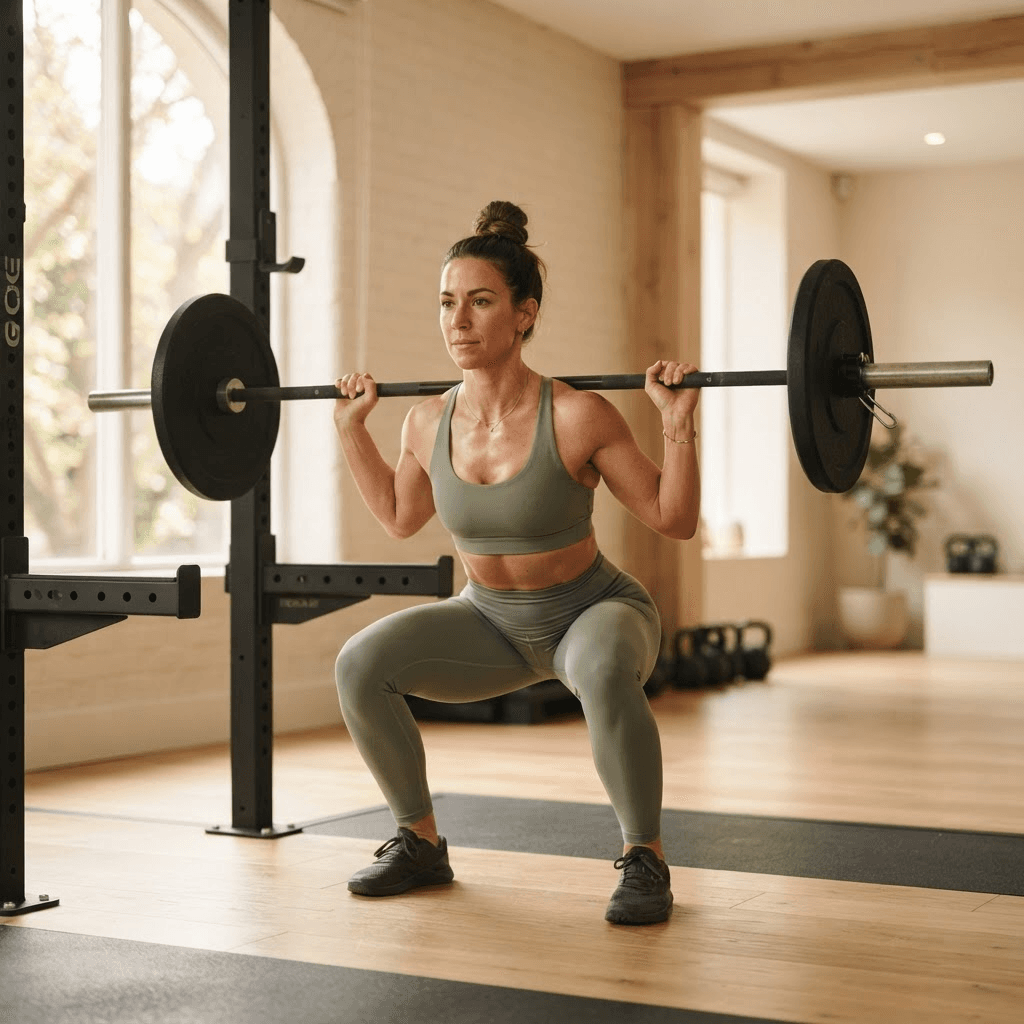
- Squat — bending at the knees and hips under load. Builds quadriceps, glutes and trunk stability. Goblet squat, box squat or barbell back squat.
- Hinge — pushing your hips backwards with a long spine. Builds hamstrings, glutes and the whole posterior chain. Romanian deadlift, hip thrust or conventional deadlift.
- Push — moving weight away from your torso. Builds chest, shoulders and triceps. Push-up, dumbbell bench press or overhead press.
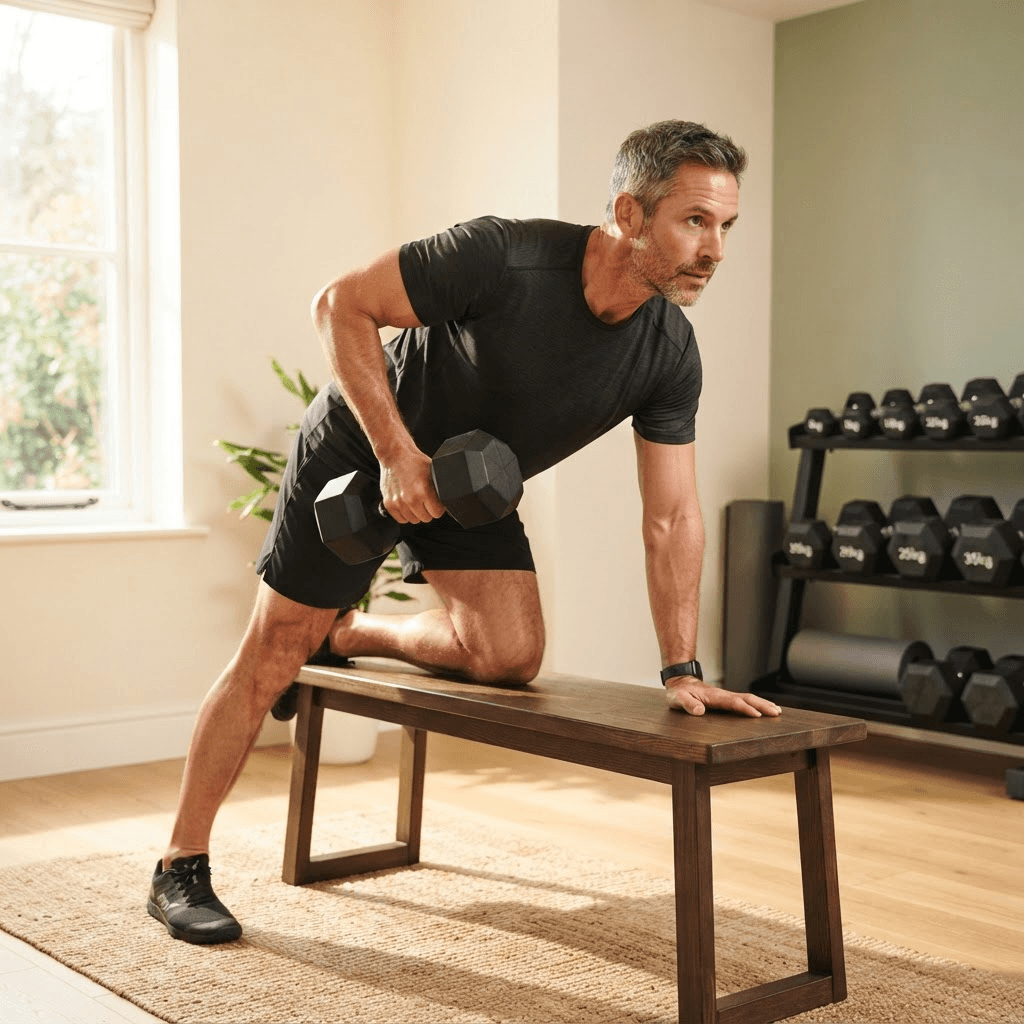
- Pull — bringing weight towards your torso. Builds lats, mid-back and biceps, and quietly fixes desk posture. Dumbbell row, lat pulldown or assisted pull-up.
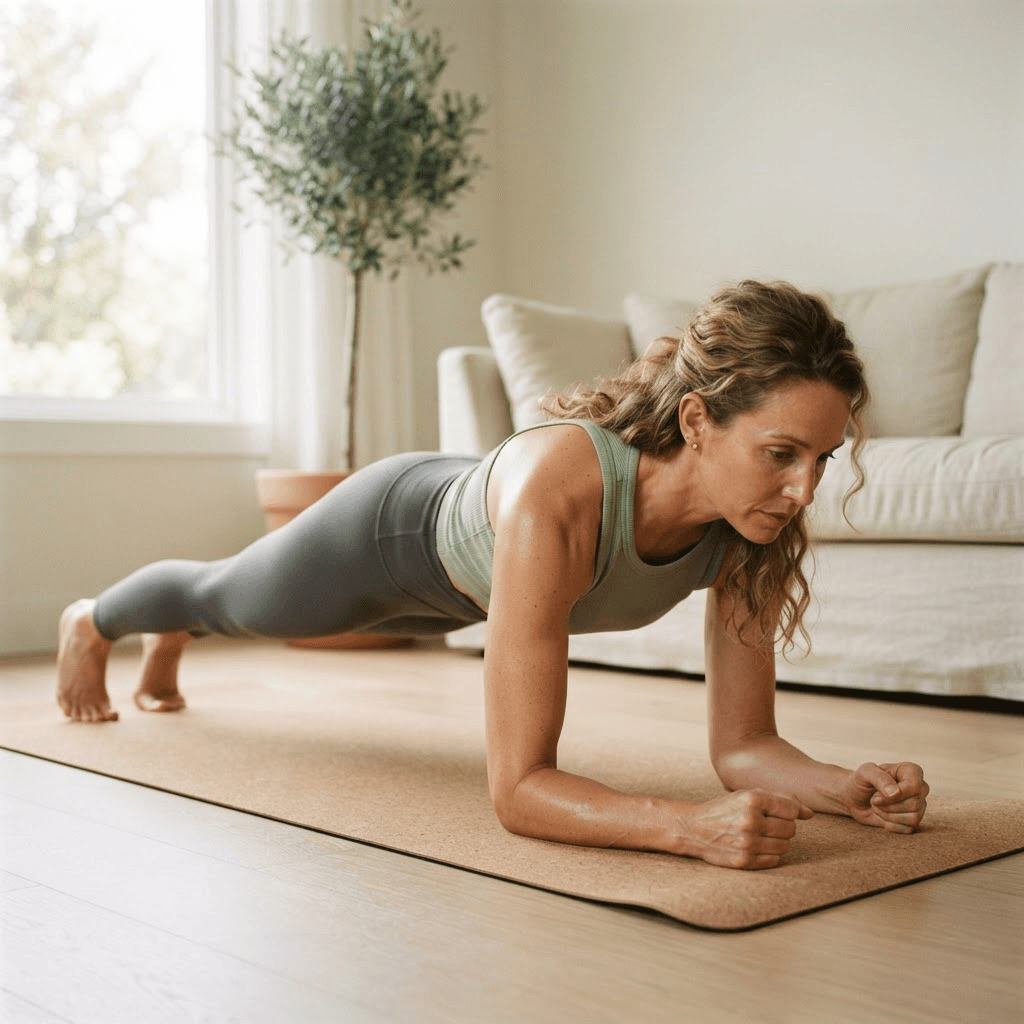
- Carry or brace — resisting movement rather than creating it. Builds genuine core strength. Suitcase carry, farmer walk, plank or dead bug.
Notice that crunches, cable kickbacks and lateral raises are absent. They are not useless, they are simply not where a beginner should spend limited weekly energy. Compound lifts recruit multiple joints and large amounts of muscle at once, which produces more adaptation per minute than any isolation exercise can. Add the accessories later, once the foundations are boring.
Your first 12 weeks: the full body workout plan
You will train two alternating full body sessions — Workout A and Workout B — either two or three times per week with at least one rest day between sessions. Three sessions a week is ideal. Two is genuinely enough, and infinitely better than the five-day plan you quit in February. Sessions run 45 to 55 minutes including warm-up.
Workout A
- Goblet squat or barbell back squat — 3 sets of 8 reps
- Dumbbell bench press or push-up — 3 sets of 8 reps
- One-arm dumbbell row — 3 sets of 10 reps per side
- Romanian deadlift — 2 sets of 10 reps
- Suitcase carry — 3 rounds of 30 metres per side
Workout B
- Romanian deadlift or trap bar deadlift — 3 sets of 6 reps
- Seated or standing overhead press — 3 sets of 8 reps
- Lat pulldown or assisted pull-up — 3 sets of 8 reps
- Split squat or step-up — 2 sets of 10 reps per leg
- Dead bug — 3 sets of 8 reps per side
Rest 90 seconds between sets of the first two exercises and about 60 seconds for the rest. If you finish a set and immediately feel ready to go again, you rested too long or the weight was too light. Warm up with five minutes of easy cycling or brisk walking, then one set of the day's first exercise using roughly half your working weight.
| Phase | Weeks | Focus | What changes |
|---|---|---|---|
| Phase 1 | 1–4 | Learn the patterns | Deliberately light weights, add 1 rep per set each week, film one set weekly to check form |
| Phase 2 | 5–8 | Build the habit under load | Add 2.5kg to lower-body lifts and 1–2kg to upper-body lifts whenever all reps feel controlled |
| Phase 3 | 9–12 | Earn real strength | Drop main lifts to 5–6 reps with heavier loads, keep accessories at 10 reps, take a lighter week at week 12 |
Week 12 is a deload, not a reward. You reduce every working weight by around 40 percent and keep the same sets and reps. It feels almost lazy, and it lets accumulated joint and nervous system fatigue clear so that week 13 starts from a genuinely fresh baseline. Skipping deloads is one of the most common reasons an enthusiastic beginner stalls in month four.
How much weight should a beginner actually lift?
That means you are almost never grinding to complete failure, which sounds counterintuitive until you notice you can now train again in 48 hours instead of limping for five days. Training close to failure on every set buys you a small amount of extra stimulus at a large cost in recovery — a terrible trade for a beginner whose main job is accumulating consistent sessions.
Progressive overload simply means making the work slightly harder over time, and weight on the bar is only one way to do it. You can add a repetition, add a set, slow the lowering phase to three seconds, shorten your rest, or improve your range of motion. Any of those count. What does not count is doing exactly what you did last month and hoping your body responds anyway.
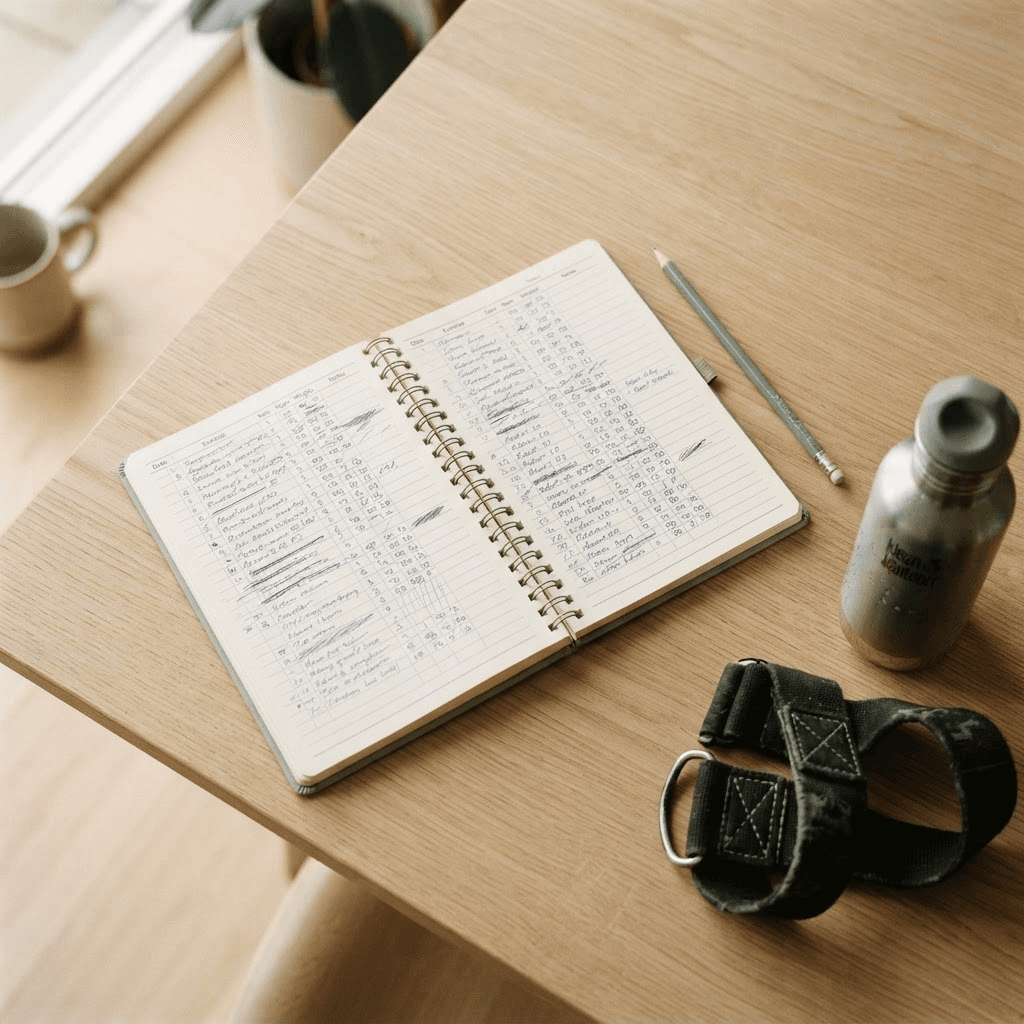
A training log is not admin. It is the only thing that tells you whether the last month of your life produced anything.
Write down the exercise, the weight, the reps and one word about how it felt. A pocket notebook is fine; an app is fine. When you open it next session you are no longer guessing — you are trying to beat a specific number, which is a far more motivating way to train than vaguely doing your best.
Form cues that prevent almost every beginner injury
Strength training has a lower injury rate than football, running or recreational cycling, and nearly all of the injuries that do occur come from the same three causes: loading a pattern before you own it, adding weight faster than your tendons adapt, and letting your ribcage and pelvis lose their relationship to each other under load. These cues address all three.
- Brace before you move. Take a breath into your belly and gently stiffen your midsection as if bracing for a poke in the stomach, then lift. Do not suck your stomach in.
- Keep your ribs stacked over your pelvis. Flaring the ribcage on an overhead press is where most lower-back complaints originate.
- Move through your full available range, not someone else's. Depth in a squat is determined by your hips, not by a rule you read online.
- Control the lowering phase for two to three seconds. Most muscle growth stimulus lives in the eccentric portion of the lift.
- Stop the set when your technique changes, not when the target rep number is reached. Those two moments should eventually be the same, but early on they are not.
Film one set from the side every week or two. Everybody hates doing this, and everybody learns something. What your body feels like it is doing and what it is actually doing are often two different things for the first couple of months, and thirty seconds of video closes that gap faster than any coaching cue I can write down.
Recovery, protein and sleep: where muscle is actually built
Training is the request. Food and sleep are the permission. If you lift three times a week on six hours of sleep and 60 grams of protein a day, you will get stronger for a while through neural adaptation and then stall hard, wondering what you did wrong.
For protein, most active adults do well between 1.4 and 1.8 grams per kilogram of body weight per day, spread across three or four meals rather than dumped into dinner. For a 70kg person that is roughly 100 to 125 grams daily — achievable with eggs at breakfast, fish or legumes at lunch, chicken or tofu at dinner and Greek yoghurt somewhere in between. You do not need powder, though a scoop is a convenient way to close a 25-gram gap on a busy day.
If a joint objects on a rest day rather than a muscle, that is worth listening to. Knees are the usual culprit among new lifters, and the strengthening drills in our guide to low impact workouts for bad knees address the underlying cause instead of asking you to simply avoid squatting.

- Programme hopping. Changing plans every three weeks guarantees you never see what any of them could have done. Give this one twelve weeks.
- Chasing soreness as proof of quality. Soreness mostly reflects novelty, not effectiveness. Trained lifters progress with very little of it.
- Skipping the pull. Everybody enjoys pressing. Under-training your back is how you end up with cranky shoulders by month five.
- Adding weight every session on principle. Load should follow technique, not a calendar.
- Doing twenty minutes of cardio before lifting. If you value strength, lift first while you are fresh, then walk or cycle afterwards.
- Training the same movement pattern on consecutive days without recovery, then blaming the exercise when something aches.
- Judging progress only in the mirror. Use your log, your resting heart rate, how your clothes fit and how easily you climb stairs.
What realistic progress looks like
In weeks one to three, almost all of your improvement is neurological. Your nervous system gets better at recruiting the muscle you already have, so your lifts climb quickly while your body looks unchanged. This phase deceives people in both directions — some assume they are gifted, others assume nothing is happening.
From weeks four to eight, real tissue change begins. Posture shifts, sleeves fit differently, and everyday tasks like carrying shopping or lifting a toddler stop registering as effort. Between weeks nine and twelve, most consistent beginners have added meaningful load to every main lift and can see visible change in the shoulders, arms and legs. Expect roughly 0.25 to 0.5kg of new muscle per month in your first year if food and sleep support it — slower than the internet promises, and permanent in a way that crash programmes never are.
References and further reading
The training and nutrition recommendations above are drawn from peer-reviewed research and national clinical guidance. These are the primary sources.
- Physical Activity Guidelines for Americans, 2nd edition — muscle-strengthening activity recommendations for adultsU.S. Department of Health and Human Services
- WHO guidelines on physical activity and sedentary behaviour — twice-weekly resistance training recommendationWorld Health Organization
- Schoenfeld BJ, Ogborn D, Krieger JW. Dose-response relationship between weekly resistance training volume and muscle hypertrophyJournal of Sports Sciences (PubMed)
- Morton RW et al. Systematic review and meta-analysis of protein supplementation on resistance training-induced gains in muscle mass and strengthBritish Journal of Sports Medicine (PubMed)
- Grgic J et al. Effects of resistance training performed to repetition failure or non-failure on muscular strength and hypertrophyJournal of Sport and Health Science, PubMed Central
- Osteoporosis prevention and the role of weight-bearing and resistance exercise in bone mineral densityNational Institutes of Health, Osteoporosis Resource Center
- ACSM position stand: progression models in resistance training for healthy adultsAmerican College of Sports Medicine (PubMed)
- Strength and resistance exercise guidance for adults, including safe starting pointsNHS (United Kingdom)
Strength training questions beginners ask most
How many days a week should a beginner strength train?
Two to three full body sessions a week is the sweet spot for a beginner. Three gives you slightly faster progress; two is enough to build real muscle and is far easier to sustain around work and family. Always leave at least one rest day between sessions so your muscles can complete the repair process.
Can I build muscle at home without a gym?
Yes. A pair of adjustable dumbbells and a bench cover every movement pattern in this plan for the first year or more. Bodyweight training also works if you progress the difficulty — moving from incline push-ups to standard to feet-elevated, for example. Equipment determines convenience, not results.
Will strength training make women look bulky?
No. Building visible muscle mass is a slow process requiring years of deliberate training and a calorie surplus. What women who lift consistently for three to six months typically report is a firmer, more defined shape, better posture and noticeably more everyday strength — not size.
Should I do cardio as well as lifting?
Yes, but keep it separate from your strength priority. Daily walking plus one or two easy 20 to 30 minute cardio sessions a week supports heart health and recovery without interfering with muscle growth. If you do both in one session, lift first while you are fresh.
How long before I see results from strength training?
Strength usually improves within two to three weeks as your nervous system adapts. Visible changes in muscle shape and body composition typically appear between weeks eight and twelve of consistent training with adequate protein and sleep.
What should I do if a lift causes pain?
Stop that set. Sharp, localised or joint pain is different from muscular effort. Reduce the load, shorten the range of motion, or substitute a similar movement that feels clean. If pain persists beyond a few days or limits daily activity, see a physiotherapist rather than training through it.
Vitality Editorial Team
Vitality publishes practical fitness guidance based on cited sources and established public-health recommendations.
Medical disclaimer: This article is educational and general in nature. It is not a diagnosis, prescription or personalised training plan. Speak with a qualified healthcare professional before starting a new exercise programme, particularly if you have an existing condition, injury or are pregnant.