Pilates vs Weight Training: Which Builds Strength Faster?
Pilates improves control, endurance and trunk stability, while weight training builds maximal strength and muscle faster. Here is how to choose — or combine them — for your goal.
Key takeaways
- Weight training builds maximal strength and muscle faster because external load can be measured and progressively increased across the whole body.
- Pilates is highly effective for trunk endurance, movement control, balance and confidence, especially for beginners or people returning from pain.
- Pilates can make you stronger, but the result is specific to the positions, resistance and repetition ranges you practise; it does not automatically replace heavy pulling, squatting or carrying.
- You do not need to choose permanently. Two full-body lifting sessions plus one or two Pilates sessions is a productive, recoverable combination for most adults.
- The best method is the one that matches your current goal, can be progressed, and does not provoke symptoms you cannot settle within 24 to 48 hours.
The honest answer was not “whichever one you enjoy,” although enjoyment matters. It was not “Pilates makes long muscles” or “lifting makes you bulky,” because neither claim survives basic physiology. The answer depended on what Claire meant by strong. Did she want to carry two suitcases upstairs, lift more weight from the floor, hold her trunk steady while running, return to movement without fear, or add visible muscle? Those outcomes overlap, but they are not identical.
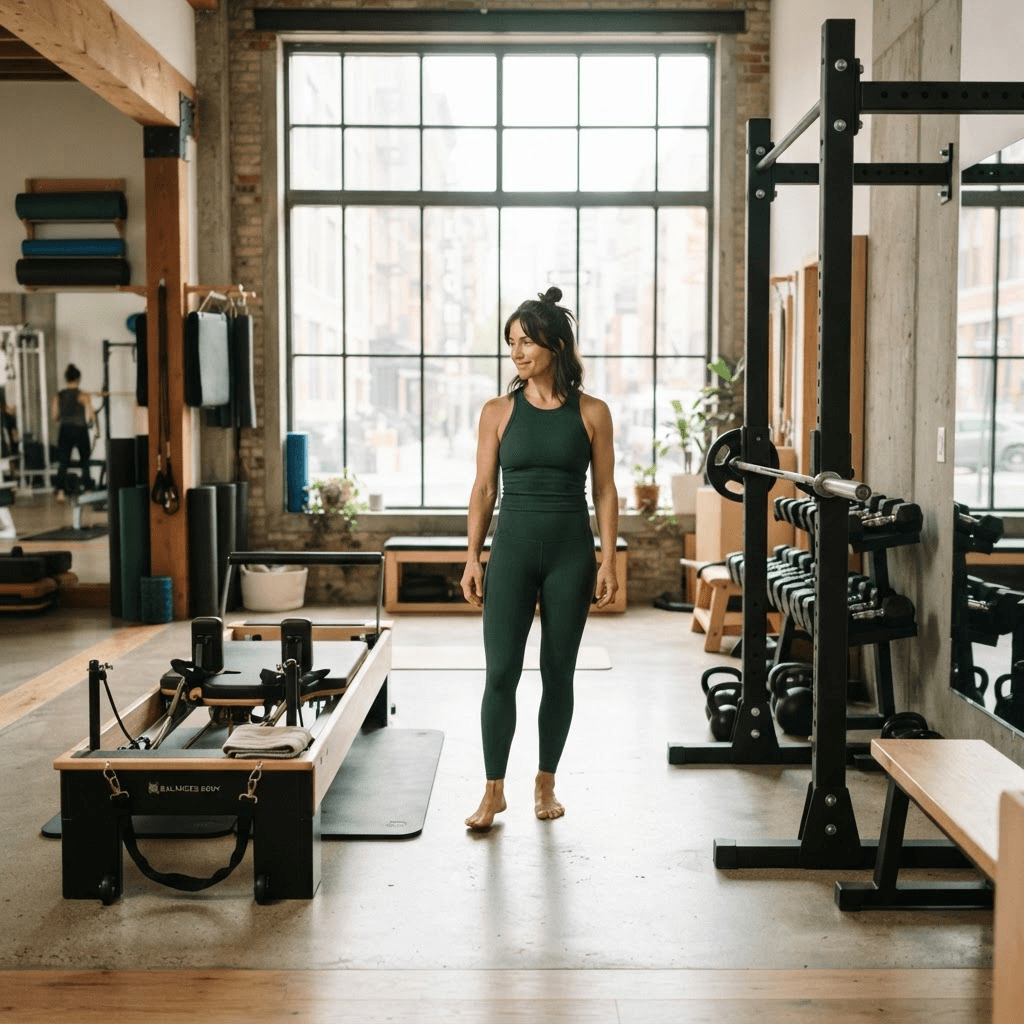
When Pilates and weight training are compared fairly, weight training wins the race for maximal strength and muscle growth. Pilates often wins for precise movement practice, trunk endurance and a gentler entry point. For many people, the smartest answer is not a winner-takes-all choice. It is a sequence: build control, add load, and keep enough of both to support the life you want outside the studio.
The short answer: weight training builds strength faster
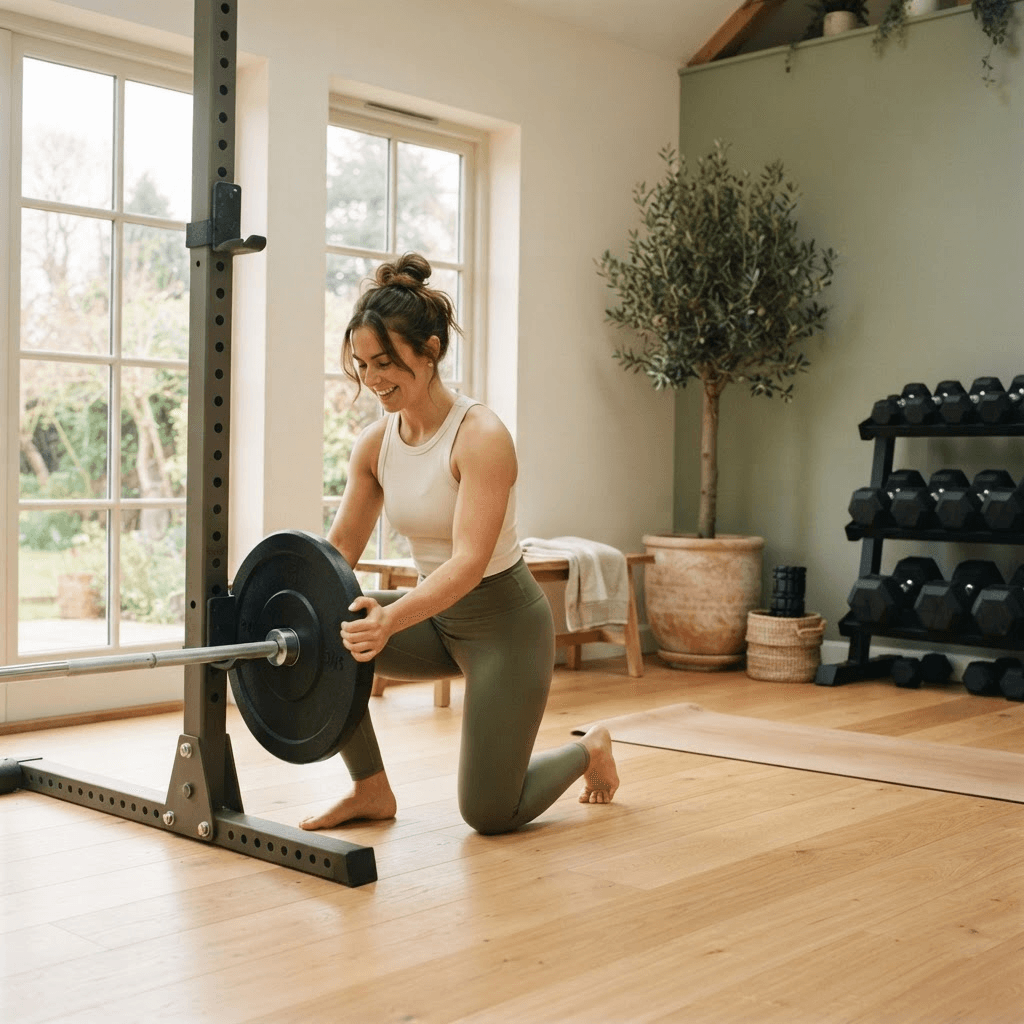
Strength is the ability to produce force. To increase it, the body needs a challenge large enough to recruit muscle fibres and a progression that asks for slightly more over time. Barbells, dumbbells, machines and resistance bands make that process easy to measure. You can lift 20 kilograms this week, 22.5 next week, or perform another repetition with the same load. The training stress is visible.
Pilates also uses resistance: body weight, gravity, springs, bands and long lever positions. A demanding reformer sequence can be genuinely hard. The limitation is not that Pilates is “only stretching.” The limitation is that many classes prioritise smooth control and sustained submaximal effort, while the resistance ceiling for the legs, back and chest may arrive before those large muscles receive the load needed for continued maximal-strength gains.
| Goal | Pilates | Weight training | Likely faster choice |
|---|---|---|---|
| Maximal strength | Moderate improvement, especially early | High and directly measurable improvement | Weight training |
| Muscle growth | Possible with sufficient resistance and fatigue | Efficient across all major muscle groups | Weight training |
| Core endurance and control | A central training emphasis | Improves through bracing and loaded movement | Pilates initially |
| Bone loading | Some benefit from weight-bearing positions | High potential with progressive external load | Weight training |
| Balance and movement confidence | Strong emphasis and accessible progressions | Improves when programmed deliberately | Pilates initially |
| Everyday function | Useful control and endurance | Useful lifting, carrying and force capacity | Combination |
What actually counts as strength?
Fitness marketing uses “strength” as if it were one quality. In practice, strength has several faces. Maximal strength is the greatest force you can produce once. Strength endurance is the ability to repeat or sustain force. Hypertrophy is an increase in muscle size, which supports strength but is not identical to it. Power is force expressed quickly. Motor control is the nervous system organising joints and muscles for a task. A good programme may train several at once, but no programme maximises all of them equally.
Specificity explains most of the difference
Your body adapts specifically to the challenge it receives. Practise slow, controlled hip rolls and you become skilled and enduring in spinal articulation. Practise heavy split squats and you become better at producing force through one leg under load. Neither adaptation is fake; each is simply specific. This is why someone with years of Pilates experience can shake under a moderately heavy squat, while an experienced lifter may struggle to coordinate a precise teaser on the mat.
Progressive overload is the common language
Both methods work best when the challenge progresses. In weight training, overload can mean more weight, repetitions, sets, range of motion or control. In Pilates, it can mean a less stable base, a longer lever, a different spring setting, greater range, slower tempo or a more complex sequence. Complexity, however, is not always overload. A move can become harder to coordinate without placing meaningfully more tension on the target muscle.
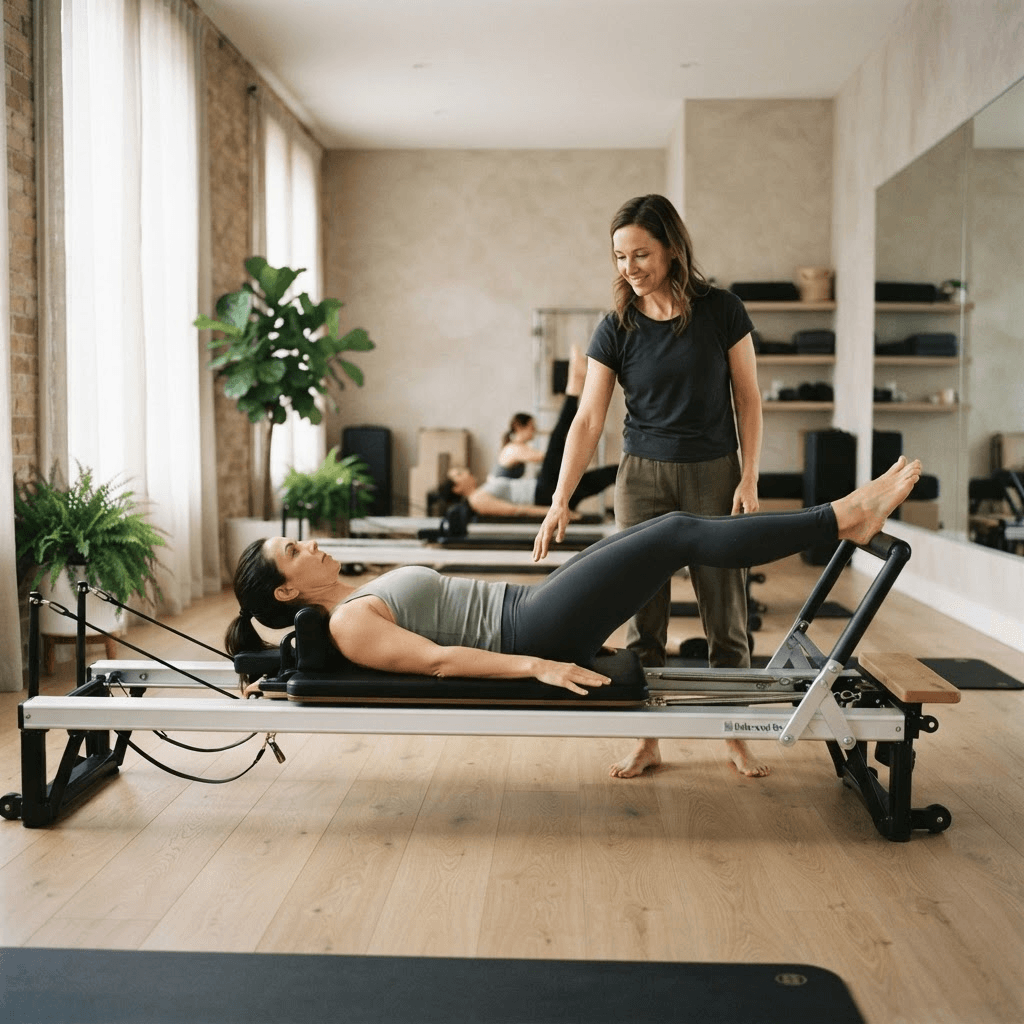
How Pilates builds strength — and where it reaches a limit
Joseph Pilates developed his method around controlled movement, breath, concentration and whole-body coordination. Modern Pilates now includes mat classes, classical and contemporary reformer work, chair and tower exercises, and rehabilitation-informed sessions. The dose varies enormously. A gentle beginner mat class and an advanced reformer session should not be treated as the same stimulus.
The strengths of Pilates
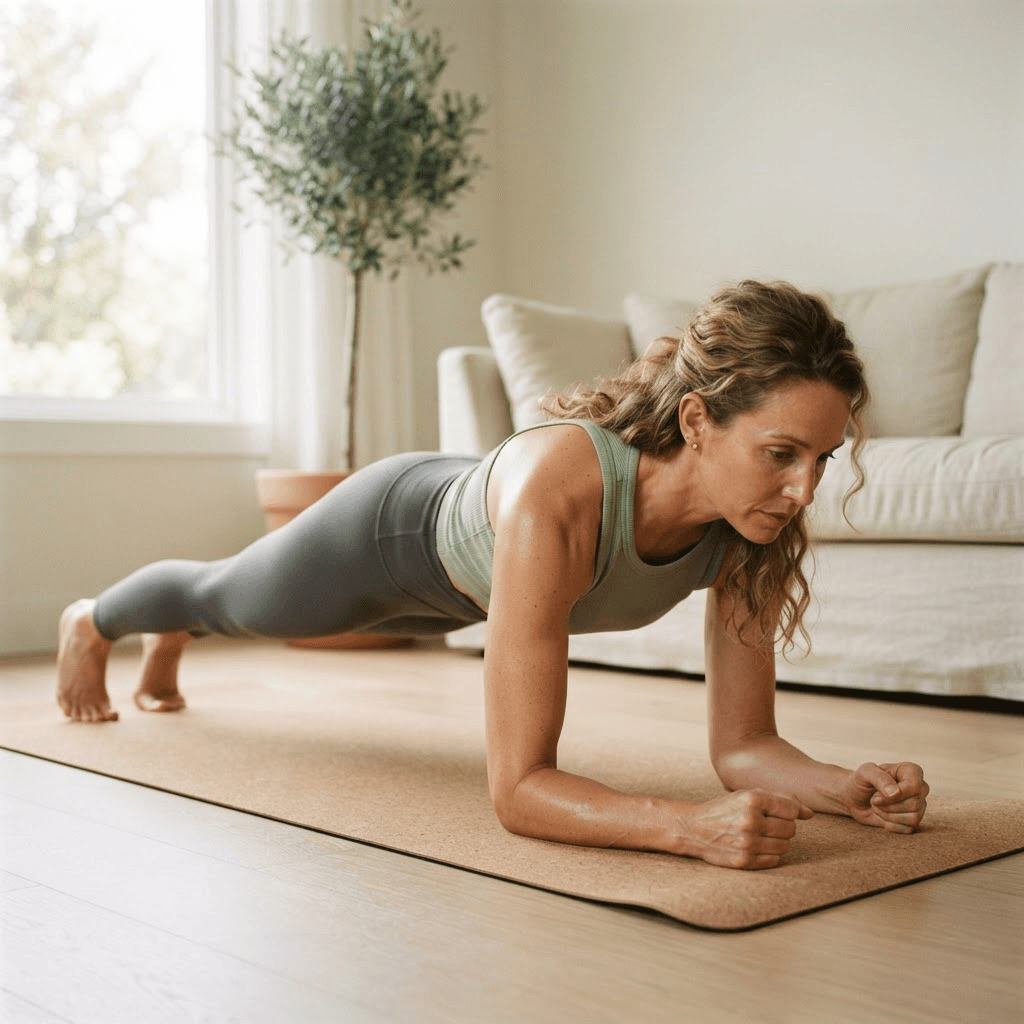
- Trunk endurance: repeated anti-extension, flexion, rotation and lateral-control tasks train the abdominal wall and spinal stabilisers to sustain effort.
- Body awareness: deliberate pacing and detailed feedback help you notice rib, pelvis and shoulder position without needing a mirror.
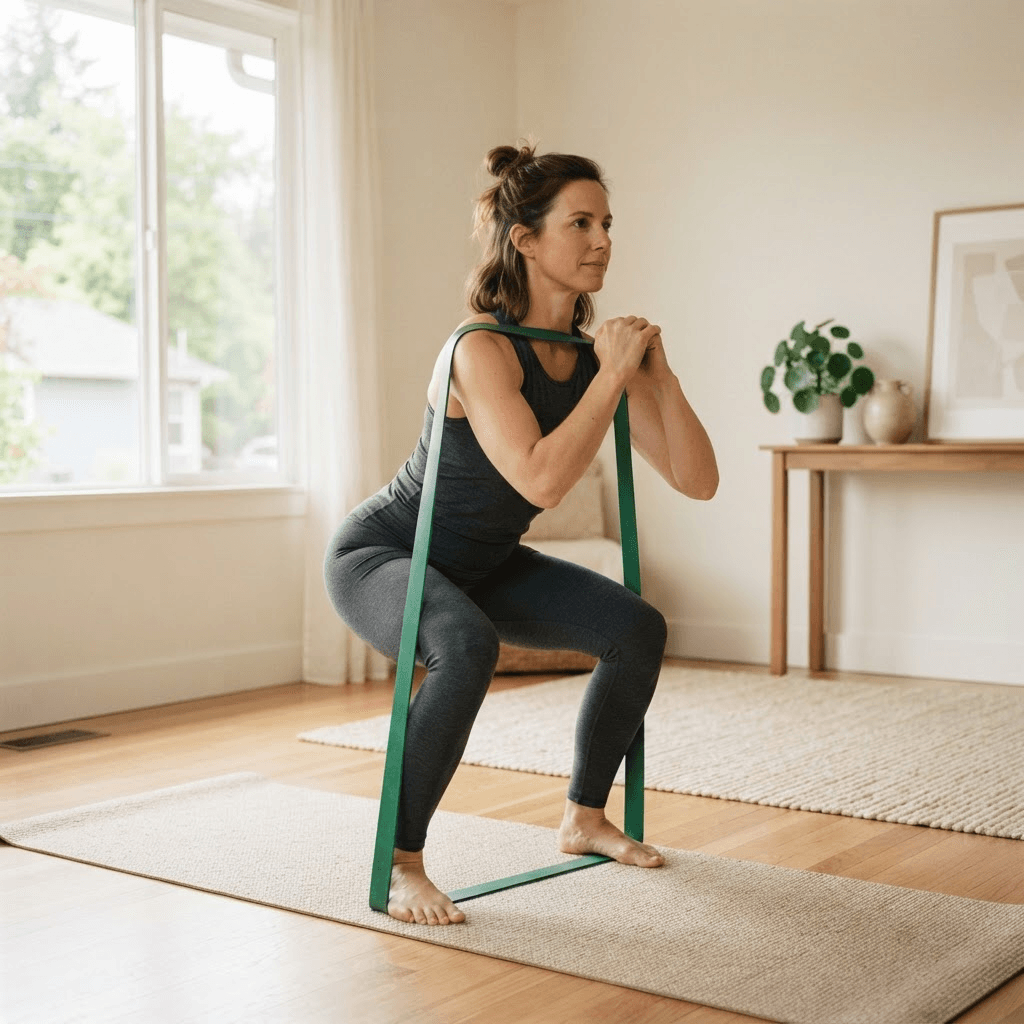
- Accessible resistance: springs can assist a difficult movement or resist it, making reformer work adaptable during a return from pain.
- Balance and coordination: smaller bases of support and contralateral patterns challenge the nervous system without requiring heavy load.
- Consistency: many people find the coached, low-impact environment less intimidating than a weight room and therefore attend more reliably.
Research supports meaningful improvements, while also reminding us to avoid exaggerated claims. Systematic reviews have found Pilates can improve physical function, balance and aspects of quality of life in several populations. Evidence for chronic low-back pain suggests Pilates can reduce pain and disability compared with minimal intervention, although it is not clearly superior to every other well-designed exercise approach. That distinction matters: Pilates is a useful route into movement, not a uniquely corrective cure.
Where Pilates may stop being enough
Early gains can be impressive because beginners respond to modest resistance and quickly improve coordination. Later, large muscle groups need a larger stimulus. Your quadriceps may be capable of moving far more than the hardest spring setting or body-weight variation asks of them. Pulling strength is another gap in many mat programmes; the back and arms rarely receive the progressively heavier rows and pulldowns that support climbing, lifting and shoulder capacity.
Muscle growth can occur when a muscle works close enough to fatigue through a useful range of motion. Some Pilates exercises meet that condition, especially for the abdominals, hip muscles and shoulders. But a class designed around flow may move on before a muscle receives enough challenging sets. If visible muscle gain or a large increase in force is the priority, adding external resistance is the more direct path.
A note on “long, lean muscles”
Exercise cannot lengthen a muscle beyond its anatomical attachments, and no method can choose “lean” rather than “bulky” tissue. Pilates can improve posture, control and muscular endurance, which may change how you carry yourself. Body composition reflects muscle mass, fat mass, genetics, nutrition and total activity — not a special muscle type created by one class.
Why weight training produces faster strength gains
Resistance training is an umbrella term covering free weights, machines, cables, bands and loaded body-weight exercises. Its defining feature is not the equipment; it is the planned exposure to resistance. A good programme includes movement patterns that ask the legs to squat and hinge, the upper body to push and pull, and the whole body to brace and carry.
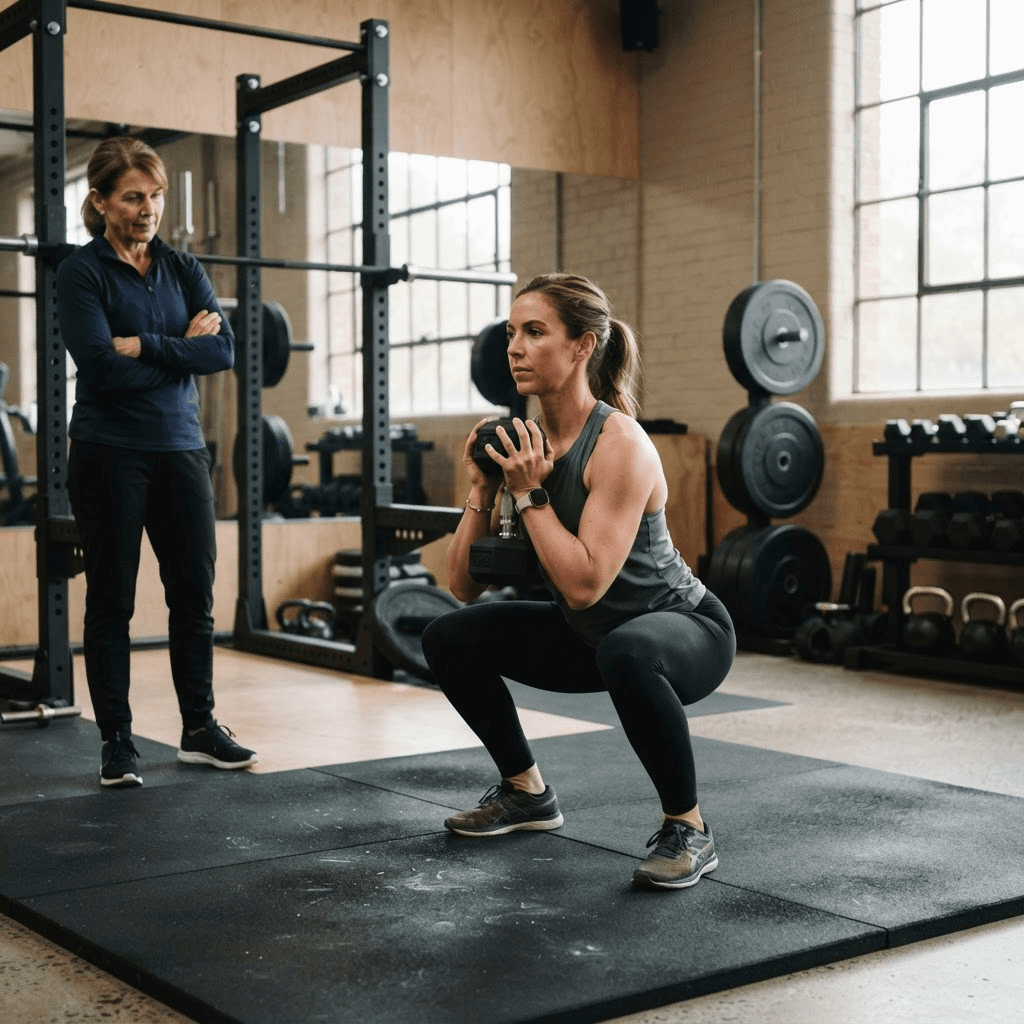
Load is precise and scalable
Weights let you match the task to your current capacity and then move the target in small increments. That matters because the body needs a reason to adapt. A 2021 position stand from the American College of Sports Medicine reinforces a broad evidence base: progressive resistance exercise improves strength and physical function, with programming adjusted to training status and goals. Beginners do not need maximal loads. Sets that finish with roughly two or three good repetitions still available can build strength while technique develops.
It trains the missing everyday demands
Life includes forces that are not always elegant. A suitcase pulls from one side. A child shifts while being carried. A bag of soil begins on the ground. Loaded carries, rows, deadlifts and step-ups prepare you for those demands in a direct way. They also expose bones to mechanical loading. Bone health is influenced by many factors, but progressively loaded resistance exercise is one of the most useful training tools available, particularly as adults age.
The trade-off is a steeper learning curve
Weight training is not inherently dangerous, but an unsupervised beginner can do too much too soon. The numbers are seductive: if five kilograms felt good, ten appears twice as productive. It is not. Tendons, joints and confidence adapt on a slower timetable than enthusiasm. A sensible starting plan uses a small exercise menu, submaximal effort and repeatable technique. The 12-week strength training plan explains those foundations in more detail.
Core strength, posture and injury prevention: clearing up three claims
Does Pilates build a stronger core?
Usually, yes — particularly for someone who has not trained trunk endurance. Pilates gives the trunk repeated, focused practice and teaches breathing without losing control of the rib cage and pelvis. Weight training also trains the core whenever you stabilise a load during a squat, row, press or carry. Pilates is more explicit; lifting is often more heavily loaded. A resilient trunk benefits from both sustained control and the ability to tolerate force.
Will Pilates fix posture?
Posture is not a single ideal shape. It changes with the task, mood, fatigue and anatomy. Pilates may improve awareness and endurance, helping you vary position more comfortably. It cannot permanently pull every body into a universal alignment, and there is weak justification for labelling ordinary spinal curves as dysfunction. The useful goal is not perfect posture; it is having several comfortable postures and the capacity to change between them.
Which method prevents injury?
No exercise method prevents every injury. Sensible resistance training can increase tissue capacity; Pilates can improve control and expose movement options. Injury risk is also shaped by sleep, previous injury, sudden workload changes, sport demands and chance. The protective plan is the one that progresses gradually, includes the movements your life requires and leaves enough recovery between hard sessions.
How to choose: a step-by-step decision guide
Do not choose from identity — ���I am a Pilates person” or “I am a lifter.” Choose from the adaptation you need now. You can reassess after eight weeks.
- Name one measurable outcome. Examples: carry two 15-kilogram bags for 30 metres, complete ten controlled push-ups, attend two pain-free sessions each week, or hold a side plank for 45 seconds.
- Check your starting constraints. Consider current pain, recent surgery, pregnancy, osteoporosis, balance, equipment access, budget and whether you need individual instruction.
- Match the method to the outcome. Choose weights for maximal force, muscle gain and loaded daily tasks. Choose Pilates first for movement confidence, trunk endurance and a supported return to exercise.
- Choose a dose you can recover from. Two focused sessions are more useful than five classes that leave you depleted or repeatedly sore.
- Record one progression marker. For lifting, track load and repetitions. For Pilates, track spring setting, lever length, range, tempo or a clearly defined exercise level.
- Review after eight weeks. If the marker has not changed for three weeks, improve sleep and consistency first, then adjust the training challenge.
Choose Pilates first if…
- You are returning after pain or a long inactive period and a calm, coached environment helps you move without fear.
- Trunk endurance, balance, coordination or controlled range of motion is your main short-term goal.
- You strongly prefer classes and that structure is the difference between attending and skipping.
- Heavy equipment is unavailable, but a well-taught mat or reformer programme is accessible.
Choose weight training first if…
- Your priority is gaining muscle, increasing bone-loading exercise or lifting heavier objects.
- You want progress that can be measured in kilograms, repetitions and sets.
- Your sport or work exposes you to higher forces that should be prepared for progressively.
- You already have good movement confidence and need a stronger training stimulus.
The hybrid approach: Pilates and weight training together
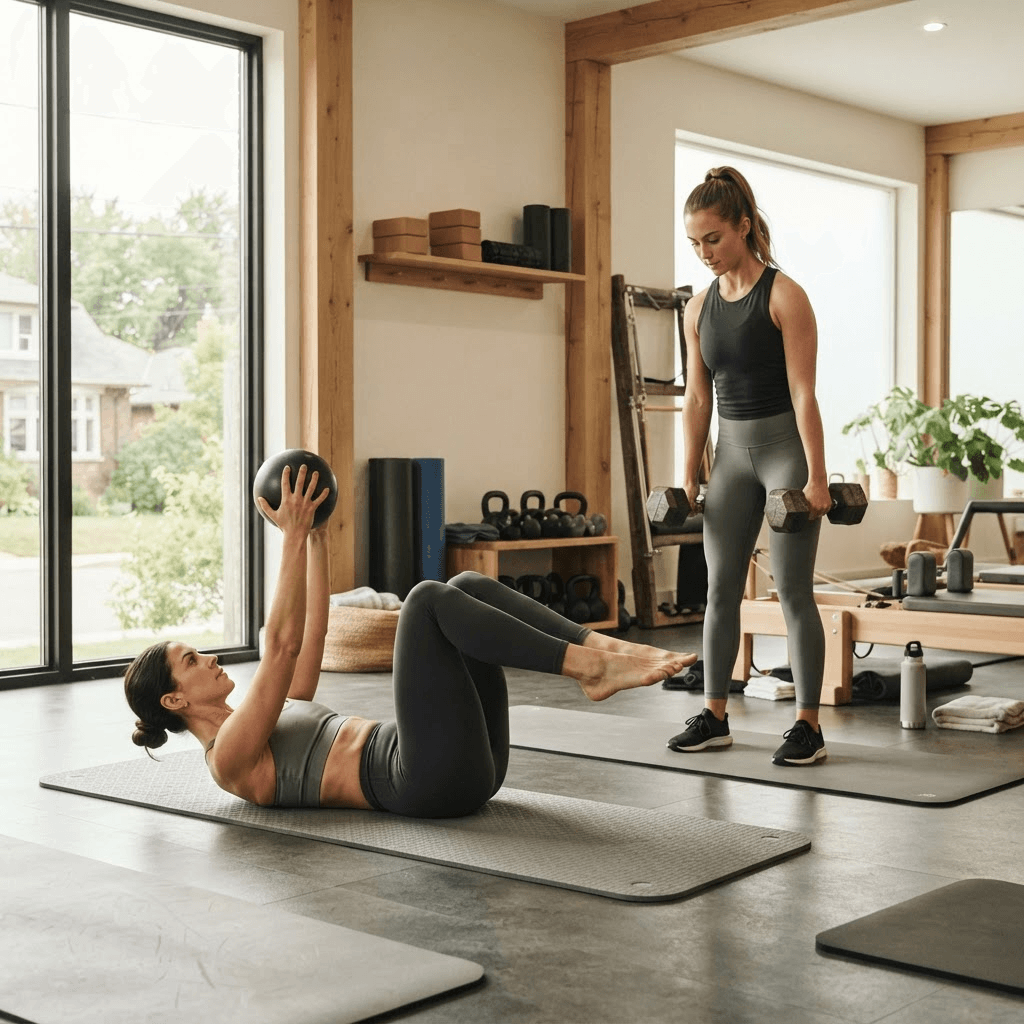
Claire eventually chose both doors, but not on the same terms. She treated lifting as the main driver of force and Pilates as deliberate practice for control, breathing and range. After eight weeks, her goblet squat had moved from 8 to 18 kilograms, and the side plank that once felt threatening had become ordinary. More important, she stopped scanning every movement for danger.
A practical weekly schedule
| Day | Session | Purpose |
|---|---|---|
| Monday | Full-body weights, 40–55 minutes | Squat, hinge, push, pull and carry |
| Tuesday | Easy walk or rest | Recovery and general activity |
| Wednesday | Pilates, 40–50 minutes | Trunk endurance, control and mobility |
| Thursday | Rest or easy cardio | Recover before the second lift |
| Friday | Full-body weights, 40–55 minutes | Repeat patterns with small progression |
| Saturday | Optional gentle mat Pilates or walk | Skill practice, not another hard session |
| Sunday | Rest | Sleep, food preparation and reset |
If the sessions must occur on the same day, do the priority method first. For faster maximal-strength gains, lift before Pilates or separate the sessions by several hours. Keep the second session technically focused rather than exhausting. Fatigue makes precise movement less precise and heavy lifting less productive.
An 8-week progression from control to strength
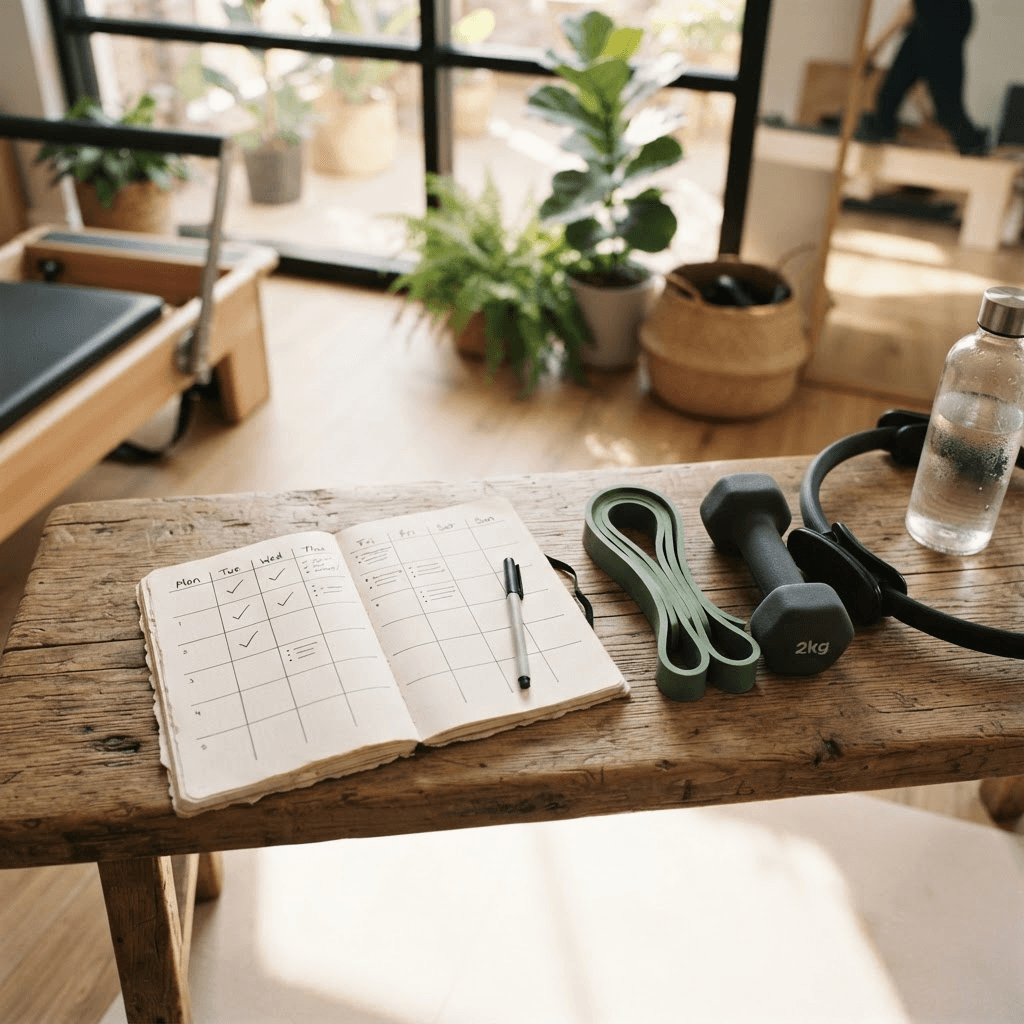
Weeks 1–2: learn the positions
Complete two short full-body lifting sessions and one beginner Pilates session. Use five lifting patterns: box squat, dumbbell Romanian deadlift, supported row, incline push-up and suitcase carry. Perform two sets of 8 to 10 controlled repetitions, stopping with about three repetitions available. In Pilates, choose foundational footwork, bridge, dead bug, side-lying leg work and modified side plank. The goal is repeatability, not soreness.
Weeks 3–4: build reliable volume
Add a third set to the squat, row and push-up. Keep the same load until every repetition looks similar. In Pilates, lengthen one lever or add a small range only when breathing and trunk control remain steady. If soreness changes how you move for more than 48 hours, return to the previous dose rather than forcing progression.
Weeks 5–6: increase resistance
Increase the dumbbell load by the smallest available jump when you can complete the top of the repetition range with two or three repetitions in reserve. Add a split squat or low step-up if balance permits. In reformer Pilates, adjust springs according to the exercise and instructor guidance; more spring is not always harder because springs can assist as well as resist. The test is whether the intended muscles work while control remains intact.
Weeks 7–8: make strength measurable
Choose three tests related to daily life: a ten-repetition goblet squat load, a 30-metre suitcase carry and a timed side plank. Test them in week seven without grinding to failure, then train normally and repeat at the end of week eight. Improvement may appear as more load, cleaner repetitions, a longer hold or less apprehension. Each counts, but record them separately so the word “stronger” has evidence behind it.
Seven common mistakes that slow progress
- Mistaking shaking for failure. Shaking can reflect novelty, fatigue or motor learning. It does not prove a muscle received the best possible strength stimulus.
- Making Pilates more complicated instead of more progressive. A choreography challenge is useful only when it supports the adaptation you want.
- Lifting to exhaustion in every set. Consistent high-quality work usually outperforms repeated failure for beginners, particularly when soreness disrupts the next session.
- Changing exercises every week. Repeating a small set of movements long enough to improve them is how progress becomes measurable.
- Ignoring pulling and carrying. Presses and abdominal work cannot replace rows, pulldowns and loaded carries for whole-body strength.
- Treating pain as proof of damage or proof of effort. Pain is a protective experience influenced by many factors. It deserves attention, not panic or bravado.
- Using exercise to compensate for food. Training supports health and performance; turning every session into punishment makes both Pilates and lifting harder to sustain.
How quickly should you expect results?
Beginners often feel more coordinated within two to four weeks because the nervous system becomes better at recruiting muscle for familiar tasks. Measurable strength can improve over a similar period, although the size of change depends on the test, training history, sleep, nutrition and attendance. Visible muscle growth generally needs longer — often eight to twelve weeks before a beginner notices a meaningful difference, and longer for other people to notice it.
Do not compare a Pilates class calorie estimate with a lifting-session estimate and call the larger number better. Strength adaptation is not priced by calories burned. Eat enough protein and total energy to recover, sleep as consistently as your life allows, and judge the plan by the outcome chosen in step one. For general health, pair either method with regular aerobic activity; strength work does not replace the cardiovascular benefits of walking, cycling or swimming.
The verdict: choose a lead method, not a permanent identity
If the question is strictly “Pilates vs weight training: which builds strength faster?”, weight training is the clearer answer. It offers a higher and more measurable loading ceiling, efficiently trains large muscle groups and maps directly to maximal force and muscle gain. That is not a dismissal of Pilates. Pilates can build meaningful strength, particularly trunk endurance and control, and it can provide the confidence that allows someone to begin loading again.
Choose weights as the lead method when force and muscle are the destination. Choose Pilates as the lead method when control, confidence and an accessible entry point are the immediate need. Combine them when you want a body that can both produce force and organise it well. Claire did not need to decide which studio belonged to her. She needed a programme in which every session had a purpose.
References and further reading
These sources inform the training principles and health guidance in this article. Links lead to the publisher, journal or public-health source.
- Resistance training prescription for muscle strength and hypertrophyBritish Journal of Sports Medicine
- Physical activity guidelines for adultsWorld Health Organization
- Pilates for low back painCochrane Database of Systematic Reviews
- Exercise and physical activity for bone healthNational Institutes of Health
- Progression models in resistance training for healthy adultsMedicine & Science in Sports & Exercise
Pilates vs weight training: frequently asked questions
Is Pilates considered strength training?
Pilates is a form of resistance exercise and can build strength, particularly trunk endurance, hip control and upper-body stability. Whether it functions as sufficient strength training depends on the exercise, resistance, proximity to fatigue and your current ability. For continued maximal-strength and muscle gains across the whole body, progressively loaded squats, hinges, pushes, pulls and carries are usually needed.
Does Pilates build muscle or only tone?
Pilates can build muscle when an exercise places enough tension on a muscle and is progressed over time. “Toning” is not a separate physiological process; the visible look people describe comes from muscle mass, body fat and genetics. Weight training generally makes progressive loading easier and therefore builds substantial muscle more efficiently.
Should I do Pilates or weights first?
Do the method tied most closely to your main goal first, when you are least fatigued. If maximal strength is the priority, lift first and use Pilates later for lower-intensity control work. If you are learning a technically demanding Pilates sequence or returning from pain, place Pilates first or schedule the sessions on separate days.
Can I do Pilates and weight training on the same day?
Yes, if the total dose is recoverable. Put the priority session first, keep the second session easier, or separate them by several hours. Two hard sessions back to back can reduce technique quality. Most beginners progress well with two lifting days and one or two Pilates days spread across the week.
Is reformer Pilates better than weight training for back pain?
Pilates can reduce pain and disability for some people with persistent low-back pain, but research does not show one exercise method is universally best. A graded programme you trust and can continue is more important than the label. New severe pain, progressive weakness, numbness in the saddle area, or bladder and bowel changes require prompt medical assessment.
How many times a week should I train to get stronger?
Two full-body resistance sessions per week are an effective starting point for most adults. Add one or two Pilates sessions if recovery, schedule and interest allow. Progress comes from gradually increasing an appropriate challenge, not simply collecting more sessions, so keep at least one easier or rest day after demanding work when you are beginning.
Vitality Editorial Team
Vitality publishes practical fitness guidance based on cited sources and established public-health recommendations.
Medical disclaimer: This article is educational and general in nature. It is not a diagnosis, prescription or personalised training plan. Speak with a qualified healthcare professional before starting a new exercise programme, particularly if you have an existing condition, injury or are pregnant.