How to Lose Belly Fat: A Step-by-Step Playbook That Targets Visceral Fat
You cannot crunch away a waistline, and no tea, wrap or fat-burner has ever moved fat from one body part. But belly fat — especially the dangerous kind wrapped around your organs — responds fast to the right levers. Here is the honest, no-gimmick playbook, in the order that works.

Measure the right thing
Your tape measure beats the scale for belly fat
Wrap a soft tape around your waist at the belly button after a normal breath out. Here is where the widely used risk bands fall — green is lower risk, amber is worth acting on, red is high.
Picture the last time you tried to "target" your stomach. Maybe it was a hundred crunches before bed, a waist trainer under your shirt, or a drawer full of green-tea capsules that promised to "melt" fat. Weeks later the mirror looked identical. That is not a willpower problem and it is not your genetics being cruel — it is basic physiology. Your body does not take fat from wherever you happen to be exercising. It draws on fat stores from all over, in an order largely written by your hormones and your DNA, and the belly is often the last place to give it up.
So this guide throws out the gimmicks entirely. Instead of "10 flat-tummy moves", you get the mechanism — what belly fat actually is, why one type is worth caring about more than the other — followed by a four-lever plan in the exact order to pull the levers. It works whether you are twenty-five or sixty-five, whether you love the gym or have never set foot in one. What it will not do is promise you a six-pack in a fortnight. Honest beats fast here, because honest is the version that stays gone.
First, the myth we have to bury: spot reduction
Spot reduction is the belief that exercising a body part burns the fat that covers it. It is intuitive, it is everywhere, and it is wrong. When researchers have people train one limb intensively for weeks and then measure the fat on it, the trained limb does not lose more fat than the untrained one. The muscle underneath gets stronger; the fat on top comes off on the body's own schedule, from everywhere at once.
This is genuinely good news, because it frees you from the busywork. You do not need a special ab gadget or an endless plank routine to shrink your waist. You need to lose fat overall, and your waist — being a major fat depot — will shrink as part of that. Ab training still has a place: a strong midsection protects your back and looks defined once the fat above it is gone. But it is the polish, not the paint.
The two kinds of belly fat (only one is the real problem)
Grab the soft layer just above your belt. That is subcutaneous fat — the pinchable kind that sits between your skin and your muscles. It is the fat most people fixate on, but it is metabolically fairly quiet and mostly a cosmetic concern.
The fat that deserves your attention is the kind you cannot pinch at all. Visceral fat sits deeper, packed around your liver, pancreas and intestines. A belly that is hard and round rather than soft and squishy often carries a lot of it. This is the fat linked to insulin resistance, higher blood pressure, unhealthy cholesterol patterns and heart disease, because it behaves almost like an active organ, pumping inflammatory signals into your bloodstream.

Here is the part almost nobody tells you: visceral fat is more responsive, not less. Because it is so metabolically active, it is often among the first fat your body mobilises when you move into a consistent deficit and start moving more. That is why your waistband can loosen and your bloodwork can improve well before your abs make an appearance. You are winning the health battle long before you win the mirror one.
Before you start, measure the right thing
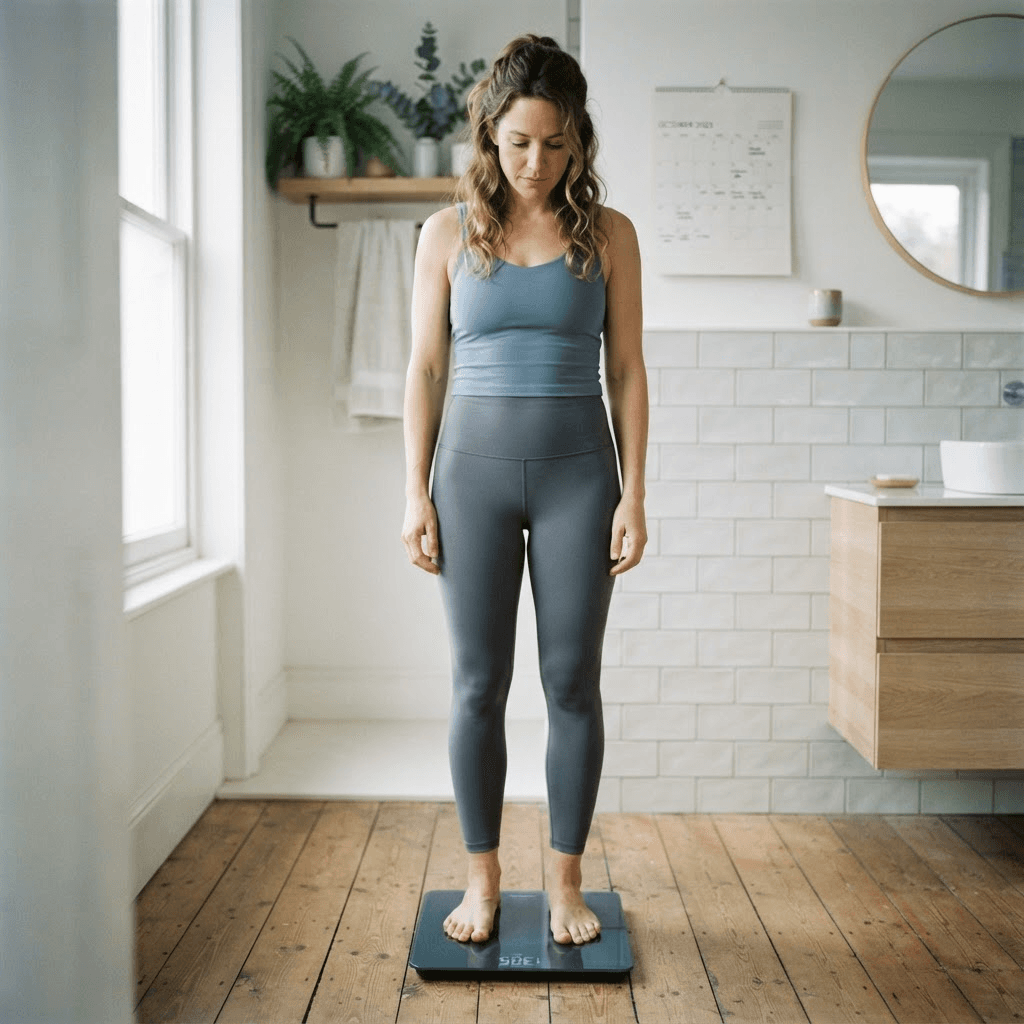
The bathroom scale is a blunt instrument for belly fat, because it cannot tell muscle, water and fat apart. A soft tape measure around your waist is cheaper, and for tracking your midsection it is more honest. Wrap it around your bare abdomen at the level of your belly button, after breathing out normally — do not suck in — and keep the tape snug but not digging in.
These are the widely used public-health thresholds for waist circumference. They are not a diagnosis, but they are a useful line in the sand for who benefits most from acting now.
| Risk band | Women | Men | What it suggests |
|---|---|---|---|
| Lower risk | Under 80 cm (31.5 in) | Under 94 cm (37 in) | Little added risk from waist size; keep the habits that got you here. |
| Increased risk | 80–88 cm (31.5–34.6 in) | 94–102 cm (37–40 in) | A good moment to act. Small changes now pay off. |
| High risk | Over 88 cm (34.6 in) | Over 102 cm (40 in) | Strongly worth reducing; consider looping in your doctor. |
Measure once, on the same day of the week, first thing in the morning, and write it down. You are looking for a downward trend over months, not day-to-day flickers. If you also weigh yourself, treat the tape as the tie-breaker — plenty of people recomposing their bodies see the waist fall while the scale barely moves.
The four levers that actually shrink a waist
Everything that reliably reduces belly fat comes down to four levers. Pull them in this order. Most people get impatient and jump to lever four (exercise) while ignoring lever one, then wonder why nothing budges. The order matters as much as the list.
Lever 1 — A modest, boring calorie deficit
Fat loss anywhere, belly included, requires your body to burn more energy than it takes in, so it dips into stored fat to cover the gap. There is no way around this and no food that overrides it. The mistake is going too aggressive: a savage deficit costs you muscle, tanks your energy and sleep, and — through the stress it creates — can actually work against your midsection. Aim for a deficit of roughly 300 to 500 calories a day, the kind you barely notice.
You do not have to weigh every pea to do this. If counting is not your style, our guide to running a calorie deficit without obsessive tracking covers plate-based and habit-based versions that work just as well.
Lever 2 — Protein and fibre at every meal
What you eat inside that deficit changes how easy it is to sustain and how much muscle you keep. Two nutrients do the heavy lifting. Protein keeps you full, protects the muscle that keeps your metabolism ticking, and has a high "cost" to digest. Fibre — from vegetables, beans, fruit and whole grains — slows digestion, steadies blood sugar and feeds the gut. Together they make a smaller number of calories feel like enough.
- Anchor every meal with a palm-sized portion of protein: eggs, Greek yoghurt, fish, poultry, tofu, lentils.
- Fill half the plate with vegetables or salad before you add anything else — volume first, so fullness arrives on fewer calories.
- Cut the liquid calories. Sugary drinks, juice, fancy coffees and alcohol are the single easiest place most people find a painless deficit.
- Slow down. Fullness signals take about twenty minutes to land, so eating quickly quietly overshoots.
Lever 3 — Move more, all day, not just at the gym
The calories you burn just living — fidgeting, walking to the shop, taking the stairs, standing on calls — are called NEAT, and for most people they dwarf the calories burned in a single workout. When people diet, NEAT quietly collapses; they move less without noticing and the deficit erodes. Protecting daily movement is one of the most underrated belly-fat tools there is.

Set a daily step target you can actually hit — 7,000 to 9,000 is a sensible band for most adults — and take a short walk after your largest meal. If you want the full breakdown, our guide to walking for weight loss and the steps that matter has the numbers.
Lever 4 — Strength training two or three times a week
This is where exercise finally earns its place — not to "burn belly fat" directly, but to keep and build muscle while you are in a deficit. More muscle means a higher resting metabolism and a firmer, more defined midsection once the fat above it recedes. Full-body strength work beats endless ab isolation every time, because big compound movements recruit far more muscle per minute.

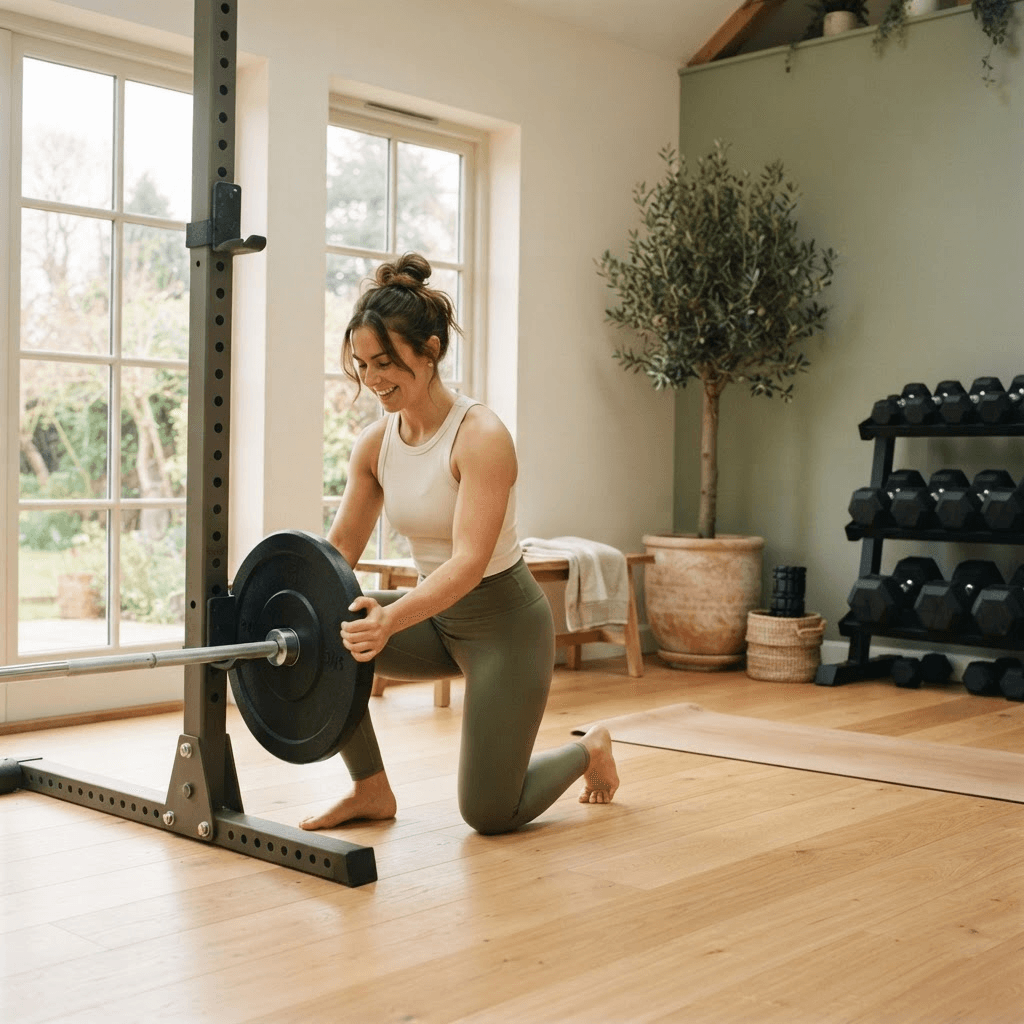
You do not need a barbell or a gym membership to start. A pair of adjustable dumbbells, or even just your bodyweight, is plenty for the first few months. New to lifting? Begin with our strength training plan for beginners, which builds a full-body base in twelve weeks.
The hidden lever: sleep and stress
You can do the four levers well and still stall if you treat sleep and stress as optional. Chronic short sleep and relentless stress raise cortisol, and cortisol has a particular fondness for parking fat around the middle. Poor sleep also ramps up hunger hormones, so you wake up hungrier, reach for quicker carbohydrates, and move less because you are tired. It is a quiet, compounding tax on everything else you are doing.

You cannot out-train a body that is exhausted and stressed. Sleep is not the reward for the work — it is part of the work.
Aim for seven to nine hours, protect a consistent bedtime, and give yourself a genuine wind-down away from screens. For stress, you do not need a monastery — a daily walk, a few minutes of slow breathing, and saying no to one draining commitment a week move the needle more than any supplement claiming to "block cortisol".
How long does it take — and what "stubborn" really means
Give the plan 8 to 12 weeks before you judge it. Visceral fat often responds within the first month, which is why your clothes can feel looser and your energy can lift before the mirror fully agrees. Subcutaneous belly fat — the pinchable layer, and especially the lower-belly pocket — is usually the last to go, because it is the least metabolically active. That is not stubbornness or failure; it is simply the order your body chose.
- Weeks 1–4: Water weight and bloating settle. The tape may barely move, but habits are locking in. Do not panic or cut harder.
- Weeks 4–8: The waist starts trending down. Bloodwork, blood sugar and energy often improve here first.
- Weeks 8–12: Visible change accumulates. Reassess your deficit — as you lose weight, your maintenance calories fall.
- Beyond 12 weeks: If the waist truly stalls for three-plus weeks, it is a plateau to troubleshoot, not a signal to starve.
Where this guidance comes from
The claims above draw on public-health bodies and peer-reviewed research on abdominal fat, spot reduction and waist circumference. Follow any link to read the original source.
- Waist circumference and waist–hip ratio: report of a WHO expert consultationWorld Health Organization
- Regional fat changes induced by localized muscle endurance resistance trainingJournal of Strength & Conditioning Research
- Abdominal visceral fat and its association with cardiometabolic riskNature Reviews Endocrinology
- Sleep duration, cortisol and abdominal obesityNational Library of Medicine (PMC)
- Why is visceral fat worse than subcutaneous fat?Harvard Health Publishing
Pull them in this order
The whole plan in four levers
- 01A modest calorie deficit300–500 kcal a day — the kind you barely feel.
- 02Protein + fibre firstFuller on fewer calories, muscle protected.
- 03Move all day (NEAT)Steps and post-meal walks beat one gym blast.
- 04Strength 2–3× a weekKeeps the muscle that shapes a lean waist.
The takeaways, ticked off
What to remember when the mirror is slow to agree
- Spot reduction is a myth — sit-ups build the muscle under the fat but do not burn the fat sitting on top of it.
- The belly fat that matters most is visceral fat around your organs, and it responds faster than the fat you can pinch.
- A tape measure around your waist tells you more about health risk than the number on the scale.
- Four levers do almost all the work: a modest calorie deficit, more protein and fibre, daily movement, and real sleep.
- Fixing sleep and stress is not a bonus round — high cortisol quietly parks fat around your middle.
- Give it 8 to 12 weeks. Visceral fat often shrinks first, so your waist can change before the scale fully catches up.
Straight answers
The belly-fat questions people actually type into Google
01What is the fastest way to lose belly fat?
There is no shortcut that targets the belly specifically, but the fastest sustainable route is a modest calorie deficit combined with more protein and fibre, daily walking, two or three strength sessions a week, and proper sleep. Because visceral fat is metabolically active, this combination often shrinks your waist noticeably within the first four to eight weeks. Anything promising to burn belly fat in days is selling water loss or a myth.
02Can I lose belly fat without exercise?
Yes — diet drives most fat loss, so a calorie deficit built from protein, fibre and fewer liquid calories will reduce belly fat even if you never formally work out. That said, adding daily movement and some strength training keeps the weight you lose as fat rather than muscle, and protects your metabolism. Without any resistance training, you may lose the size but end up softer than you hoped.
03Do sit-ups and crunches burn belly fat?
No. Sit-ups and crunches strengthen the abdominal muscles underneath, but they do not burn the fat sitting on top of them, because spot reduction is not how the body loses fat. You will build a stronger core, which is worthwhile, but the definition only shows once you reduce overall body fat through diet, movement and sleep.
04Why is my belly fat so stubborn compared with the rest of me?
The pinchable subcutaneous fat around the lower belly is the least metabolically active fat you carry, so your body tends to draw on it last. This is normal, not a personal failing. Stay consistent with the four levers; the belly is often the final area to change, which means visible waist results tend to arrive later in the process even when everything is working.
05Does stress really cause belly fat?
Chronic stress raises cortisol, which is associated with fat being stored around the abdomen and with stronger cravings for calorie-dense food. Stress also disrupts sleep, which further raises hunger hormones and lowers your daily movement. Managing stress will not melt fat on its own, but leaving it unmanaged can quietly cancel out an otherwise solid diet and exercise routine.
06How do I know if I have visceral fat?
You cannot pinch visceral fat because it sits deep around your organs, so a belly that feels firm and round rather than soft often carries more of it. A simple waist-circumference measurement is the most practical home check: broadly, over 88 cm for women or 102 cm for men signals higher risk. Imaging scans can measure it precisely, but for everyday tracking a tape measure is enough.
07Will belly fat come back after I lose it?
Only if the habits that removed it stop. Belly fat, like all fat, returns when energy intake consistently exceeds what you burn. The good news is that maintenance is far easier than loss — you no longer need a deficit, just the same protein-forward eating, daily movement and sleep that got you here, plus an occasional waist check to catch any drift early.
08How long does it take to lose belly fat?
Expect meaningful change over 8 to 12 weeks of consistency rather than days. Visceral fat frequently responds first, so your waistband and health markers can improve within a month, while the last layer of subcutaneous lower-belly fat usually takes longest. Judge progress by the monthly trend on your tape measure, not by daily fluctuations.
Keep the waist moving