Caffeine and Sleep: How Late Is Too Late for Coffee?
The gap — where most people lose the second half of the night
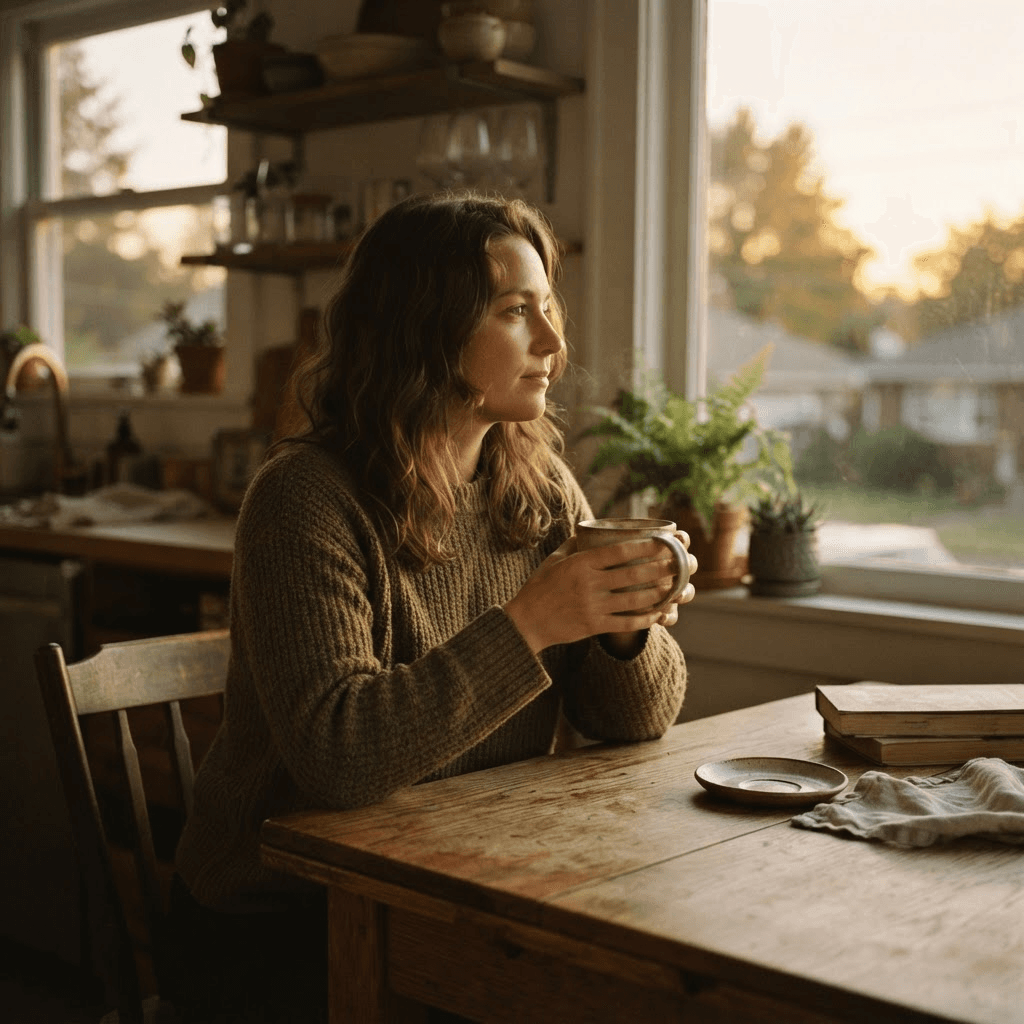
The 3 p.m. coffee felt harmless. You were asleep by eleven, so no harm done — except you surfaced at two, stared at the ceiling, and woke up feeling like you had barely slept. Caffeine is the most common reason a good sleeper has bad nights, and the fix is almost never "quit coffee." It is knowing when your cup stops being a drink and starts being a sleep problem.
The short version
- Caffeine has a half-life of roughly five to six hours on average, but it varies widely from person to person — some people clear it in three hours, others take far longer.
- A useful rule of thumb from recent research: to protect a typical night, finish a standard cup of coffee around eight or more hours before you want to be asleep.
- "I fall asleep fine after coffee" misses the point — research suggests caffeine can still reduce deep sleep and total sleep time even when getting to sleep feels easy.
- Coffee is not the only culprit: tea, cola, energy drinks, dark chocolate and some painkillers all carry caffeine that counts toward your daily total.
- If cutting caffeine back sensibly does not help, or you feel wired and exhausted at once, that is worth raising with a clinician rather than chasing a better cutoff time.
Here is the trap. You had a coffee at three because the afternoon was dragging, and it worked — you got through the meeting. You were even asleep by eleven, which felt like proof it was fine. Then at some point in the small hours you were wide awake for no obvious reason, and the morning arrived feeling like you had run a night shift. Nothing in your evening explains it. The explanation was in your afternoon.
Caffeine is probably the single most common reason an otherwise decent sleeper has patchy nights, precisely because it hides so well. It rarely stops you falling asleep, so it never looks guilty. This guide follows one ordinary cup forward through the evening to show where it actually does its damage, gives you a realistic cutoff to aim for, and covers the sources you are not counting.
How long caffeine actually stays in your system
The number that matters is caffeine's half-life: the time your body takes to clear about half of a dose. In healthy adults it averages somewhere around five to six hours, though estimates vary and so do people. The practical consequence is that "half gone" is not "gone." If you drink a coffee with roughly 100 mg of caffeine at 3 p.m., a rough half — about 50 mg, the equivalent of a strong cup of tea — can still be circulating around 8 or 9 p.m., and a quarter of it near midnight.
That slow tail is the whole problem. You are not wired at bedtime, so nothing feels wrong, but there is still enough caffeine in the background to interfere with how deeply you sleep once you are under. The dose you barely noticed at 3 p.m. is quietly present at 1 a.m.
How fast you personally clear caffeine varies a lot, and it is largely out of your control. Genetics play a big role — some people are naturally fast metabolisers and some are slow. Clearance also tends to slow during pregnancy and with certain medications, and speeds up in regular smokers. This is why one friend can have an espresso after dinner and sleep like a stone while the same cup leaves you rattling until 2 a.m. Neither of you is imagining it, and comparing yourself to them is not useful.

How caffeine sabotages sleep — even when you fall asleep fine
Caffeine works by blocking adenosine, the molecule that builds up the longer you are awake and creates the mounting pressure to sleep. Adenosine is the reason you feel drowsy by late evening; caffeine sits in its parking spots and masks that signal. You still made the adenosine — you just cannot feel it. When the caffeine finally clears, the backlog can arrive all at once, which is part of why a late cup can leave you unusually alert at bedtime and then oddly restless later.
The bigger misunderstanding is the "but I sleep fine after coffee" defence. Falling asleep and sleeping well are not the same measurement. Research suggests that even when caffeine does not delay how quickly you drop off, it can still trim total sleep time and reduce slow-wave sleep — the deep stage most associated with feeling physically restored. So you can spend eight hours in bed, fall asleep easily, and still wake feeling shortchanged. If that pattern sounds familiar, our guide to why you wake up tired even after eight hours works through the other common causes too.
A note on proportion, because sleep advice loves to overreach: a single afternoon coffee is not going to ruin your health, and no one cup either causes or cures anything. Short and broken sleep is associated with a range of poorer outcomes in large studies, but association is not causation and the size of any effect is debated. The honest, narrow claim is the useful one — caffeine can measurably worsen how you sleep tonight, and getting the timing right is a cheap way to protect it.

How late is too late? A cutoff you can actually use
Because clearance is so individual, there is no universal deadline — but recent research gives a sensible default. A 2023 review pulling together sleep and caffeine studies suggested that, to avoid meaningful disruption to a typical night, a standard coffee (around 100 mg) is best finished roughly nine hours before bed, and larger pre-workout style doses (in the region of 200 mg or more) may need something closer to twelve or thirteen hours. You do not need to be precise to the minute; you need to stop treating late-afternoon coffee as free.
The simplest way to apply this is to work backwards from your target sleep time rather than forwards from your first coffee. Pick when you want to be asleep, count back, and let that set your last-cup deadline.
| Target sleep time | Last standard coffee by | If you are sensitive, by |
|---|---|---|
| 10:00 p.m. | Around 1:00–2:00 p.m. | Around noon |
| 11:00 p.m. | Around 2:00–3:00 p.m. | Around 1:00 p.m. |
| 12:00 a.m. | Around 3:00–4:00 p.m. | Around 2:00 p.m. |
The clock also runs the other way. If your sleep timing itself is all over the place, an earlier caffeine cutoff will only get you so far — the schedule has to hold still first. Our guide to fixing a broken sleep schedule covers anchoring your wake-up time, which is the thing every other habit organises itself around.
- 3:00 PM
The cup
About 100 mg of caffeine goes in. Within an hour it peaks in your bloodstream and the afternoon slump lifts. So far, so useful.
- 8:30 PM
Roughly half remains
One half-life on, around 50 mg is still circulating — as much as a strong cup of tea. You feel normal, which is exactly why it is easy to miss.
- 11:00 PM
Lights out
You fall asleep without much trouble. But there is still caffeine in the background, quietly nudging your sleep lighter than it should be.
- 2:00 AM
The gap
A quarter of the dose may still linger. Combined with a natural lightening of sleep in the early hours, this is a common time to surface — and struggle to drop back off.
The caffeine you are not counting
People who have already moved their coffee earlier sometimes stay stuck, because coffee was never their only source. Caffeine turns up in places that do not register as "having a coffee," and a couple of these after dinner can quietly rebuild the dose you thought you had cut.
- Tea — black and green tea carry a meaningful amount, less than coffee but far from nothing, and a large after-dinner mug adds up.
- Cola and other soft drinks — an easy evening habit that most people never file under "caffeine."
- Energy drinks — often the biggest single hit on this list, and frequently drunk late in the day exactly when you least want it.
- Dark chocolate — a genuine source; a big evening slab of very dark chocolate is not trivial for sensitive people.
- Some painkillers and cold-and-flu remedies — several combine caffeine with the active ingredient, so check the label before a late dose.
- Decaf is not caffeine-free — it is low, not zero, which usually does not matter, but can for the most sensitive.

Moving your last cup earlier without the 3 p.m. crash
The reason people resist an earlier cutoff is the afternoon slump the coffee was papering over. Take the coffee away and the tiredness it was hiding shows up — so the trick is to shift the cup earlier gradually and give the real dip something else to lean on.
- Move the deadline in steps, not in one jump. Pull your last cup back by 30 minutes every few days rather than banning afternoon coffee overnight, which usually triggers a headache and a swift relapse.
- Treat the slump with light and movement, not another dose. A brief walk outside, or even just daylight and a glass of water, does more for a mid-afternoon dip than most people expect.
- Front-load your caffeine. If you enjoy coffee, have it earlier and, if you like, a little stronger in the morning window, so the afternoon does not feel like deprivation.
- Swap the ritual, not just the drink. A lot of the 3 p.m. coffee is the pause, not the caffeine — a decaf, a herbal tea, or a proper five-minute break can carry the habit without the half-life.
- Give it a week or two before judging it. Sleep changes lag behind habit changes, so one improved cutoff will not show up as a transformed night immediately.

When it is not the coffee
Sometimes you do everything right — last cup at lunchtime, no sneaky cola, a sensible evening — and the nights are still broken. At that point caffeine is not your problem, and hunting for an even earlier cutoff is chasing the wrong thing. Waking repeatedly in the small hours can have plenty of other drivers, from a racing mind to an underlying sleep condition.
If you consistently wake in the early hours and cannot settle, the pattern may be worth troubleshooting directly — our guide to why you wake up at 3 a.m. is built for exactly that. And if the shortfall has been running for a while, the piece on sleep debt and whether you can catch up explains how to work the balance back without wrecking your schedule.
For most people, though, the fix really is this ordinary: caffeine is a genuinely useful drug with a long, quiet tail, and the whole skill is respecting the tail. Keep the coffee you love, have it earlier, count the sources you were ignoring, and let your evenings stop paying for your afternoons.
Sources and further reading
The guidance above draws on public-health and clinical sources on caffeine, its half-life and its effects on sleep. Follow the links to read the original material, and note that individual caffeine clearance varies widely.
- Caffeine, how it works and effects on sleepSleep Foundation
- Timing of caffeine intake and its effect on sleep — systematic reviewSleep Medicine Reviews (via PubMed)
- Caffeine: pharmacology, half-life and individual variationStatPearls — National Library of Medicine
- Caffeine content of common foods and drinksU.S. Food and Drug Administration (FDA)
- Tips for better sleep, including caffeine timingCDC — Sleep and Sleep Disorders
- Insomnia and persistent sleep problems: when to seek helpNHS
The coffee questions people ask at 3 p.m.
How late is too late to drink coffee?
As a general rule, finish a standard cup of coffee around eight or more hours before you want to be asleep — so roughly 2 to 3 p.m. if you aim for an 11 p.m. bedtime. Recent research points to a cutoff of about nine hours for a typical coffee and longer for large doses. Treat it as a starting point and move it earlier if you are caffeine-sensitive.
How long does caffeine stay in your system?
Caffeine has a half-life of roughly five to six hours on average in healthy adults, meaning about half a dose is cleared in that time and the rest tails off over the following hours. This varies widely between people because of genetics, pregnancy, some medications and smoking, so some clear it much faster or slower than average.
Why does coffee not keep me awake but still ruins my sleep?
Falling asleep and sleeping deeply are different things. Research suggests caffeine can reduce total sleep time and deep, slow-wave sleep even when it does not delay how quickly you drop off. So you can fall asleep easily after an afternoon coffee and still wake feeling unrested, because the quality of the night was lowered rather than the start of it delayed.
Does decaf coffee affect sleep?
Decaf is low in caffeine, not caffeine-free, so for most people an evening decaf is fine. If you are unusually sensitive, or you are drinking several large decafs late at night, even that small amount could contribute. If you suspect it, switch the evening cup to a genuinely caffeine-free herbal option for a week and see if anything changes.
What can I drink in the afternoon instead of coffee?
Caffeine-free options that keep the ritual work best: herbal or fruit teas, decaf coffee, or simply water with a short walk outside. A lot of the afternoon coffee habit is the pause and the warm drink rather than the caffeine itself, so replacing the ritual usually matters more than replacing the exact drink.
I stopped afternoon coffee but still sleep badly — why?
Two common reasons. First, caffeine may still be reaching you through tea, cola, energy drinks, dark chocolate or some painkillers. Second, the problem may not be caffeine at all — an irregular schedule, a racing mind or an underlying sleep condition can all cause broken nights. If sensible changes do not help within a couple of weeks, it is worth speaking to a clinician.
Keep reading
More from the sleep desk for the nights caffeine leaves you staring at the ceiling.
 Mental HealthNight Anxiety: Why Your Brain Switches On at Bedtime (and 5 Fixes That Actually Work)
 Mental HealthRevenge Bedtime Procrastination: Why You Stay Up Late When You Are Exhausted (and How to Stop)
 Mental HealthHow to Regulate Your Nervous System: A Beginner’s Guide to Calming Anxiety in Your Body