Intermittent Fasting for Weight Loss: How to Pick a Method You Can Actually Stick To
Intermittent fasting is not magic and it is not a diet — it is a schedule. Pick the wrong window and you white-knuckle it for a week and quit. Pick the right one and it quietly does the hardest job in fat loss for you. Here is how to choose, start and troubleshoot the method that fits your real day.

See the difference
Every method, drawn to scale
5:2 is a weekly pattern, not a daily clock
Eat normally on five days and cap intake near 500–600 calories on two non-consecutive days.
Longer fasts do not deliver proportionally more fat loss — they mostly deliver more difficulty. For most people, 16:8 is the sweet spot between results and real life.
Skip breakfast, eat between noon and eight, lose weight without counting a thing. That is the promise that made intermittent fasting the most searched diet on the planet — and it is half true, which is exactly why so many people try it, feel amazing for nine days, then rage-eat a family-size bag of crisps at 11pm and declare it "not for them". The problem is almost never the person. It is that they chose a fasting window that fought their life instead of fitting it.
This guide is built differently from most. Rather than selling you one protocol, it lays the popular methods side by side, gives you a short set of questions to find the one that suits your actual day, then walks you through the first week and the problems that trip people up. Think of it less as a diet plan and more as choosing the right tool for a job you already understand: eating a little less, more of the time, without it running your life.
First, what intermittent fasting actually does
Intermittent fasting (IF) is not a description of what you eat. It is a description of when. You compress your eating into a set window each day or week and stop eating outside it. That is the entire idea. The reason it helps most people lose weight is refreshingly boring: a shorter window usually means one or two fewer eating occasions, less mindless grazing and less late-night snacking, which adds up to eating fewer calories overall — often without consciously trying. If you want the mechanism spelled out, our guide to the calorie deficit for weight loss explains the arithmetic every method quietly obeys.
There are secondary effects worth knowing but not worth over-hyping. During a fast, insulin falls and your body leans more on stored fat for fuel; some people report steadier energy and fewer cravings once adapted. What the evidence does not support is the idea that fasting melts fat faster than plain old eating less. In head-to-head trials, intermittent fasting and daily calorie restriction produce very similar weight loss. Fasting wins only when it makes eating less feel easier for you — and loses when it makes you so ravenous you overeat the moment the window opens.
The four methods, side by side
Almost every fasting plan you have heard of is a variation on two ideas: shrinking your daily eating window, or eating far less on a couple of days a week. Here is how the popular ones actually compare, ranked roughly from gentlest to most demanding.
| Method | The schedule | Difficulty | Best suited to |
|---|---|---|---|
| 16:8 | Fast 16 hours, eat within an 8-hour window daily (e.g. 12–8pm) | Beginner | Almost everyone; the default starting point |
| 18:6 | Fast 18 hours, eat within a 6-hour window daily | Intermediate | People comfortable with 16:8 who want a nudge further |
| 5:2 | Eat normally 5 days, cap intake near 500–600 kcal on 2 non-consecutive days | Intermediate | People who hate daily restriction but can handle two lean days |
| OMAD | One meal a day; roughly a 23-hour fast | Advanced | Experienced fasters; rarely necessary and hard to hit protein |
Notice the pattern: the harder methods do not deliver proportionally more fat loss. They mostly deliver more difficulty. OMAD in particular is a favourite of the internet and a nightmare for muscle and protein intake — fitting 100-plus grams of protein into a single sitting is genuinely unpleasant. For the overwhelming majority of people reading this, the honest answer is 16:8, and the rest of this guide assumes you are starting there.

Choosing the window that fits your day
This is the step everyone skips and everyone regrets. The single biggest predictor of whether fasting sticks is whether your eating window contains the meals you genuinely care about. Run through these questions honestly before you set a single time.
- Which meal would you fight hardest to keep? If it is a family dinner, your window must end late enough to include it — a noon-to-eight window, not a nine-to-five one. Build the window around your non-negotiable meal.
- When are you actually hungry? Some people wake up starving and cannot function without breakfast. If that is you, eat breakfast — shift your window earlier (say 8am to 4pm) rather than forcing a skipped meal you will resent.
- When do you train? Lifting on an empty stomach is fine for many people, but you want a solid protein meal within a couple of hours afterwards. Position your window so at least one real meal lands post-workout.
- What does your job allow? If lunch is the only time you can reliably eat with colleagues, do not build a window that excludes it. A plan that isolates you socially is a plan you quit.
For most people the answers point to the same place: a noon-to-8pm window. It skips only breakfast, keeps lunch and dinner intact, and survives both a work canteen and a family table. Start there, and only shift the times if your honest answers above pull you somewhere else.
What you can drink — and what quietly ends the fast
The rule is simpler than the internet makes it: if it has meaningful calories, it breaks your fast. If it does not, it is fine. Staying hydrated is not optional — a surprising amount of "fasting hunger" is actually thirst, and dehydration is behind most fasting headaches.
| Keeps the fast | Breaks the fast | It depends |
|---|---|---|
| Plain water and sparkling water | Juice, smoothies and soft drinks | Diet drinks — fine for most, but can trigger cravings in some |
| Black coffee, no milk or sugar | Lattes, cappuccinos, sweet coffees | A splash of milk — technically calories, but rarely enough to matter |
| Plain black, green or herbal tea | Anything with honey, sugar or oat milk | Bone broth — has calories, but many use it to get through long fasts |

Your first week, hour by hour
The first few days are an adjustment, not a verdict. Your body is used to being fed on its old schedule and will send hunger signals at the old times out of habit. Those signals fade fast once it learns nothing arrives. Here is what to expect and how to ride it out.
- Days 1–2: expect hunger waves at your old breakfast time. They pass in 20 minutes. Drink water or black coffee and stay busy — hunger is a wave, not a rising tide.
- Days 3–4: energy can dip mid-morning as your body adapts. This is normal and temporary. Do not test a maximal gym session on day three.
- Days 5–7: most people notice the morning hunger has quietened and the window feels natural. This is the point at which you can actually judge whether the schedule fits.
- Throughout: break your fast with protein and fibre, not pastries. A blood-sugar spike on an empty stomach is the fast track to an afternoon crash and a craving spiral.
The goal of week one is not weight loss. It is proving to yourself that you can be a little hungry and completely fine — which turns out to be the real skill behind every diet that ever worked.
Fasting is only half the plan — the window matters more
Here is the mistake that quietly wrecks results: people obsess over the fast and treat the eating window as a free-for-all. It is not. A shorter window makes it easier to eat less, but if you pack it with ultra-processed food and skip protein, you will lose muscle, feel awful and stall. What you eat inside the window is what decides whether this works.
Two levers do most of the work. The first is protein: aim for roughly 1.6 grams per kilogram of your goal body weight, which protects muscle while you lose fat. Our high-protein foods list turns that number into meals, and these no-cook high-protein snacks fit neatly into a tight window. The second is not eating your calories back the moment the window opens — break the fast with real food, not a celebratory binge.

Movement matters too, and not in the way most people think. You cannot out-fast a poor diet, but resistance training two or three times a week tells your body to hold onto muscle while the fat comes off. Pair fasting with strength training for beginners and a daily walking habit, and you turn a simple eating schedule into genuine fat loss rather than just a smaller version of yourself.
Troubleshooting: fixes for the five things that go wrong
Most people who "fail" at fasting hit one of a handful of predictable snags. None of them mean fasting is wrong for you — each has a straightforward fix.
You are ravenous, not just peckish
Real, distracting hunger usually means your window is too aggressive or your last meal was too small. Widen the window (16:8 back to 14:10), and make the final meal before your fast bigger and higher in protein and fibre so it carries you through. Hunger that ruins your focus is a signal to ease off, not to grit your teeth harder.
You get headaches or feel shaky
This is almost always dehydration or low electrolytes, not low blood sugar in a healthy person. Drink more water than usual and add a pinch of salt to it, or have a cup of broth if headaches persist. If you feel genuinely faint, dizzy or unwell, stop the fast and eat — no schedule is worth pushing through real symptoms.
The scale has not moved in weeks
Fasting only works if it creates a calorie deficit, and a generous eating window can erase one entirely. Track a few honest days: the leak is usually oversized "window meals", liquid calories, or weekend eating that undoes the weekday deficit. Fix the food inside the window before you make the fast any longer.
A social meal falls outside your window
Move the window, do not skip the dinner. Fasting is a flexible tool: shift your window later that day, or simply eat normally and return to your schedule tomorrow. One meal outside the window is a rounding error over a month. Isolating yourself to protect a rule is how good plans die.
You binge the moment the window opens
This is the clearest sign the fast is too long for you right now. Overeating at noon to compensate for a brutal morning cancels the entire point. Shorten the fast, eat enough protein, and remember that fasting should make eating less feel easier — if it is making you eat more, the method is fighting you.

How long before it works, realistically
Expect the first week to feel like adjustment, weeks two and three to feel normal, and the scale to start telling an honest story by around week four. As with any approach, judge the monthly trend, not the daily number — body weight swings by pounds on water alone, and reading that noise as failure is the fastest way to quit something that was actually working.
And be honest with yourself about fit. Intermittent fasting is a brilliant tool for people who prefer fewer, bigger meals and hate grazing. It is a poor fit for people who genuinely feel best eating small amounts often, or whose lives revolve around morning meals. There is no prize for fasting if plain, steady portion control makes you happier — the best method is always the one you will still be doing next year.
References and further reading
The claims above are drawn from clinical reviews and controlled trials comparing intermittent fasting with daily calorie restriction, plus public-health guidance on safe weight management. These are the primary sources.
- de Cabo R, Mattson MP. Effects of intermittent fasting on health, aging, and diseaseNew England Journal of Medicine (PubMed)
- Trepanowski JF et al. Effect of alternate-day fasting on weight loss and maintenance (TREAT-style comparison)JAMA Internal Medicine (PubMed)
- Lowe DA et al. Effects of time-restricted eating on weight loss and other metabolic parametersJAMA Internal Medicine (PubMed)
- Patterson RE, Sears DD. Metabolic effects of intermittent fastingAnnual Review of Nutrition (PMC)
- Intermittent fasting: what is it, and how does it work?Johns Hopkins Medicine
- Managing overweight and obesity in adults — healthy weight guidanceNHS (United Kingdom)
Common questions
Intermittent fasting questions, answered plainly
Does intermittent fasting really work for weight loss?
Yes, but not because of any metabolic magic. It works by making it easier to eat fewer calories overall — a shorter eating window usually means fewer snacks and less late-night eating. In controlled trials, intermittent fasting produces weight loss very similar to plain daily calorie restriction. It is a genuinely effective tool if the schedule suits you and helps you eat less; it does nothing special if it leaves you so hungry you overeat when the window opens.
What is the best intermittent fasting method for beginners?
The 16:8 method — fasting for 16 hours and eating within an 8-hour window, such as noon to 8pm — is the best starting point for almost everyone. It usually means skipping only breakfast, keeps lunch and dinner intact, and fits around work and family meals. Harder methods like 18:6 or OMAD are not more effective, only more demanding, so there is rarely a reason to start with them.
Can I drink coffee while intermittent fasting?
Yes. Black coffee with no milk, sugar or syrup has essentially no calories and does not break your fast — it also helps blunt morning hunger, which makes fasting much easier. Plain tea and water are fine too. What breaks the fast is adding calories: milk, sugar, honey, oat milk or a sweetened coffee. A tiny splash of milk rarely matters in practice, but a latte does.
Why am I not losing weight with intermittent fasting?
Almost always because the eating window is not producing a calorie deficit. A generous window can easily fit in as many calories as you burn, especially if meals are oversized, calorie-dense or paired with weekend eating that undoes the weekday effect. Track a few honest days to find the leak and fix the food inside your window before making the fast any longer.
Will I lose muscle with intermittent fasting?
You can, if you under-eat protein or skip resistance training — but you do not have to. Aim for roughly 1.6 grams of protein per kilogram of your goal body weight within your eating window, and lift weights two or three times a week. Together, these signal your body to hold onto muscle so most of what you lose is fat.
How long does it take for intermittent fasting to work?
Expect the first week to be an adjustment period, weeks two and three to feel normal, and clear, honest progress on the scale by around week four. Judge the monthly trend rather than daily weigh-ins, since body weight fluctuates by several pounds on water and food volume alone. If nothing has changed after a month of a consistent window, the issue is calorie intake, not the timing.
Make the eating window count
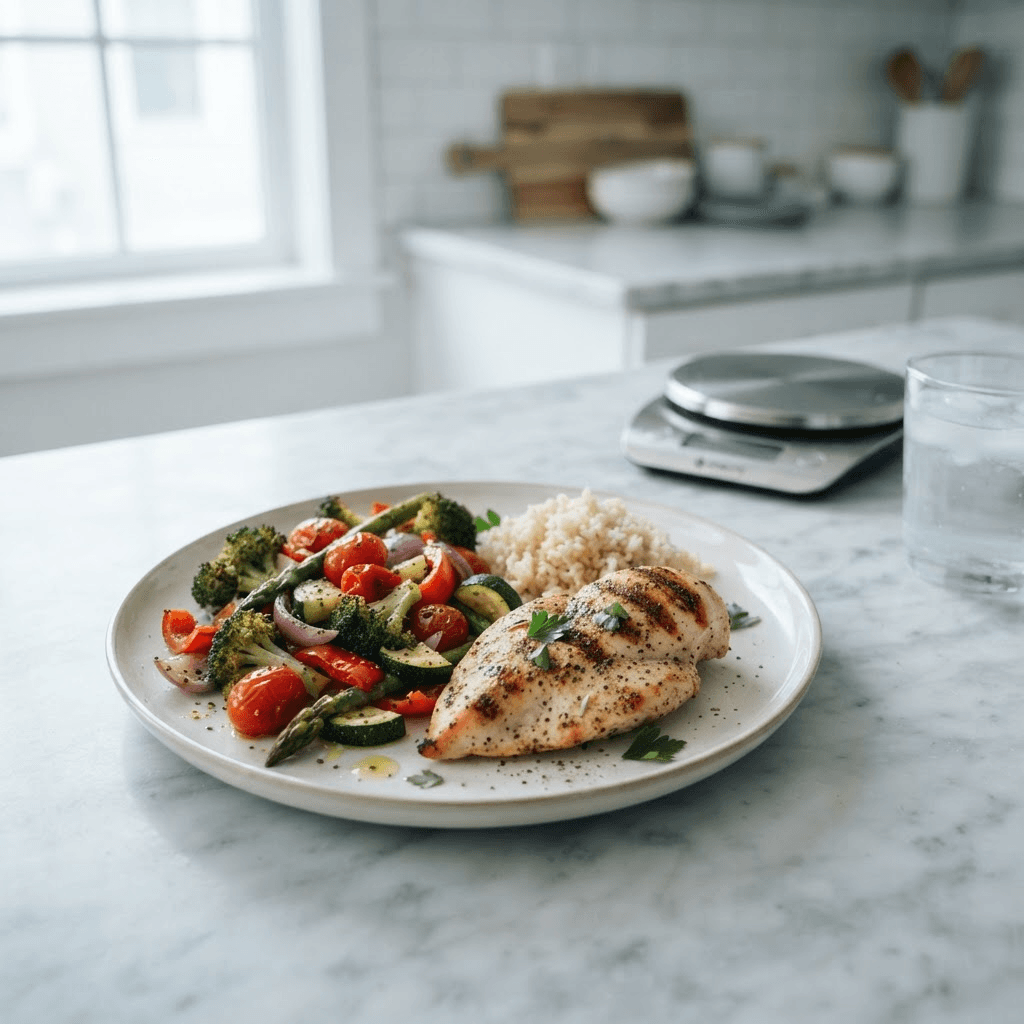 Weight LossCalorie Deficit for Weight Loss: How to Set One You Can Actually Keep
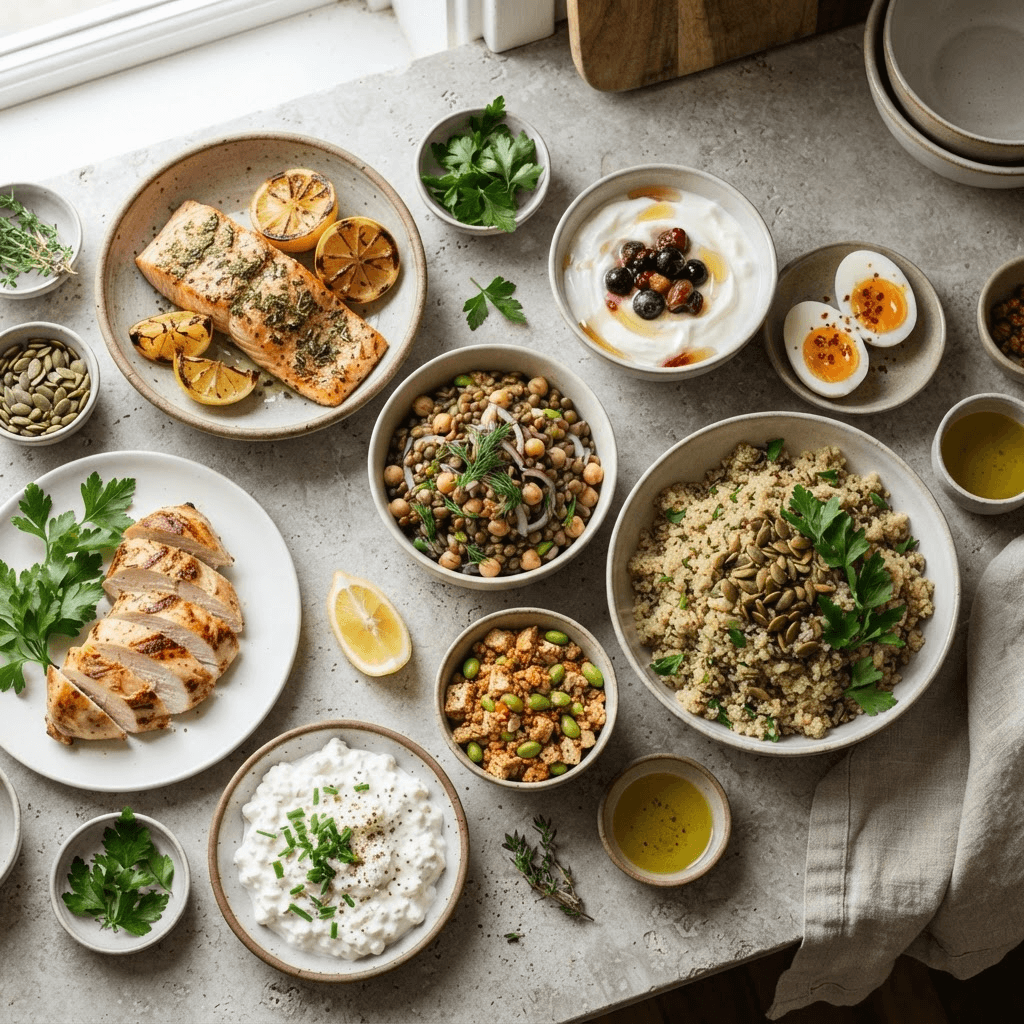 NutritionHigh-Protein Foods: 30 Best Options, Portions and Easy Meal Ideas
 Healthy RecipesHigh-Protein Snacks: 15 No-Cook Ideas You Can Throw Together in 5 Minutes
 FitnessStrength Training for Beginners: A 12-Week Full Body Workout Plan to Build Muscle