Bedtime Routine for Adults: A Wind-Down Plan for the Last Hour Before Bed
The gap — where most people lose the second half of the night
You brush your teeth, get into bed, and expect sleep to just happen — then lie there wide awake with a brain that will not stop narrating. The problem usually is not the bed. It is that you went from a lit screen and a busy head straight to lights-out with no runway. A bedtime routine is that runway: the last hour that tells your body the day is actually over.

The short version
- A bedtime routine is a wind-down buffer, not a checklist — its job is to give your body and mind a runway between the day and sleep, roughly 30 to 60 minutes long.
- Consistency tends to matter more than which activities you pick; doing a similar sequence at a similar time helps your body learn the cue.
- Choose two or three calming steps you will actually repeat, rather than a twelve-item ritual you abandon in a week.
- The most common routine-killers are bright screens in bed, working right up to lights-out, and clock-watching — all of which keep the brain switched on.
- If a steady wind-down routine does not help after a few weeks, or you regularly lie awake for long stretches, that is worth raising with a clinician rather than adding more steps.
Picture the last ten minutes of your evening. The final episode ends, or the last email gets sent, and you close the laptop. You brush your teeth, plug in your phone, switch off the light, and lie down expecting sleep to arrive the way it does in adverts — instantly, gratefully. Instead your brain, which was fully switched on ninety seconds ago, keeps running: tomorrow's to-do list, that slightly awkward thing you said in 2015, whether you locked the door. You are tired. You are also completely awake.
This is the gap almost no one plans for. We give ourselves a runway to start the day — coffee, shower, a slow build — but we expect to slam from full speed into sleep with no deceleration at all. A bedtime routine is simply that deceleration. It is the last stretch of the evening spent doing quiet, predictable things that let your body catch up with the fact that the day is over. This guide is not a rigid ritual to copy. It is a menu you build from, so you end up with a wind-down you will actually keep.
Why a wind-down beats a "sleep hack"
Falling asleep is not a switch you flip; it is more like a plane landing. Your body needs to lose altitude gradually — a slow drop in alertness, a settling of body temperature, a fading of the mental chatter that ran the day. When you go straight from a bright screen and an active mind to lying in the dark, you are asking for an emergency landing, and the mind tends to fight it.
A routine helps in two overlapping ways. First, the activities themselves are low-stimulation, so your arousal has somewhere to come down to. Second — and this is the part people underrate — repetition builds an association. Do a similar sequence before bed most nights and your brain starts to read that sequence as a cue that sleep is coming, in much the way a consistent routine helps settle a child. The cue is doing quiet work before you even reach the pillow.
It is worth being honest about scale here, because sleep advice tends to oversell. A wind-down routine is not a cure for insomnia and it will not fix a schedule that is genuinely out of sync. What it reliably does for many people is smooth the transition into sleep and cut the "wired but tired" feeling of lying down with a racing head. If your trouble is more that your body clock is in the wrong place entirely, our guide to fixing a broken sleep schedule tackles the timing problem a routine cannot.
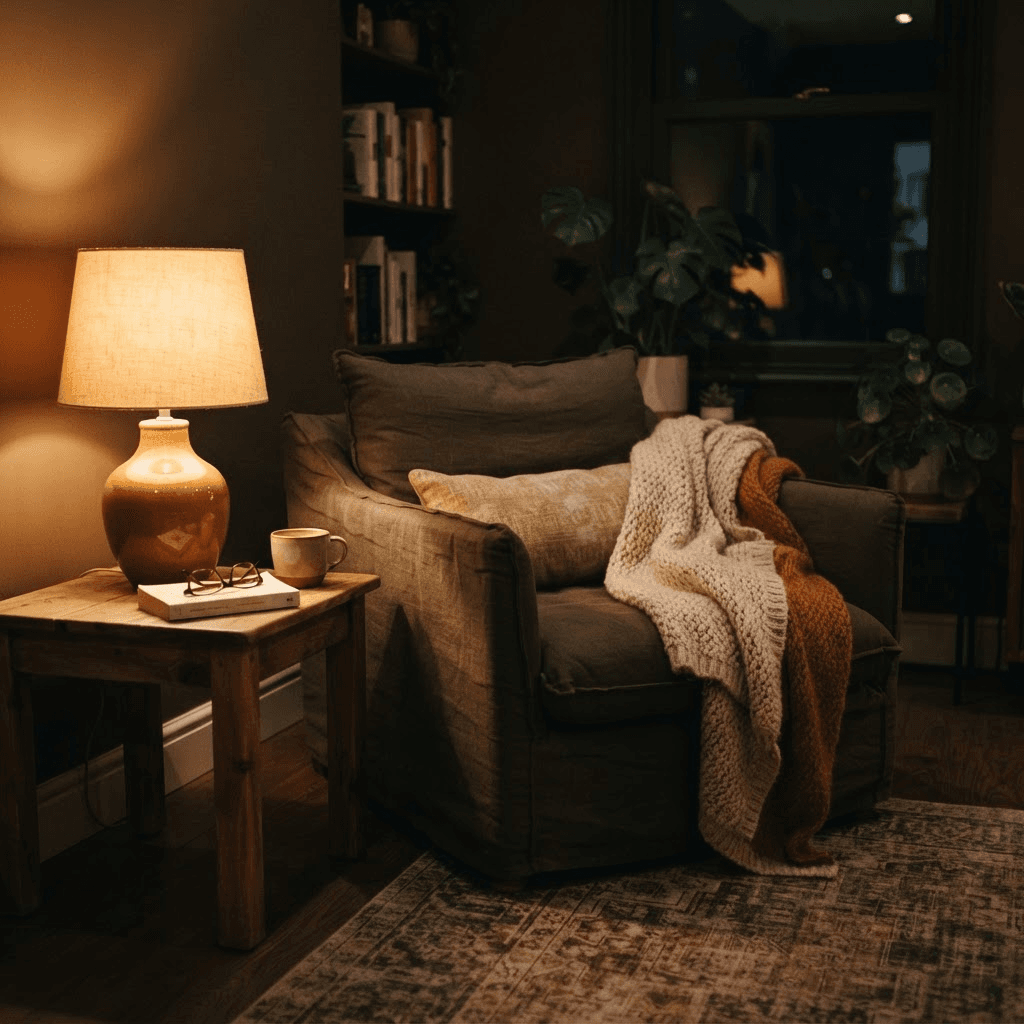
The last 90 minutes, in three gears
You do not need to overhaul your whole evening. It helps to think of the last stretch before bed as shifting down through three gears — you can start the whole thing 60 to 90 minutes out, or compress it into 30 if that is all you have. The point is the direction of travel: from stimulating to neutral to genuinely quiet.
| When | The gear | What it looks like |
|---|---|---|
| ~90–60 min before | Dim and close down | Lower the lights, finish anything with a deadline, tidy the loose ends so your mind is not holding them. |
| ~60–30 min before | Offload and soften | Get tomorrow out of your head and onto paper, warm shower or bath, gentle stretch, quieter activities only. |
| ~30–0 min before | Analog and dark | Screens down, book or calm audio, low light, into a cool dark bedroom. Nothing that demands a decision. |
A warm shower or bath in that middle gear is a small, well-liked example of how this works. Research suggests that warming up and then cooling down can help nudge the natural drop in core body temperature that accompanies falling asleep — part of why a shower an hour or so before bed leaves many people feeling drowsy rather than refreshed. It is a nice-to-have, not a requirement, but it shows the logic: you are working with the body's own settling process, not overriding it.
Build your own wind-down: the menu
Here is where most bedtime-routine advice goes wrong. It hands you a twelve-step ritual — journal, stretch, tea, meditation, gratitude, skincare, reading, breathing, essential oils — and you keep it up for four nights before the whole thing collapses under its own weight. A routine you abandon helps no one. So treat the list below as a menu. Pick two or three things that genuinely appeal to you, and ignore the rest without guilt.
Quiet the body
- A warm shower or bath about an hour before bed, then a cool bedroom to lean into the natural temperature drop.
- A few minutes of gentle stretching or slow, easy movement — nothing that gets your heart rate up.
- Slow breathing: longer exhales than inhales for a few minutes, which many people find calming as they settle.
Quiet the mind
- A short "brain dump" — write tomorrow's tasks and any worries on paper so your mind can stop rehearsing them. This is one of the highest-value steps for busy heads.
- Reading a physical book or e-reader on a warm, dim setting — fiction tends to work better than anything work-adjacent.
- Calm audio: a slow podcast, an audiobook, or quiet music, ideally on a sleep timer so it does not run all night.
Set the scene
- Dim the lights across the home in the last hour, not just the bedroom.
- Cool, dark and quiet: a slightly cooler room, blackout where you can, and something to mask disruptive noise if needed.
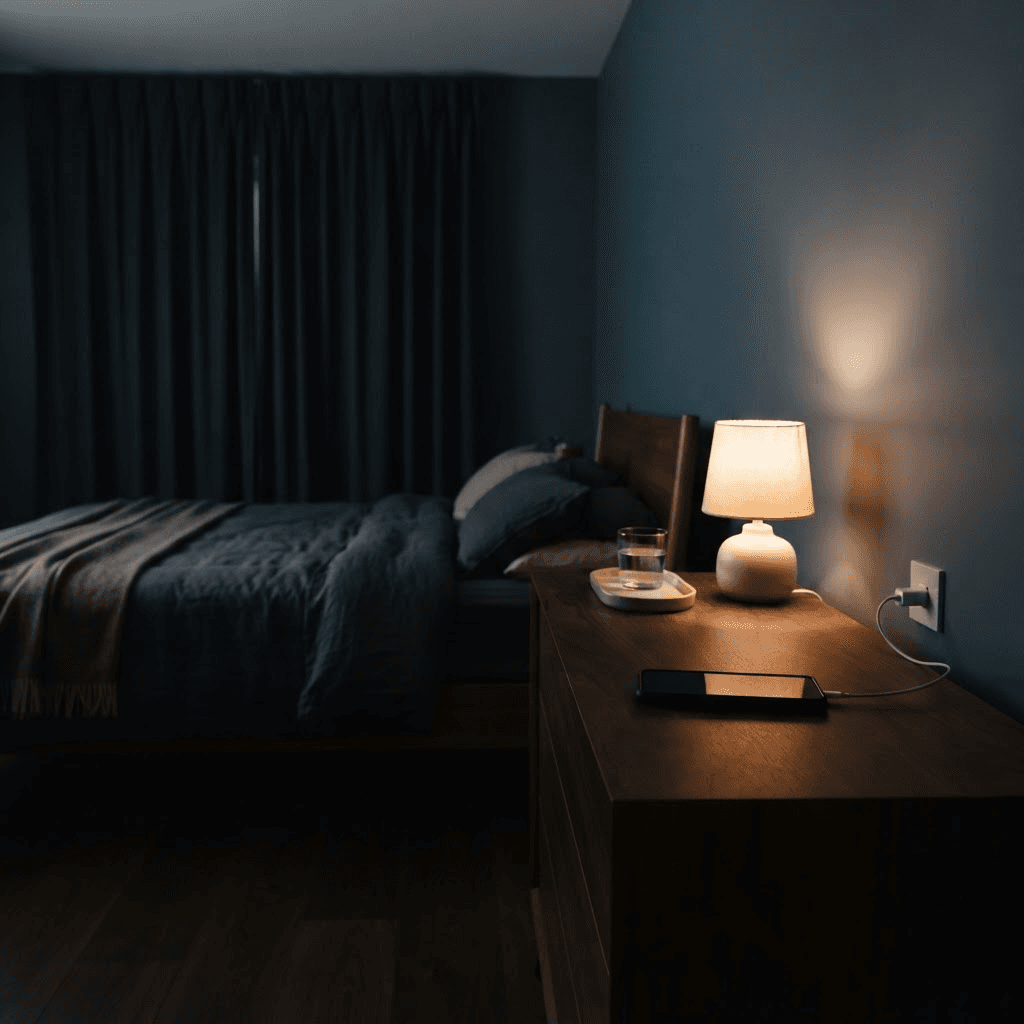
- Put the phone to charge out of arm's reach — ideally out of the room — so checking it is not the path of least resistance.
Notice the theme running through every option: less input, not more. A wind-down is subtractive. You are removing light, noise, decisions and stimulation, and the "activities" are mostly just pleasant ways to fill the space you have cleared. If a step feels like a chore, it is probably the wrong step for you — swap it for one you look forward to.

A 45-minute routine you can steal
If you would rather start from something concrete and adjust, here is a simple, screen-light routine that suits a lot of people. It assumes a target of lights-out at 11 p.m., so it begins at around 10:15. Move the clock to fit your own bedtime, and drop any step that does not fit your life.
- 10:15 — Dim the lights and do the last practical thing: lay out tomorrow's clothes, sort the bag, quick tidy. Small closure, so nothing nags at you later.
- 10:25 — Two-minute brain dump. Write tomorrow's top few tasks and anything on your mind onto paper or a notes app you then put down.
- 10:30 — Warm shower, then into the coolest comfortable bedroom you can manage.
- 10:45 — Phone on to charge across the room. Into bed with a paperback or e-reader on a warm, dim setting.
- 11:00 — Book down, light off. If your mind is still busy, a few slow breaths with long exhales rather than trying to force sleep.
One quiet detail does a lot of work in that sequence: the phone goes across the room before you get into bed. It is much easier to not pick something up than to put it down once you are lying there. If reaching for your phone at night is your particular trap, our guide to revenge bedtime procrastination digs into why the late-night scroll is so hard to resist and what actually helps.
The habits that quietly wreck the routine
A wind-down can only do so much if something earlier in the day or the evening is working against it. A few common culprits undo an otherwise good routine, and they are easy to miss because none of them feels dramatic in the moment.
- Bright screens right up to lights-out. Beyond the light itself, the bigger issue for most people is engagement — a gripping show or a heated group chat keeps your mind switched on when you are trying to power it down.
- Working, studying or handling stressful admin in the final hour. Your brain does not close those tabs the moment you shut the laptop; give it a buffer.
- Caffeine later than your body can handle. It can quietly undermine sleep even when you fall asleep fine — our guide on how late is too late for coffee covers where the cutoff usually falls.
- A large, heavy meal very close to bed, which can leave you uncomfortable and restless as you try to settle.
- Clock-watching. Checking the time when you cannot sleep tends to add pressure and make things worse, not better — turn the clock away from you.
A wind-down routine is not something you add on top of a chaotic evening. It is the shape of the evening itself, pointed gently downhill.
When you did the routine and still cannot sleep
Even a good routine will not deliver sleep every single night, and the way you handle the nights it does not is part of the routine too. The worst thing you can do is lie in bed getting increasingly frustrated, because that teaches your brain to associate the bed with being awake and anxious — the exact opposite of what you want.
A widely recommended approach is the roughly 20-minute rule: if you have been lying awake for what feels like around 20 minutes and sleep is clearly not coming, get up. Go to another room, keep the lights low, and do something calm and boring — read a few pages, listen to something quiet — until you feel sleepy, then go back to bed. You are protecting the association between your bed and sleep rather than lying there fighting.

It also matters why you are awake. If your evenings are hijacked by a mind that will not stop spinning, a routine helps but may not be the whole answer — our guide to night anxiety when you cannot sleep is built for that specific pattern. And if you keep surfacing in the small hours in particular, why you wake up at 3 a.m. works through the usual causes and what to try.
For most people, though, the fix is refreshingly ordinary. You are not missing a secret technique. You are just landing the plane too fast. Give yourself a runway most nights — a few quiet, repeated steps and a little less light — and let your evenings taper into sleep instead of hitting a wall.
Sources and further reading
The guidance above draws on public-health and clinical sources on sleep hygiene, wind-down routines and healthy sleep habits. Follow the links to read the original material, and remember that persistent sleep problems deserve individual medical assessment.
- Tips for better sleep and healthy sleep habitsCDC — Sleep and Sleep Disorders
- Bedtime routines and relaxing before sleepSleep Foundation
- Insomnia: self-help, sleep hygiene and when to seek helpNHS
- Warm bathing before bed and sleep onset — systematic reviewSleep Medicine Reviews (via PubMed)
- Healthy sleep and good sleep habitsAmerican Academy of Sleep Medicine — Sleep Education
What people ask about winding down at night
How long before bed should I start winding down?
For most people, around 30 to 60 minutes is enough, though you can start dimming lights and closing things down up to 90 minutes out. The exact length matters less than giving yourself some buffer rather than going straight from a screen to lights-out. On busy nights, shorten the routine rather than skipping it entirely.
What should a bedtime routine include?
There is no single required list. Pick two or three calming, low-stimulation activities you will actually repeat — common choices are dimming the lights, a warm shower, a short brain-dump of tomorrow's tasks, reading a physical book, and putting the phone away from the bed. Consistency and doing them in a similar order tends to matter more than which specific steps you choose.
Do I really have to give up screens before bed?
Not necessarily all of them, but the last stretch before sleep is easier without bright, engaging screens. For many people the bigger problem is not the light but how stimulating the content is — a gripping show or a busy group chat keeps your mind switched on. If you use a screen, a warm, dim setting and calmer content help, and keeping the phone out of arm's reach in bed helps more.
Will a bedtime routine cure my insomnia?
No. A wind-down routine is general self-help that can make falling asleep easier for many people, but it is not a treatment for insomnia or any sleep disorder. If you regularly lie awake for long stretches for several weeks despite a steady routine, or you wake unrefreshed, snore heavily, or notice low or anxious mood alongside poor sleep, that is worth discussing with a clinician.
My mind races the moment I lie down. What helps?
A brain-dump earlier in your wind-down — writing tomorrow's tasks and any worries onto paper so your mind can stop rehearsing them — helps a lot of people. If you are already in bed and racing, the roughly 20-minute rule is useful: rather than lying there frustrated, get up, keep the lights low, do something calm until you feel sleepy, then return to bed. If a racing mind at night is a regular pattern, it may be worth troubleshooting directly.
Keep reading
More from the sleep desk for the nights your routine alone does not do it.
 Mental HealthNight Anxiety: Why Your Brain Switches On at Bedtime (and 5 Fixes That Actually Work)
 Mental HealthRevenge Bedtime Procrastination: Why You Stay Up Late When You Are Exhausted (and How to Stop)
 Mental HealthHow to Regulate Your Nervous System: A Beginner’s Guide to Calming Anxiety in Your Body