Gut Health Foods: A Realistic Guide to Eating for Better Digestion
Forget the miracle powders. These affordable gut health foods support the microbes already living in your digestive tract—and fit into meals you might genuinely cook.
At a glance
- Variety matters more than finding one supposedly perfect gut health food.
- Beans, oats, whole grains, fruit, vegetables, nuts and seeds feed gut microbes with different fibers.
- Increase fiber gradually and drink enough fluid; a sudden jump can worsen gas and bloating.
- Fermented foods can complement a plant-rich diet, but not every fermented product contains live cultures.
- Persistent pain, bleeding, weight loss or a lasting bowel change needs medical care, not another diet hack.
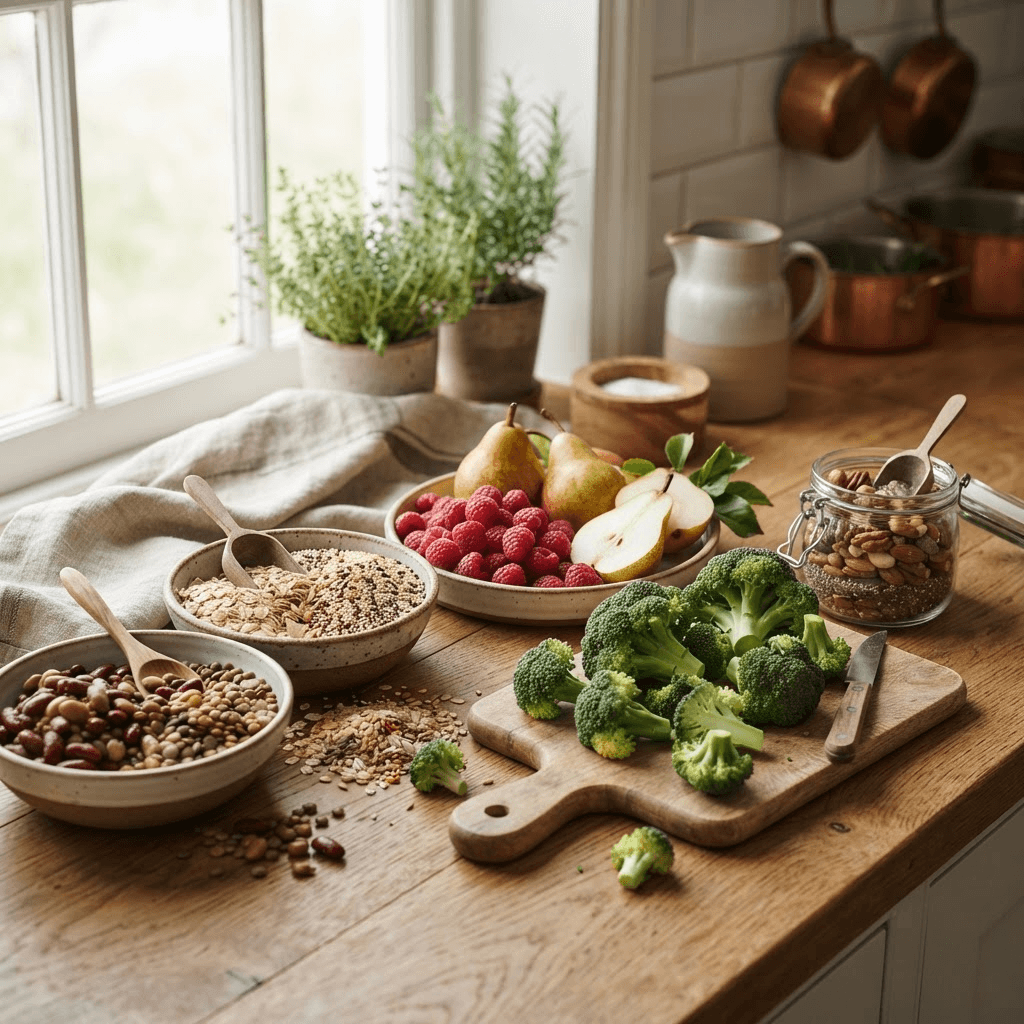
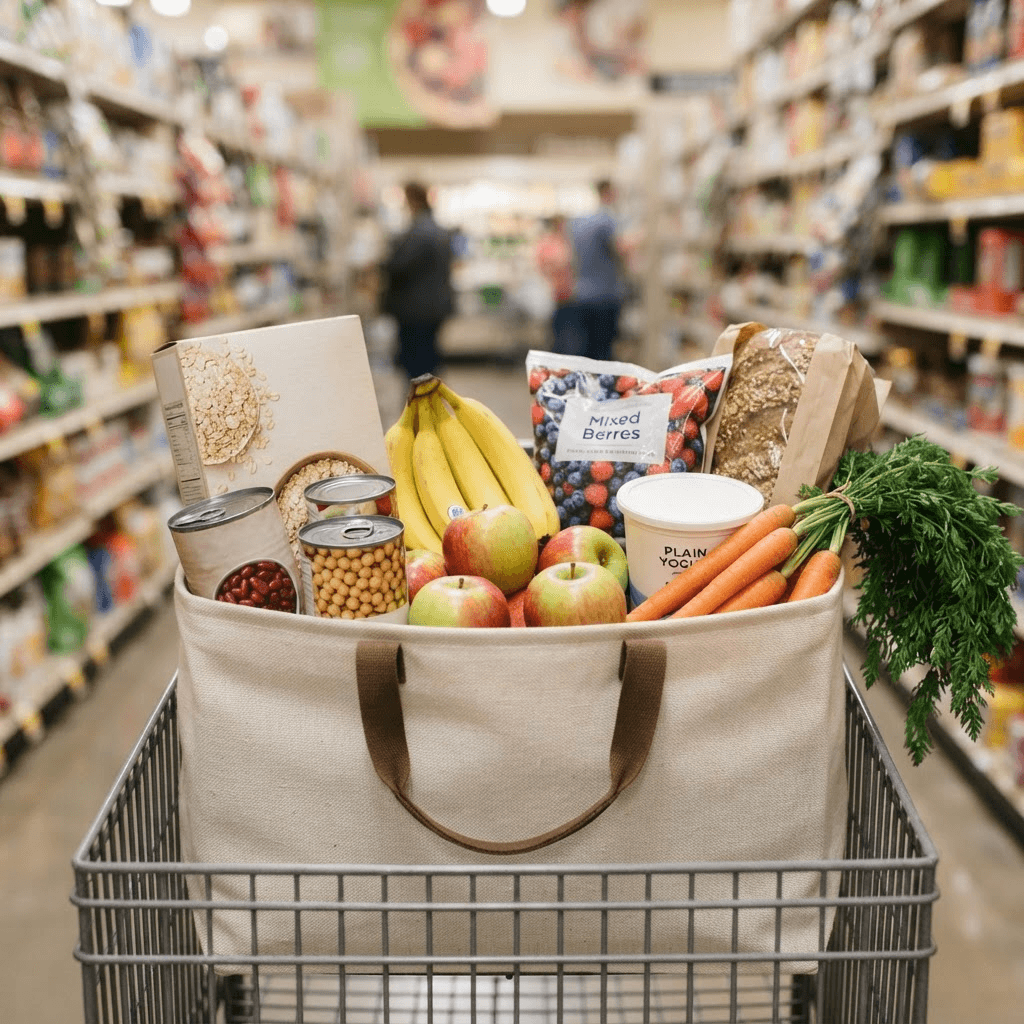
A supermarket basket built for gut health does not need to look unusual. It can contain oats, canned beans, apples, frozen berries, plain yogurt, brown rice and a loaf of whole-grain bread. The useful part is not an exotic ingredient. It is the steady arrival of different plant fibers at breakfast, lunch and dinner.
That is a less dramatic promise than a three-day “gut reset,” but it is closer to what digestive science supports. Your gut microbiome—the community of microorganisms living mainly in the large intestine—responds to what you eat repeatedly. One expensive powder cannot compensate for a week with few plants, little fluid and irregular meals. Fortunately, ordinary food can do a great deal.
What “gut health food” actually means
No official stamp turns a food into a gut-health food. In practice, the most useful choices do one or more of three jobs: provide fermentable fiber for resident microbes, introduce live microorganisms through certain fermented foods, or help meals remain nutritionally balanced and regular. Some plant fibers reach the colon partly undigested. Microbes ferment them and produce compounds including short-chain fatty acids, which help support the cells lining the colon.
Different microbes prefer different substrates. That is why dietary diversity is more convincing than a rigid list of superfoods. Oats bring beta-glucan; beans bring resistant starch and several fermentable fibers; onions and garlic contain fructans; berries contribute fiber and polyphenols. You do not need all of them daily. Across a week, variety gives the microbial community more than one item on the menu.
The gut health foods worth buying again and again
Beans and lentils: the pantry workhorses
Black beans, chickpeas, butter beans and lentils deliver fiber, plant protein and resistant starch at a low cost. Canned versions count. Rinse them to remove some sodium and begin with a few spoonfuls if pulses are new to you. Add lentils to tomato sauce, mash chickpeas into a sandwich filling or stir white beans into soup. Regular small portions are often easier to tolerate than an occasional enormous bowl.
Oats and barley: quiet breakfast upgrades
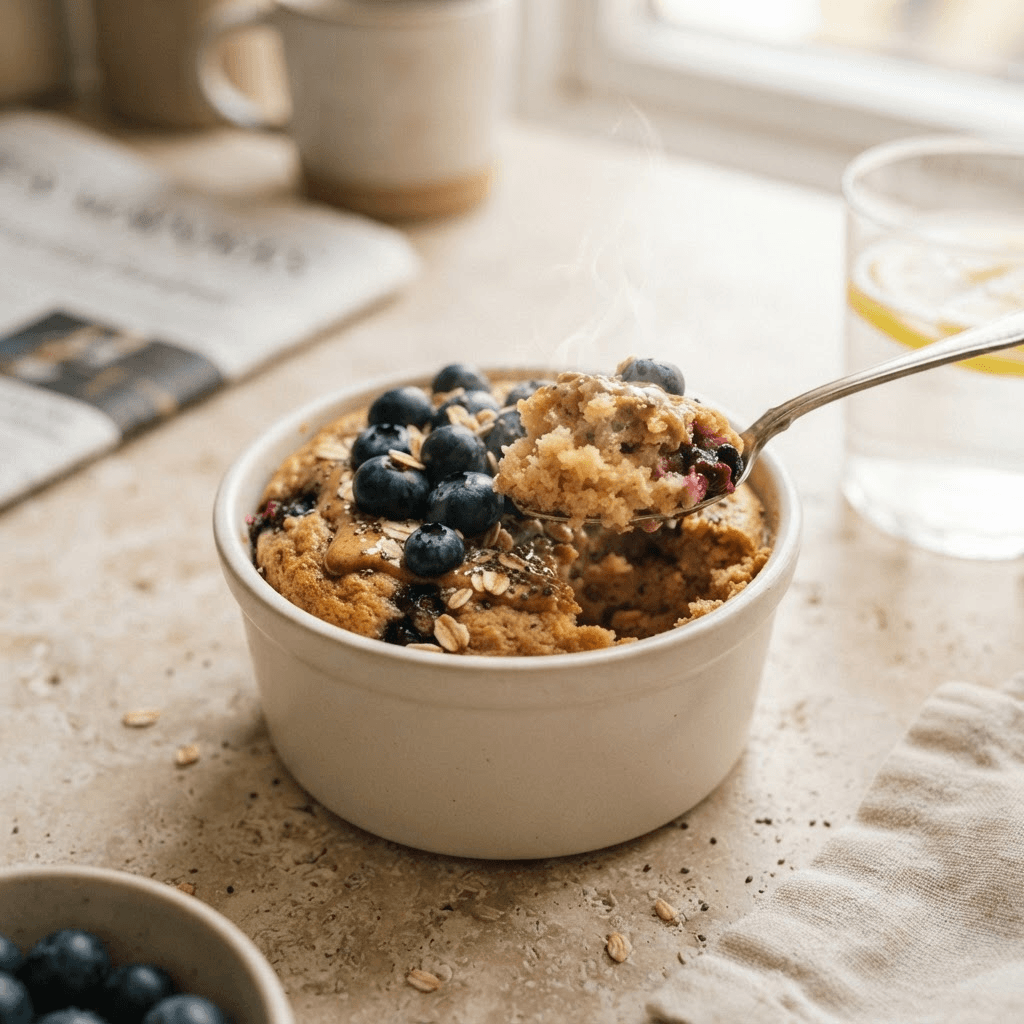
Oats and barley contain beta-glucan, a soluble fiber that forms a gel in the digestive tract. Oatmeal is the obvious option, but oats also work in yogurt, smoothies and savory patties. Pearl barley makes soup pleasantly chewy. If breakfast currently has little fiber, a bowl of oats with fruit is a simpler starting point than a complicated supplement routine.
Fruit: useful, portable and unfairly feared
Berries, pears, apples, kiwi, oranges and slightly green bananas each bring a different mix of fibers and plant compounds. Whole fruit also contains water and requires chewing, unlike juice. Frozen fruit is nutritionally useful and often cheaper. Keep the edible peel where comfortable, because much of the fiber sits in or near it.
Vegetables, especially the ones you enjoy
Broccoli is excellent; it is not compulsory. Carrots, peas, spinach, zucchini, eggplant, cabbage and tomatoes all contribute. Cooked vegetables may feel gentler than large raw salads when digestion is sensitive. Frozen and canned vegetables are valid conveniences. Aim for repeatability, not a photographically perfect produce drawer.
Nuts and seeds: small portions with useful texture
Walnuts, almonds, chia, flax and pumpkin seeds supply fiber alongside unsaturated fats. Sprinkle a tablespoon of ground flax over oats, add walnuts to fruit or use chia to thicken overnight oats. Ground flax is easier to use than whole seeds, which may pass through largely intact. Increase chia and flax gradually and take them with fluid.
Whole grains: more choices than brown rice
Whole-grain bread, bulgur, quinoa, brown rice, whole-wheat pasta and popcorn can all help. A whole grain retains the bran, germ and endosperm, so it generally supplies more fiber than its refined counterpart. There is no need to replace every grain overnight. Try a half-and-half mix of brown and white rice or choose whole-grain bread for one meal.
| Food group | Easy choice | Low-effort use | Start here if sensitive |
|---|---|---|---|
| Pulses | Canned lentils | Stir into soup or sauce | 2–3 tablespoons |
| Whole grains | Oats | Porridge or yogurt topping | ¼ cup dry oats |
| Fruit | Kiwi or berries | Eat with breakfast | 1 small serving |
| Vegetables | Frozen carrots and peas | Microwave beside dinner | ½ cup cooked |
| Nuts and seeds | Ground flax | Sprinkle over cereal | 1 teaspoon |
| Fermented food | Plain live-culture yogurt | Add fruit and oats | ¼–½ cup |
Where fermented foods fit—and where they do not
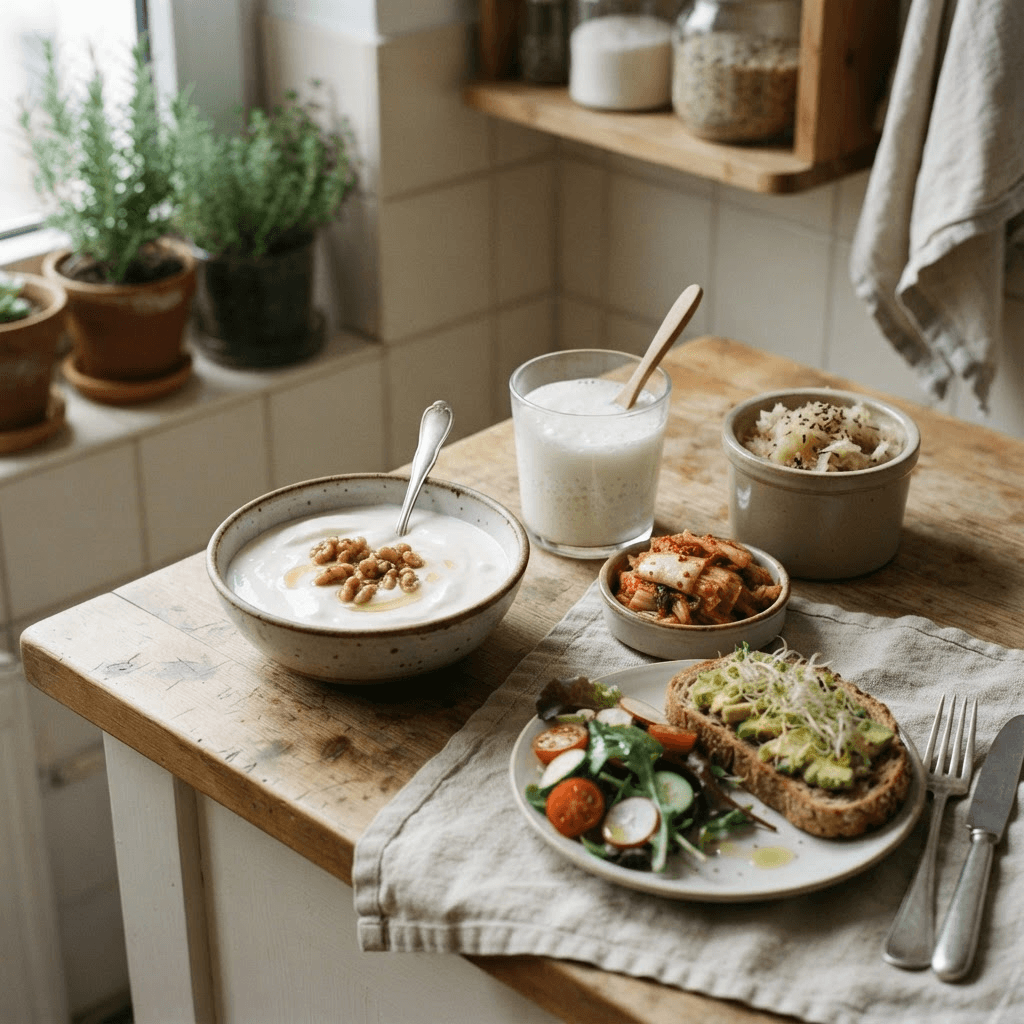
Plain yogurt with live cultures, kefir, refrigerated kimchi and unpasteurized refrigerated sauerkraut may contain living microorganisms when eaten. They can add flavor and variety, but “fermented” does not guarantee “probiotic.” Baking sourdough kills most living cultures; shelf-stable pickles may be heat-treated; and vinegar pickles may never have been fermented. Check the label rather than the rustic jar.
Treat these foods as supporting players. A spoonful of kimchi cannot replace the fiber in beans, grains, fruit and vegetables. Fermented vegetables are also salty, and sweetened yogurts can contain substantial added sugar. Our detailed guide to probiotic foods explains what survives processing and how to shop for live cultures.
Why “healthy” food sometimes makes bloating worse
Fiber fermentation produces gas. That is normal, but a sudden change can be uncomfortable. Someone moving from roughly 10 grams of fiber a day to 30 grams may experience pressure, rumbling or looser stools—not because fiber is harmful, but because the change was abrupt. Add one habit, hold it for several days and assess. Perhaps that means oats at breakfast this week and beans at lunch next week.
Fluid matters because several fibers absorb water. Regular movement can also support bowel regularity. The daily hydration guide offers a practical way to judge intake without forcing a universal gallon target. Chewing slowly and eating at reasonably regular times may help people who tend to rush meals or go all day without eating.
A gut-healthy pattern should make ordinary life easier. If the plan requires you to ignore pain, fear meals or eliminate half the grocery store, it is no longer serving that purpose.
Some fermentable carbohydrates trigger symptoms in people with irritable bowel syndrome, but the triggers and tolerable amounts differ. A low-FODMAP diet is a structured, temporary elimination and reintroduction process, ideally supervised by a dietitian; it is not a permanent “clean eating” plan. Long-term unnecessary restriction can reduce dietary variety and make nutrition harder.
Build a gut-friendly meal without calculating everything
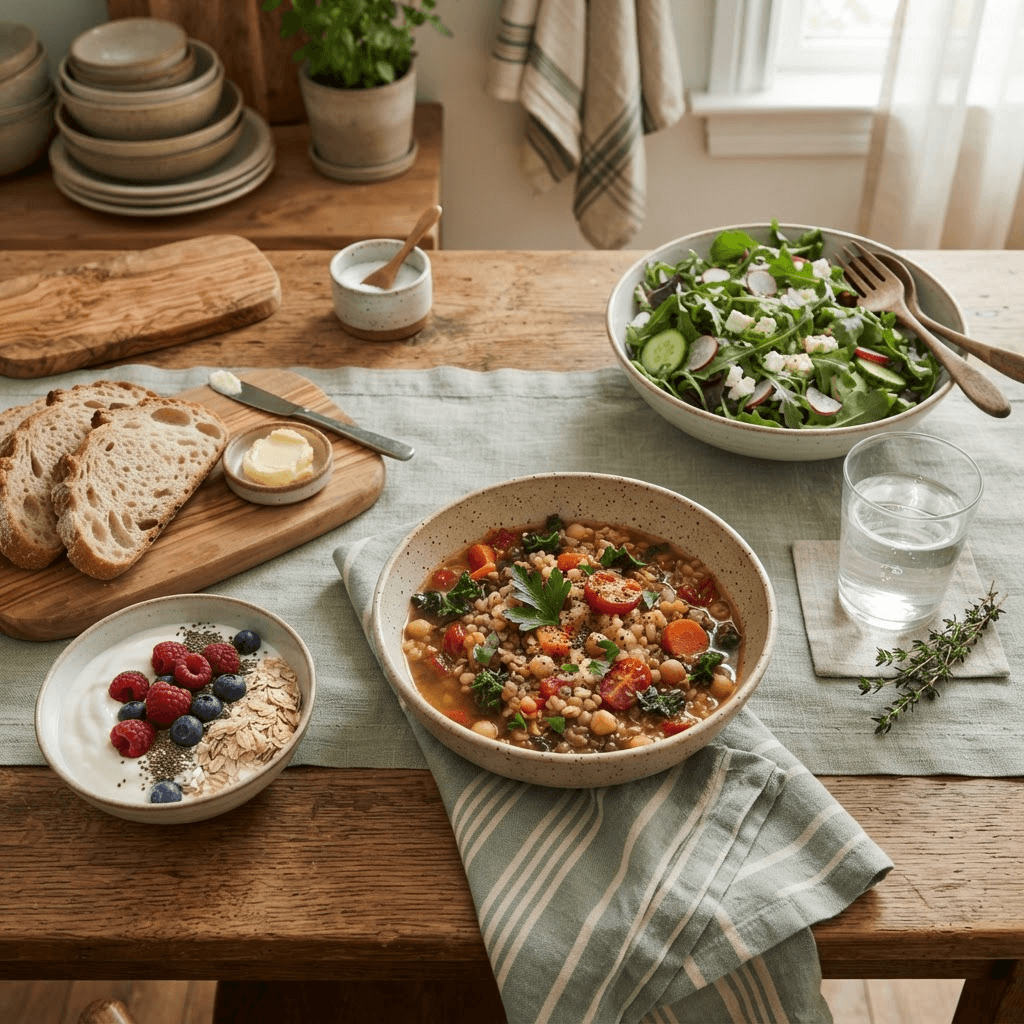
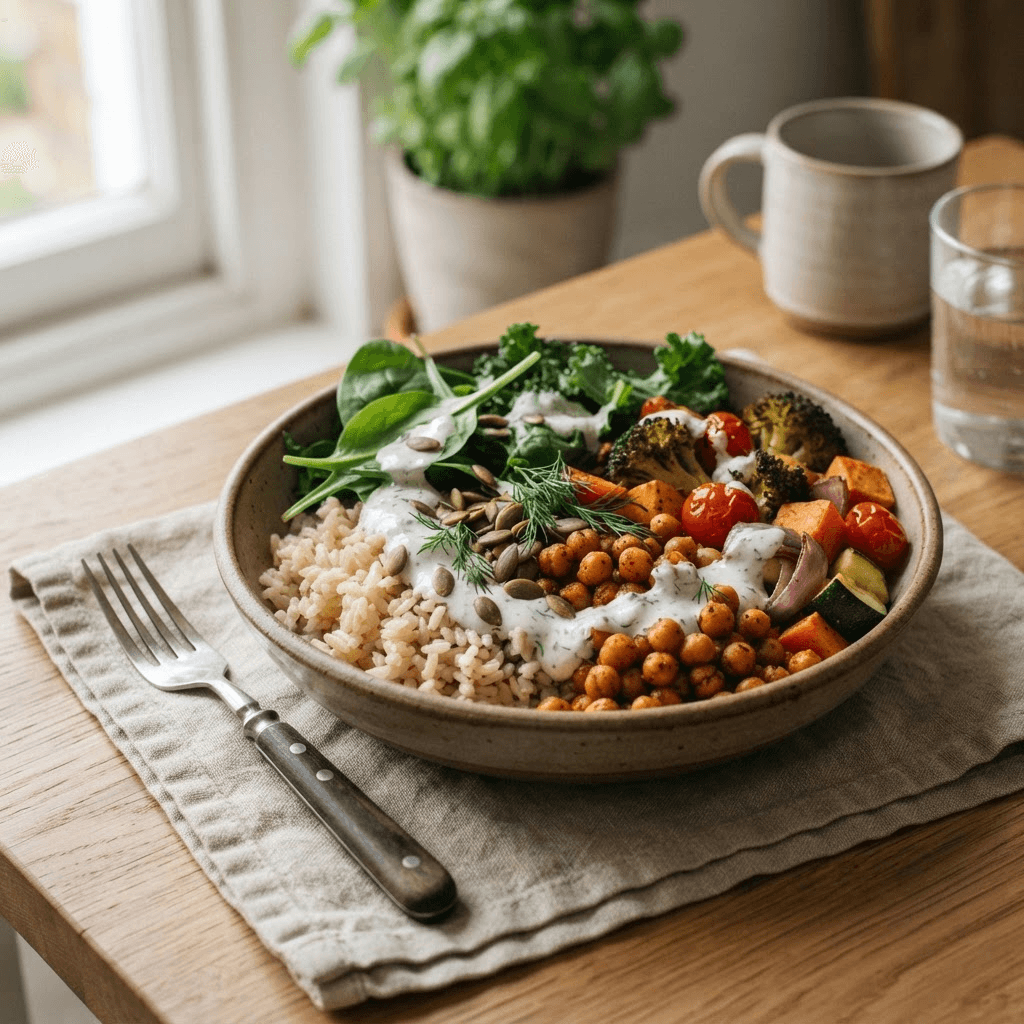
Start with a familiar carbohydrate, add a protein, include one or two plants and finish with flavor. Brown rice, chickpeas, roasted carrots, spinach and yogurt sauce is one version. Whole-grain toast, eggs, sautéed tomatoes and fruit is another. Pasta with lentil-enriched tomato sauce and a side of cooked zucchini works too. The pattern matters more than whether dinner contains a current social-media favorite.
A one-day example, not a prescription
- Breakfast: oatmeal cooked with milk or soy drink, topped with frozen berries and ground flax.
- Lunch: whole-grain toast with hummus, tomato and cucumber, plus a piece of fruit.
- Snack: plain live-culture yogurt with walnuts, or a dairy-free alternative with protein and live cultures.
- Dinner: lentil and vegetable stew with barley or rice and a spoonful of yogurt or herbs.
This day is not meant to be copied indefinitely. Swap oats for whole-grain toast, lentils for beans, berries for kiwi and barley for potatoes eaten with their skin. Rotation makes the pattern more interesting and exposes your gut microbes to a broader range of plant material.
The affordable gut health grocery basket
Wellness marketing often adds a premium to familiar ingredients. Skip the tiny bottle promising a cleanse and spend the same money on several meals. Store-brand oats, dried or canned pulses, seasonal fruit, frozen vegetables and whole-grain bread cover the basics. Choose one fermented food only if you enjoy it and can finish it before it spoils.
- Choose two fiber-rich staples: oats plus canned lentils, for example.
- Pick three fruits or vegetables with different colors and textures.
- Add one whole grain you already know how to cook.
- Include nuts or seeds if the budget allows; store them in the freezer for longer keeping.
- Select one live-culture food if wanted, then check added sugar and sodium.
A seven-day experiment that does not overhaul your life
For one week, leave your normal meals mostly intact and add a single plant-forward action each day. Monday, put berries on breakfast. Tuesday, add lentils to soup. Wednesday, choose whole-grain bread. Thursday, cook an extra vegetable at dinner. Friday, try a small serving of yogurt or kimchi. Saturday, snack on fruit and nuts. Sunday, repeat the change that felt easiest.
At the end of the week, ask practical questions. Did the food taste good? Was it affordable? Did it fit your schedule? Was digestion comfortable? Keep the wins and adjust the rest. Gut health is influenced by sleep, stress, movement, medications and medical conditions as well as food, so avoid treating every symptom as proof that you chose the wrong vegetable.
The bottom line
The best foods for gut health are not a secret category. They are varied plants eaten often enough to matter, with fermented foods added for enjoyment and variety where they suit you. Begin below your maximum ambition: one more plant at lunch, beans twice this week, oats tomorrow morning. A digestive system usually responds better to a calm routine than to a dramatic reset.
Sources and further reading
These public-health and peer-reviewed sources support the central guidance in this article.
- Dietary fiber: essential for a healthy dietMayo Clinic
- The Nutrition Source: FiberHarvard T.H. Chan School of Public Health
- Fermented foods, the gut and healthNature Reviews Gastroenterology & Hepatology
- World Gastroenterology Organisation practice guideline: probiotics and prebioticsWorld Gastroenterology Organisation
Straight answers about food and gut health
What are the best foods for gut health?
Useful staples include beans, lentils, oats, barley, whole grains, fruit, vegetables, nuts and seeds. Live-culture yogurt, kefir, refrigerated kimchi and unpasteurized sauerkraut can add fermented-food variety. A diverse pattern is more valuable than one “best” food.
How quickly can food improve gut health?
The microbiome can respond to dietary changes within days, but symptom relief and lasting habits do not follow one universal timeline. Make gradual changes over several weeks and assess comfort, bowel regularity and sustainability rather than expecting an overnight reset.
What is a good gut-healthy breakfast?
Oatmeal with berries and ground flax is an affordable option that combines several fibers. Plain live-culture yogurt with oats, fruit and walnuts is another. Choose portions and ingredients that match your tolerance.
Can eating more fiber cause bloating?
Yes. Gut microbes ferment fiber and produce gas, especially when intake rises suddenly. Add fiber in small steps, drink enough fluid and give each change several days. Persistent or severe symptoms should be discussed with a clinician.
Do I need a probiotic supplement for a healthy gut?
Most healthy adults do not need a probiotic supplement simply because gut health matters. Benefits are strain- and condition-specific. Discuss supplements with a qualified clinician if you are considering one for a diagnosed condition.
Vitalis Nutrition Desk
The Vitalis Nutrition Desk turns established nutrition science into useful, food-first guidance for everyday kitchens.
Medical disclaimer: This article provides general food and nutrition education, not personalised medical nutrition therapy. Speak with a qualified clinician or registered dietitian if you have a medical condition, food allergy, take medication affected by diet, or need an individual eating plan.