How to Read Nutrition Labels: A Practical Grocery Shopping Guide
Ignore the promises on the front. This aisle-by-aisle guide shows how to compare serving sizes, added sugar, sodium, fiber and ingredients in under a minute.
At a glance
- Start with serving size because every number beneath it depends on that amount.
- Compare similar foods using the same serving amount, not package claims such as “natural” or “multigrain.”
- Use percent Daily Value as a quick reference: 5% is generally low and 20% is generally high.
- Look for more fiber and less added sugar, sodium and saturated fat when those nutrients matter to your choice.
- The ingredient list answers different questions than the Nutrition Facts panel; use both, but do not judge a food by ingredient count alone.
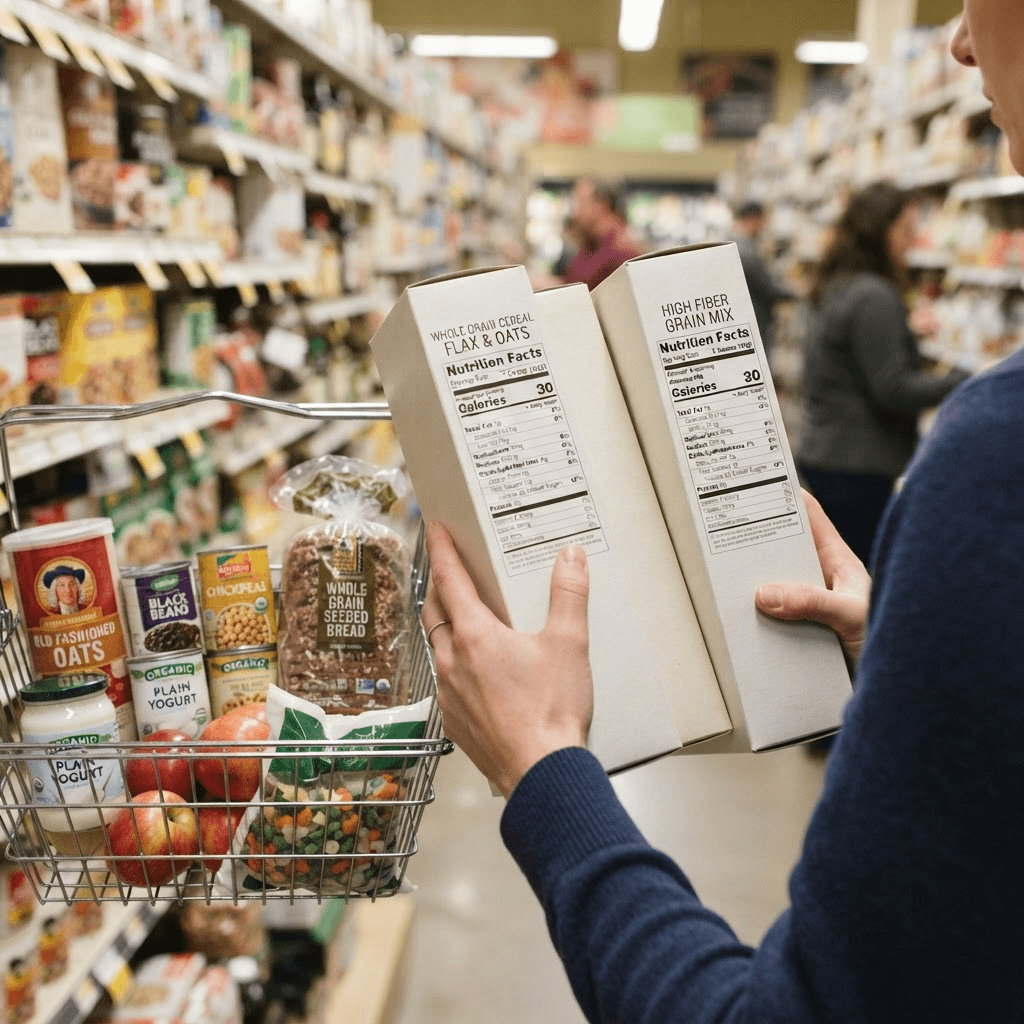
A cereal box can promise heart health, whole grains and natural energy before you ever reach the useful information. Turn it around. The regulated panel and ingredient list are not perfect measures of a food, but they are much better tools than the bright claims on the front.
You do not need to grade every item in your cart. Fresh produce, dried beans and ordinary pantry foods often need little investigation. Label reading earns its keep when you are choosing between two breads, yogurts, soups, sauces, cereals or frozen meals that look nearly identical from the front.
First, find out what the numbers are describing
Serving size sits at the top because calories and nutrients apply to that quantity. It is not a recommendation for how much you should eat. Manufacturers use standardized reference amounts, while your appetite and meal may call for more or less.
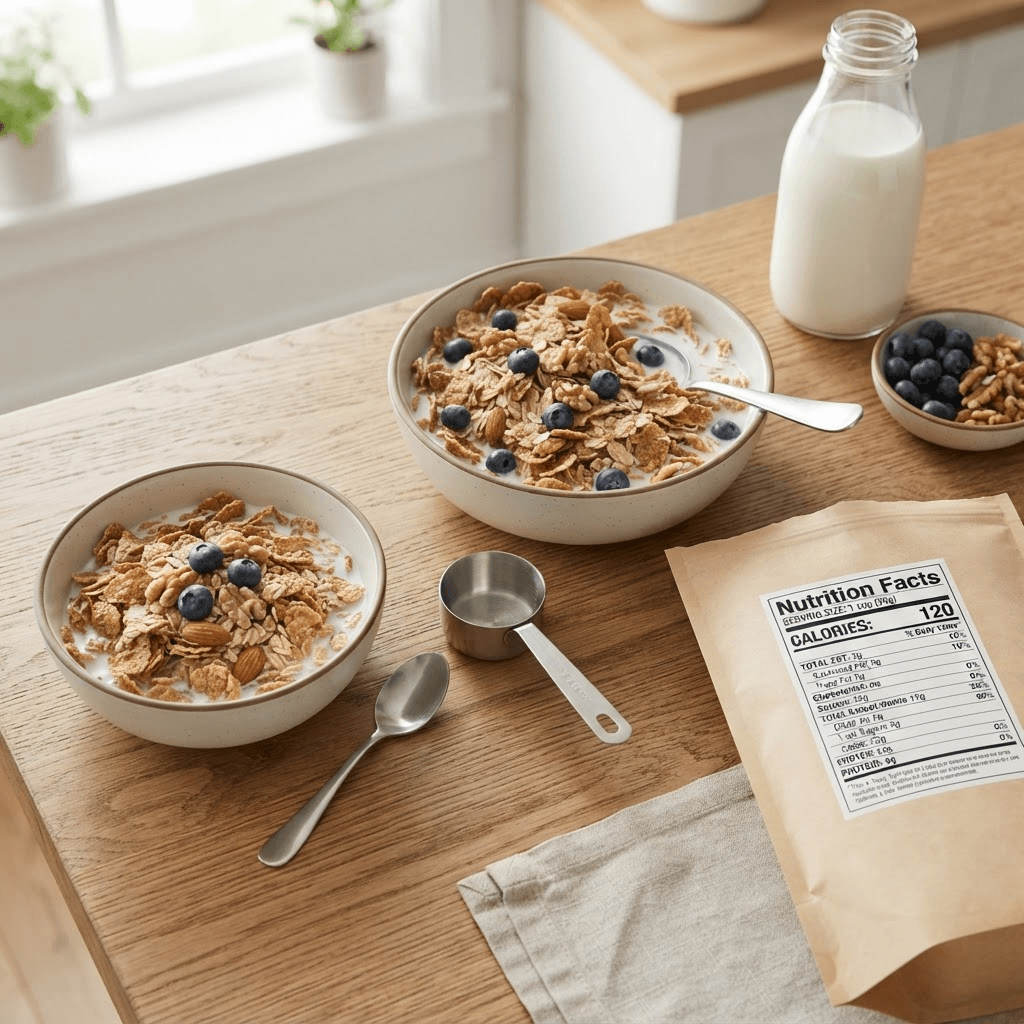
Suppose a cereal lists 180 calories, 6 grams of added sugar and 4 grams of fiber per cup. If your bowl holds one and a half cups, it provides 270 calories, 9 grams of added sugar and 6 grams of fiber before milk. Measuring once can help you recognize your usual bowl; there is no need to measure breakfast forever.
Percent Daily Value is a compass, not a personal prescription
The percent Daily Value (%DV) shows how much one serving contributes to a reference daily diet. As a quick rule, 5% DV or less is low and 20% DV or more is high. That makes it useful for comparisons: you might seek a higher %DV for fiber and a lower one for sodium or saturated fat.
Daily Values are not individualized targets. Children, athletes, pregnant people and anyone managing a medical condition can have different needs. You also do not have to make each food low in sodium or high in fiber; the day’s overall pattern matters.
| Label item | What it tells you | A practical comparison |
|---|---|---|
| Serving size | The amount used for every number | Compare equal weights or volumes |
| % Daily Value | Whether a serving is relatively low or high | 5% is low; 20% is high |
| Added sugars | Sugar added during processing | Choose less when products are otherwise similar |
| Dietary fiber | Listed fiber per serving | Choose more in breads, cereals and grains |
| Sodium | Salt plus other sources of sodium | Compare similar soups, sauces and frozen meals |
| Saturated fat | One type of fat linked with LDL cholesterol | Favor less when choosing everyday staples |
Read for the food in your hand, not an imaginary perfect diet
A useful label check changes with the aisle. Fiber matters when comparing whole-grain bread. Added sugar and protein help distinguish yogurts. Sodium can separate two canned soups. Saturated fat may be relevant for frozen pizza. Demanding high protein from salad dressing or low sugar from plain nuts only creates noise.
Added sugar is not the same as total sugar
Total sugars include naturally occurring sugar in fruit and milk plus sugar added during processing. Added sugars are listed separately. Plain milk and unsweetened yogurt can therefore show total sugar with zero added sugar. That is different from a flavored yogurt sweetened with cane sugar or syrup.
Sodium deserves comparison, not panic
Most dietary sodium comes from packaged and restaurant foods, not the salt shaker alone. Bread, sauces, deli meats, canned soup and frozen meals can contribute meaningful amounts without tasting intensely salty. Compare brands, use lower-sodium versions when they taste good to you, and remember that rinsing canned beans can remove some sodium.
Fiber can reveal the difference between brown packaging and whole grains
Color is not evidence of whole grain. Compare fiber and check whether a whole grain appears near the beginning of the ingredient list. Our high-fiber foods guide shows realistic portions and explains how to increase fiber without making digestion miserable.
What the ingredient list can—and cannot—tell you
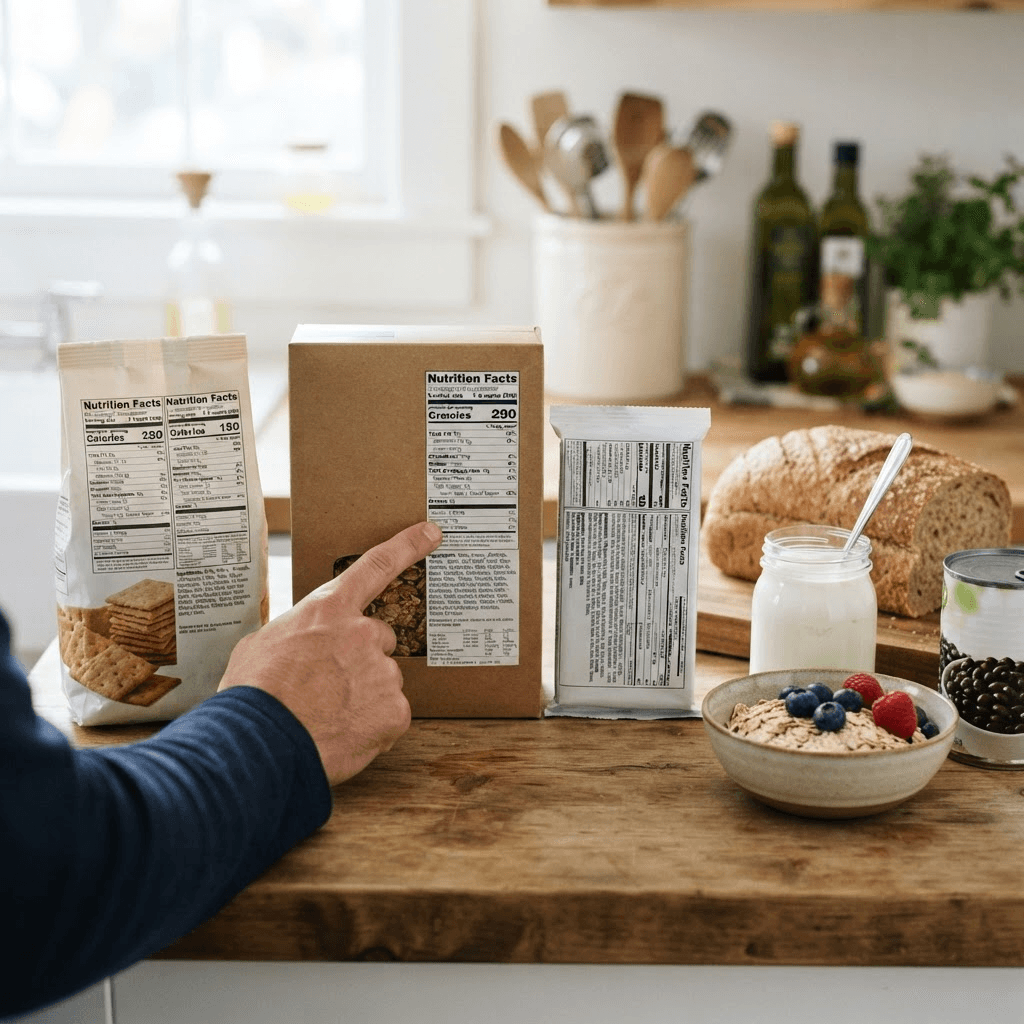
Ingredients appear in descending order by weight. The first several ingredients usually tell the clearest story. Whole-wheat flour first in bread is useful information. Sugar appearing near the top of a breakfast cereal signals that it makes up a meaningful share of the product.
- Look for allergens in the dedicated “contains” statement and ingredient list; do not rely on front claims.
- Sugar has many names, including syrups, honey, cane sugar and concentrated fruit juice. The added-sugars line totals them for you.
- Words such as tocopherol, ascorbic acid and lecithin are not evidence that a food is dangerous. Familiarity is not a safety test.
- A short list can describe butter, candy or salty chips; a longer list can describe a fortified whole-grain cereal. Ingredient count alone does not determine nutritional quality.
The best label is not always the one with the fewest ingredients. It is the one that answers your actual nutrition need at a price and flavor you will use.
Translate the sales language on the front of the package
| Front claim | What to check next |
|---|---|
| Multigrain | Whether a whole grain is a leading ingredient and how much fiber is listed |
| No added sugar | Total sugar, serving size and whether non-sugar sweeteners are used |
| Made with real fruit | Where fruit appears in the ingredients and the amount of fiber and added sugar |
| High protein | Grams per serving, serving size and whether you need extra protein in this food |
| Light or reduced | What it is reduced compared with and whether sodium or sugar changed |
| Natural | The Nutrition Facts and ingredients; the word does not make the product nutritionally superior |
Five decisions from a real grocery cart
Bread: compare slices on equal terms
One loaf may list one thin slice while another lists two. Compare 100 grams, two slices of similar size or the portion you actually eat. Look for whole grain near the start, useful fiber, and sodium that fits the rest of your sandwich.
Yogurt: decide whether it is breakfast, a snack or dessert
Compare the same container size. Protein can help a breakfast last, while added sugar varies widely. Plain yogurt with fruit gives you control over sweetness. If you want live cultures, look for a statement that they are present; our probiotic foods guide explains why not every fermented product contains live microbes at purchase.
Canned beans: convenience still counts
No-salt-added beans are useful, but standard canned beans remain an affordable, fiber-rich food. Compare sodium, rinse if appropriate, and choose the version you will actually cook. Dried beans are not morally superior when time is short.
Cereal: seek a breakfast, not a health halo
Check serving size, whole-grain ingredients, fiber and added sugar. Then consider what you serve with it. Milk or yogurt, fruit and nuts can turn a modest cereal into a more satisfying meal; a perfect-looking panel does not matter if nobody likes the cereal.
Frozen meals: judge the whole plate
Look for enough food and protein to function as a meal, plus some vegetables or fiber. Sodium can be high, but context matters: a frozen meal paired with fruit and unsalted vegetables may still fit more comfortably than takeout. One number does not describe your entire day.
Three label-reading habits worth dropping
- Do not compare unlike serving sizes. Convert to the same amount or compare the portion you will eat.
- Do not chase the lowest calorie number automatically. A slightly higher-calorie option with more fiber, protein and satisfying ingredients may serve you better.
- Do not let one nutrient cancel the entire food. Peanut butter contains fat, canned beans contain carbohydrate and bread can contain sodium; foods still contribute useful nutrition within a varied diet.
A calmer way to shop next week
Choose one aisle where labels routinely slow you down—perhaps bread or yogurt. Compare only two or three products and take a photo of the winner. Next week, buy it without reopening the investigation. Nutrition knowledge should reduce friction over time, not turn every grocery trip into an exam.
Use labels to make packaged food easier to navigate, then return your attention to meals: beans in soup, yogurt with fruit, bread holding a satisfying sandwich, and cereal that gets breakfast on the table. The panel is a tool. It is not the meal.
Sources used for this guide
These government and public-health resources explain U.S. label requirements, Daily Values and healthy dietary patterns.
- How to understand and use the Nutrition Facts labelU.S. Food and Drug Administration
- Added sugars on the Nutrition Facts labelU.S. Food and Drug Administration
- Sodium and food sourcesCenters for Disease Control and Prevention
- Dietary Guidelines for Americans, 2020–2025U.S. Department of Agriculture and U.S. Department of Health and Human Services
Questions to take into the grocery aisle
What is the first thing to look at on a nutrition label?
Start with serving size and servings per container. Every calorie and nutrient number beneath them applies to that amount, so you need this context before comparing products or calculating what your portion provides.
Is 5% Daily Value considered low?
Yes. The FDA’s general guide treats 5% Daily Value or less per serving as low and 20% or more as high. Use that shortcut to seek more of nutrients such as fiber and less of nutrients such as sodium or saturated fat, depending on the food and your needs.
What is the difference between total sugar and added sugar?
Total sugar includes sugar naturally present in foods such as milk and fruit plus sugar added during processing. Added sugar is the portion introduced by the manufacturer, cook or consumer and appears as a separate line beneath total sugars.
Does a short ingredient list mean a food is healthier?
Not necessarily. Ingredient count does not measure nutritional quality. Use the list to identify major ingredients and allergens, then consider serving size, relevant nutrients, the food’s purpose in your meal, price and how often you eat it.
Are foods labeled natural healthier?
The word natural does not tell you whether a food is high in fiber, low in sodium, minimally sweetened or nutritionally balanced. Turn the package over and compare the Nutrition Facts panel and ingredient list with similar products.
Vitalis Nutrition Desk
The Vitalis Nutrition Desk turns established nutrition science into useful, food-first guidance for everyday kitchens.
Medical disclaimer: This article provides general food and nutrition education, not personalised medical nutrition therapy. Speak with a qualified clinician or registered dietitian if you have a medical condition, food allergy, take medication affected by diet, or need an individual eating plan.