Mediterranean Diet Meal Plan for Beginners: 7 Days of Easy Meals
A flexible seven-day Mediterranean diet meal plan built from familiar groceries, repeatable lunches and satisfying dinners—without banning foods or spending Sunday cooking twelve containers.
At a glance
- The Mediterranean diet is an eating pattern, not a strict menu or a cuisine purity test.
- Build most meals around vegetables, beans, whole grains, fruit, nuts and olive oil, then add fish, dairy, eggs or poultry as they suit you.
- Repeat breakfasts and lunches to make the week affordable and manageable.
- You do not need wine, expensive fish, imported ingredients or a complete pantry overhaul.
- The pattern works because of the whole menu—not because olive oil or any other single food is magical.
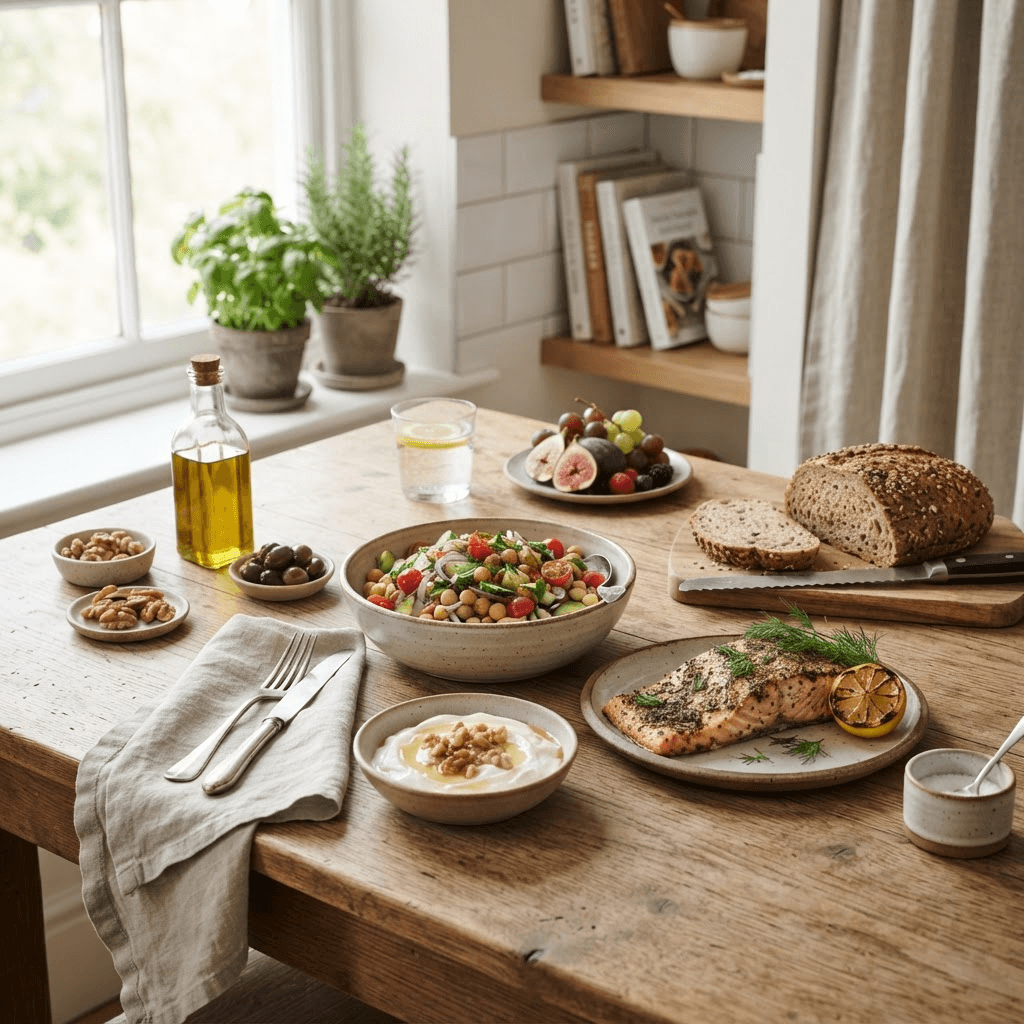
The easiest way to begin Mediterranean eating is not to recreate a seaside taverna every night. It is to make your usual grocery cart a little more plant-heavy, keep beans and whole grains within reach, use olive oil thoughtfully, and serve fish or other minimally processed proteins beside vegetables rather than making meat the entire meal.
This week is designed around leftovers on purpose. You will cook once and borrow from that work later: Monday’s chickpeas return at lunch, Tuesday’s roasted vegetables become Wednesday’s grain bowl, and one pot of lentil soup covers two meals. That is how a healthy pattern survives a real calendar.
Build a Mediterranean plate without counting anything
Use the plate as a loose map. Fill about half with vegetables, one quarter with a protein food and one quarter with a high-fiber carbohydrate. Add olive oil, nuts, seeds, avocado or olives for flavor and unsaturated fat. Fruit or plain yogurt can finish the meal if you want it. The proportions are guidance, not geometry; soup, pasta and mixed dishes will not sit in tidy quarters.
| Vegetables | Protein | High-fiber carbohydrate | Flavor and fat |
|---|---|---|---|
| Tomatoes, cucumber and greens | Chickpeas or lentils | Whole-grain pita | Olive oil and lemon |
| Roasted peppers and zucchini | Salmon or sardines | Barley or brown rice | Herbs and yogurt |
| Broccoli and mushrooms | Eggs or white beans | Whole-grain pasta | Walnuts and pesto |
| Frozen mixed vegetables | Chicken or tofu | Potatoes with skin | Olives and vinaigrette |
Mediterranean eating is less about adding a perfect ingredient and more about changing what occupies most of the plate, most of the week.
A seven-day Mediterranean diet meal plan you can actually repeat
Adjust portions to your hunger, body size and activity. Add snacks only when you are hungry between meals. Coffee and tea can stay; water is the everyday drink. If three meals from scratch is unrealistic, it is completely reasonable to use canned beans, frozen vegetables, microwaveable brown rice and store-bought hummus.
Day 1: start with familiar food
- Breakfast: plain Greek yogurt with oats, berries and chopped walnuts.
- Lunch: chickpea, cucumber and tomato salad with whole-grain pita and hummus.
- Dinner: sheet-pan chicken, peppers, red onion and small potatoes with lemon and oregano.
- Optional snack: an apple with peanut butter.
Day 2: cook extra vegetables
- Breakfast: whole-grain toast with tomato, olive oil and two eggs.
- Lunch: leftover chicken and vegetables over greens with a spoonful of yogurt dressing.
- Dinner: whole-grain pasta with white beans, spinach, tomatoes and Parmesan; roast an extra tray of vegetables for tomorrow.
- Optional snack: orange and a small handful of almonds.
Day 3: let leftovers become lunch
- Breakfast: overnight oats with milk, grated apple, cinnamon and chia.
- Lunch: brown rice bowl with yesterday’s roasted vegetables, chickpeas and tahini-lemon sauce.
- Dinner: baked salmon, green beans and barley or brown rice.
- Optional snack: plain yogurt with fruit.
Day 4: use an inexpensive pantry dinner
- Breakfast: leftover overnight oats or yogurt, fruit and nuts.
- Lunch: salmon and white bean salad with lemon, parsley and whole-grain crackers.
- Dinner: a large pot of lentil and vegetable soup with whole-grain toast; save half.
- Optional snack: carrots and hummus.
Day 5: make Friday flexible
- Breakfast: spinach and mushroom omelet with toast.
- Lunch: leftover lentil soup and a side salad.
- Dinner: whole-wheat pita pizzas with tomato sauce, vegetables and mozzarella, plus dressed greens.
- Optional snack: pear and walnuts.
Day 6: one relaxed cooking project
- Breakfast: yogurt bowl with banana, oats and pumpkin seeds.
- Lunch: hummus plate with chopped vegetables, olives, a boiled egg and pita.
- Dinner: chicken or tofu skewers with herbed couscous, tomato-cucumber salad and yogurt sauce.
- Optional snack: grapes with a piece of cheese.
Day 7: clear the fridge
- Breakfast: whole-grain toast with nut butter and berries.
- Lunch: chopped salad using remaining vegetables, beans, grains and cheese.
- Dinner: vegetable and white bean frittata with roasted potatoes or bread.
- Optional snack: fruit or leftover hummus and vegetables.
The grocery list: buy for overlap, not aspiration
Before shopping, cross off what is already in your cupboard and choose either chicken or tofu—not both—if the week needs to cost less. Frozen berries, spinach and green beans are often better-value choices and will not spoil while plans change.
| Aisle | Useful staples | Budget move |
|---|---|---|
| Produce | Tomatoes, cucumber, onions, peppers, leafy greens, potatoes, apples, citrus | Buy seasonal fruit and two frozen vegetables |
| Protein | Eggs, plain yogurt, chicken or tofu, salmon, canned beans and lentils | Use canned sardines or extra beans instead of fresh fish |
| Grains | Oats, whole-grain bread or pita, brown rice, pasta and barley | Choose two grains and repeat them |
| Flavor | Olive oil, lemons, garlic, dried herbs, tahini, olives and nuts | Buy store-brand oil and one nut or seed |
What to look for on labels
- Bread and pasta: look for a whole grain as the first ingredient and compare fiber between similar serving sizes.
- Canned beans: no-salt-added or lower-sodium is useful, but ordinary beans rinsed under water are still an excellent staple.
- Yogurt: choose one with a clear protein contribution and compare added sugar. Plain is versatile for breakfast and sauces.
- Olive oil: extra virgin olive oil offers flavor and plant compounds, but a reputable store-brand bottle is enough. Keep it away from heat and light.
- Packaged meals: judge the whole label. A Mediterranean-looking package can still be high in sodium and low in vegetables, fiber and protein.
Why this pattern supports heart and metabolic health
The pattern replaces some saturated fat from butter, fatty meat and highly processed foods with unsaturated fat from olive oil, nuts, seeds and fish. Beans, oats, vegetables, fruit and whole grains add soluble and insoluble fiber. Together, those changes can support healthier LDL cholesterol, blood pressure, blood-sugar regulation and bowel function.
Large studies and randomized trials associate Mediterranean-style eating with lower cardiovascular risk, but the benefit belongs to the full pattern. Pouring olive oil over a menu low in plants does not reproduce it. Neither does eating salmon once while most meals remain highly refined. If beans and whole grains are new to you, increase them gradually using the approach in our high-fiber foods guide.
How to eat Mediterranean-style on a tighter budget
- Make beans, lentils and eggs the default proteins for several meals each week.
- Use canned salmon, sardines or tuna when fresh fish is too expensive; compare sodium and follow local fish guidance during pregnancy.
- Buy olive oil in a size you can finish while it still tastes fresh rather than the biggest tin available.
- Choose frozen vegetables and fruit without added sauces or sugar.
- Cook one grain and one pot of soup, then change the herbs, sauce and toppings through the week.
- Keep red meat portions smaller and stretch them with lentils, mushrooms or beans in sauces and stews.
Four rules you do not have to follow
You do not have to drink red wine
Alcohol is not required for the Mediterranean diet, and starting to drink for health is not recommended. Alcohol increases several health risks, and less is generally safer. Sparkling water, coffee and tea fit comfortably.
Pasta and bread are not forbidden
Whole-grain bread and pasta can supply useful fiber and energy. The Mediterranean difference is context: pasta shares the bowl with vegetables, beans, seafood or olive oil rather than arriving as an oversized mound with little else.
The food does not need to be imported
Local beans, seasonal vegetables, canned fish and ordinary whole grains support the same principles. You are adopting a pattern, not performing a particular country’s menu.
Olive oil is healthy, but it is not unlimited
Olive oil is rich in unsaturated fat and useful for replacing less favorable fats. It is also energy-dense. Pour enough to dress and cook food well; there is no advantage to drinking it or hiding half a cup in a supposedly light salad.
If you have one hour on Sunday, do only this
- Cook a pot of brown rice, barley or another grain you genuinely like.
- Roast two trays of mixed vegetables with olive oil, pepper and dried herbs.
- Rinse two cans of beans and mix a jar of lemon vinaigrette.
- Boil four eggs or bake a tray of chicken or tofu.
- Wash fruit and visible snack vegetables, then stop. Breakfast can be assembled in five minutes.
That small amount of preparation creates bowls, salads, soup sides and quick dinners without locking you into identical containers. Pair meals with regular fluids rather than chasing a separate wellness target; our daily hydration guide explains what counts.
Evidence behind this meal plan
These clinical and public-health sources inform the eating pattern, heart-health guidance and practical recommendations above.
- Mediterranean diet for heart healthAmerican Heart Association
- Primary prevention of cardiovascular disease with a Mediterranean dietThe New England Journal of Medicine
- Healthy diet fact sheetWorld Health Organization
- What is the Mediterranean diet?Harvard T.H. Chan School of Public Health
Mediterranean eating, without the rulebook anxiety
What do you eat for breakfast on the Mediterranean diet?
Practical breakfasts include plain yogurt with fruit, oats and nuts; eggs with vegetables and whole-grain toast; or oatmeal with fruit and seeds. There is no required Mediterranean breakfast—use the pattern of minimally processed foods, fiber, protein and unsaturated fat.
Can you eat bread and pasta on the Mediterranean diet?
Yes. Whole-grain bread and pasta are useful choices, usually served in moderate portions with vegetables, beans, fish or other protein. Refined grains can still appear occasionally; the overall pattern matters more than one serving.
Is the Mediterranean diet expensive?
It does not have to be. Beans, lentils, eggs, oats, seasonal produce, frozen vegetables and canned fish can make it economical. Repeat ingredients across meals and treat fresh fish, specialty cheese and imported products as options rather than requirements.
How quickly can I start the Mediterranean diet?
Begin with two or three changes: add a vegetable to lunch and dinner, replace one meat meal with beans, and choose olive oil or nuts in place of some butter or processed snacks. A gradual shift is often easier on digestion and more sustainable than replacing the entire kitchen in one day.
Can the Mediterranean diet help with weight loss?
It can support weight management because many meals are rich in fiber, protein and minimally processed foods, but weight loss is not automatic. Portions, snacks, drinks, activity and individual energy needs still matter. The diet also has health benefits independent of weight change.
Do I need to drink wine on the Mediterranean diet?
No. Alcohol is not required, and people who do not drink should not start for health reasons. If you drink, follow local health guidance and consider personal risks, medicines, pregnancy and health conditions.
Vitalis Nutrition Desk
The Vitalis Nutrition Desk turns established nutrition science into useful, food-first guidance for everyday kitchens.
Medical disclaimer: This article provides general food and nutrition education, not personalised medical nutrition therapy. Speak with a qualified clinician or registered dietitian if you have a medical condition, food allergy, take medication affected by diet, or need an individual eating plan.