Iron-Rich Foods: 25 Best Options and How to Absorb More Iron
Compare 25 iron-rich foods, learn the difference between heme and non-heme iron, and use simple vitamin C pairings to help your body absorb more.
At a glance
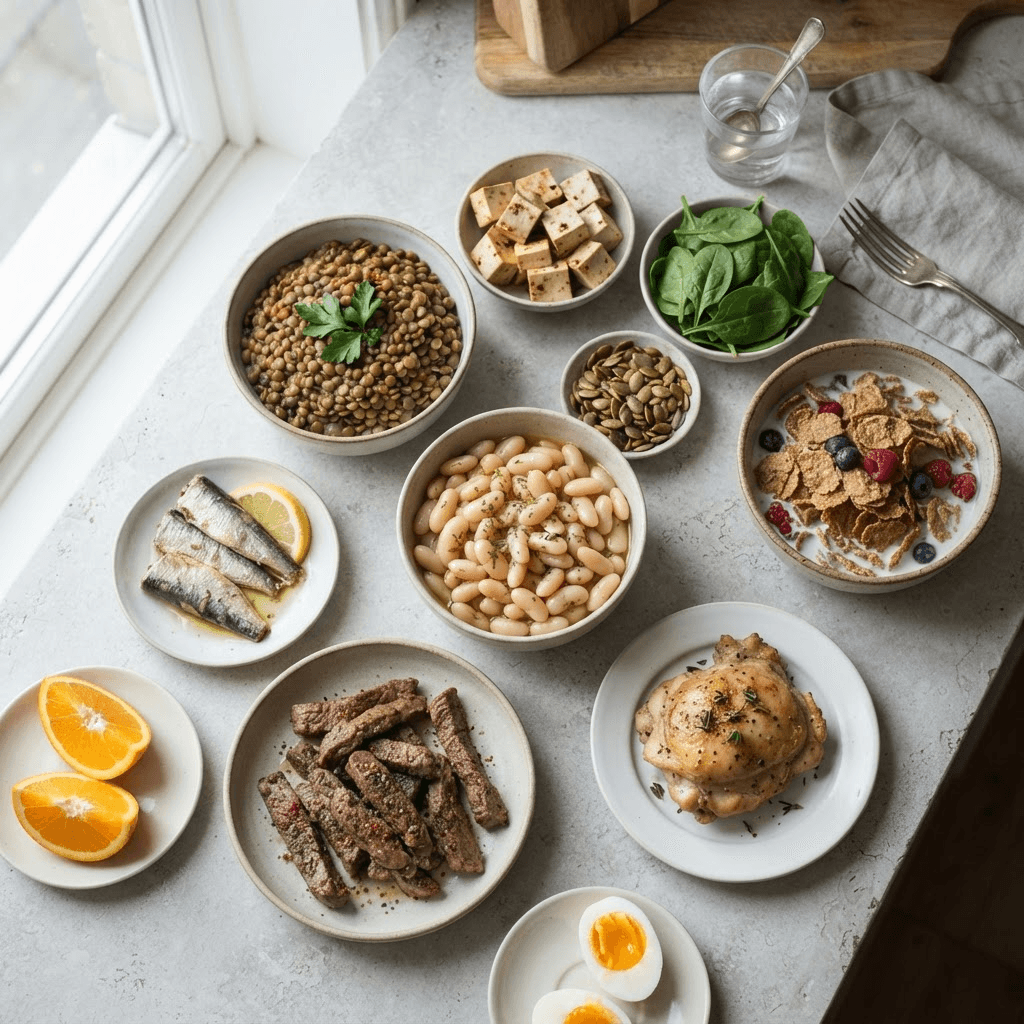
- Shellfish, lean red meat and dark poultry provide heme iron, which the body generally absorbs more readily than plant iron.
- Lentils, beans, tofu, pumpkin seeds, fortified cereal and leafy greens can make a meaningful contribution without meat.
- Pair plant iron with vitamin C foods such as peppers, citrus, berries, broccoli or tomatoes at the same meal.
- Tea and coffee can reduce non-heme iron absorption when taken with a meal; people worried about iron can enjoy them between meals instead.
- Food supports iron intake, but fatigue or suspected deficiency requires a blood test and clinical advice—not self-treatment with high-dose supplements.
The simplest way to eat more iron is to place one dependable source in each main meal. That could mean fortified cereal at breakfast, lentils or lean beef at lunch, and tofu, beans, sardines or dark-meat chicken at dinner. When the source is plant-based, add something rich in vitamin C—bell pepper, orange, kiwi, berries, broccoli or tomatoes—to help your body capture more of the iron on the plate.
Iron matters because your body uses it to make hemoglobin, the protein in red blood cells that carries oxygen. It also supports muscle metabolism, normal growth and several enzymes. Yet a food being “high in iron” is only half the story. The type of iron, the rest of the meal, your current iron stores and life stage all influence how much you absorb.
How much iron do you need each day?
Needs vary sharply by age, sex and pregnancy status. US recommended amounts are 8 milligrams a day for adult men and women age 51 and older, 18 milligrams for women ages 19–50, and 27 milligrams during pregnancy. Breastfeeding needs are generally 9 milligrams for adults. Menstrual blood loss is the main reason the recommendation is higher before menopause.
| Life stage | Recommended iron |
|---|---|
| Adult men, age 19+ | 8 mg/day |
| Women, ages 19–50 | 18 mg/day |
| Adults, age 51+ | 8 mg/day |
| Pregnancy | 27 mg/day |
| Breastfeeding, ages 19–50 | 9 mg/day |
Vegetarians may need substantially more dietary iron because non-heme iron is less readily absorbed. That does not mean a vegetarian diet cannot supply enough. It means regular legumes, soy foods, seeds, fortified grains and vitamin C pairings matter more than an occasional handful of spinach.
Heme versus non-heme iron: what changes on the plate?
Heme iron occurs in meat, poultry and seafood. Its absorption is relatively efficient and less affected by other parts of the meal. Non-heme iron occurs in plants, eggs and fortified foods. The body adjusts its absorption according to need, but meal composition has a larger effect. Vitamin C can convert plant iron into a form that is easier to absorb.
Both types count. A flexible diet can use mussels, sardines, beef or chicken alongside lentils, beans and greens. A vegetarian diet can emphasize larger and more frequent non-heme sources. The goal is a pattern, not a single “superfood.”

Ten animal foods high in iron
| Food | Serving | Approx. iron |
|---|---|---|
| Oysters | 3 oz cooked | 7–8 mg |
| Mussels | 3 oz cooked | 5–6 mg |
| Beef liver | 3 oz cooked | 5 mg |
| Lean beef | 3 oz cooked | 2–3 mg |
| Sardines | 3.75 oz can | 2.5 mg |
| Dark turkey meat | 3 oz cooked | 2 mg |
| Dark chicken meat | 3 oz cooked | 1–1.5 mg |
| Light tuna, canned | 3 oz drained | 1 mg |
| Eggs | 2 large | 1.8 mg |
| Salmon | 3 oz cooked | 0.5–1 mg |
Shellfish can be especially concentrated, while ordinary lean beef and dark poultry are easier to use in weekly meals. Sardines offer iron plus protein, calcium when the bones are eaten, and omega-3 fats. Rotate seafood choices and follow local pregnancy and childhood mercury guidance.

Fifteen plant foods high in iron
| Food | Serving | Approx. iron |
|---|---|---|
| Fortified breakfast cereal | 1 serving | 4–18 mg |
| White beans | 1 cup cooked | 6–8 mg |
| Lentils | 1 cup cooked | 6.5 mg |
| Tofu, firm | 1/2 cup | 3–6 mg |
| Chickpeas | 1 cup cooked | 4.5–5 mg |
| Kidney beans | 1 cup cooked | 5 mg |
| Soybeans | 1 cup cooked | 8–9 mg |
| Pumpkin seeds | 1 oz | 2.5 mg |
| Sesame seeds | 1 oz | 4 mg |
| Cashews | 1 oz | 1.9 mg |
| Quinoa | 1 cup cooked | 2.8 mg |
| Spinach | 1/2 cup cooked | 3 mg |
| Swiss chard | 1/2 cup cooked | 2 mg |
| Dried apricots | 1/2 cup | 1.7 mg |
| Dark chocolate, 70–85% | 1 oz | 3.4 mg |
Fortified cereal can provide a large amount, but the range is broad: one product may supply 4 milligrams while another supplies the full daily value. Check the serving size and percent Daily Value using our nutrition label guide. Choose cereals that also keep added sugar reasonable and contribute fiber.
Spinach contains iron, but it also contains oxalates that limit absorption. It remains a nutritious vegetable; it simply should not carry the whole plan. Lentils, beans, tofu and fortified foods provide more dependable foundations. They also contribute protein, and legumes add fiber. See our guides to high-protein foods and high-fiber foods for ways to complete the meal.
How to absorb more iron from food

Add vitamin C to plant-iron meals
Vitamin C is the most useful meal-level tool. Add strawberries to fortified cereal, squeeze lemon over lentils, serve beans with tomato salsa, add peppers to tofu stir-fry, or eat an orange beside seed-topped oatmeal. The foods need to be in the same meal; there is no need for a separate supplement.
| Iron source | Vitamin C partner | Meal idea |
|---|---|---|
| Fortified cereal | Berries or kiwi | Cereal with milk or soy milk and fruit |
| Lentils | Tomatoes and lemon | Lentil tabbouleh with tomato and herbs |
| Black beans | Bell pepper and salsa | Bean tacos with pepper slaw |
| Tofu | Broccoli and peppers | Tofu vegetable stir-fry |
| Pumpkin seeds | Orange | Seed-topped oats with orange wedges |
| Chickpeas | Tomatoes | Chickpea tomato stew |
Move tea and coffee away from iron-rich meals
Polyphenols in tea and coffee can bind non-heme iron and reduce absorption. If iron status is a concern, have them about one to two hours away from iron-rich meals rather than with breakfast or dinner. This matters less for someone with healthy stores eating a varied diet, but it can be a useful adjustment for vegetarians or people rebuilding intake under clinical guidance.
Do not fear calcium—use timing strategically when needed
Large calcium doses may temporarily compete with iron absorption, but dairy and calcium-rich foods remain important. Most people do not need to separate every glass of milk from every bean. If a clinician is treating low iron, ask whether calcium supplements should be taken at a different time from iron supplements or the day’s most iron-focused meal.
Cook and prepare plants in useful ways
Soaking and cooking beans, fermenting soy into tempeh, and leavening bread can reduce phytates that bind minerals. Using a cast-iron pan may add a small and variable amount, especially to acidic, moist foods such as tomato sauce. It is a bonus, not a substitute for iron-rich ingredients.
A realistic one-day iron-rich meal plan
This example shows the pattern rather than prescribing an exact target. Portions should match appetite and medical needs.
- Breakfast: fortified whole-grain cereal with milk or fortified soy milk, strawberries and pumpkin seeds. Save coffee for later in the morning.
- Lunch: lentil and quinoa bowl with tomatoes, red pepper, parsley, lemon and olive oil.
- Snack: an orange with cashews, or hummus with red pepper strips.
- Dinner: beef and broccoli stir-fry with brown rice, or tofu and broccoli stir-fry with peppers for a meat-free version.
- Dessert if wanted: fruit with a small square of dark chocolate rather than relying on chocolate as the main iron source.
The most useful iron habit is not eating one heroic serving. It is repeating ordinary sources and smart pairings across the week.

Shop for iron without an expensive wellness basket
- Keep two legumes on hand. Dry lentils cook quickly; no-salt-added canned beans make a fast backup. Rinse canned beans to reduce sodium.
- Compare fortified staples. Cereal, bread and oatmeal can contribute iron, but only the label reveals how much.
- Use frozen vegetables. Frozen broccoli, spinach and peppers reduce waste and remain convenient sources of vitamin C or iron.
- Choose one concentrated animal option if you eat it. Canned sardines, lean ground beef or dark chicken meat can stretch across several meals.
- Buy vitamin C foods you will finish. Oranges, frozen berries, cabbage, tomatoes and peppers all work; an exotic powder is unnecessary.
Four iron myths worth leaving behind
“Spinach is the best iron food”
Cooked spinach contributes iron, but oxalates limit how much is absorbed. Beans, lentils, tofu, fortified cereal and shellfish are often more practical anchors. Keep spinach for its broad nutrition value, not a cartoon reputation.
“You cannot get enough iron without red meat”
Red meat provides absorbable heme iron, but vegetarian diets can meet needs with regular legumes, soy foods, seeds, fortified grains and vitamin C. Because absorption is lower, planning and monitoring matter more for people with heavy periods, pregnancy or a history of deficiency.
“Craving ice proves iron deficiency”
Compulsively chewing ice, called pagophagia, is associated with iron deficiency in some people, but it does not confirm a diagnosis. It is a reason to discuss testing, not a reason to start high-dose tablets on your own.
“More iron is always safer”
Iron can be toxic in excess. Supplements commonly cause constipation, nausea and abdominal pain, and an overdose can be life-threatening to children. Store all iron products securely. People with hemochromatosis or other iron-loading conditions require specific medical advice and should not deliberately increase intake.
When food is not enough: testing and treatment
Someone can eat iron-rich food and still become deficient because of blood loss, pregnancy, low total intake, celiac disease, inflammatory bowel disease, bariatric surgery or another absorption problem. A clinician may check a complete blood count and ferritin, then interpret them alongside symptoms and inflammation. Treatment may include food changes, oral iron, investigation of bleeding or, in selected cases, intravenous iron.
Sources and further reading
Daily needs, absorption guidance and food values in this article are based on these public-health and food-composition sources.
- Iron fact sheet for consumersNIH Office of Dietary Supplements
- Iron fact sheet for health professionalsNIH Office of Dietary Supplements
- FoodData Central nutrient databaseUS Department of Agriculture
- About iron-deficiency anemiaNational Heart, Lung, and Blood Institute
- Iron deficiency anaemia: assessment, prevention and controlWorld Health Organization
Straight answers about iron-rich foods
What food is highest in iron?
Oysters, mussels and liver are among the most concentrated natural sources. Fortified cereals may supply even more per labeled serving. The best everyday choice depends on your dietary pattern, serving size and safety needs; liver is not appropriate as a frequent food during pregnancy.
How can I raise my iron through food?
Include a dependable source at each main meal and pair plant sources with vitamin C. Examples include fortified cereal with berries, lentils with tomatoes and lemon, beans with pepper salsa, or tofu with broccoli. Have tea and coffee between meals if iron status is a concern.
Which fruit has the most iron?
Fruit is generally more useful for vitamin C than iron. Dried apricots and raisins contribute modest amounts, but citrus, kiwi, berries and guava may be more valuable beside beans, lentils or fortified grains because vitamin C improves non-heme iron absorption.
Are eggs high in iron?
Two large eggs provide about 1.8 milligrams, so they contribute but are not as concentrated as shellfish, liver, lentils, white beans or many fortified cereals. Combine eggs with beans and vitamin C-rich vegetables for a stronger iron-focused meal.
Can vegetarians get enough iron?
Yes. Regular lentils, beans, tofu, tempeh, soybeans, seeds and fortified grains can meet needs, especially with vitamin C pairings. Because plant iron is absorbed less efficiently, vegetarians with heavy periods, pregnancy, symptoms or a history of deficiency should discuss monitoring with a clinician.
Does coffee block iron absorption?
Coffee and tea can reduce absorption of non-heme iron when consumed with a meal. If you have low iron or are at higher risk, enjoy them one to two hours away from iron-rich meals. They do not need to be eliminated for most people.
Should I take an iron supplement?
Only when a clinician recommends one based on your circumstances or test results. Excess iron can cause harm, and supplements can mask the need to investigate bleeding or poor absorption. Keep them securely away from children.
Vitalis Nutrition Desk
The Vitalis Nutrition Desk turns established nutrition science into useful, food-first guidance for everyday kitchens.
Medical disclaimer: This article provides general food and nutrition education, not personalised medical nutrition therapy. Speak with a qualified clinician or registered dietitian if you have a medical condition, food allergy, take medication affected by diet, or need an individual eating plan.